
 Worksheets
Level 3 initial assessment
Total questions: 40
Worksheet time: 20mins
Being able to send drawings electronically is an advantage of using
a text pager
a CAD system
hand drawn methods
forward planning methods.
When using traditional hand produced drawings, which one of the following is an advantage over using CAD?
Draughtsmen are not required.
Amendments can be made quickly.
Special computing hardware is not required.
Drawings can be used in all weather conditions.
When producing orthographic drawings, the minimum size of a disabled entrance would be found in the
material specification
bill of quantities
building regulations
window schedule.
Room dimensions and door positions are required to produce
an invoice
a sketch plan
a specification
an orthographic drawing.
Varying paint shades required for rooms in a building and commonly found on a
design brief
decorating schedule
material specification
general detail drawing.
What view of an object does isometric projection show?
Plan A
Pictoral.
Sectional.
Two dimensional.
A viewpoint and a 30° set square is required to produce
isometric drawings
auto-cad drawings
a site survey
a freehand sketch
Which one of the following insulation materials can be blown onto the cavity of an existing wall?
Multi-foil.
Fibreglass.
Sheep’s wool.
Expanded polystyrene.
Which one of the following can be used between the studs of a partition wall?
Multi-foil.
Mineral wool.
Polyisocyanurate.
Pumped expanded foam.
What does part L of the building regulations cover?
Structural safety.
Toxic substances.
Protection from falling.
Conservation of fuel and power.
Which one of the following areas is mineral wool insulation materials best used?
In the cavity of a new build wall.
Below a screed in a concrete floor.
Below the felt on a flat roof.
As external wall insulation.
What is the minimum U value required for a domestic house wall?
0.1
0.3
0.5
1.0
An Energy Performance Certificate will show the estimated
cost of insulating a loft
cost of insulating a cavity wall
savings if made if no heating is used
savings made if improvements are made.
Which one of the following best describes a means of sustainability?
Inexpensive Imported materials
Recycled materials
Adding insulation materials
Reducing landfill.
Using locally sourced materials is a good example of
sustainability
saving labour
minimising offcuts
mixing lime mortar.
Which two of the following are both required to calculate the number of tiles required for a bathroom?
Surface area and cost of the tiles/m².
Surface area and m² coverage/box of tiles.
Coverage/metre and cost of tiles/m².
Coverage/metre and labour cost/hour.
Which two of the following are both required to calculate the cost to board out a floor?
Cost of materials/m² and the daily labour rate.
Cost of materials/m² and the labour rate/m².
The labour rate/m² and the cost of joisting/m³.
The labour rate/m² and the cost of the labourer.
What information is required to prepare a materials list using a schedule?
Drawing and specification.
Drawing and bill of quantities.
Specification and site survey.
Specification and standard contract.
Why is a preferred supplier used when sourcing materials?
They can deliver in 24 hours.
They do not charge for delivery.
They are reliable and cost effective.
They can provide cheap alternatives.
Which one of the following is the purpose of the bill of quantities?
To show the details of a quote.
To show information for invoicing.
To show a table of measured rates.
To show provisional sum information.
What is the purpose of the tendering process?
To give a prime cost.
To give a provisional sum.
To give a completion invoice.
To give a range of quotes to choose from.
What is the name given to a fixed price for building work?
Quote
Ledger.
Invoice.
Estimate.
An approximate cost for building work is known as a
tender
estimate
fixed price
provisional cost.
How much extra would need to be ordered if 15% waste is allowed on 60 rolls of wallpaper?
9.
15.
45
75.
Labour, operational and material costs are required to produce a
Quote
receipt
prime cost
provisional sum.
What is a benefit of planning the sequence of activities for a job?
Lead times and plant hire can be planned for.
Job and time sheets can be planned in advance.
Material and product lists can be developed.
Labour can be sourced and estimated.
Having materials in place at the right time is a benefit of using
hiring equipment
daywork sheets
appropriate lead times
staged payment methods.
Which one of the following is an advantage of purchasing equipment over hiring it?
There will be no PAT testing costs.
Costs are increased in the long term.
It is returned at the end of the contract.
It is available at any times
Which one of the following is an advantage of hiring equipment?
Faulty items can be exchanged.
It is cheaper in the long term.
Storage room is not required.
Replacement parts have to be purchased.
Start dates end dates and the labour required are all required to produce a
Staged payments plan.
Permit to work.
Scatter graph.
Gantt chart.
What is the purpose of a method statement?
To show material delivery times.
To show material ordering times
To show a safe order of working.
To show the decisions made in meetings.
The purpose of a risk assessment is to
list of work undertaken in a day
analyse the possible dangers of a task
list materials supplied by builder merchant
an agreement authorising work to be carried out.
What is the purpose of a delivery note?
An architect’s instruction authorising work alterations.
To provide product information to the customer.
To provide information on specified materials.
List materials supplied by a supplier
What is the purpose of an agenda for a meeting?
To provide product information to the customer.
To provide information on topics for discussion.
To provide information on specified materials.
To provide information on permits to work.
Site inductions provides information on
rates of pay
working times
material invoices
architect’s instructions.
What do tool box talks provide information on?
Safe working practices.
Emergency procedures.
When materials are being delivered.
How to write invoices for work completed.
Damaged materials and poor standards of work are identified during a
toolbox talk
site meeting
site induction
defects survey.
A defects list contains information collected from a
site investigation at the start of a contract
survey carried out on the finished work
architect’s instructions
building control visit.
The contract details and a material order number is required when
delivering site induction information
resolving problems with a supplier
raising a request to invoice materials
preparing an estimate for prospective work.
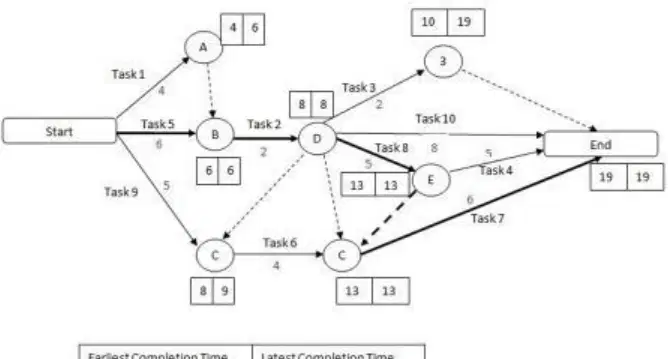
What is shown in the image?
Design brief
Scatter graph
Detailing sheet
Critical path analysis.

