
 Worksheets
ACADEC 2025 Social Science Test 1
Total questions: 100
Worksheet time: 2hrs 28mins

Which phrase meant only a few people in the US had wealth or money?
Stealing/theft
Demobilization
Uneven distribution of wealth
Paying up front


The immigration laws of the 1920s
prevented illegal immigration
encouraged immigration of skilled workers
reduced the number of immigrants from certain contries
allowed immigrants to enter if they were wealthy
The Red Scare was mainly a result of
the communist revolution in Russia
the prohibition act
the women's suffrage movement
the Harlem Renaissance
Someone who is against all government would believe in
communism
anarchy
open immigration laws
prohibition
The rise of the KKK and the National Origins Act of the 1920s showed that Americans
welcomed all immigrants
supported the temperance movement
feared foreigners and communist ideas
wanted to pass the women's suffrage laws
Goods such as the radio, refrigerator and other appliances caused
economic growth in the 1920s
the stock market to crash
prohibition to be repealed
gangsters to rise to power
A flapper could be described as
a women that supported prohibition
the people involved in the Harlem Renaissance
members of the KKK
women that challenged traditional roles and ideas
Women gained the right to vote with the _____ amendment
15th
18th
19th
21st
Which of the following was a result of the auto industry growing?
growth of suburbs
rubber and glass was in high demand
the railroad industry lost profits
all of the above
Which part of the Harlem Renaissance best reflects the image of the Roaring Twenties?
demands for equal rights
passage of the 18th and 19th amendments
expression through jazz and dance
an increase in the number of immigrants coming in to the US


President Harding’s secretary of the interior, Albert B. Fall, secretly allowed private interests to lease lands containing U.S. Navy oil reserves, causing a scandal that came to be known as the
Daugherty scandal.
Fall scandal.
Forbes scandal.
Teapot Dome scandal.
The Ohio Gang was a
group of Harding’s friends.
group of notorious bank robbers.
nickname for the Veterans Bureau.
powerful crime network.
With which statement would President Calvin Coolidge most likely agree?
Big business should be heavily monitored by the Supreme Court.
States bear the greatest responsibility in regulating large corporations.
The federal government should interfere with business as little as possible.
Corporations should shoulder the majority of the country’s tax burden.

To encourage Americans to "buy now" and "pay later" when purchasing products in their stores they encouraged
Credit
Margin Buying
Muckraking
Imperialism
Made consumers feel confident that they could make big purchases because they could buy now and pay later
Laissez-Faire economics
Welfare Capitalism
Installments
Supply Side Economics


The large number of immigrants entering the United States from southern Europe during the 1920s.
The mass movement of Black people from the South to cities in the industrialized North during the early 20th century.
The name given to the annual movement of wild horses across indigenous reservations in the upper Rocky Mountain states.
The yearly run of salmon up the Columbia River which provided a much-needed source of food for new settlers to Oregon and Washington.

The outlawing of the manufacture, transportation, and sale of alcohol in the U.S. between 1920 and 1933.
The law limiting the types of jobs Black people could take in the 1920s.
The political movement in the 1920s that worked to prohibit women from voting.
The law prohibiting U.S. presidents from serving more than two terms in office.


They rejected traditional 1920s ideas of what was acceptable behavior for women.
They smoked cigarettes, went out dancing at night clubs, drank alcohol, and wore "short" skirts.
They "bobbed" their hair (cut it short) and listened to jazz music.
They worked outside the home at different jobs not previously available to their mothers and grandmothers.
All of the these are correct.

a women's basketball team.
a population increase in Harlem in the 1920s.
a program to promote Latino culture
a celebration of African-American culture in literature and art.

politician.
composer.
inventor.
pilot.


Dust bowl
Support of communism
Poverty
Red Scare


The respiratory disease tuberculosis, also known as "consumption," spread rapidly throughout the country.
Americans were encouraged to buy and use more mass-produced goods. This included new appliances, inventions, and cars.
Wealthier Americans migrated out of urban areas into newly-developed suburban areas.
High poverty meant Americans had to consume all they could

Black history.
Women's history.
Evolution.
Nativism

Music.
Novels and short stories.
Black American shared experience and culture.
The Liberian independence movement.

American overreaction to the threat of communism.
The measles pandemic of 1925 - 1926.
The extreme lack of blood donations following World War I.
A beef shortage in 1923 caused by the "red" cattle disease in the West.

Prohibition
Women's suffrage
Immigration quotas
The Red Scare

Gave Black men the right to vote.
Gave women the right to vote.
Made the two-party system the primary political system in the United States, which pushed Populist Party members to join the Democratic party.
stopped the selling and producing of alchohol

Rock n' Roll
Jazz
Swing
The Blues

The establishment of the Centers for Disease Control & Prevention (CDC).
The murder trial of Sacco and Vanzetti.
The Scopes Trial
Prohibition


Lillian Gish
Babe Ruth
Orville Wright
Little Orphan Annie

Who were the sharecroppers in American history?
Native Americans who cultivated crops on reservations
European immigrants who worked on plantations in exchange for food and shelter
African American farmers who rented land and paid with a share of their crops
Mexican laborers who worked on farms in the Southwest

Which laws enforced racial segregation in the Southern United States?
Emancipation Proclamation
Brown v. Board of Education
Civil Rights Act of 1964
Jim Crow Laws

Who founded the Tuskegee Institute in Alabama?
Marcus Garvey
W.E.B. DuBois
Frederick Douglas
Booker T. Washington

Which organization was founded to fight for the civil rights of African Americans?
Women's Suffrage Movement
NAACP
League of Nations
United Negro Improvement Association
Who started the "Back to Africa" movement to free Africans from their colonial oppressors?
Madam C.J. Walker
W.E.B. DuBois

The Great Migration was
A way to get people to mobilize and move heavy equipment to the ocean ports
Moving supplies to the docks and loading ships to Europe
A technique to avoid German U-Boats in the Atlantic Ocean
African Americans left the south to settle in the North to fill the job voids
What happened to the Treaty of Versailles when Wilson went back to America?
The treaty was ratified
The treaty was rejected
Wilson was reelected but the treaty was rejected
America committed to be involved in European problems

writers who were against the materialism of the 1920s were called
Bootleggers
The Lost Generation
Fundamentalists
Conservatives
What did the 18th Amendment accomplish?
It granted all men the right to vote
It granted all women the right to vote
It banned the sale and consumption of alcohol (prohibition)
It provided equal rights for women of all races


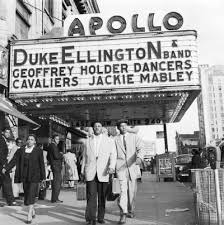

The Harlem Renaissance
Occurred in Harlem, New York
Took place in the 1920s
Was a period of intellectual, artistic, and social explosion
All of the answers are correct
What technological advancement contributed most to the growth of towns and cities in the 1920s & 1930s?
electric lights
automobile
radio
telephone
Which action was evidence that the prosperity of the roaring 20s was an illusion?
the buying and selling of stocks
the overproduction of consumer goods
the sharp increase in the birth rate
the widespread use of buying on credit

What did the artists of the Lost Generation have in common?
they were all writers
they were disillusioned with society after WWI
they had suffered severely from the Wall Street Crash
they took so many drugs that they were deeply dependent
Which president promised a "return to normalcy"?
Taft
Hoover
Harding
Coolidge
The biggest scandal during Harding's administration was the....
Whiskey Ring Scandal
Teapot Dome Scandal
Watergate Scandal
Iran-Congra Scandal
Calvin Coolidge said the "Business of America is _______________."
Business
War
Reform
Taxing
Coolidge first became president by....
being Vice President when Warren Harding died
winning all the votes in the electoral college
winning the electoral college by only one vote
by a 2/3 vote in the House of Representatives

(2018)How did the process shown in this photograph enhance the automobile industry?
By speeding up production of automobiles at lower costs
By requiring only licensed workers to produce the automobiles
By ensuring high-quality automobiles for consumers at higher prices
By developing new designs to test automobile safety standards
Which of the following was a pull factor that drew African Americans north during the Great Migration?
the sale of inexpensive land by the federal government
the construction of low-cost government housing in growing cities
the absence of segregation and racial discrimination outside the South
the availability of good jobs in the North and the West
This time period in US History consisted of economic growth and prosperity, rise of the automobile, and the beginning of the Harlem Renaissance.
1901-1914
1946-1960
1920-1929
1961-1973
The timeline below shows changes in U.S. tariff policy between 1920 and 1930:
May 1921— Emergency Tariff increases import taxes on agricultural products
September 1922— Fordney-McCumber Tariff raises tariffs on farm and manufactured goods
June 1930— Smoot-Hawley Tariff increases tariff levels to record high level.
What conclusion can be drawn from this timeline?
The American economy was almost entirely self-sufficient throughout the 1920s.
During the 1920s, the United States shifted from an export-based economy to an import-based economy.
Crop prices and corporate profits increased steadily during the 1920s as a result of government policy
During the 1920s, Congress supported domestic producers with a protective trade policy.
Passage of which of these represented a shift from the foreign policy that dominated American politics between the two world wars?
the Wagner Act
the Espionage Act
the Lend-Lease Act
the Taft-Hartley Act
With the creation of the ____________________ in 1926, Americans across the nation could now listen to the same programs, sporting events, and news broadcasts simultaneously.
Columbia Broadcasting System
Turner Sports
Northern Broadcasting System
National Broadcasting Company
The _____________________ led to a flourishing of black art, literature, and music between the years of 1924-1929 within New York City
Harlem Globetrotters
Jazz Age
Harlem Shake
Harlem Renaissance

