
 Worksheets
Lesson 1: Nature of Communication
Total questions: 100
Worksheet time: 50mins
The brief history of communication includes which of the following developments?
Development from cave paintings to digital communication
Only the invention of the telephone
Only the use of written letters
Only the creation of the internet
At the end of the lesson, the learners will be able to: Define communication.
Communication is the process of exchanging information between individuals.
Communication is the study of numbers and their operations.
Communication is the art of painting and sculpture.
Communication is the process of cooking food.
At the end of the lesson, the learners will be able to: Explain the nature and process of communication.
Explain the nature and process of communication.
List the types of communication barriers.
Describe the history of communication devices.
Identify famous communicators in history.
At the end of the lesson, the learners will be able to: Differentiate the various models of communication.
Differentiate the various models of communication.
List the advantages of communication.
Describe the history of communication.
Explain the barriers to communication.
At the end of the lesson, the learners will be able to: Distinguish the unique features of one communication model from others.
Distinguish the unique features of one communication model from others.
List all communication models without comparison.
Memorize the names of communication models only.
Describe communication without identifying unique features.
According to the passage, we can trace the history of communication way back to which era?
Modern era
Prehistoric era
Medieval era
Industrial era
Early human beings used ________, such as cave drawings or paintings, and boulder art, to relay messages.
symbols
numbers
letters
tools
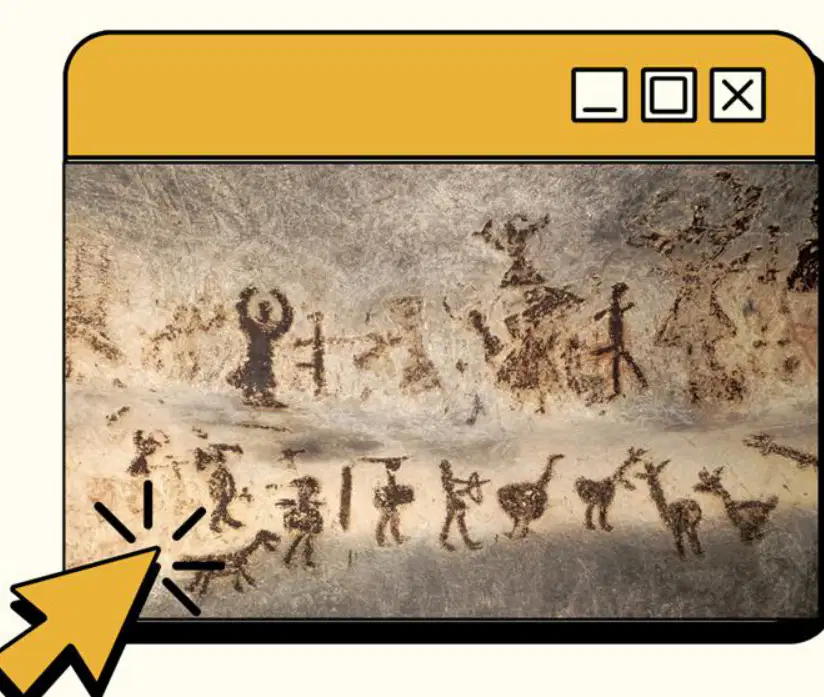
What did early human beings use cave drawings or paintings and boulder art for, according to the passage?
To relay messages.
To decorate their homes.
To keep track of time.
To cook food.
What is the origin of the word 'communication'?
Greek word 'logos'
Latin word 'communicare'
French word 'parler'
German word 'sprechen'
Communication means to "____" or "to make common".
to share
to hide
to separate
to ignore
What is communication?
The process of eating food
The exchange of ideas from one person to another using verbal, non-verbal, or written symbols
The act of running
The process of making art
According to the passage, communication ________ people and shapes how they interact, influence, express themselves, build relationships, and solve problems within society.
connects
divides
isolates
separates
What does communication help people do within society?
Build relationships and solve problems
Only express themselves
Only influence others
None of the above
Fill in the blank: The ______ conceptualizes an idea and is the source of information in the elements of communication.
Sender
Receiver
Channel
Feedback
Fill in the blank: The ______ is the information, idea, or thoughts conveyed by the speaker in the elements of communication.
Message
Channel
Receiver
Feedback
Fill in the blank: The ______ is the medium or method used to transmit a message in the elements of communication.
Channel
Noise
Feedback
Receiver
Fill in the blank: The ______ is the recipient of the message and decodes the message in the elements of communication.
Receiver
Sender
Channel
Feedback
Fill in the blank: ______ is the response provided by the receiver in the elements of communication.
Feedback
Message
Channel
Sender
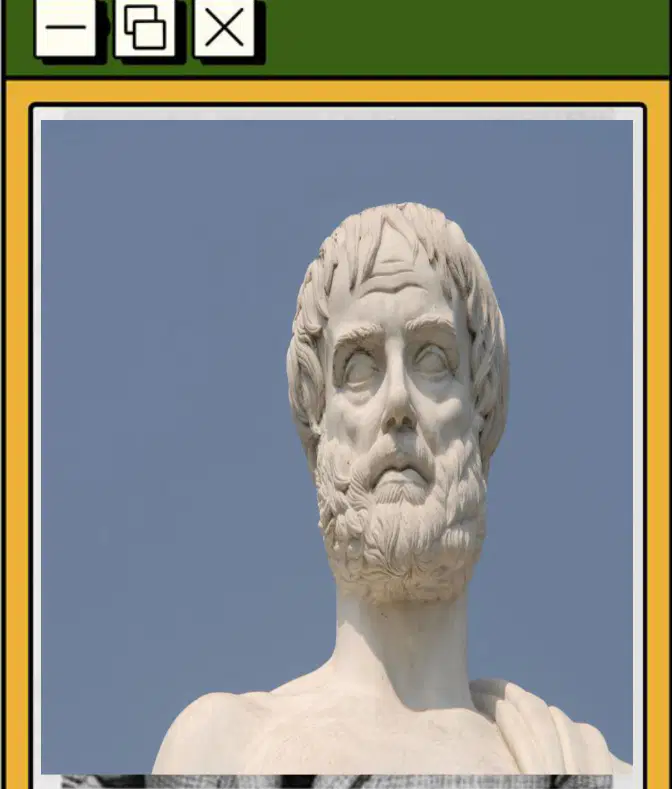
Who proposed the earliest mass communication model called 'Aristotle’s Model of Communication'?
Socrates
Plato
Aristotle
Pythagoras
Fill in the blank: Aristotle’s Model of Communication was proposed before ______ B.C.
300
100
500
700
According to the passage, Aristotle’s Model of Communication is more focused on public speaking than interpersonal communication.
True
False
According to Aristotle’s Model of Communication, which of the following is NOT one of the five primary elements?
Speaker
Speech
Channel
Effect
Fill in the blank: Aristotle’s Model is mainly focused on the _______ and speech.
speaker
listener
message
channel
Match the elements of Aristotle’s Model of Communication with their correct order:
First
1
Second
2
Third
3
Fourth
4
Fifth
5
Based on the diagram, what comes immediately after 'Speech' in Aristotle’s Model of Communication?
Audience
Speaker
Message
Feedback
Who was the speaker in the example: Alexander gave a brave speech to his soldiers in the battlefield to defeat the Persian Empire? Speaker: ________
Alexander
Darius
Caesar
Napoleon
What was the speech about in the example: Alexander gave a brave speech to his soldiers in the battlefield to defeat the Persian Empire?
about his invasion
about peace negotiations
about surrendering to the enemy
about celebrating a festival
about building a new city
What was the occasion in the example: Alexander gave a brave speech to his soldiers in the battlefield to defeat the Persian Empire?
War field
Coronation ceremony
Religious festival
Victory parade
Peace treaty signing
Who was the audience in the example: Alexander gave a brave speech to his soldiers in the battlefield to defeat the Persian Empire?
Soldiers
Persian Empire
Civilians
Generals
What was the effect in the example: Alexander gave a brave speech to his soldiers in the battlefield to defeat the Persian Empire?
To defeat Persia
To make peace with Persia
To retreat from the battlefield
To surrender to the enemy
Who was Harold Dwight Lasswell?
A) A political scientist and communication theorist
B) A mathematician
C) A biologist
D) An artist
According to Lasswell's Model, what is the first fundamental question in the communication process?
Who?
Says What?
In Which Channel?
To Whom?
According to Lasswell's Model, what is the second fundamental question in the communication process?
Who?
Says What?
In Which Channel?
With What Effect?
According to Lasswell's Model, what is the third fundamental question in the communication process?
To Whom?
With What Effect?
In Which Channel?
Who?
According to Lasswell's Model, what is the fourth fundamental question in the communication process?
A) To Whom?
B) With What Effect?
C) Who?
D) Says What?
According to Lasswell's Model, what is the fifth fundamental question in the communication process?
Who?
With What Effect?
In Which Channel?
Says What?
List the five key questions of Lasswell's Model.
Who? Says what? In which channel? To whom? With what effect?
What? When? Where? Why? How?
Who? What? When? Where? Why?
Sender? Message? Medium? Receiver? Feedback?
Lasswell's Model is very ______ and ______. (Fill in the blanks)
linear, general
complex, specific
dynamic, detailed
circular, ambiguous
What does Lasswell's Model focus on?
It focuses on the effect of the message sent, and not on engaging the sender and receiver in a conversation.
It focuses on the feedback loop between sender and receiver.
It emphasizes the importance of non-verbal communication.
It is primarily concerned with the technological medium used.
Who is the political candidate running for mayoral position?
Dino
Carlos
Maria
Elena
What did Dino talk about in his campaign?
his platforms
his favorite foods
his vacation plans
his pets
In which channel did Dino deliver his message?
a speech
a letter
an email
a phone call
To whom did Dino deliver his speech?
the audience (his constituents)
his family
the school principal
the mayor
What was the effect after the election period?
Dino was elected mayor
Dino moved to another city
Dino became a teacher
Dino lost the election
Using Lasswell’s model, analyze the situation below. A tech company creates a new smartphone advertisement, highlighting the features and benefits of the product. The advertisement is aired on national television, targeting young professionals. The goal of the advertisement is to generate interest and excitement about the new smartphone, leading to increased sales. According to Lasswell’s model, who is the communicator (Who)?
A tech company
Young professionals
National television
The smartphone
According to Lasswell’s model, what is the message (Says What)?
The features and benefits of the new smartphone
The person delivering the advertisement
The target audience for the smartphone
The channel used to broadcast the advertisement
According to Lasswell’s model, what is the channel (In Which Channel)?
National television
The sender
The message
The audience
Using Lasswell’s model, analyze the situation below. A tech company creates a new smartphone advertisement, highlighting the features and benefits of the product. The advertisement is aired on national television, targeting young professionals. The goal of the advertisement is to generate interest and excitement about the new smartphone, leading to increased sales. According to Lasswell’s model, who is the audience (To Whom)?
Young professionals
Tech company employees
Senior citizens
Children
According to Lasswell’s model, what is the effect (With What Effect)?
Generate interest and excitement about the new smartphone, leading to increased sales
Describe the features of the new smartphone in detail
Identify the target audience for the new smartphone
Select the appropriate media channels for advertising the smartphone
Who was Claude Elwood Shannon?
An American mathematician, electrical engineer, and the founder of information theory
An American scientist and mathematician who collaborated with Shannon
The inventor of the telephone
A famous physicist
Who collaborated with Shannon to popularize and extend the implications of Shannon's theories?
Albert Einstein
Warren Weaver
Nikola Tesla
Isaac Newton
The Shannon–Weaver model is known as the “________ of all communication models.”
mother
father
child
origin
According to Shannon & Weaver's Model, what is the role of the 'Noise Source' in the communication process?
It transmits the message
It receives the message
It introduces interference or distraction
It is the final destination
In Shannon & Weaver's Model, which component is responsible for sending the message to the receiver?
Information Source
Transmitter
Noise Source
Destination
Fill in the blank: In Shannon & Weaver's Model, '______' refers to any interference during the process, resulting in the distortion of the message or distraction of either the sender or receiver.
noise
feedback
channel
context
Match the following components of Shannon & Weaver's Model with their correct roles: Match the correct pairs.
Information Source
Originates the message
Transmitter
Sends the message
Receiver
Receives the message
Destination
Final target of the message
In Shannon & Weaver's Model, 'noise' can cause distortion of the message or distraction of either the sender or receiver.
True
False
Fill in the blank: ________ is the one who decides the message.
Source
Receiver
Channel
Noise
Fill in the blank: ________ is the communication sent.
Message
Receiver
Channel
Feedback
Fill in the blank: ________ is the encoder that converts messages to signals transmitted to cables.
Transmitter
Receiver
Modulator
Amplifier
Fill in the blank: ________ is the electrical impulse or radio wave.
Signal
Battery
Resistor
Switch
Fill in the blank: ________ are external distractions.
Noise
Thoughts
Memories
Feelings
Fill in the blank: ________ are the decoded signals which should be comprehensible for the receiver.
Received Signal
Transmitted Signal
Encoded Message
Noise
Fill in the blank: ________ is the receiver of the message.
Destination
Source
Channel
Noise
Match the following terms with their correct definitions:
Source
The one who decides the message
Message
Communication sent
Transmitter
The encoder that converts messages to signals transmitted to cables
Signal
Electrical impulse or radio wave
Noise
External distractions
Using Shannon & Weaver’s model, what most likely caused the secretary to bring the wrong document after Genina called her from a noisy fashion show event?
Noise interfered with the message, causing miscommunication.
The secretary intentionally brought the wrong document.
Genina did not actually call the secretary.
The boss gave unclear instructions to Genina.
Who is widely regarded as the founder of the field of Communication Studies?
Wilbur Schramm
Claude Shannon
Harold Lasswell
Paul Lazarsfeld
According to Schramm’s Model, communication is a ________ process where the receiver becomes the sender-encoder, and the sender becomes receiver-decoder.
continuous
linear
static
one-way
Wilbur Schramm lived from 1907 to _____?
1987
1975
1992
1969
What is the main feature of Schramm’s 1954 model of communication?
It is a linear process
It is a circular, interactive process
Only one participant acts as sender
It is a written process
In Schramm’s 1954 model, both participants act as ________ and receiver.
sender
listener
observer
moderator
According to Schramm’s 1954 model, what roles do the participants take on during communication?
Both participants act as sender and receiver, and each functions as encoder, interpreter, and decoder.
One participant is always the sender, and the other is always the receiver.
Participants only act as decoders in the communication process.
Only one participant encodes, while the other only decodes.
Schramm’s 1954 model is sometimes called the Osgood–Schramm model.
True
False
According to Schramm's 1970 model, what are the main components involved in the communication process?
Source, Encoder, Signal, Message, Decoder, Destination
Sender, Receiver, Channel, Feedback
Speaker, Listener, Noise, Feedback
Encoder, Decoder, Feedback, Channel
In Schramm's 1970 model, what is the term used to describe the shared experiences between communicators?
Field of Experience
Feedback Loop
Message Channel
Noise Barrier
Schramm's 1970 model explicitly includes barriers like noise and interference in the communication process.
True
False
In Schramm's 1970 model, which elements are affected by noise and interference?
Only the source
Only the destination
The entire communication process
Only the encoder and decoder
Read the following passage and answer the question: Dr. Lee explains the treatment plan to Mr. Han using medical terms. While Dr. Lee has a deep understanding of medical terminology, Mr. Han might have limited knowledge of medical jargons which could affect his understanding of the message. To clarify, Mr. Han asks Dr. Lee to explain the treatment in simpler terms. Realizing the difference in their fields of experience, Dr. Lee explains the treatment in everyday terms, making it easier for Mr. Han to understand.
Mr. Han wanted to test Dr. Lee
Mr. Han did not understand the medical terms
Dr. Lee was speaking too quickly
Mr. Han was not interested in the treatment
Who had a deep understanding of medical terminology?
Dr. Lee
Mr. Smith
Ms. Johnson
Dr. Patel
Dr. Lee helped Mr. Han understand the treatment plan better by:
explaining the plan in simple terms
prescribing more medication
referring him to another doctor
avoiding questions about the plan
Who developed the SMCR (Source-Message-Channel-Receiver) model of communication in 1960?
David Berlo
Claude Shannon
Wilbur Schramm
Harold Lasswell
What does SMCR stand for in Berlo's model of communication?
Source-Message-Channel-Receiver
Sender-Message-Communication-Receiver
Source-Model-Channel-Response
Sender-Model-Channel-Receiver
In Berlo's model, both the source and the receiver should comprehend ________ to effectively analyze the communication process.
human behavior
mathematical formulas
chemical reactions
historical dates
According to Berlo's SMCR Model, what are the four main components of the communication process?
Source, Message, Channel, Receiver
Sender, Medium, Feedback, Listener
Speaker, Content, Method, Audience
Origin, Information, Pathway, Destination
Which of the following is NOT a subcomponent of the 'Source' in Berlo's SMCR Model?
A) Communication Skills
B) Attitudes
C) Content
D) Culture
Match the following components of Berlo's SMCR Model with their correct subcomponents:
Communication Skills
1
Content
2
Hearing
3
Attitudes
4
In Berlo's SMCR Model, which component is responsible for encoding the message?
Source
Message
Channel
Receiver
In Berlo's SMCR Model, the 'Channel' includes seeing, touching, and tasting as subcomponents.
True
False
Fill in the blank: Berlo’s SMCR model points out the importance of the relationship between the encoder (______) and the decoder (______.)
sender, receiver
receiver, sender
message, channel
channel, message
What does 'Attitudes' refer to in the context of communication skills?
The total way of life of a group or nation
Familiarity or level of authority or credibility a person has on the topic
The sender’s approach towards the receiver, topic, and oneself; the receiver’s stance towards the sender, topic, and oneself
How a person sees and understands the different aspects of the society: beliefs, culture, religion, values
Fill in the blank: In communication skills, 'Knowledge' refers to _________
Familiarity or level of authority or credibility a person has on the topic
The ability to persuade others effectively
The use of non-verbal cues in conversation
The speed at which information is delivered
How does the 'Social System' influence communication skills?
It influences how a person sees and understands the different aspects of the society: beliefs, culture, religion, values.
It determines the speed at which a person can speak.
It only affects written communication, not verbal communication.
It ensures everyone communicates in the same language.
Fill in the blank: In communication, 'Culture' is defined as _________.
The total way of life of a group or nation
A method of sending messages
A type of language used in business
A form of non-verbal communication
Fill in the blank: The ______ refers to the entirety of a message from the beginning to end.
Content
Header
Footer
Subject
Fill in the blank: ______ are verbal and non-verbal.
Elements
Numbers
Colors
Animals
Fill in the blank: ______ refers to how the message was delivered or relayed.
Treatment
Content
Source
Feedback
Fill in the blank: ______ refers to how effectively the framework of the message was organized.
Structure
Tone
Audience
Purpose
Fill in the blank: ______ refers to the form in which the message was sent (e.g., language, body movement, gestures).
Code
Channel
Feedback
Context
What is the channel described as 'Hearing capacity using the faculty of the ears'?
Hearing
Sight
Touch
Taste
What is the channel described as 'Seeing capacity using the faculty of the eyes'?
Seeing
Hearing
Tasting
Touching

