
 Worksheets
Ancient Egyptians
Total questions: 85
Worksheet time: 1hrs 25mins
When did the ancient Egyptians live?
2000 BC to 1000 BC
3100 BC to 332 BC
500 AD to 1000 AD
1000 BC to 500 BC
What river did the ancient Egyptians live along?
Amazon
Nile
Yangtze
Mississippi
Select two types of jobs that ancient Egyptians had.
Farmer and scribe
Engineer and astronaut
Pilot and chef
Scientist and actor
Farming was important to the Egyptians because the yearly flooding of the Nile made the soil ______ for crops.
fertile
dry
rocky
salty
What process did the ancient Egyptians use to preserve bodies for the afterlife?
Mummification
Cremation
Embalming with ice
Genetic cloning
The more important the person, the bigger their tomb in ancient Egypt.
True
False
Hieroglyphics were used for which purpose in ancient Egyptian tombs?
To record religious texts and prayers
To decorate the tombs with colorful patterns
To store food for the afterlife
To build the tomb walls
What is the process of preserving the body after death by drying or treating flesh called?
mummification
fermentation
calcification
photosynthesis
respiration
What was the formal writing system used in ancient Egypt called?
hieroglyphics
cuneiform
latin
sanskrit
Tutankhamun is also referred to as ________.
King Tut
Pharaoh Ramses
Cleopatra
Akhenaten
Each god represented an aspect of the Egyptian world. For example, Ra was the god of the sun and Anuket was the god of the ________.
river Nile
desert
moon
mountains
Who were the rulers of ancient Egypt who were seen as a bridge between the gods and the Egyptians?
Pharaohs
Priests
Warriors
Merchants
How many gods were there in ancient Egypt?
Less than 100
About 500
More than 2000
10,000
How many years ago did the ancient Egyptians live? Tick one.
3100 years ago
5000 years ago
332 years ago
3000 years ago
What jobs were done by the ancient Egyptians? Tick two.
farmers
drivers
merchants
school teachers
Draw four lines to finish each sentence.
an afterlife
an afterlife
the bigger the tomb
the bigger the tomb
the Pyramids
the Pyramids
bodies after death
bodies after death
Find and copy one word which means ‘the process of preserving the body after death by drying or treating flesh’.
mummification
fertilization
germination
photosynthesis
Anuket was the god of what? Tick one.
Egyptian people
the sun
the river Nile
afterlife
Hieroglyphics are:
a system of writing using symbols or pictures
a type of ancient weapon
a form of ancient currency
a style of ancient architecture
The discovery of Tutankhamun’s tomb was important because:
It provided valuable insights into ancient Egyptian civilization.
It revealed the location of the lost city of Atlantis.
It proved that Tutankhamun was the last pharaoh of Egypt.
It showed that the pyramids were built by aliens.
How many years ago did the ancient Egyptians live? Tick one.
3100 years ago
5000 years ago
332 years ago
3000 years ago
What jobs were done by the ancient Egyptians? Tick two.
farmers
drivers
merchants
school teachers
Draw four lines to finish each sentence.
bodies after death
Ancient Egyptians believed in...
the bigger the tomb
The more important the person,...
the Pyramids
These tombs are what we now call...
an afterlife
This meant that great care was taken with...
Find and copy one word which means 'the process of preserving the body after death by drying or treating flesh'.
mummification
fertilization
germination
photosynthesis
Anuket was the god of what? Tick one.
Egyptian people
the sun
the river Nile
afterlife
What are hieroglyphics?
Hieroglyphics is the name of the writing system used by ancient Egyptians.
Hieroglyphics is a type of ancient Egyptian jewelry.
Hieroglyphics is a traditional Egyptian dance.
Hieroglyphics is a famous Egyptian monument.
The discovery of Tutankhamun’s tomb was important because:
it provided valuable insights into ancient Egyptian civilization.
it was the first tomb ever discovered in Egypt.
it proved that Tutankhamun was the last pharaoh of Egypt.
it contained the Rosetta Stone.
When did the ancient Egyptians live?
2000 BC to 1000 BC
3100 BC to 332 BC
500 AD to 1000 AD
1000 BC to 500 BC
Where did the ancient Egyptians live?
Along the river Nile in Kemet (now Egypt)
Along the Amazon River
In the mountains of Greece
In the deserts of Arabia
Name two types of jobs that ancient Egyptians did.
scribes, bakers, priests, doctors, craftsmen, merchants, farmers, etc.
astronauts, computer programmers, pilots, race car drivers
movie directors, basketball players, DJs, video game designers
fashion models, airline attendants, astronauts, software engineers
Why was farming important to the ancient Egyptians?
Farming was important because it allowed them to grow lots of different grains and crops, and the yearly flooding of the Nile made the soil fertile for crops.
Farming was important because it helped them build large pyramids.
Farming was important because it allowed them to travel across the desert easily.
Farming was important because it made their cities closer to the sea.
What process did the ancient Egyptians use to preserve bodies for the afterlife?
Cremation
Mummification
Freezing
Embalming
What are hieroglyphics?
A) A type of food
B) Ancient Egyptian writing used to tell the life story of the person who died and guide them to the afterlife
C) A kind of pyramid
D) A farming tool
What is the meaning of the term 'innovative'?
Advanced and original ideas or methods.
Something that is old and outdated.
A process that never changes.
A term used for traditional practices.
What is the process of preserving the body after death by drying or treating flesh called?
mummification
embalming
cremation
decomposition
What is the formal writing system used in ancient Egypt called?
hieroglyphics
cuneiform
alphabet
calligraphy
What is a stone coffin, decorated with inscriptions and sculptures, called?
sarcophagus
obelisk
mausoleum
catacomb
The ancient Egyptians lived...? Tick one.
from 5000 BC to 3100 BC
from 332 BC to 5000 BC
from 5000 BC
from 3100 BC to 332 BC
The ancient Egyptians grew which of the following by the river Nile?
Wheat
Potatoes
Tomatoes
Apples
Why did the ancient Egyptians live by the Nile?
helped to fertilise the soil
to learn how to swim
for drinking water
for washing and cleaning
What is mummification? Tick one.
when you become a parent
travelling to the afterlife
being buried in a tomb with your possessions
the process of preserving the body after death by drying or treating flesh
5. Fill in the missing words: Some of these tombs are what we now know as __________ _________________. The more important the person, the bigger their _____________.
pyramids, tombs
statues, monuments
temples, shrines
palaces, rooms
Why were hieroglyphics drawn around the tombs?
to make them look rich and beautiful
to guide the dead to the afterlife
to practise their artwork
to tell the life story of the dead
The discovery of Tutankhamun’s tomb was important because:
it provided valuable insights into ancient Egyptian civilization and burial practices.
it was the first tomb ever found in Egypt.
it proved that Tutankhamun was the last pharaoh of Egypt.
it contained no artifacts or treasures.
It was important for ancient Egyptians to live a good life because:
they believed it would ensure a good afterlife.
it would make them wealthy in this life.
it would help them become rulers.
it would allow them to avoid paying taxes.
The ancient Egyptians lived...? Tick one.
from 5000 BC to 3100 BC
from 332BC to 5000 BC
from 5000 BC
from 3100 BC to 332 BC
What did the ancient Egyptians grow by the river Nile?
The ancient Egyptians grew grains and crops by the river Nile.
The ancient Egyptians grew only fruits by the river Nile.
The ancient Egyptians grew only flowers by the river Nile.
The ancient Egyptians grew only trees by the river Nile.
Why did the ancient Egyptians live by the Nile? Tick three.
helped to fertilise the soil
to learn how to swim
for drinking water
for washing and cleaning
What is mummification? Tick one.
when you become a parent
travelling to the afterlife
being buried in a tomb with your possessions
the process of preserving the body after death by drying or treating flesh
Fill in the missing words: Some of these tombs are what we now know as the ________. The more important the person, the bigger their ________.
pyramids, tomb
sphinx, statue
temples, altar
obelisks, monument
Why were hieroglyphics drawn around the tombs? Tick two.
to make them look rich and beautiful
to guide the dead to the afterlife
to practise their artwork
to tell the life story of the dead
The discovery of Tutankhamun’s tomb was important because:
it provided valuable insights into ancient Egyptian civilization.
it was the first tomb ever discovered in Egypt.
it proved that Tutankhamun was the last pharaoh of Egypt.
it contained the Rosetta Stone.
It was important for ancient Egyptians to live a good life because:
they believed it would ensure a favorable afterlife.
it would make them wealthy in this life.
it would help them become rulers.
it would allow them to avoid paying taxes.
When did the ancient Egyptians live?
1000 BC to 500 BC
3100 BC to 332 BC
2000 AD to 2020 AD
5000 BC to 4000 BC
What is the name of the longest river in the world that the ancient Egyptians lived along?
Amazon
Nile
Yangtze
Mississippi
What does the word 'innovative' mean?
Old and traditional
Advanced and original ideas or methods
Simple and easy
Difficult and confusing
Name two crops that ancient Egyptians grew on their farms.
wheat and barley
rice and corn
potatoes and tomatoes
apples and oranges
Why did the ancient Egyptians live by the Nile River?
For its beautiful scenery
Because the yearly flooding made the soil fertile for crops and provided water for drinking, washing, and cleaning
To avoid other people
Because it was the only place to build pyramids
What process did the ancient Egyptians use to preserve bodies for the afterlife?
mummification
embalming with spices only
cremation
freezing
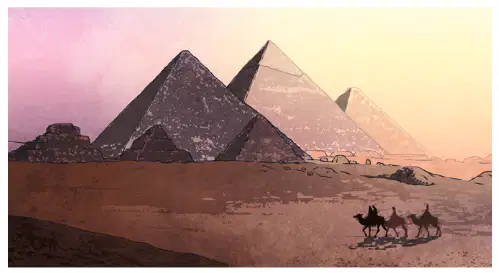
The image of the pyramids shows that the ancient Egyptians believed in the afterlife and the need for possessions because:
They thought possessions were needed in the afterlife.
They believed pyramids were only for decoration.
They did not believe in any afterlife.
They built pyramids to store food for the living.
What is mummification? Fill in the blank: Mummification is the process of preserving the body after death by ______ or treating flesh.
drying
painting
freezing
boiling
What were early Egyptian rulers first called before the term 'pharaoh' began to be used more?
kings
emperors
sultans
governors
Pharaohs were rulers who were seen as religious leaders and the bridge between the gods and the Egyptians.
True
False
Who was one of the most famous ancient Egyptian pharaohs whose tomb was discovered in 1922?
Tutankhamun (King Tut)
Ramses II
Cleopatra VII
Akhenaten
What is a sarcophagus? Fill in the blank: A sarcophagus is a stone ______, decorated with inscriptions and sculptures.
coffin
statue
temple
vase
How many gods were there in ancient Egypt?
More than 2000
Less than 100
Exactly 12
About 50
Which god was the god of the sun in ancient Egypt?
Ra
Osiris
Anubis
Horus
Which god was the god of the river Nile in ancient Egypt?
Anuket
Osiris
Ra
Horus
The ancient Egyptians believed it was important to live a good and harmonious life because:
they wanted to ensure a favorable afterlife.
they wanted to become wealthy.
they wanted to rule the world.
they wanted to avoid hard work.
The ancient Egyptians lived...? Tick one.
from 5000 BC to 3100 BC
from 332 BC to 5000 BC
from 5000 BC
from 3100 BC to 332 BC
What were some of the jobs done by ancient Egyptians? Tick three.
merchants
farmers
school teachers
scribes
Find and copy one word which describes the advanced and original farming techniques used.
innovative
traditional
basic
outdated
The ancient Egyptians lived by the river Nile because:
it provided water and fertile land for farming.
it was the only place with gold mines.
it was far from other civilizations.
it was the coldest region in Egypt.
5. 'Mummification' refers to:
the process of preserving a body after death
the act of building pyramids
the worship of the sun god
the writing of hieroglyphics
The pharaohs were important in ancient Egypt because they were considered:
Gods and rulers who unified the country
Ordinary citizens with no special power
Foreign invaders with little influence
Traders who traveled to other lands
It was important to the ancient Egyptians to live a good and harmonious life because:
they believed it would ensure a favorable afterlife.
it would make them wealthy.
it would help them conquer other lands.
it would allow them to become gods.
The Egyptians were interesting people because of their unique culture and achievements.
Agree
Disagree
Not sure
No opinion
The ancient Egyptians lived...? Tick one.
from 5000 BC to 3100 BC
from 332 BC to 5000 BC
from 5000 BC
from 3100 BC to 332 BC
What were some of the jobs done by ancient Egyptians? Tick three.
merchants
farmers
school teachers
scribes
Find and copy one word which describes the advanced and original farming techniques used.
innovative
traditional
basic
ineffective
Why did the ancient Egyptians live by the river Nile?
The ancient Egyptians lived by the river Nile as the yearly flooding allowed them to grow grains and crops.
Because the river Nile was the only source of gold in Egypt.
Because the river Nile was the only place where they could build pyramids.
Because the river Nile was believed to have magical healing powers.
What is 'mummification'?
Mummification is the process of preserving the body after death by drying or treating flesh.
Mummification is a type of ancient writing system.
Mummification is a method of building pyramids.
Mummification is a festival celebrated in ancient Egypt.
The pharaohs were important in ancient Egypt because they were:
the rulers and considered gods on earth
farmers who grew crops
traders from other lands
builders of only small houses
It was important to the ancient Egyptians to live a good and harmonious life because:
they believed it would ensure a favorable afterlife.
it would make them wealthy in this life.
it would allow them to become gods.
it would help them conquer other lands.
The Egyptians were interesting people.
Yes, they were interesting people.
No, they were not interesting people.
They were boring people.
They were unknown people.

