
 Worksheets
Doppler (pt 1)
Total questions: 100
Worksheet time: 1hrs 28mins
Is a change in the observed or received frequency of a wave because of the motion of the source or observer or receiver
(a)
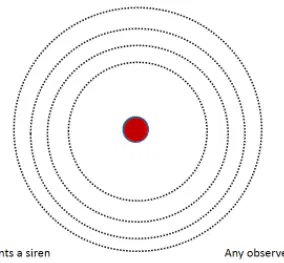
The red dot represents a (a) originating sound waves traveling in all directions equally
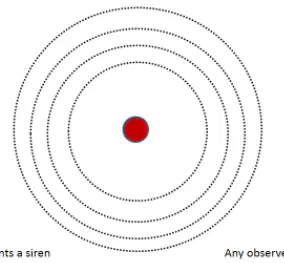
Since the source is not moving the frequency and wavelength are the (a) in all directions
Regarding the doppler effect, if the frequency is doubled then the wavelength is (a)
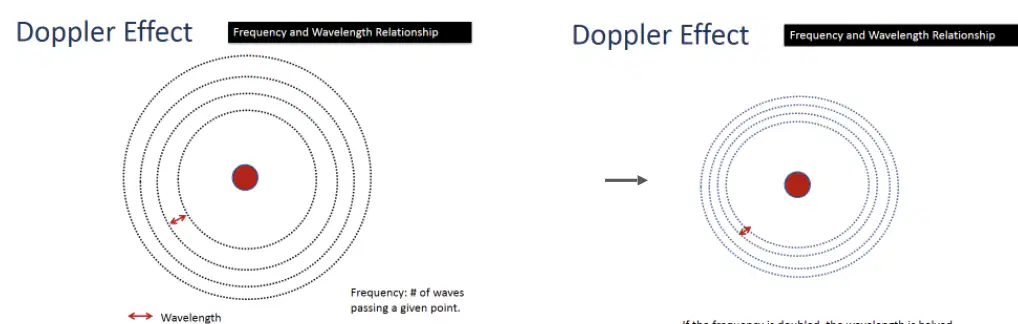
What happens to the frequency and wavelength in this image?
Frequency halves, wavelength doubles
Frequency doubles, wavelength doubles
Frequency doubles, wavelength halves
Frequency halves, wavelength halves
Regarding the doppler effect, high frequency = (a) pitch
Regarding the doppler effect, low frequency = (a) pitch
Short wavelength, high pitch = (a) frequency
Long wavelength, low pitch = (a) frequency
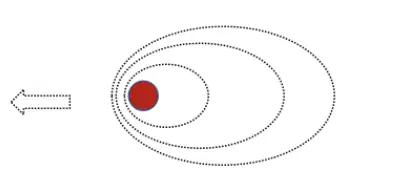
Wave forms get closer at the (a) of the moving source
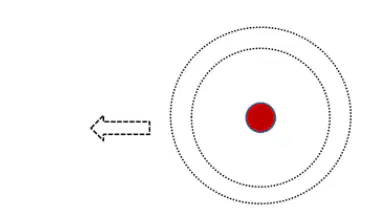
If the source starts to move the waveform gets (a)
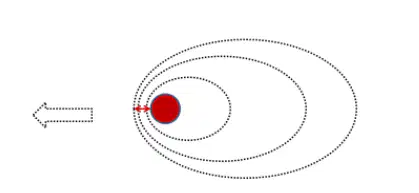
There is an increase in frequency and a shortening of the wavelength at the (a) of the moving source
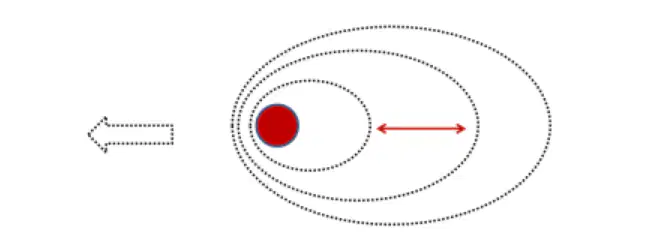
There is a decrease in frequency and a lengthening of the wavelength at the (a) of the moving source
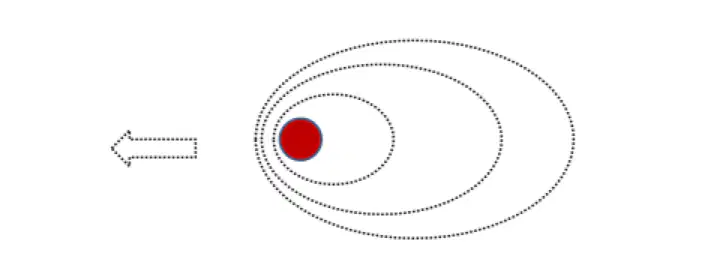
Source produces the same amount of sound waves. It is the (a) that produces the change in frequencies at the front and back of the moving source
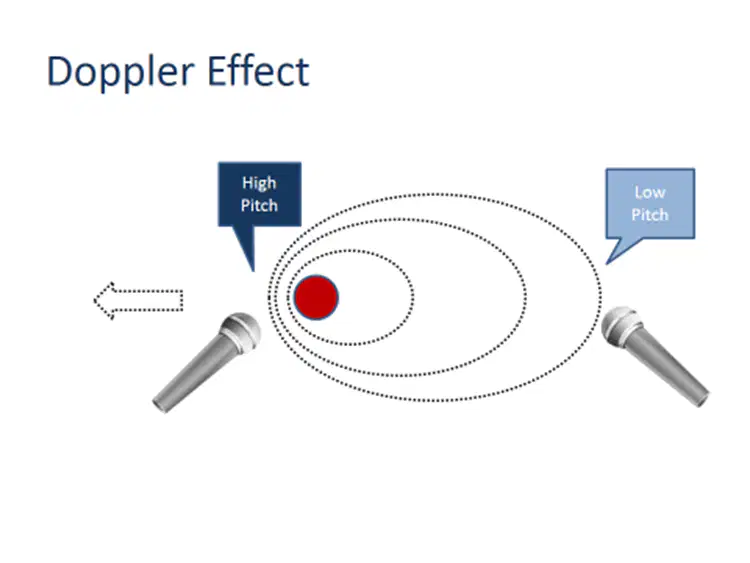
The (a) in ultrasound relates to the CHANGE IN FREQUENCY between the emitted and reflected sound
The change in frequency between emitted sound and reflected sound is caused by a change in (a) between the source and the reflector due to motion
The (a) is the moving structure and the transducer is the stationary listener
Is a change in the observed or received frequency of a wave because of the motion of the source or observer or receiver
(a)
Is the difference between the emitted frequency and the echo returning from moving scatterers
(a)
The change in frequency resulting from motion between transducer and a moving target in the body.
(a)
Greater velocities = (a) Doppler shifts
Which of the following is the correct units for doppler shift or frequency?
Centimeters
Poise
Hertz
MmHG
Which of the following is the typical range of values for doppler shift/frequency?
<20,000 Hz
>20,000 Hz
20 Hz
20Hz to 20KHz
Doppler shift/frequency: Towards the transducer --> (a) frequency
Doppler shift/frequency: Away from the transducer --> (a) frequency
Transducer frequency 2MHz to 10MHz
Doppler shift --> 20 Hz
Doppler shift --> 20 – 20,000 Hz
Doppler shift --> <20Hz
Doppler shift --> 20Hz to 30 Hz
The __ __ is a low frequency (10kHz) that ‘rides’ on top of the much higher ‘carrier’ transducer frequency (3MHz).
(a)
The process of extracting the Doppler frequency from the transducer frequency is called (a)
(a) = 2 x reflector speed x incident frequency x Cos angle propagation speed
Which of the following is the correct equation for doppler shift?
Doppler shift = 2 x reflector speed x incident frequency x Cos angle
propagation speed
Doppler shift = 2 x reflector speed x outward frequency x Cos angle
propagation speed
Doppler shift = 2 x reflector speed x incident frequency x Sin angle
propagation speed
Doppler shift = 3 x reflector speed x incident frequency x Cos angle
propagation speed
What does doppler measure?
Speed
Velocity
Magnitude
Strength
Speed = (a) only
Velocity = __ and __
(a)
Doppler frequency depends on (a)
The magnitude of shift depends upon the (a) of the angle between the sound beam and the direction of motion
Velocity (measured) = true velocity x cos (angle)
(a)
Cosine of 0 degrees =
1
0.5
0
Cosine of 60 degrees
1
0.5
0
Cosine of 90 degrees
1
0.5
0
Doppler Equation works whether the source is moving, the receiver is moving, or the reflector is moving.
True
False
The Doppler (fd)shift is equal to the received frequency(f2) (a) the source frequency (f1).
For an approaching reflector (scatterer) Doppler shift is positive when the received frequency is (a) than the source frequency
For an approaching reflector (scatterer), When is the doppler shift positive?
Doppler shift is positive when the received frequency is less than the source frequency
Doppler shift is positive when the received frequency is greater than the source frequency
For a receding reflector, Doppler shift is (a)
For a receding reflector, Doppler shift is negative. That is, the received frequency is (a) than the source frequency
In diagnostic Doppler ultrasound the (a) reflector is the situation of interest
Is the change in frequency caused by motion
(a)
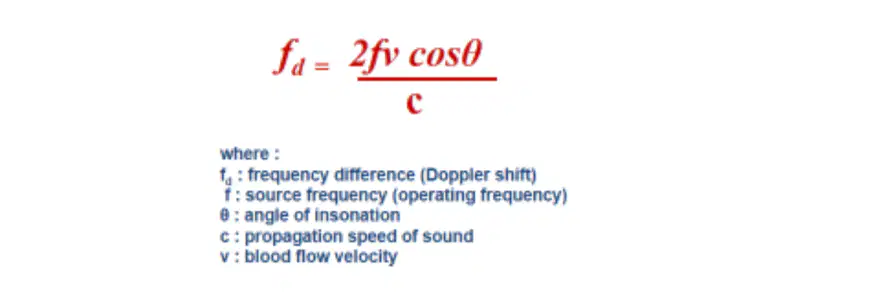
This image represents the
(a)
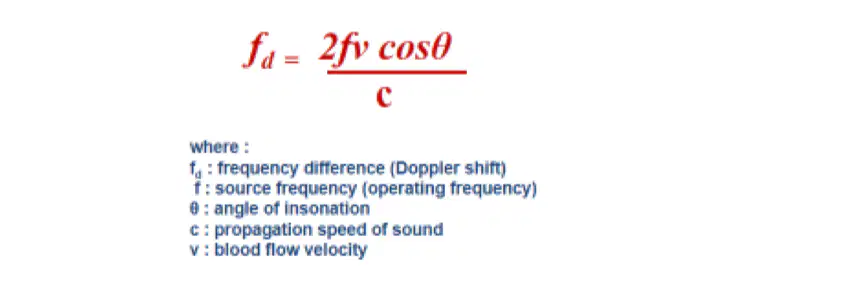
Based on this equation the doppler sift depends on the (a) frequency, the velocity of blood, and the angle of intonation
If scatterer speed increases, doppler shift (a)
If source frequency increases, doppler shift (a)
The difference between the emitted frequency and the echo frequency returning from moving scatterers
(a)
How many crystals are in pulse wave doppler?
1
2
4
3
What is the advantage of PWD as compared to Continuous Wave Doppler?
Echoes arise only from the area of interrogation, the sample
volume. (Range resolution, range specificity, or freedom from range ambiguity)
Echoes do not arise from the area of interrogation, the sample
volume. (Range resolution, range specificity, or freedom from range ambiguity)
Echoes arise only from the area of disinterest, the sample
volume. (Range resolution, range specificity, or freedom from range ambiguity)
What is the disadvantage for pulsed wave doppler?
(a)
Which of the following is NOT another name for pulsed wave doppler?
Continous wave doppler
Pulsed doppler
Spectral doppler
Duplex doppler
Positive bidirectional Doppler moves (a) the transducer
Negative bidirectional doppler moves (a) from the transducer
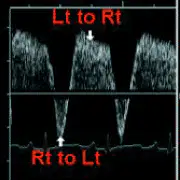
Bidirectional: TOWARD the transducer is __ the baseline
Above
Below
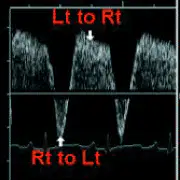
Bidirectional doppler: Away from the transducer is (a) the baseline
Quadrature direction or phase quadrature
(a)
How many crystals are present in continuous wave doppler?
1
2
3
4
In continuous wave doppler two crystals are present. What are they doing?
1 receiving, 1 transmitting
both transmitting
both receiving
1 frequency, 1 wavelength
What is the advantage as compared to PWD?
Range ambiguity
Allows measurement of very high velocities
Allows measurement of very low velocities
Echoes
Range ambiguity
Echoes detected come from entire length of overlap between transmit and receive beams.
It does not create an anatomical image.
(a)
Higher velocities appear negative (below the baseline)
(a)
It is also called the Nyquist frequency, which is the Doppler frequency at which aliasing occurs.
(a)
Which of the following is the correct equation for Nyquist limit?
PRP/2
wavelength/2
PRF/2
frequency/2
Change the Nyquist (change the scale).
(a)
Select a transducer with a lower frequency. This shrinks the spectrum
(a)
What is the most common error associated with doppler ultrasound?
low range
PRF
PRP
Aliasing
Select new view with a shallower sample volume. This raises the Nyquist
(a)
Using a shllaower sample volume, (a) the Nyquist
Use continuous wave Doppler
(a)
Select a new view so that the angle is further away from 0° and closer to 90°. This shrinks the spectrum
(a)
Baseline shift for appearance only
(a)
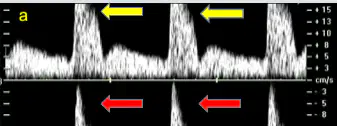
Yellow arrow represents:
Nyquist limit
Aliasing
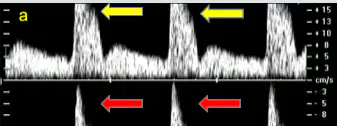
The red arrow represents:
Nyquist limit
Aliasing
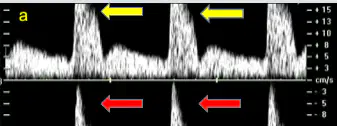
What is the Nyquist limit in this image?
12
14
15
18

How could you optimize the Nyquist limit in this image?
Decrease
Increase
Nothing
Regarding the nyquist limit, the (a) refers to the frequency at which a pulsed wave transducer transmits pulses (sampling rates)
Regarding nyquist limit, PRF is determined by the:
Speed of sound
Frequency
Wavelength
PRP
Regarding the Nyquist limit, the deeper the target area to investigate, the (a) the PRF
Regarding the nyquist limit, the deeper the sample volume, the (a) the transducer has to wait to receive the returning echo
The maximum possible frequency that can be measured. It is equal to one half the PRF
(a)
Regarding Nyquist limit, if the waiting time between pulses is not sufficient (if another pulse is sent out before all echoes from previous pulses have returned) range (a) results
Regarding Nyquist limit, to obtain accurate measurement of velocity, the PRF must be at least (a) the doppler shift frequency
Regarding Nyquist limit, at the very least the PRF has to be (a) enough to sample the doppler signal at least two times for each cycle.
Regarding Nyquist limit, higher velocities = (a) PRF
The Nyquist limit (a) as the sample volume is placed deeper
If the doppler frequency exceeds one half the PRF =
(a)
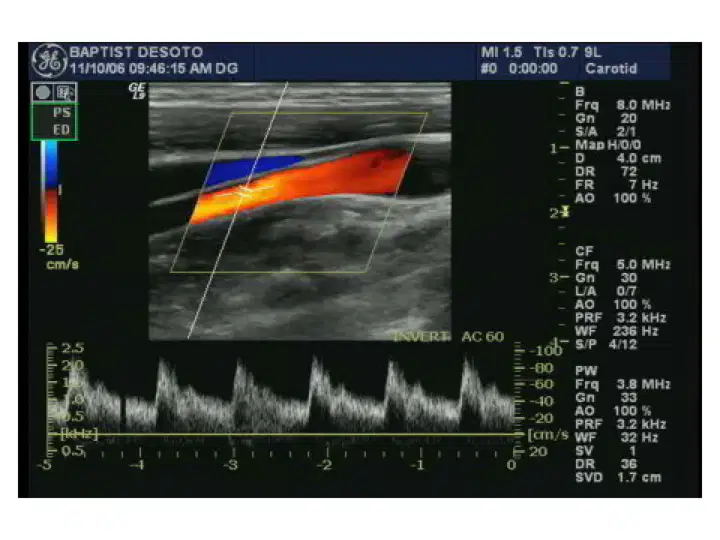
This image shows:
(a)
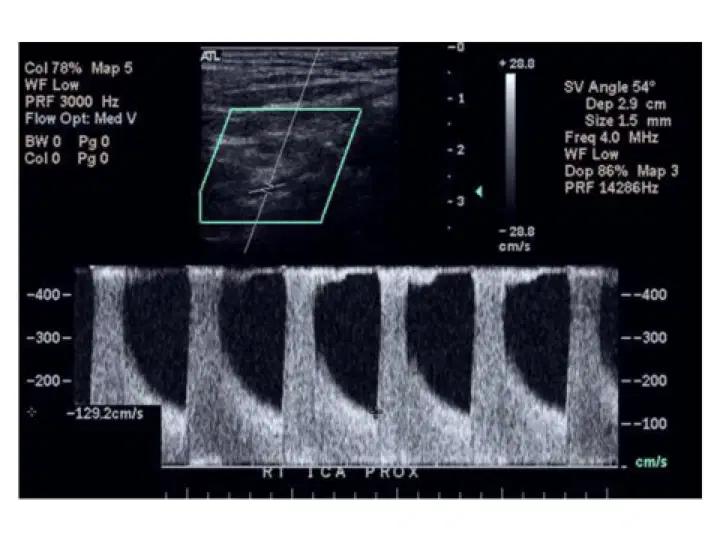
This image shows:
(a)
The PRF lowers if the B-mode is updated while doing doppler
(a)
(a) doppler can detect broader range of blood flow velocities; more than pulsed wave or color flow
When the velocity is too high to measure accurately with pulsed wave doppler, then (a) should be used
(a) has the limitation that it does not provide depth information
(a) doppler provides depth specificity; but it has limitations on the velocities it can measure accurately
One crystal
Range resolution
Limit on max velocity
Uses damping, Low Q, wide bandwidth
(a)
Two crystals
Range ambiguity
Unlimited max. velocity
Does not use damping. High Q, narrow bandwidth, higher sensitivity
(a)

