
 Worksheets
Pre Quiz Forensic Science and Criminalistics
Total questions: 100
Worksheet time: 2hrs 1mins
What does the 4th amendment of the US Constitution state?
freedom of speech
right to bear arms
right to a fair trial by your peers
protects against unreasonable search and seizures
Who is known as the Father of Forensics?
Edmond Locard
Mathieu Orfila
Francis Galton
Calvin Goddard
What does the Locard Exchange Principle imply?
fingerprints can help identify people
wherever there is contact, something is left behind (evidence)
for every action there is an equal and opposite reaction
there is always some type of DNA left at a crime scene
Where was forensic science first noted?
United States
France
China
Australia
Where in the body would vitreous humor be found?
in the eye
in the blood
in the brain
in the kidneys
Fresh blood should be allowed to _____________ before being analyzed.
clump
coagulate
heat then cool
air dry
If a person lacks A and B proteins on their red blood cells, which of the following is their blood type?
Blood Type: A
Blood Type: B
Blood Type: AB
Blood Type: O

The application of science in collecting and analyzing physical evidence in criminal cases
Criminalistics
Crime Scene Investigator
Forensic Photographer
Trace Evidence Examiner

processes crime scenes to collect and preserve physical evidence
Criminalistics
Crime Scene Investigator
Forensic Photographer
Trace Evidence Examiner

uses photographic techniques to document crime scenes and evidence, as well as provide image enhancements and exhibits for analysis and courtroom presentation
Criminalistics
Crime Scene Investigator
Forensic Photographer
Trace Evidence Examiner

processes and examines latent fingerprints in criminal cases
Latent Print Examiner
Forensic Serologist/Forensic Biologist
Forensic Toxicologist
Questioned Document Examiner

Qualifications for employment TO BE a Forensic Scientists include a Bachelor of Science (BS) or higher in natural or physical science
true
false
Forensic Science is
microscopes used for vapor
the applications of testing
applying principles of science to the law
the application of evidence to testing
A crime scene sketch is a required part of an investigation.
True
False
CSI stands for
Criminal Scenic Investor
Crime Series Insulator
Crime Scene Instigator
Crime Scene Investigator
All evidence must be collected in glass test tubes.
True
False
All evidence gathered at a crime scene must be
labeled and documented
analyzed in a scientific manner
handled carefully so not to contaminate the specimen
all of the above
The first job of a police officer is to
take photographs
secure the area with crime scene tape
make sure the scene is safe
gather evidence
Facts that help prove that an event took place
evidence
quantitative observation
physical change
sabotage
The location where a crime is believed to have taken place.
physical scene
bank
classroom
crime scene
Which of the following is NOT a crime scene search pattern?
Spread
Standard
Circular
All of them
Maintaining a ______ _____ _______ log is essential to present credible evidence in court.
Turning off Filters
Chain of Command
Chain of Custody
Evidence ID Forms
Forensic ____________________ determined cause and amnner of death
anthropologist
pathologist
engineer
odentologist
Photos from a crime scene should be taken
from a distance, mid-range, and close up with and without a scale
from a distance, mid-range, and close up with a scale
from a distance and close up
from 4 views at a distance and close up
The spatter pattern that is created when a blood covered instrument is raised or swung backwards.
Smears
Cast Off
Arterial Gushes
Lines of Convergence
True or False: Blood typing evidence is used to eliminate an individual or class of people.
True
False
True or False: A blood drop that falls at a 90 degree angle, makes an elongated drop mark.
True
False
Luminol is a chemical used to...
Illuminate or glow if blood is present
Detect if the blood is from a human or not
Determine the blood type of an individual
Preform a White Blood Cell count
Blood spatter that results from a damaged artery producing large drop patterns is called...
Smears
Cast Off
Arterial Gushes
Passive Drops
Blood patters that can sometimes create a recognizable mirror image, like hand prints, on a previously unstained surface.
Smears
Cast Off
Arterial Gushes
Passive Drops
What is glass commonly used as in forensic science?
evidence
crime scene
suspect
weapon
What are the two main types of glass commonly encountered in forensic cases?
mirror glass and safety glass
tempered glass and laminated glass
plastic glass and acrylic glass
stained glass and frosted glass
How can the refractive index of glass be useful in forensic analysis?
The refractive index of glass can be used to identify and compare glass fragments in forensic analysis.
The refractive index of glass can be used to analyze the chemical composition of glass fragments in forensic analysis.
The refractive index of glass can be used to identify fingerprints on glass surfaces in forensic analysis.
The refractive index of glass can be used to determine the age of glass fragments in forensic analysis.
What is the significance of the presence of tempered glass in a crime scene?
Tempered glass can indicate accidental breakage.
Tempered glass can provide evidence of forced entry or the use of a weapon.
Tempered glass has no significance in a crime scene.
Tempered glass can be easily manipulated and does not provide reliable evidence.
How can the fracture patterns of glass be helpful in forensic investigations?
The fracture patterns of glass can provide information about the direction and force of impact, helping to determine the cause of the fracture and potentially identify the object or weapon used.
Forensic investigations do not rely on fracture patterns of glass for any analysis.
Fracture patterns can only provide information about the type of glass, not the cause of the fracture.
The fracture patterns of glass have no relevance in forensic investigations.
How can the density of glass be determined in forensic examinations?
Buoyancy test
Magnetic resonance imaging
Chemical analysis
Archimedes' principle
This fiber has extreme elastic properties:
Acrylic
Nylon
Polyester
Rayon
Spandex
This first man-made fiber is also the most common synthetic fiber:
Acrylic
Nylon
Polyester
Rayon
Spandex
Appears dark on a fingerprint image
valley
ridge
basal
dermis
Appears light on a fingerprint image
valley
ridge
basal
apocrine
Innermost layer of skin
dermis
eccrine
apocrine
basal
Invisible fingerprints
patent
valley
epidermis
latent
Outermost layer of skin
epidermis
basal
eccrine
dermis
Visible fingerprints
latent
patent
plastic
ridge
Which test produces light when blood is present?
Kastle-Meyer
Luminol
ELISA
Fluorescein
Egyptians used what technique to try to cure diseases?
Transfusions
Bloodletting
Agglutination
Blood Typing
What is the main purpose of fingerprints?
To provide accurate measure of individual identities
To categorize and make prints searchable
To develop methods of finding the needle in a haystack
To digitize and reduce turnaround time
When did the FBI become the nation's central repository for fingerprints?
1924
1975
1999
2005
What did Mr. Bush use to determine if a suspect was their man?
Senior agents' opinions
Loops and whirls
Unusual traits and characteristics
Fingerprint patterns
What was the main reason for the FBI to digitize fingerprints?
To reduce the time taken to process fingerprints
To increase the storage capacity for fingerprints
To make the process of identifying individuals more accurate
All of the above
Eyewitness accounts of a crime?
testimonial
physical evidence
trace evidence
Locard's Exchange
Any material items that are present at the crime scene or on the victims?
physical evidence
trace evidence
testimonal
These can be photographed, they can show wear patterns, they can be used to match a vehicle
shoeprints
tire tracks
bite marks
tool marks
can often be matched to weapons, marks on the weapon, or the weapon's size, shape, and length
weapons
wounds
write
wither
When an object is broken, torn, or cut two unique edges form.
cut
fracture
tear
I don't know

What bone is highlighted?
Femur
Tibia
Fibula
Humerus

The analysis of skeletal remains within a legal investigation
Forensic entomology
Forensic archaeology
Forensic science
Forensic anthropology
If a skull has square eye sockets, a square mandible, a large upper brow ridge and a large mastoid bone protrusion, it is
male
female
A wider pelvic arch, wider pelvic brim and flared ilium belong to a
female
male
The closure of sutures an indicate an older age. Where are sutures found?
femur
tibia
skull
ribs
How are entomology and forensic entomology different?
Entomology studies insects while forensic entomology studies insects in application to civil and criminal legal cases.
Entomology studies insects in application to civil and criminal legal cases while forensic entomology studies insects.
Trick! They are both the same.
This is not the answer.
breakdown of once living matter by living organisms
instar
larva
decomposition
insect succession
stage 1 of decomposition
fresh stage
skeletal or dry
advanced decay
bloating
active decay
stage 2 of decomposition
bloating
advanced decay
active decay
fresh stage
dry or skeletal
body development in 4 stages: egg, larva, pupa, & adult
complete metamorphosis
grub
oviposition
spiracles
Which of the following choices is not an example of an input device?
Keyboard
Mouse
Joy Stick
Speaker
Crime scene documentation is accomplished through _________ and ___________.
sketching, photography
sketching, witness interviews
witness interviews, photography
peripheral analysis, FTIR data
Which selection correctly identifies examples of user-created data?
Word processing documents, Spreadsheets, Accounting records, Databases, Pictures
Word processing documents, Spreadsheets, Accounting records, Databases, Clusters
Word processing documents, Clusters, Accounting records, Databases, Pictures
Word processing documents, Spreadsheets, Accounting records, Clusters, Pictures
What is the sole purpose of Computer Forensics?
Identify Scams and Theft
Identify crimes with technology
Identify evidence to state within the Court of Law
Identify crimes in technology and find ways to prevent them from happening.
Computer Forensics and Cyber Security are the same things.
True
False
Computer forensics is mostly focused on...
Defense to prevent crimes
To gather data related to crime
To stalk criminals
To keep data
The idea of Computer Forensics started in...
1979
1992
2000
1984
Computer Forensics was started by...
FBI - Forensic Bureau of Investigation
FSC - Federal Science Communication
U.S. Secret Service
IDC - International Data Coorperation
The best way of performing a search is by covering the area in _______________ .
a systematic way.
a cross linear way
with many people using different techniques.
various ways.
The spiral search method works best where?
small outdoor areas with few obstacles
large indoor or outdoor areas with large obstacles
any outdoor scene with obstacles
large indoor or outdoor areas with few obstacles
The strip or parallel search method is used _____________.
for smaller outdoor areas or indoor crime scenes.
for large indoor areas
indoor crime scenes only
large outdoor crime scenes
When evidence may be harder to find because the crime scene may contain a lot of items or debris, which search method would be the best to use?
Spiral
Grid
Strip or Parallel
Quadrant or Zone
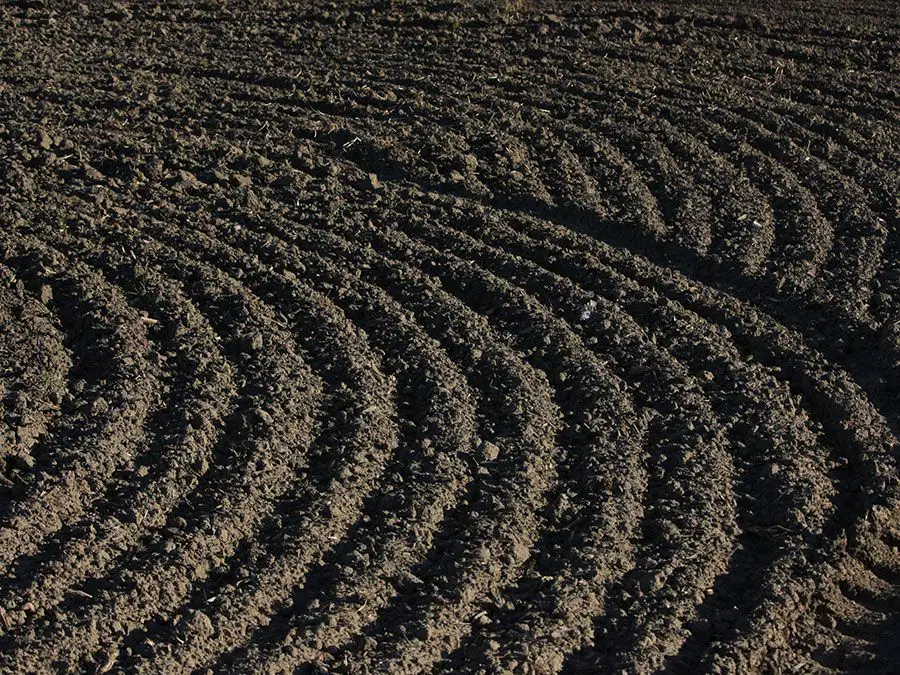
Which area of forensic science includes the study of soil studies and casts and molds?
Earth Science
Anatomy
Social Studies
General

