
Font size
 Worksheets
Airway Trauma associated with Tracheal Tubes
Total questions: 103
Worksheet time: 52mins
Which of the following is a type of trauma that can occur due to artificial airways?
Ischemia or ulceration
Friction injuries
Negative reactions
Laryngeal dysfunction
All of the above
Ischemia or ulceration due to artificial airways is caused by ________ on the soft tissue of the airway.
pressure
infection
humidity
temperature
Friction injuries from tracheal tubes are due to:
Pressure on the soft tissue
Patient moving their head and position of tube
Reaction to the material of the tube
Lack of stimulation from airflow
Negative reactions to tracheal tubes may occur because the patient may have a reaction to the ________ of the tube.
material
length
color
shape
Laryngeal dysfunction occurs secondary to a lack of stimulation from ________.
airflow
blood flow
nerve impulses
muscle contraction
Which of the following is a technique used to diagnose airway trauma?
Physical examination
Blood transfusion
Chemotherapy
Dialysis
Which of the following is a technique used to diagnose airway trauma?
Fluoroscopy
Appendectomy
Insulin therapy
Cataract surgery
Which of the following is a technique used to diagnose airway trauma?
Laryngoscopy
Colonoscopy
Angioplasty
Gastrectomy
Which of the following is a technique used to diagnose airway trauma?
Bronchoscopy
Endoscopy
Lithotripsy
Phlebotomy
Which of the following imaging techniques is used to diagnose airway trauma?
MRI
X-ray
Ultrasound
CT scan
Fill in the blank: ________ is a technique used to diagnose airway trauma and is abbreviated as PFT.
Pulmonary Function Test
Peak Flow Test
Pulmonary Fiberoptic Test
Pulmonary Flow Technique
What is the most common complication of artificial airways?
Glottic edema
Sore throat/hoarseness
Infection
Bleeding
Sore throat/hoarseness as a complication of artificial airways is usually the result of _________?
tube irritation
infection of the lungs
allergic reaction to medication
improper humidification
How long does sore throat/hoarseness usually last after artificial airway insertion?
1-2 hours
2-3 days
1 week
1 month
Which of the following is a recommended treatment for sore throat/hoarseness after artificial airway insertion?
Antibiotics
Cool mist aerosol
Surgery
Oxygen therapy
Inspiratory stridor is the #1 clinical sign of which complication of artificial airways?
Sore throat/hoarseness
Glottic edema
Infection
Bleeding
Glottic edema can be caused by all of the following EXCEPT:
Traumatic intubation
Insertion with oversized tube or trach
Poor artificial airway maintenance
Regular exercise
Which of the following is NOT a treatment for glottic edema?
Cool aerosol
Vasoconstrictor
Corticosteroids
Antibiotics
What is subglottic edema?
Edema that occurs above the glottis
Edema that occurs below the glottis at the level of the cricoid cartilage
Edema that occurs in the lungs
Edema that occurs in the vocal cords
Subglottic edema is a serious complication after extubation that commonly requires _________
reintubation
antibiotics only
humidified oxygen only
chest physiotherapy
What action should be taken if subglottic edema occurs after extubation?
Wait and observe
Aggressive actions should be taken
No action is needed
Give antibiotics only
Marked inspiratory stridor with or without sternal retractions is a sign of which condition?
Subglottic edema
Asthma
Pneumonia
Bronchitis
Vocal cord ulceration should be suspected if hoarseness continues for more than _________.
1 week
2 days
3 months
5 hours
Which of the following is NOT a cause of vocal cord ulceration?
Traumatic intubation
Tight-fitting ETT
Allergic reaction
Viral infection
Excessive movement of the tube
Vocal cord ulceration can be caused by traumatic intubation.
True
False
What is vocal cord paralysis caused by?
Damage to the recurrent laryngeal nerve
Damage to the trachea
Infection in the lungs
Allergic reaction
Vocal cord paralysis occurs secondary to which type of injury?
Upper chest or neck injury
Leg injury
Abdominal injury
Arm injury
Laryngotracheal web is caused by necrotic tissue at the ______ or subglottic level.
glottic
tracheal
epiglottic
cricoid
What does necrotic tissue at the glottic or subglottic level lead to?
Fibrin formation
Infection
Bleeding
Swelling
Fibrin formation in laryngotracheal web combines with ______ and cellular debris.
secretions
cartilage
mucosa
blood vessels
What does the combination of fibrin, secretions, and cellular debris create in laryngotracheal web?
Web
Tumor
Scar
Cyst
Stridor and acute airway obstruction can occur in laryngotracheal web.
True
False
Severe cases of laryngotracheal web require ______ removal.
surgical
medical
laser
chemical
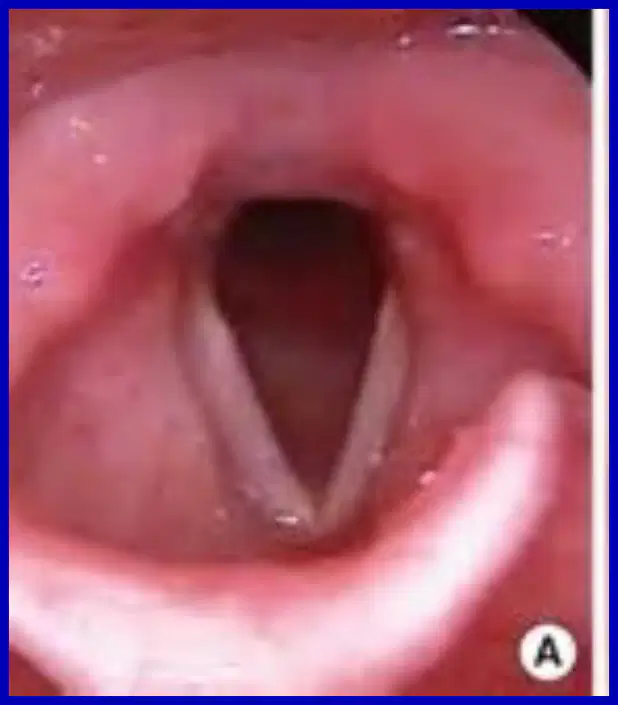
Look at the images provided. Which image shows a Normal Glottis?
Left image
Right image
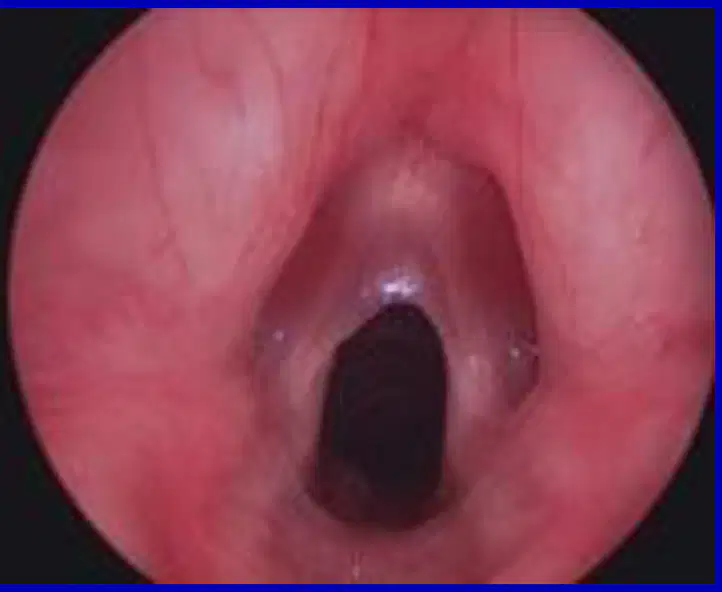
What is the main difference between a Normal Glottis and a Glottic Web? Fill in the blank: A Glottic Web is characterized by the presence of a _______ across the glottis.
web or membrane
nodule
polyp
ulcer
What are the most common types of tracheal lesions?
Granulomas, tracheomalacia, and tracheal stenosis
Bronchiectasis, asthma, and pneumonia
Laryngeal nodules, vocal cord paralysis, and epiglottitis
Pulmonary embolism, pleural effusion, and pneumothorax
Which of the following is less common among tracheal lesions?
Granulomas
Tracheomalacia
Tracheoesophageal fistulas
Tracheal stenosis
Tracheomalacia is defined as the softening of the cartilaginous rings which cause collapse of the trachea during inspiration.
True
False
Tracheal stenosis is the narrowing of the lumen of the trachea due to what cause?
Fibrous scarring
Bacterial infection
Congenital malformation
Allergic reaction
In intubated patients, tracheal stenosis most commonly occurs at which site?
At the site of the cuff
At the carina
At the vocal cords
At the tip of the endotracheal tube
Stenosis at the stoma is caused by which of the following?
The stoma being too large
Infection
Movement of the trach
Frequent trach changes
All of the above
What is a tracheoesophageal fistula?
A hole between the esophagus and the trachea
A blockage in the trachea
An infection of the esophagus
A narrowing of the trachea
Tracheoesophageal fistula rarely occurs.
True
False
Tracheoesophageal fistula is most commonly due to ________ surgical technique.
incorrect
sterile
minimally invasive
robotic
Late occurrence of tracheoesophageal fistula can be due to all of the following EXCEPT:
Malnutrition
Tracheal erosion
Sepsis
Viral infection
Esophageal erosion from NG tube
Tracheoesophageal fistula is diagnosed by recurrent aspiration and ________ distension.
abdominal
thoracic
cervical
cranial
The treatment for tracheoesophageal fistula is by ________ repair.
surgical
medical
radiological
conservative
What is a tracheoinnominate fistula?
A hole between the trachea and esophagus
A hole between the trachea and innominate artery
A blockage in the trachea
An infection of the trachea
A tracheoinnominate fistula results in massive blood loss and usually death.
True
False
Only ___% of patients with tracheoinnominate fistula will survive.
25
50
75
10
What is a very rare complication caused by low positioning of the stoma in tracheostomy patients?
Tracheoinnominate fistula
Tracheal stenosis
Tracheomalacia
Tracheoesophageal fistula
Pulsing of the trach tube may be an indication of tracheoinnominate fistula.
True
False
Which of the following is NOT a treatment for tracheoinnominate fistula?
Inflate cuff to apply pressure
Slows bleeding
Surgical repair
Antibiotic therapy
This picture shows how close the trachea is to the brachiocephalic artery and aorta. What complication can occur if a stoma is placed too low during a tracheostomy?
Pneumothorax
Tracheoinnominate fistula (TIF)
Vocal cord paralysis
Subcutaneous emphysema
This picture shows how close the trachea is to the brachiocephalic artery and aorta. Fill in the blank: If a stoma is placed too low, it is easy to cause a _________
trachoinnominate fistula (TIF)
pneumothorax
esophageal perforation
subcutaneous emphysema
Which of the following is a method to limit tube movement for the prevention of complications?
Sedation
Use of sterile technique
High cuff pressures
Changing tube frequently
Which device can be used to limit tube movement?
Swivel adapters
Oxygen mask
Nasal cannula
Face shield
Using a trach collar over a Briggs adapter helps in _________
limiting tube movement
increasing airway resistance
reducing oxygen concentration
causing tube blockage
Why is the selection of proper size tube important in the prevention of complications?
It helps prevent complications related to improper tube fit.
It increases the risk of infection.
It makes the procedure more difficult.
It reduces the effectiveness of the treatment.
Tubes should be changed frequently to prevent complications.
True
False
Which group of patients should be encouraged not to try to speak?
Intubated patients
Ambulatory patients
Pediatric patients
Elderly patients
Using low cuff pressures is recommended for the prevention of complications.
True
False
Which of the following is a part of infection control in the prevention of complications?
Use of sterile technique
High cuff pressures
Frequent tube changes
Encouraging speech
Proper trach care and maintenance is important for _________
infection control
color enhancement
weight gain
improved vision

What is one effect of artificial airways on patients?
They improve the ability to speak
They inhibit the ability to speak
They have no effect on communication
They cure respiratory diseases

Always communicate to your patient regardless if they can talk back.
True
False

Name one way to promote communication for patients with artificial airways.
Speaking trach
Sign language
Lip reading
Hand gestures

Which of the following is NOT a way to promote communication for patients with artificial airways?
A) Speaking trach
B) Writing utensils
C) Use of letter, phrase, or picture board
D) Ignoring the patient

Fill in the blank: The ________ is a device that can help promote communication in patients with artificial airways.
Passy-muir valve
Tracheostomy tube
Endotracheal tube
Nasogastric tube
Artificial airways bypass the upper airways. What is one consequence for patients? Fill in the blank: Patients will have a ________ deficit.
humidity
oxygen
nutrient
calcium
Which of the following is a consequence of a humidity deficit in patients with artificial airways?
Increased ciliary function
Causes thickened secretions and decreases ciliary function
Improved airway clearance
Reduced infection risk
What can occlude the trach tube resulting in airway obstruction, infection, and difficulty breathing? Fill in the blank: ________ secretions can occlude the trach tube.
Thickened
Watery
Clear
Diluted
Selection of humidification based on patient needs includes which of the following options?
HME
Heated humidifier
Both A and B
None of the above
What does HME stand for in the context of humidification? Fill in the blank: HME stands for ________ ________ ________.
Heat Moisture Exchanger
High Moisture Evaporator
Humidification Management Equipment
Heated Medical Element
Tracheostomy tubes require daily cleaning and care to prevent which of the following?
Infection and mucus plugging
Bleeding
Fractures
High blood pressure
If a patient is having trouble breathing or if a suction catheter cannot be passed, what should be done?
Leave the tube in place
Remove the tube
Increase oxygen
Call for help only
A patient with a tracheostomy tube could decompensate quickly if there is an obstruction.
True
False
Fill in the blank: Tracheostomy tubes require daily cleaning and care to prevent ______ and mucus plugging.
infection
bleeding
fracture
swelling
Which of the following is required for proper trach care procedure?
Gloves and goggles/face shield
Stethoscope
Blood pressure cuff
Thermometer
Fill in the blank: For proper trach care procedure, ________ equipment is required to clear the airway.
Suction
Oxygen
Nebulizer
Stethoscope
Which of the following should be checked before starting the trach care procedure?
Resuscitation bag and mask
Oxygen tank
Tracheostomy tube
Syringe
Fill in the blank: ________ is required to provide breathing support during trach care.
Oxygen
Glucose
Saline
Antibiotics
Which kit is specifically mentioned as required for trach care?
First aid kit
Tracheostomy care kit
Suture kit
IV kit
Fill in the blank: A spare ________ cannula is required for proper trach care procedure.
inner
outer
nasal
arterial
Which of the following is used for cleaning during trach care?
Peroxide and sterile water
Alcohol wipes
Soap and water
Hand sanitizer
Fill in the blank: ________ tipped applicators are required for proper trach care procedure.
Cotton
Plastic
Metal
Foam
Which of the following is used to secure the trach tube?
New trach ties
Bandage
Tape
Gauze
Fill in the blank: A new ________ tube is required for proper trach care procedure.
trach
feeding
endotracheal
nasogastric
Which type of lubricant is required for proper trach care procedure?
Water soluble lubricant
Petroleum jelly
Oil-based lubricant
Silicone gel
Fill in the blank: A ________ is required for proper trach care procedure to help with inflation or suction.
Syringe
Stethoscope
Bandage
Thermometer
What should you do before performing any procedure on a patient?
Suction the patient
Clean the inner cannula
Explain the procedure to the patient
Skip to the next step
Step 3: What must always be done prior to care?
Clean the inner cannula
Clear secretions
Add sterile water
Allow cannula to soak
What is the first action when cleaning the inner cannula?
Add sterile water and peroxide to basin
Remove the inner cannula and place it in the basin
Use brushes to remove dried secretions
Rinse with sterile water
Step 4: After adding sterile water and peroxide to the basin, what should you do next?
Rinse with sterile water
Allow cannula to soak
Remove the inner cannula
Explain the procedure to the patient
What should you do first when cleaning the stoma site?
Apply new gauze dressing
Remove the gauze dressing
Change the ties
Use peroxide solution
After removing the gauze dressing, what should you do with it?
Reuse it
Dispose
Wash and keep
Leave it aside
When using applicators dipped in the peroxide/water solution, where should you start cleaning?
Far from the stoma
Close to the stoma and work away
Only on the ties
On the neck
Step 5: Clean the stoma site
True
False
What should you do to the old ties or velcro holder?
Tighten them
Cut or loosen them
Wash them
Ignore them
When changing the ties, what should you keep one hand on?
The neck
The gauze dressing
The flange of the trach tube
The peroxide solution
Which of the following is a potential long-term complication of tracheal intubation?
Tracheal stenosis
Pneumothorax
Asthma
Pulmonary embolism
What is the primary cause of subglottic edema following extubation?
Allergic reaction
Viral infection
Trauma from the endotracheal tube
Congenital abnormality
Which of the following best describes tracheomalacia?
Stiffening of the tracheal wall
Softening and collapse of the tracheal cartilage
Formation of a tracheal web
Obstruction by a foreign body

