
 Worksheets
Instrumentation, Ch 10
Total questions: 87
Worksheet time: 54mins
The relationship between instrumentation, equipment, and supplies is best described as:
Instrumentation refers to specialized tools, equipment refers to larger machines, and supplies are consumable items used in procedures.
Instrumentation and equipment are the same, while supplies are reusable items.
Equipment and supplies are both consumable, while instrumentation is permanent.
Supplies are specialized tools, equipment is consumable, and instrumentation is large machinery.
The relationship between instruments, equipment, and supplies and safety in the OR environment is:
Proper management of instruments, equipment, and supplies is essential for maintaining safety in the OR environment.
Instruments and equipment have no impact on safety in the OR environment.
Supplies are unrelated to safety in the OR environment.
Safety in the OR environment depends only on the surgical team, not on instruments or equipment.
Items that require sterilization prior to use in the sterile field include:
Surgical instruments
Patient identification bands
Surgical drapes (unopened)
Non-sterile gloves
Recognize basic instruments by type, function, and name.
Identifying instruments based on their type, function, and name
Playing musical instruments in a band
Repairing broken instruments
Composing music using instruments
Proper care, handling, and assembly of instruments involves which of the following?
Cleaning, inspecting, and assembling instruments according to guidelines
Leaving instruments uncleaned after use
Mixing different types of instruments carelessly
Ignoring manufacturer's instructions during assembly
Differentiate the types of special equipment utilized in the OR.
Special equipment in the OR includes surgical microscopes, C-arm X-ray machines, and electrosurgical units.
Special equipment in the OR includes only stethoscopes and thermometers.
Special equipment in the OR refers exclusively to anesthesia machines.
Special equipment in the OR is limited to basic surgical instruments like scalpels and forceps.
Proper care, handling techniques, and safety precautions of special equipment should be demonstrated by:
Following manufacturer guidelines and using personal protective equipment.
Ignoring safety instructions and using equipment carelessly.
Allowing untrained individuals to operate the equipment.
Storing equipment in unsafe and unclean conditions.
Cite the names and functions of accessory equipment.
Accessory equipment includes items such as filters, regulators, and lubricators, which help control and maintain pneumatic systems.
Accessory equipment includes only the main power supply units used in machinery.
Accessory equipment refers to decorative items used for aesthetic purposes in machines.
Accessory equipment includes only the primary moving parts of a machine.
Proper care, handling, and assembly of accessory equipment involves which of the following?
Following manufacturer instructions and using appropriate cleaning methods
Ignoring manufacturer guidelines and assembling equipment randomly
Using any cleaning agent regardless of equipment material
Assembling equipment without checking for damage or cleanliness
Collect and prepare supplies used in the OR.
Gather and organize surgical instruments and materials before surgery.
Administer anesthesia to the patient.
Perform the surgical procedure.
Clean the operating room after surgery.
Which of the following are grades of surgical instruments?
Surgical-grade
Floor-grade
Disposable-grade
All of the above
Fill in the blank: The three grades of surgical instruments are ________, floor-grade, and disposable-grade.
surgical-grade
medical-grade
sterile-grade
premium-grade
Floor-grade is a grade of surgical instrument.
True
False
Disposable-grade is a grade of surgical instrument.
True
False
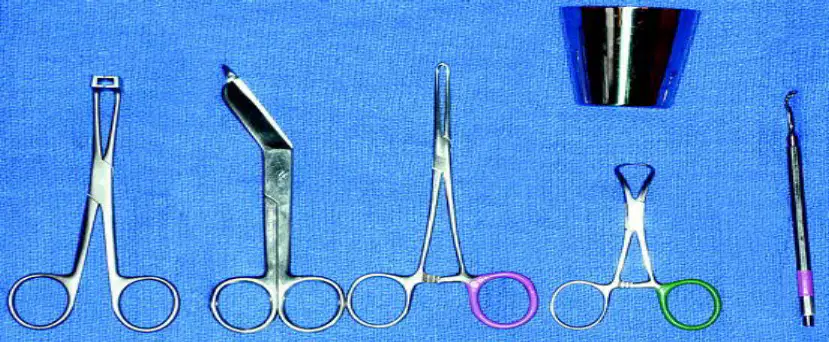
Most modern surgical instruments are made of which material?
Plastic
Stainless steel
Wood
Glass
Which of the following metals is NOT commonly combined to make surgical instrument alloys?
Carbon
Chromium
Iron
Gold
Fill in the blank: Chromium increases resistance to ________ in surgical instruments.
corrosion
heat
electricity
wear
Titanium is ________ and lighter in weight compared to other metals used in surgical instruments.
Weaker
Stronger
Heavier
More brittle
Which of the following is NOT a finish type for surgical instruments?
High polish
Satin
Ebonized
Painted
List the three finish types for modern surgical instruments mentioned in the slide.
High polish, Satin, Ebonized
Matte, Glossy, Chrome
Brushed, Anodized, Painted
Polished, Textured, Coated
Which of the following is NOT a category by design for instruments?
Handheld
Powered
Endoscopic
Magnetic
Robotic
Fill in the blank: Handheld instruments design parts include handles (finger rings, pistol grip, or spring-loaded), ratchets, shanks, box lock, jaws or blades, and _____
tips
wheels
springs
screws
Which of the following is NOT a type of handle for handheld instruments?
Finger rings
Pistol grip
Spring-loaded
Magnetic grip

Fill in the blank: One of the classifications of surgical instruments is ______/dissecting.
Cutting
Clamping
Retracting
Suturing

Fill in the blank: One of the classifications of surgical instruments is grasping/_______
holding
cutting
measuring
suturing

Fill in the blank: One of the classifications of surgical instruments is clamping/______.
occluding
cutting
suturing
retracting

Fill in the blank: One of the classifications of surgical instruments is retracting/______.
viewing
cutting
suturing
clamping
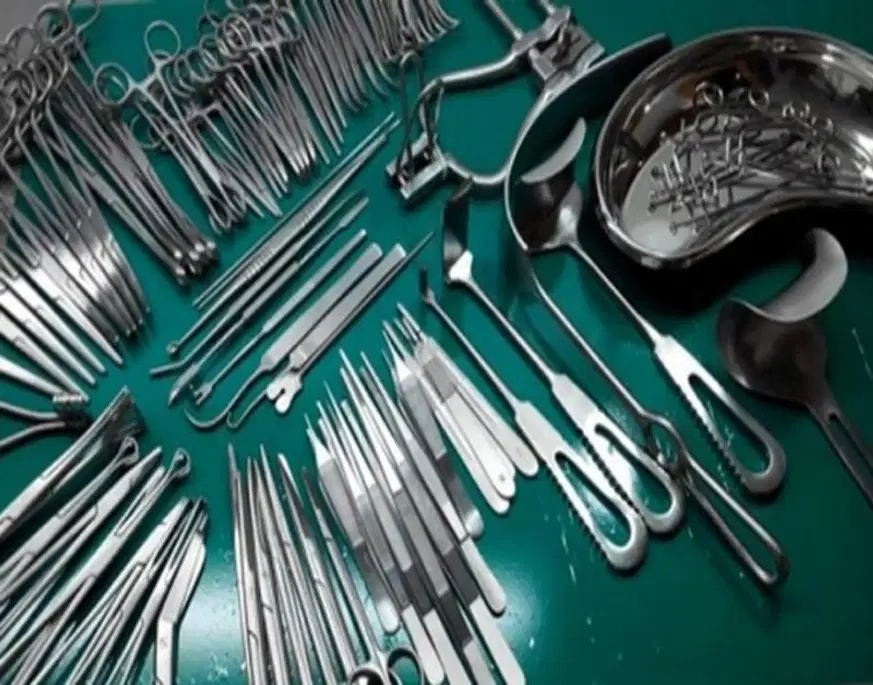
Fill in the blank: One of the classifications of surgical instruments is _______. (related to exploring or examining)
Probing
Cutting
Clamping
Retracting
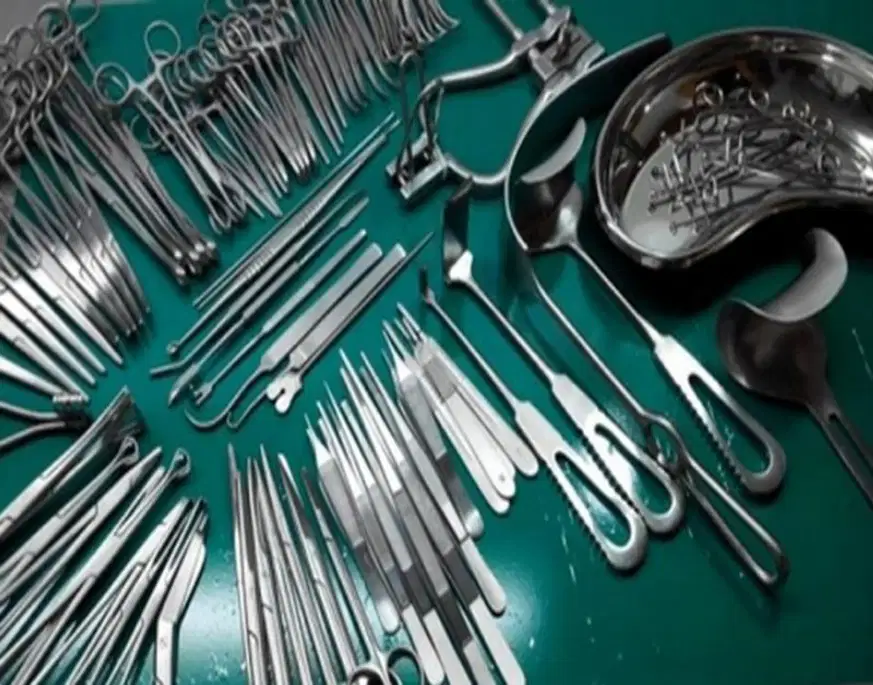
Fill in the blank: One of the classifications of surgical instruments is _______. (related to making an opening wider)
Dilating
Cutting
Grasping
Suturing

Fill in the blank: One of the classifications of surgical instruments is _______. (related to stitching)
Suturing
Cutting
Grasping
Retracting

Fill in the blank: One of the classifications of surgical instruments is _______. (related to removing fluids)
Suctioning
Cutting
Clamping
Retracting
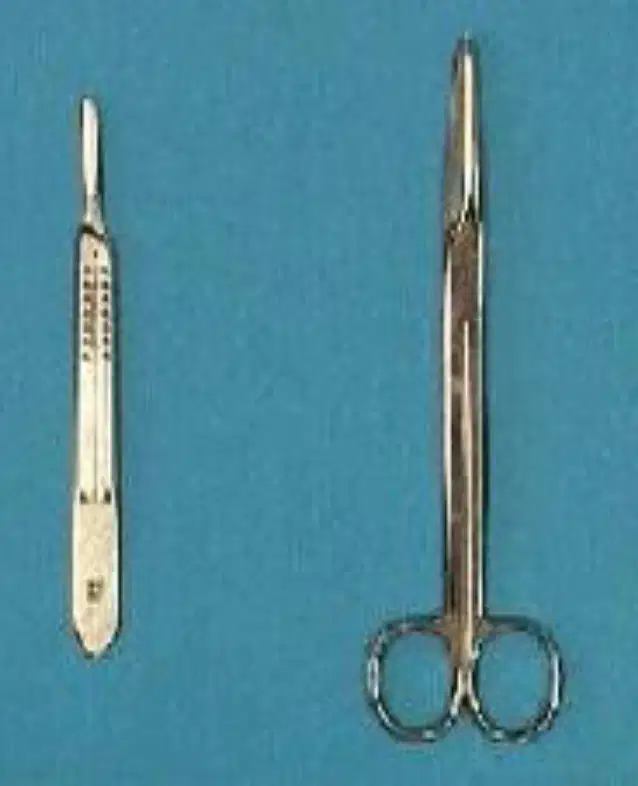
Which of the following instruments are used for incision, sharp dissection, or excision of tissue?
Scalpels/knives
Forceps
Retractors
Clamps
Fill in the blank: Instruments with one or more sharp edges are used for ________, sharp dissection, or excision of tissue.
incision
suturing
retraction
anastomosis
Which of the following is NOT a cutting/dissecting instrument?
Scissors
Saws
Biopsy punches
Forceps
Name two examples of cutting/dissecting instruments mentioned in the classification slide.
Scalpels/knives, Scissors
Forceps, Retractors
Needle holders, Suction tips
Probes, Dilators

Which scalpel handle is labeled as #3 in the image?

Which scalpel handle is labeled as #4L in the image?
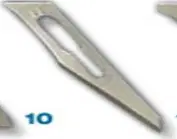
Which scalpel blade is labeled as number 10 in the image?
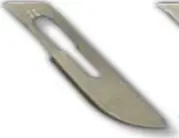
Which scalpel blade is labeled as number 15 in the image?
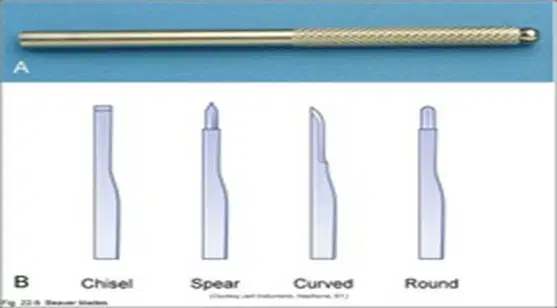
Which beaver knife tip is shown as 'Chisel' in the image?
First tip from the left
Second tip from the left
Third tip from the left
Fourth tip from the left

Which beaver knife tip is shown as 'Curved' in the image?
First tip from the left
Second tip from the left
Third tip from the left
Fourth tip from the left

Look at the image of the scissors. Which one is labeled as 'Metzenbaum'?
The first scissor from the left
The second scissor from the left
The third scissor from the left
The fourth scissor from the left
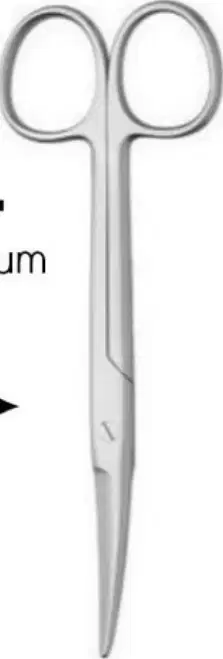
Look at the image of the scissors. Which one is labeled as 'Mayo'?
The first scissor from the left
The second scissor from the left
The third scissor from the left
The fourth scissor from the left
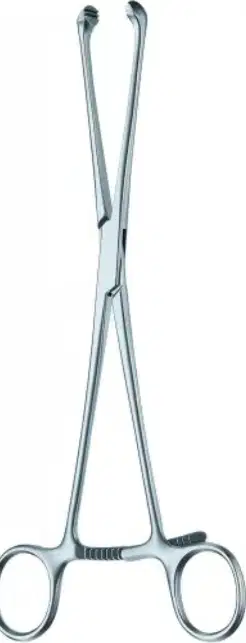
What is the primary purpose of grasping/holding instruments in surgery?
To cut tissue
To manipulate tissue
To measure tissue
To cauterize tissue
Grasping/holding instruments may or may not have a ________ locking mechanism.
ratcheted
magnetic
spring-loaded
hydraulic
Which of the following is included in grasping/holding instruments?
Tissue forceps
Bone-holding clamps
Both A and B
None of the above
Grasping/holding instruments are used to facilitate dissection or suturing, or to reduce and stabilize fractured bone during internal fixation.
True
False
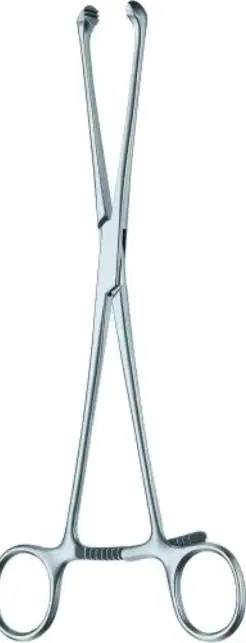
Identify the type of surgical instruments shown in the images.
Grasping/holding instruments
Cutting/dissecting instruments
Retracting/exposing instruments
Suturing instruments
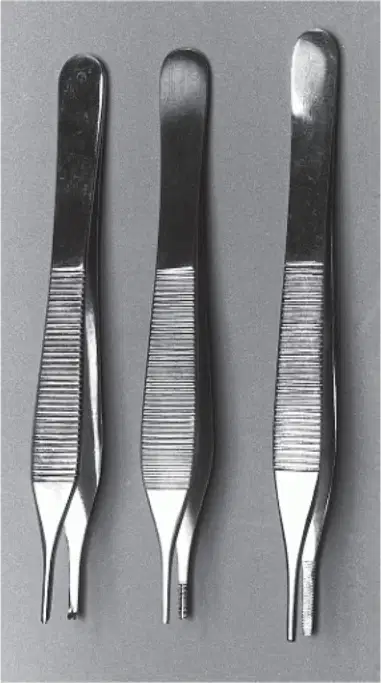
What is the name of the thumb forceps shown in the first image on the left?
W/Teeth
Brown
Plain
Ferris-Smith
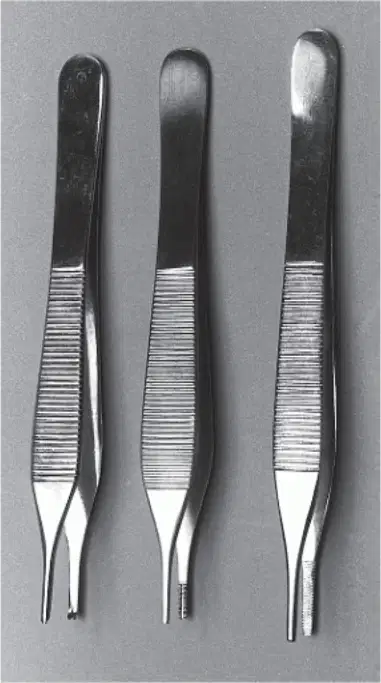
What is the name of the thumb forceps shown in the second image from the left?
W/Teeth
Brown
Plain
Ferris-Smith
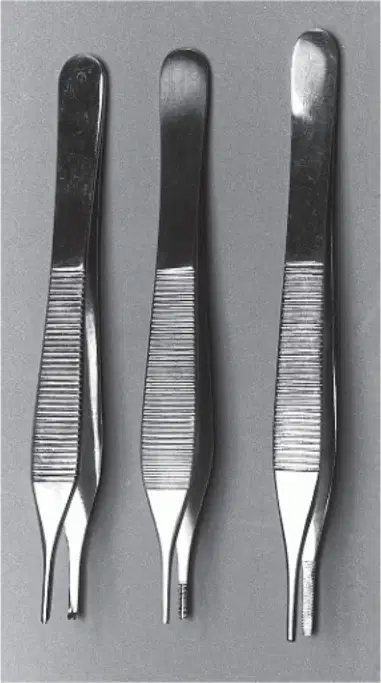
What is the name of the thumb forceps shown in the third image from the left?
W/Teeth
Brown
Plain
Ferris-Smith

What is the name of the thumb forceps shown in the fourth image from the left?
Ferris-Smith
DeBakey
Russian
Bayonnet
Which of the following is a function of clamping/occluding instruments?
To cut tissue
To occlude or constrict tissue
To suture wounds
To retract organs
Fill in the blank: Clamping/occluding instruments are constructed with opposing ______ handles for fingers.
ring
flat
curved
pointed
Which of the following is NOT a feature of clamping/occluding instrument construction?
Opposing ring handles for fingers
Interlocking ratchets
Serrated blades
Two shanks that connect the ringed handles to the box lock
Clamping/occluding instruments include which of the following?
Vascular clamps
Intestinal clamps
Hemostatic clamps
All of the above
Fill in the blank: The two shanks of a clamping/occluding instrument connect the ringed handles to the ______, or hinge joint of the clamp.
box lock
ratchet
jaw
tip
Which of the following is NOT a feature of clamping/occluding instruments?
A) Opposing ring handles for fingers
B) Interlocking ratchets
C) Two shanks that connect the ringed handles to the box lock
D) Used for cutting tissue
Fill in the blank: Clamping/occluding instruments are designed to ______ or constrict tissue.
occlude
expand
lubricate
illuminate
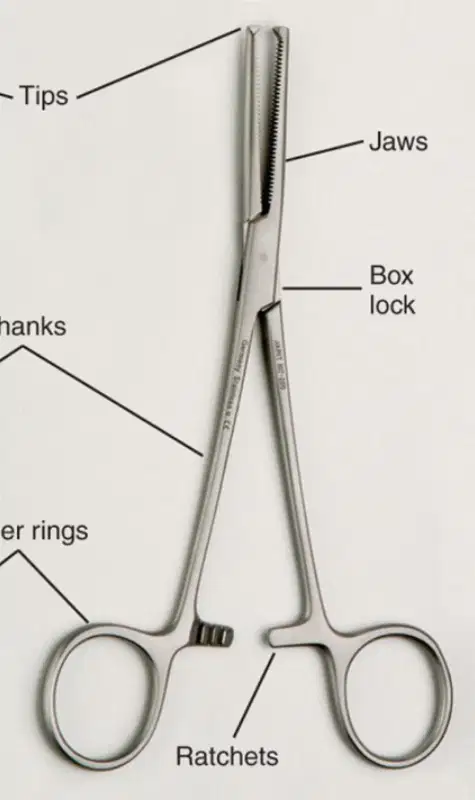
Which part of the surgical clamp is used to lock the instrument in place?
Tips
Jaws
Box lock
Ratchets
What is the primary function of hemostatic clamps?
To cut tissue
To occlude bleeding vessels
To hold retractors
To suture wounds
Fill in the blank: Hemostatic clamps are designed to ________ bleeding vessels.
occlude
stimulate
dilate
irrigate
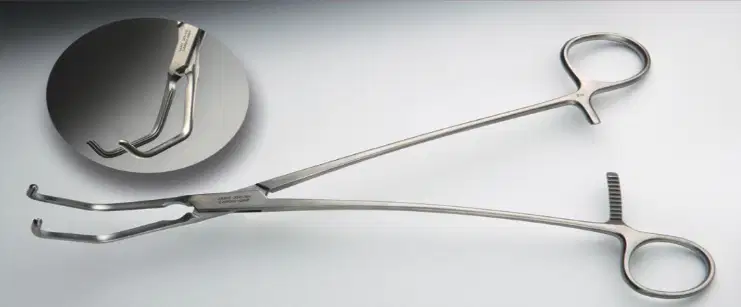
Look at the image of the surgical instrument shown (top left). What type of clamp is this?
Bulldog clamp
Satinsky clamp
DeBakey clamp
Kelly clamp
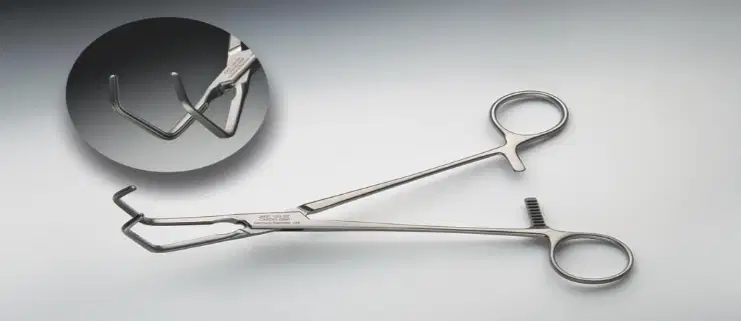
Look at the image of the surgical instrument shown (top right). What type of clamp is this?
Bulldog clamp
Satinsky clamp
DeBakey clamp
Kelly clamp

Look at the image of the surgical instrument shown (bottom left). What type of clamp is this?
Bulldog clamp
Satinsky clamp
DeBakey clamp
Kelly clamp
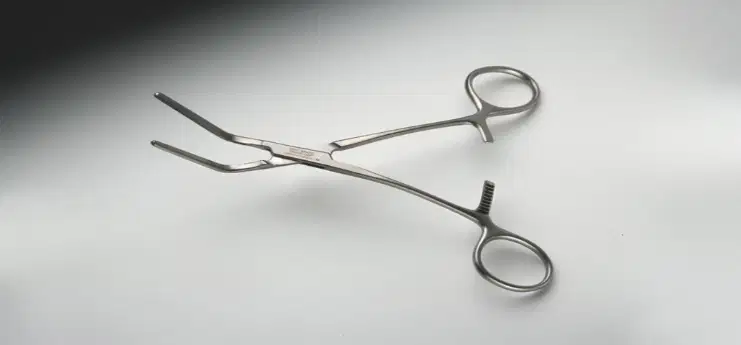
Look at the image of the surgical instrument shown (bottom right). What type of clamp is this?
Bulldog clamp
Satinsky clamp
DeBakey clamp
Kelly clamp
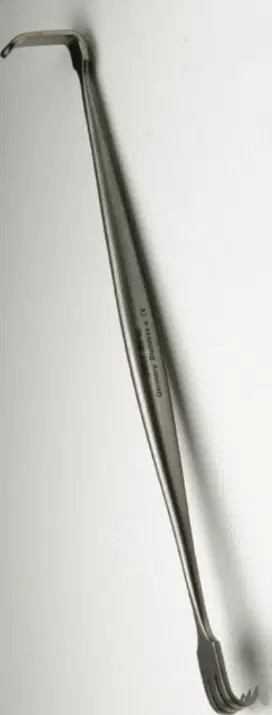
What is the main function of viewing instruments in surgery?
To allow visualization of a structure
To cut tissues
To suture wounds
To deliver anesthesia

Retractors are instruments designed for exposure of the operative area.
True
False
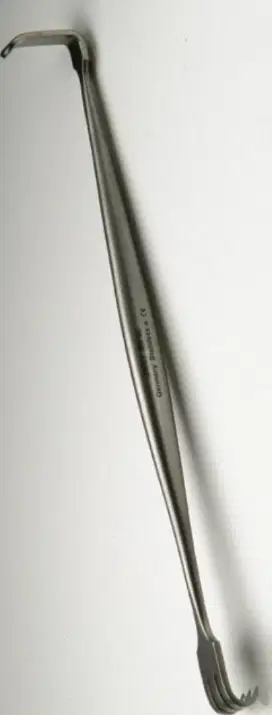
Which of the following statements is true about viewing instruments?
Their main function is to cut tissue
Their main function is to allow visualization of a structure
Their main function is to suture wounds
Their main function is to provide suction
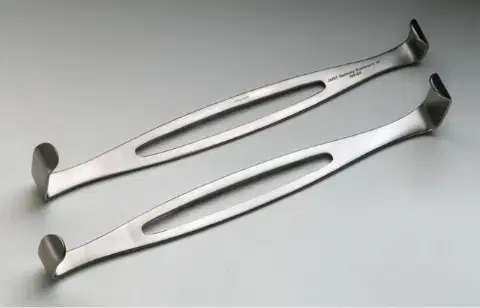
Look at the image of the surgical instrument shown. What is the name of this instrument?
Army/Navy
Weitlaner
Murphy
Balfour
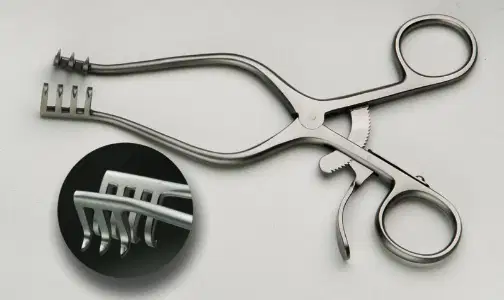
Look at the image of the surgical instrument shown. What is the name of this instrument?
Army/Navy
Weitlaner
Murphy
Balfour
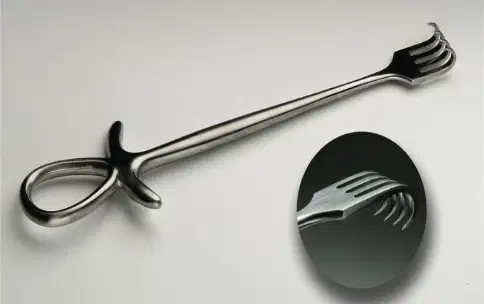
Look at the image of the surgical instrument shown. What is the name of this instrument?
Army/Navy
Weitlaner
Murphy
Balfour
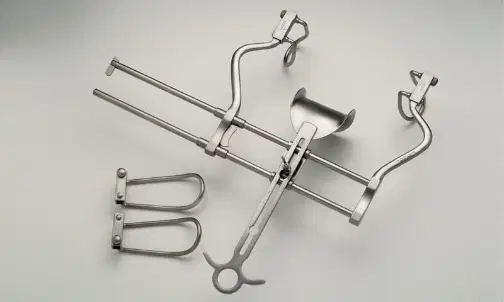
Look at the image of the surgical instrument shown. What is the name of this instrument?
Army/Navy
Weitlaner
Murphy
Balfour
Fill in the blank: Probes are ________, wire-like instruments for the exploration of a structure.
malleable
rigid
sharp
opaque
Which of the following do probes include?
Fistulas, ducts, or vessels
Bones and muscles
Skin and hair
Nerves and tendons
Fill in the blank: Dilators gradually dilate an orifice or duct to allow for introduction of larger instrumentation or to open a ________.
stricture
artery
ligament
membrane
Which of the following is included as a type of dilator?
Urethral dilators
Cardiac stents
Bone screws
Skin staples
What are probes used for in surgical procedures?
Cutting tissue
Exploration of a structure
Suturing wounds
Absorbing fluids
Fill in the blank: Probes are malleable, wire-like instruments for the _______ of a structure.
exploration
destruction
illumination
compression
Which of the following is included in the use of probes?
Fistulas
Ducts
Vessels
All of the above
What is the function of dilators in surgical procedures?
To cut tissue
To gradually dilate an orifice or duct to allow for introduction of larger instruments
To absorb fluids
To suture wounds
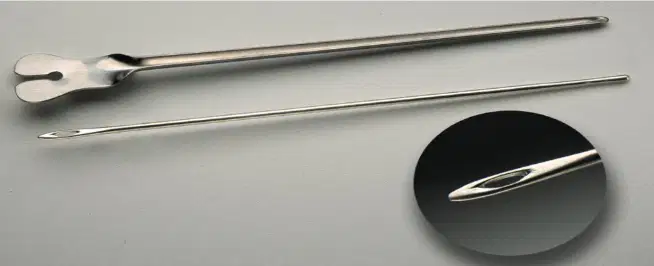
Identify the instrument shown in the image labeled 'Probe & Grooved Director'.
Probe
Dilator
Scalpel
Forceps
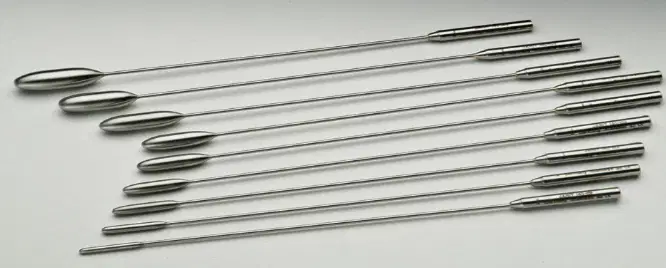
Identify the instrument shown in the image labeled 'Bakes Common Duct Dilators'.
Probe
Dilator
Retractor
Scissors
Instrument with fine teeth at the tip of the blades to grasp tissue is what?
forceps
scalpel
hemostats
retractor
Instrument to clamp blood vessels to stop bleeding or grasp tissue is what?
Forceps
scalpel
hemostats
retractor
Instrument with fine teeth at the tip of the blades to grasp tissue is what?
forceps
scalpel
hemostats
retractor
Instrument to clamp blood vessels to stop bleeding or grasp tissue is what?
Forceps
scalpel
hemostats
retractor

