
Font size
 Worksheets
2025 Pathophysiology Review!
Total questions: 18
Worksheet time: 18mins
Which of the following factors may contribute to poor wound healing? Select all that apply.
malnutrition
adequate hydration and circulation
wound infection
impaired immune response due to steroid use
recent surgery
Which of the following statement(s) accurately describe(s) dystrophic calcifications? Select all that apply.
occurring in dead or dying tissue
can often be seen by the naked eye
seen in health tissue as a result of increased serum calcium levels
often seen in atherosclerotic lesions and heart valve dysfunction
only able to be seen through microscopic examination
A client is complaining of chronic coughing and shortness of breath after working for a few weeks in a factor that produces caustic cleaning chemicals. Which type of hypersensitivity reaction is this client most likely displaying?
Type I
Type II
Type III
Type IV
Which of the following are considered "red flags" for back pain that could indicate serious disease or malignancy? Select all that apply.
associated fever/chills
unintentional weight gain
saddle anesthesia
associated issues with incontinence
history of intravenous drug use
Which of the following are part of the DSM-5-TR diagnostic criteria for major depressive disorder (MDD)? Select all that apply.
gender identification as female
anhedonia
thoughts of death or suicidal ideation
increased concentration or obsessive thoughts
insomnia or hypersomnia
Which classification of leukemia refers to derangement of the production of the B-cells, T-cells, and natural killer cells?
acute
chronic
lymphocytic
myelocytic
Which type of leukemia is the most common leukemia in adults?
acute lymphocytic leukemia (ALL)
acute myelogenous leukemia (AML)
chronic lymphocytic leukemia (CLL)
chronic myelogenous leukemia (CML)
Which type of atherosclerotic lesion is the one most likely to result in the development of a thrombus or embolus?
complicated lesion
fusiform lesion
fatty streak
fibrous atheromatous plaque
A client reports that they often feel very dizzy when they stand up too fast when getting up in the morning while they are in the nursing home. Their nurse takes their blood pressure while they are living down with a result of 122/78 mmHg. Which of the following blood pressures taken within 3 minutes of standing would result in a diagnosis of orthostatic hypotension in this client?
122/70 mmHg
106/72 mmHg
142/80 mmHg
118/66 mmHg
Which statement regarding angina is false?
Both stable and unstable angina are a result of narrowing of coronary artery lumen, but unstable angina shows irregularities on electrocardiogram (EKG).
Stable angina resolves with rest, while unstable angina can often occur during rest.
Unstable angina can often lead to a myocardial infarction, due to the instability of the atherosclerotic plaque in the coronary artery.
In both stable and unstable angina, troponin labs will be negative, due to the lack of damage to the coronary tissue.
Which of the following risk factors predispose a client to the development of a urinary tract infection (UTI)? Select all that apply.
assigned male at birth
nephrolithiasis
washout phenomenon
prostatic hyperplasia
constipation
What aspect of a client's past medical history may indicate that the metabolic acidosis that they are experiencing is a result of renal tubular acidosis (RTA)?
previous diagnosis of strep throat
recent computed tomography (CT) scan with contrast
poorly treated hypertension
previous history of nephrolithiasis with staghorn stones
A patient is on mechanical ventilation due to a diagnosis of acute respiratory distress syndrome (ARDS) resulting from multisystem organ failure. Which acid-base imbalance are they most at-risk for?
respiratory acidosis
metabolic acidosis
metabolic alkalosis
respiratory alkalosis
Which of the following signs and symptoms are seen in cystic fibrosis? Select all that apply.
barrel chest
malnutrition
airway obstruction due to thickened mucus
steatorrhea
bronchospasm
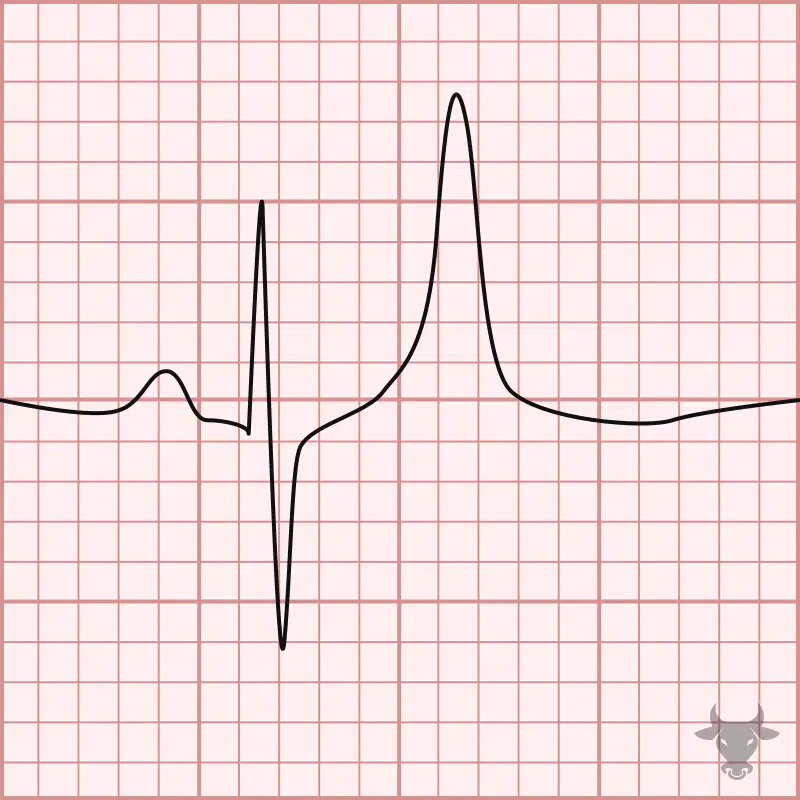
A client has been recently diagnosed with end-stage renal disease (ESRD) and is currently hospitalized to receive hemodialysis and intravenous diuretics to remove excess body fluids which were impacting their ability to breathe. Today, they started complaining about feeling a strange fluttering sensation in their chest and feeling weaker than usual. An EKG was performed, showing this tracing for each beat. What diagnosis does the nurse suspect?
hyperkalemia
hypercalcemia
hypocalcemia
hypomagnesemia
Which of the following are major sources of gastric irritation and peptic ulcer formation? Select all that apply.
excessive use of aspirin
excessive use of nonsteroidal anti-inflammatory drugs (NSAIDs)
infection with Helicobacter pylori
large intake of red meat
overuse of laxatives and stool softeners
Which of the following are possible chronic complications seen in diabetes mellitus (DM)? Select all that apply.
arterial insufficiency and foot ulcers
erectile dysfunction
myocardial infarction
cerebral infarction
chronic kidney disease (CKD)
Which of the following are risk factors that predispose a client to erectile dysfunction? Select all that apply.
hypertension
hyperlipidemia
smoking
use of antidepressants
overweight or obese BMI

