
 Worksheets
APUSH Ch 1
Total questions: 99
Worksheet time: 50mins
According to the passage, who followed Christopher Columbus to North America in the sixteenth century?
European explorers
Native Americans
Asian traders
Viking settlers
Why did some of the original colonists flee to the New World?
They may have fled poverty or religious persecution in the Old World.
They wanted to escape the warm climate of Europe.
They were searching for gold mines in the Arctic.
They were forced to leave due to overpopulation in the New World.
What vision did Americans come to embrace during the American Revolution?
A vision of their country as an independent nation.
A vision of remaining loyal to the British crown.
A vision of uniting with France as a single nation.
A vision of returning to colonial rule under Spain.
Which of the following ideals became synonymous with American life according to the passage?
Reverence for individual liberty
Self-government
Religious tolerance
All of the above
Most colonists who came to the New World were determined to create a society modeled on which customs?
English customs
Spanish customs
French customs
Dutch customs
According to the passage, what was a major difference between the New England colonies and the southern colonies?
New England had large plantations and many slaves
New England had small family farms and was more homogeneous
Southern colonies had more Quakers
Southern colonies had more merchants
Fill in the blank: The war that strengthened ties between the colonies and Britain by fighting together against the French and Indians was the ____________.
French and Indian War
Revolutionary War
War of 1812
Civil War
After 1763, what financial decision by the British government increased tensions with the American colonies?
Imposing new taxes on the colonies
Allowing more self-rule
Reducing trade restrictions
Granting independence
By the 1770s, the main issue that brought the crisis of imperial authority to a head was the colonists' demand for more self-rule and opposition to new taxes.
True
False
According to the passage, what belief united Americans during the Revolution?
The right to free trade
The unalienable rights of life, liberty, and the pursuit of happiness
The need for a king
The importance of British rule
According to the passage, how many years ago did the earth, the fifth in size among the planets, come into being?
Several billion years ago.
A few thousand years ago.
About a hundred million years ago.
Just a million years ago.
Who said the following in 1498: 'I have come to believe that this is a mighty continent which was hitherto unknown. . . . Your Highnesses have an Other World here.'?
Christopher Columbus
Vasco da Gama
Amerigo Vespucci
Ferdinand Magellan
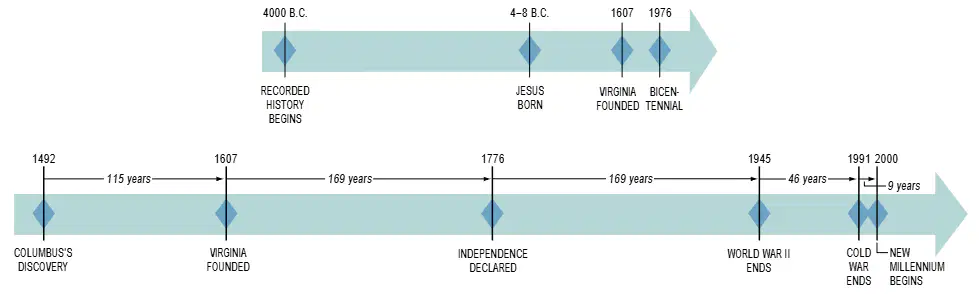
Fill in the blank: Recorded history begins around ________.
4000 B.C.
10,000 B.C.
200 A.D.
1500 B.C.
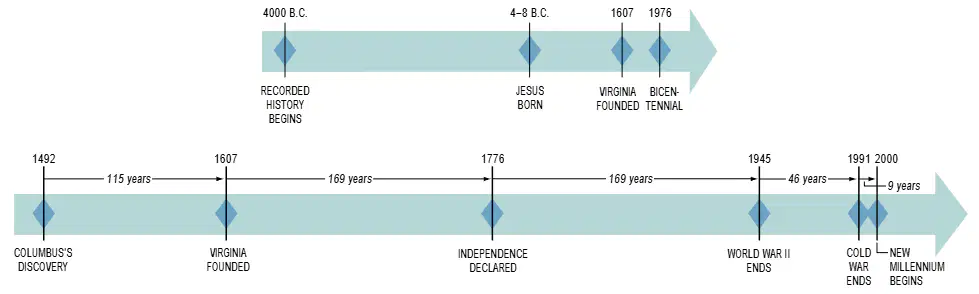
Fill in the blank: Columbus's discovery occurred in the year ________.
1492
1588
1776
1620
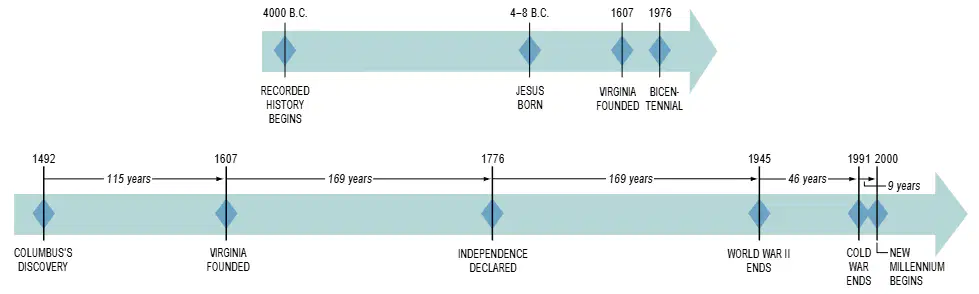
Fill in the blank: Independence was declared in the year ________.
1776
1492
1865
1914
According to the passage, what major event happened about five hundred years ago that altered the future of both the Old and New Worlds?
European explorers stumbled on the American continents.
The Industrial Revolution began in Europe.
The printing press was invented in China.
The Black Death swept through Asia.
According to the passage, about how many years ago did a single supercontinent contain all the world's dry land?
225 million years ago
65 million years ago
500 million years ago
10 million years ago
Which of the following mountain ranges is NOT mentioned as part of western North America in the passage?
The Rockies
The Sierra Nevada
The Andes
The Cascades
The passage states that the existence of a single original continent has been proved in part by the discovery of nearly identical species of what?
fish
birds
insects
reptiles
True or False: The Appalachian mountains were probably formed after continental separation, perhaps 350 million years ago.
True
False
What was the name of the massive landform that anchored the northeastern corner of North America?
Canadian Shield
Rocky Mountains
Appalachian Plateau
Great Plains
According to the passage, when did the Great Ice Age begin?
225 million years ago
10 million years ago
2 million years ago
350 million years ago
What happened to the Great Salt Lake as described in the passage?
It became a gradually shrinking inland sea, slowly evaporated, and left an arid, mineral-rich desert.
It turned into a lush forest due to increased rainfall.
It was completely drained and replaced by farmland.
It became a major shipping route connecting to the ocean.
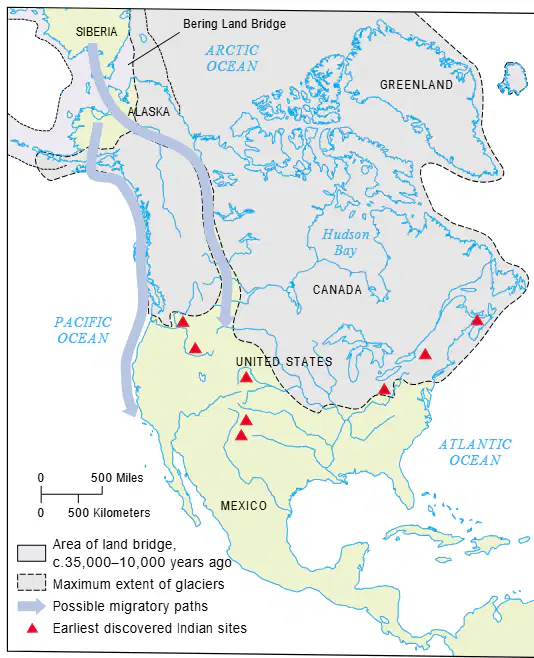
According to the most plausible theory, how did the first Americans arrive in North America?
By crossing the Atlantic Ocean
By crossing the Bering land bridge from Eurasia to North America
By flying
By walking from South America
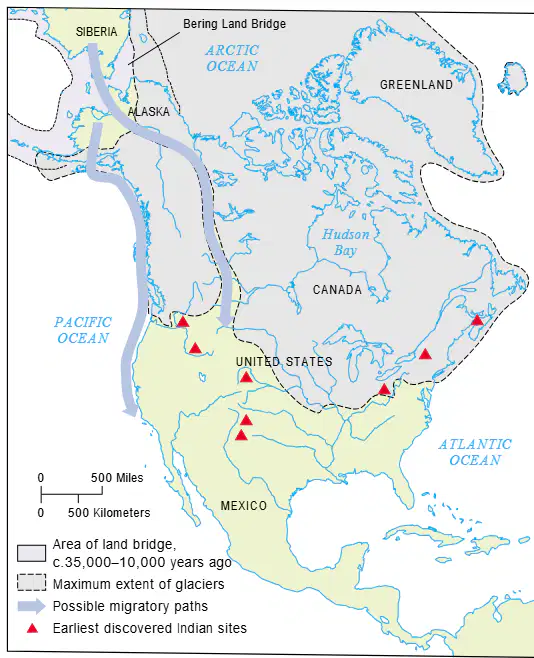
Fill in the blank: The Bering land bridge connected _______ with North America during the Ice Age.
Eurasia
Africa
Australia
South America
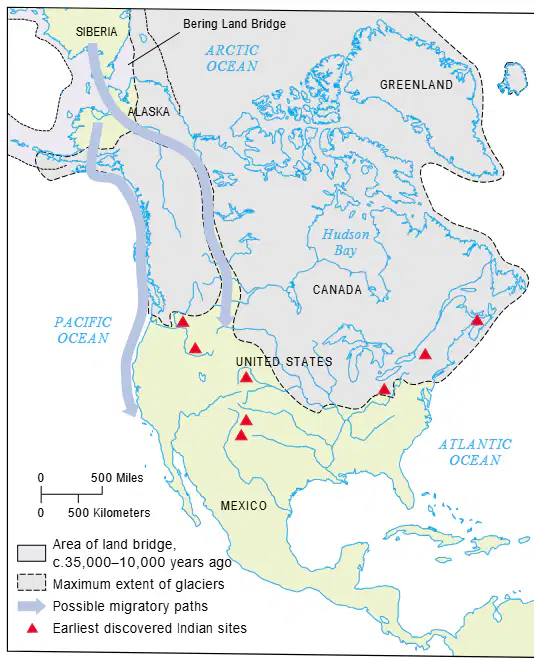
The Bering land bridge was exposed because sea levels dropped during the Ice Age.
True
False
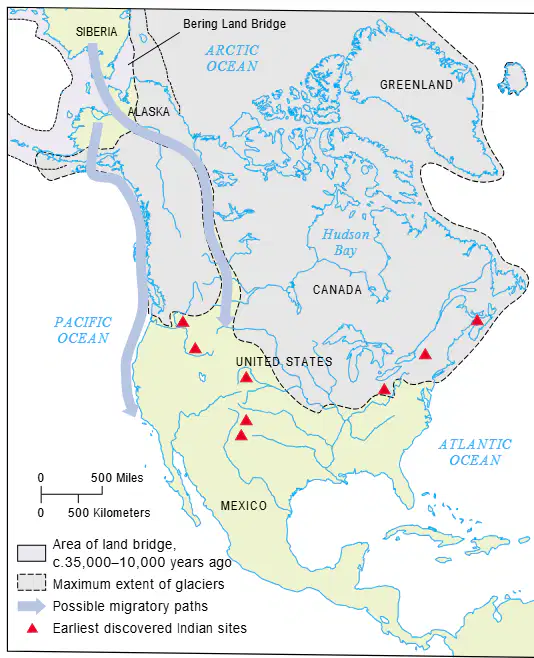
What happened to the Bering land bridge about 10,000 years ago?
It became a mountain range
It was flooded as sea levels rose
It turned into a desert
It became a forest
Fill in the blank: By the time Europeans arrived in America in 1492, approximately _______ million people inhabited the two American continents.
54
10
100
5
Which of the following civilizations is NOT mentioned as having developed in the Americas?
Incas
Mayans
Aztecs
Egyptians
The map offers further clues to the European mentality of the time. Which of the following best describes these clues?
It reflects a Eurocentric worldview and a sense of superiority over other regions.
It shows a detailed understanding of all continents equally.
It emphasizes the importance of Asian and African cultures over Europe.
It presents an unbiased and modern perspective of global geography.
Misconceptions about the geography of the Americas influenced further exploration and settlement patterns in which of the following ways?
They led explorers to search for nonexistent routes and resources.
They resulted in immediate accurate mapping of the continent.
They discouraged any further exploration of the region.
They caused settlers to avoid all coastal areas.
What crop accounted for the size and sophistication of Native American civilizations in Mexico and South America?
Corn (maize)
Wheat
Rice
Barley
By about what year had corn planting reached the present-day American Southwest?
1200 B.C.
500 B.C.
2000 B.C.
800 A.D.
The Iroquois Confederacy developed political and organizational skills to sustain a robust military alliance that menaced its neighbors, Native American and European alike, for well over a century.
True
False
Which of the following Native American groups built an elaborate pueblo of more than six hundred interconnected rooms at Chaco Canyon?
Aztecs
Anasazis
Iroquois
Creek
What does the Spanish word 'Pueblo' mean?
village
mountain
river
forest
Unlike the Europeans, what was the Native American view regarding humans and the earth?
Native Americans did not presume that humans had dominion over the earth.
Native Americans believed the earth was to be conquered and exploited.
Native Americans thought humans were superior to all other life forms.
Native Americans viewed the earth as a resource for unlimited use.

A major limitation of representing Native American territories at the time of first contact with Europeans is:
the boundaries were not fixed and often changed over time
the territories were always accurately mapped
all Native American groups had the same type of territory
European maps included every Native American group

The map accurately shows the exact original territory of each Native American group at the time of first contact with Europeans.
True
False
Fill in the blank: The Navajo and Apache peoples had migrated from present-day northern Canada to the American Southwest before the Spanish first encountered them in the ________.
1500s
1200s
1800s
1700s

Which Native American group is shown as inhabiting the Great Plains region on the map?
Sioux
Tlingit
Iroquois
Hopi
It is difficult to determine which Native American groups were originally in the southeastern and mid-Atlantic regions because:
records from that time are incomplete or missing.
the groups frequently changed their names.
the regions were uninhabited before European arrival.
Native Americans did not have any form of government.
According to the passage, what did Native Americans sometimes do to create better hunting habitats?
They ignited massive forest fires, deliberately torching thousands of acres of trees.
They built large dams to flood the forests.
They planted new forests to attract animals.
They imported new animal species for hunting.
In the year 1492, probably no more than ______ million Native Americans paddled through the whispering, primeval forests and paddled across the sparkling, virgin waters of North America.
4 million
1 million
10 million
20 million
Who were the indirect discoverers of the New World according to the passage?
Norse seafarers from Scandinavia and Christian crusaders.
Spanish conquistadors and Portuguese explorers.
Native American tribes and Polynesian navigators.
Chinese merchants and African traders.
Which of the following was NOT a product that became popular in Europe as a result of the crusades?
Silk
Spices
Gold
Perfumes
The Norse settlements in North America were supported by a strong nation-state and lasted for many years.
True
False
According to the passage, why were the luxuries of the East prohibitively expensive in Europe?
They had to be transported enormous distances from the Spice Islands (Indonesia), China, and India, in creaking ships and on swaying camelback, which made them expensive.
They were heavily taxed by European monarchs before being sold.
They were produced in limited quantities due to lack of skilled labor in the East.
They were considered illegal and could only be sold on the black market.
Who was the Italian adventurer that returned to Europe in 1295 and began telling tales of his nearly twenty-year sojourn in China?
Marco Polo
Christopher Columbus
Amerigo Vespucci
Ferdinand Magellan
Muslim middlemen made it easy and cheap for European consumers to access goods from the East.
True
False
What breakthrough in the fifteenth century allowed European sailors to sail southward along the coast of West Africa?
They developed the caravel, a ship that could sail more closely into the wind, and discovered they could return to Europe by sailing northwesterly from the African coast toward the Azores.
They learned to navigate using only the stars and the moon.
They built larger ships capable of carrying more cargo and people.
They established trading posts along the Mediterranean Sea.
What was the main reason European consumers and distributors were eager to find a new route to the riches of Asia?
To find a less expensive route to the riches of Asia or to develop alternate sources of supply.
To spread European culture and religion in Asia.
To escape political turmoil in Europe.
To establish new colonies for European settlement.
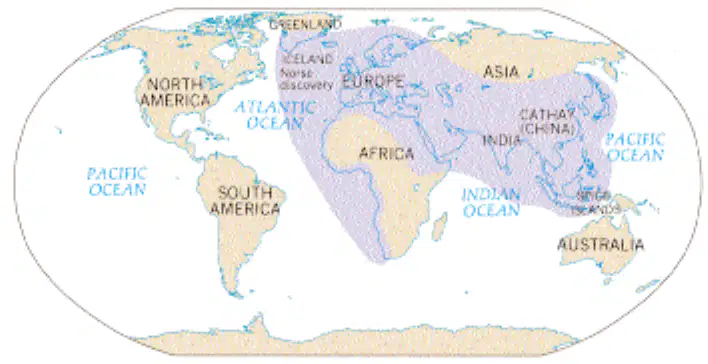
Refer to the map titled 'The World Known to Europe, 1492.' Which of the following continents was NOT known to Europeans at that time?
Africa
North America
Europe
Asia
According to the passage, what was the main reason Europeans did not have direct access to sub-Saharan Africa until the fifteenth century?
The Sahara Desert barrier had remained remote and mysterious, preventing direct access.
European ships were not advanced enough to sail to Africa.
There were strict trade bans imposed by African kingdoms.
Europeans were uninterested in African goods until the fifteenth century.
The Portuguese were the first Europeans to establish direct trade with sub-Saharan Africa in the fifteenth century.
True
False
What was one major consequence of the Portuguese involvement in the African slave trade?
It led to the origins of the modern plantation system and the large-scale exploitation of slave labor.
It resulted in the immediate abolition of slavery in Europe.
It caused the decline of European maritime exploration.
It led to the unification of all African kingdoms under Portuguese rule.
Explain how the early African slave trade fostered the extinction of regional African cultures and tribal identities, according to the passage.
Slave brokers deliberately separated persons from the same tribes and mixed unlike people together to frustrate organized resistance, which fostered the extinction of regional African cultures and tribal identities.
Slave brokers encouraged the preservation of tribal customs to maintain peace among enslaved people.
Slave traders only captured people from a single tribe to keep cultural identities intact.
The slave trade had no impact on African cultures or tribal identities.
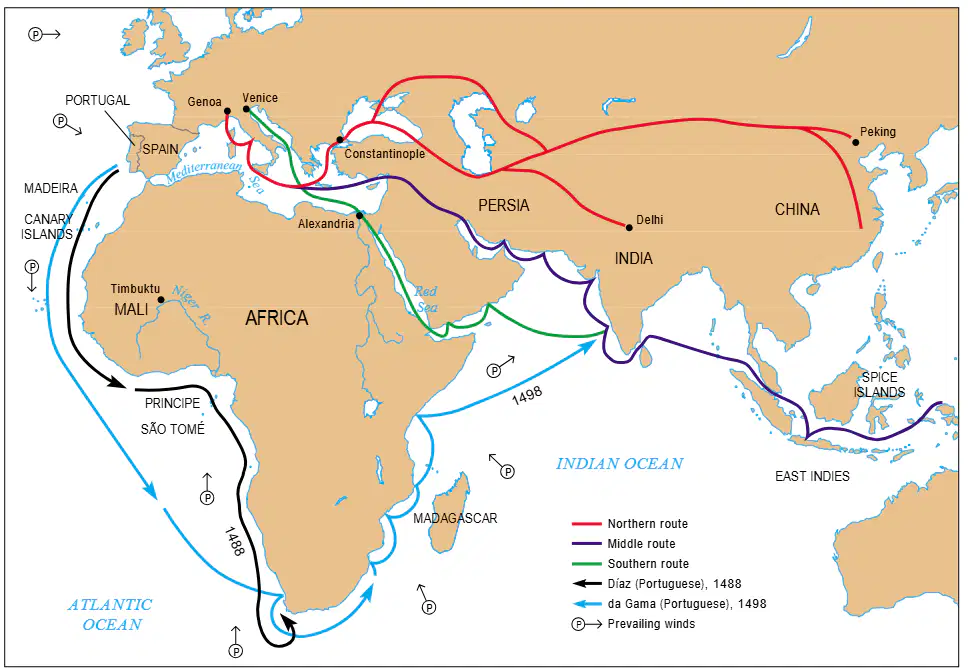
Which explorer rounded the southernmost tip of Africa in 1488?
Vasco da Gama
Christopher Columbus
Bartholomeu Dias
Ferdinand Magellan
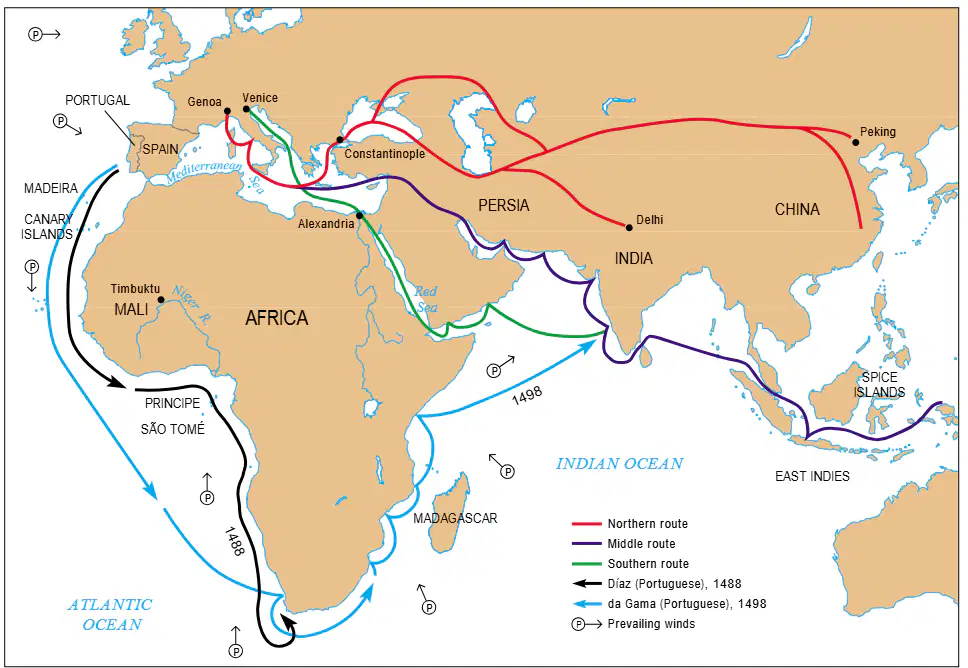
In what year did Vasco da Gama reach India?
1488
1492
1498
1502
The marriage of which two sovereigns led to the unification of Spain in the late fifteenth century?
Ferdinand of Aragon and Isabella of Castile
Vasco da Gama and Isabella of Castile
Ferdinand Magellan and Isabella of Castile
Ferdinand of Aragon and Catherine of Aragon
Refer to the passage below. The Portuguese controlled the African coast and thus controlled the ______ to the round-Africa water route to India.
gateway
currency
language
climate
The main motivation for Europeans to seek new trade routes to Asia was:
to find a direct route for valuable spices and goods
to spread Christianity to Asia
to escape from European wars
to discover new continents
Who persuaded the Spanish monarchs to outfit him with three tiny but seaworthy ships and headed westward, eventually sighting an island in the Bahamas on October 12, 1492?
Christopher Columbus
Ferdinand Magellan
Amerigo Vespucci
Hernán Cortés
Columbus was at first so certain that he had skirted the rim of the 'Indies' that he called the native peoples ________, a gross geographical misnomer that somehow stuck.
Indians
Africans
Europeans
Asians
Columbus's discovery would eventually convulse four continents. Which of the following was NOT one of those continents?
Europe
Africa
Asia
The Americas
The introduction of New World foodstuffs like maize, manioc, and sweet potatoes may have fed an African population boom that offset the losses inflicted by the slave trade.
True
False
What was one of the most important Indian gifts to the Europeans and to the rest of the world, according to the passage?
Foodstuffs such as tobacco, maize, beans, tomatoes, and especially the lowly potato.
Precious metals like gold and silver.
Advanced navigation tools and maps.
Domesticated animals such as horses and cattle.
What technological advancement, introduced about 1450, facilitated the spread of scientific knowledge and helped Columbus's voyage?
Printing presses
Steam engines
Telegraphs
Microscopes
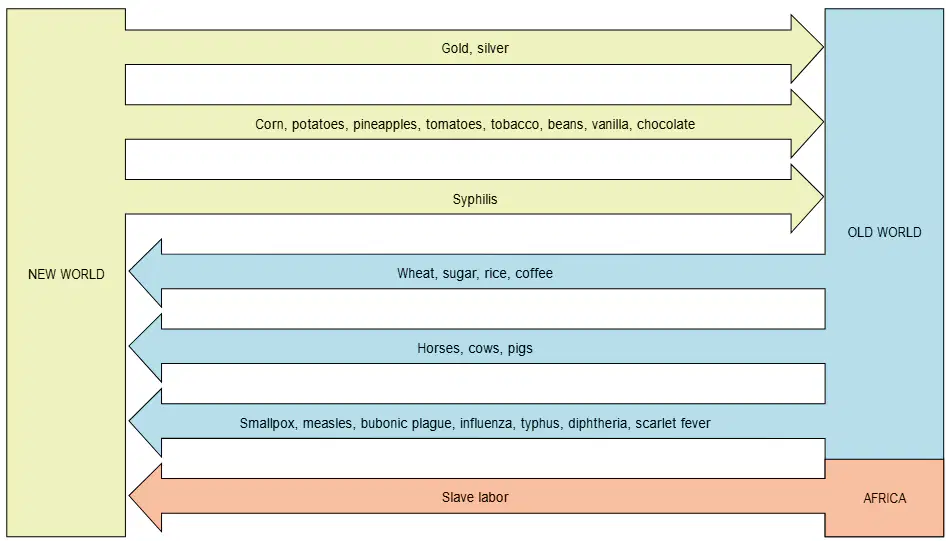
According to the passage and diagram, which of the following was brought from the Old World to the New World during the Columbian Exchange?
Corn
Horses
Syphilis
Gold
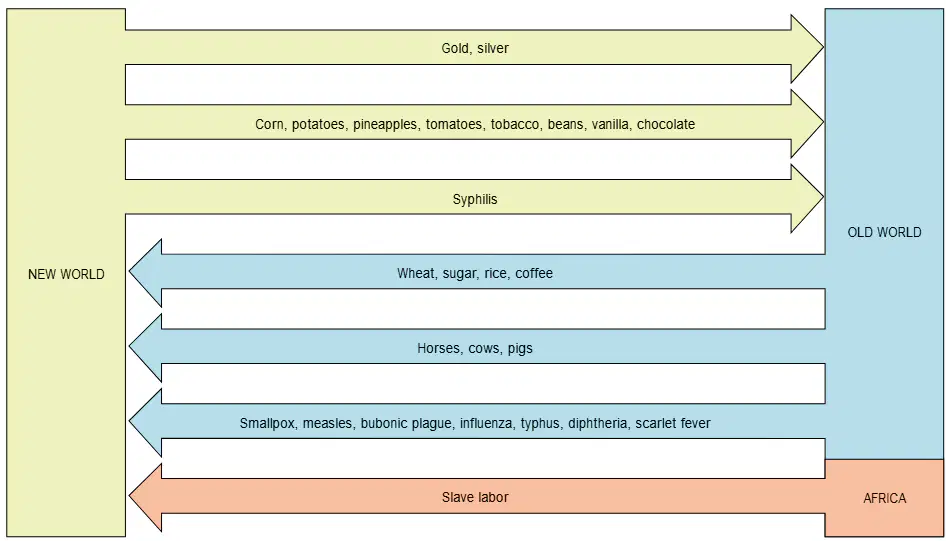
Fill in the blank: During the Columbian Exchange, ________ was introduced to the Old World from the New World, causing a significant impact on European diets.
corn
rice
wheat
barley
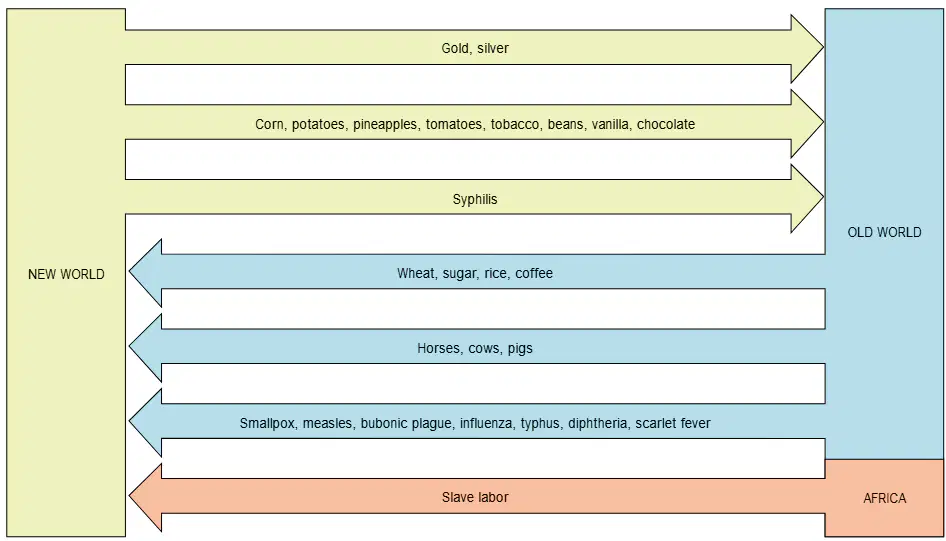
Which of the following diseases was brought from the Old World to the New World during the Columbian Exchange?
Syphilis
Smallpox
Malaria
Tuberculosis
Fill in the blank: The passage states that the lethal germs spread among the New World peoples with the speed and force of a ________.
hurricane
river
forest
mountain
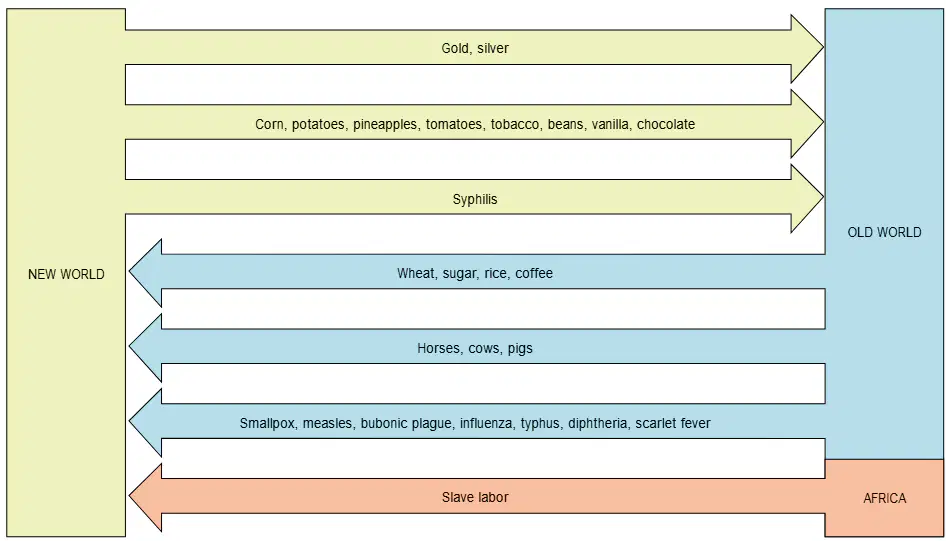
According to the diagram, which of the following was NOT exchanged from the New World to the Old World?
Gold
Wheat
Syphilis
Horses
Fill in the blank: The passage mentions that Columbus brought seedlings of ________ cane, which thrived in the warm Caribbean climate.
sugar
bamboo
corn
cotton
According to the passage, what percentage of Native Americans perished due to diseases after Columbus's landfall?
As many as 90 percent
About 10 percent
Roughly 30 percent
Nearly 50 percent
According to the passage, what disease did Indian slaves unintentionally transmit to early European explorers?
Syphilis
Malaria
Tuberculosis
Smallpox
Who was hailed as the discoverer of the Pacific Ocean?
Vasco Núñez Balboa
Ferdinand Magellan
Christopher Columbus
Hernán Cortés
Which Spanish explorer started from Spain in 1519 with five tiny ships and completed the first circumnavigation of the globe?
Ferdinand Magellan
Hernán Cortés
Francisco Pizarro
Vasco Núñez de Balboa
Bartolomé de Las Casas wrote The Destruction of the Indies in 1542 to chronicle the awful fate of the Native Americans and to protest Spanish policies in the New World.
True
False
In the Treaty of Tordesillas (1494), which country received compensating territory in Africa and Asia, as well as title to lands that one day would be Brazil?
Spain
Portugal
France
England
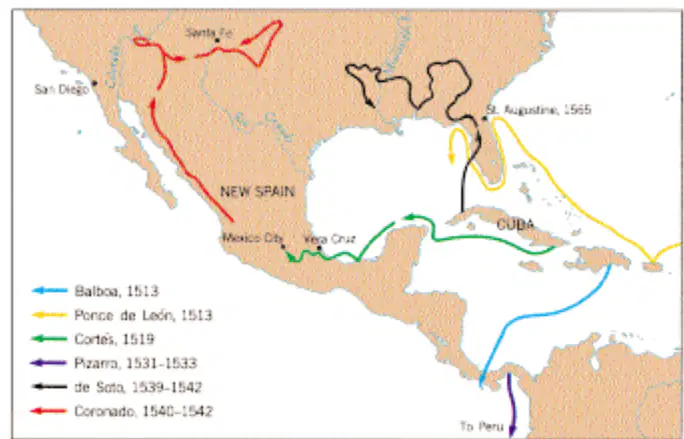
Who was the Spanish explorer that traversed northern Texas and Oklahoma in search of golden cities between 1540-1542?
Hernando de Soto
Francisco Coronado
Francisco Pizarro
Balboa
Which Spanish explorer discovered and crossed the Mississippi River during his expedition from 1539-1542?
Hernando de Soto
Francisco Pizarro
Vasco Núñez de Balboa
Juan Ponce de León
What was the main economic impact of the influx of New World silver into Spain by 1600?
It touched off a price revolution that increased consumer costs by as much as 500 percent in the hundred years after the mid-sixteenth century.
It led to a significant decrease in the Spanish population due to disease.
It resulted in the immediate abolition of feudalism in Spain.
It caused Spain to become the leading industrial power in Europe.
The encomienda system allowed the Spanish government to 'commend' Indians to certain colonists in return for the promise to try to Christianize them.
True
False
In what year did the great Moorish city of Granada in Spain fall, marking the end of a ten-year siege?
1492
1453
1517
1485
What was the main goal of the Christian kingdoms of Spain for five centuries before the fall of Granada?
To drive the North African Muslim Moors ("the Dark Ones") off the Iberian peninsula.
To establish trade routes with Asia.
To convert all of Europe to Christianity.
To form an alliance with the Ottoman Empire.
True or False: The Reconquista created a large class of men who regarded manual labor and commerce with respect.
True
False
Between 1519 and 1540, Spanish conquistadores swept across the Americas in two wide arcs of conquest. One arc went from Cuba through Mexico into what is now the southwestern United States. Where did the other arc start?
Panama
Brazil
Florida
Peru
Which two great empires did the Spanish conquistadores extinguish in the Americas?
Aztec and Incan empires
Mayan and Roman empires
Ottoman and Mongol empires
Persian and British empires
The territory claimed by the Spanish conquistadores extended from Colorado to Argentina, including much of what is now the continental United States.
True
False
According to the passage, how many men achieved the military conquest of this vast region?
One thousand
Ten thousand
Fifty thousand
One hundred thousand
Who were the conquistadores?
Native American leaders
Spanish conquerors
Portuguese sailors
French explorers
Fill in the blank: The conquistadores were mostly in their twenties and early thirties, and all knew how to wield a _____
sword
pen
hammer
bow
What was one of the main motives for some conquistadores, according to the passage?
To become farmers
To spread Christianity
To build ships
To learn new languages
The passage states that most conquistadores received titles of nobility and large rewards for their efforts.
True
False
According to the passage, what term is used for the offspring of Spanish conquerors and Indian women?
Criollos
Mestizos
Peninsulares
Mulattoes
Fill in the blank: The new race formed by the offspring of Spanish conquerors and Indian women was called _____
mestizos
peninsulares
criollos
mulattoes
According to the passage 'The Conquest of Mexico', in what year did Hernán Cortés set sail from Cuba to Mexico?
1492
1519
1521
1500
According to the passage 'The Conquest of Mexico', who was the female Indian slave that helped Cortés by translating for him?
Doña Marina
Malinche
Moctezuma
Quetzalcoatl

