
 Worksheets
Position Me Please!
Total questions: 10
Worksheet time: 3mins

What position is this patient in?
Prone
Semi-Fowlers
Supine
Side lying (Lateral)
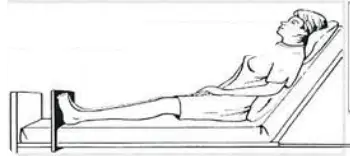
What position is this patient in?
Trendelenburg
Semi-Fowler's
Supine
Sims
Which position should a patient be in when eating or when they are having trouble breathing?
Reverse Trendelenburg
High Fowler's
Supine
Fowler's
If a patient is non-weight bearing on their LEFT side, which position would be best for them to be positioned in?
High Fowler's with legs dangling over side of the bed
Left lateral (full side-lying) position
30° tilt to the right
Prone position on the left side
In the acute rehabilitation setting, which is the BEST reason to place a patient in the supine position (lying flat on their back)?
To prevent the patient from falling asleep during therapy
To prepare for rest, certain treatments, or post surgery recovery
To improve lung expansion and make breathing easier
To help food move more easily into the stomach after eating
A patient is recovering from a hip replacement and has posterior hip precautions. Which position should you AVOID?
Supine with pillows to prevent leg crossing
Semi-Fowler's with a pillow between the knees
Side-lying with the surgical leg crossing midline
Sitting in a chair with hips higher than knees
A patient has spinal precautions (No BLT: Bend, Lift, Twist). Which actions follow these precautions?
Logrolling to reposition while keeping the spine in alignment
Twisting at the waist to reach the bedside table
Lifting the hips to scoot up in bed without help
Sitting cross-legged in bed
Which action is safe for a patient with anterior hip precautions?
Extending the leg behind the body wile standing
Sitting with hips at 90° and avoiding hip extension
Crossing the legs at the ankles
Twisting the leg inward
A patient has weakness on the left side after a stroke. Which position BEST supports their comfort and safety in bed?
Lying on the left side without pillows
Side-lying on the unaffected side with pillows supporting the affected arm and leg
Supine with arms tucked under the body
Prone with the affected arm behind the back
A patient is recovering from a stroke with complete paralysis on the left side. They are alert, have no pain, and their skin is intact. Which position would be MOST appropriate for turning them in bed during routine care?
Avoid the affected side at all times to protect it from injury
Alternate between the affected side and the unaffected side, using pillows for support and alignment
Keep them only on the unaffected side to prevent discomfort
Place them prone with the affected arm underneath for support

