
 Worksheets
Science 10 Reviewer-1st-QTR
Total questions: 85
Worksheet time: 29mins
During a geography field trip, a group of students is tasked with identifying volcanoes located in Luzon. They come across several volcanoes but need to find the one that is not situated in Luzon. The volcanoes they are considering are:
Cagua
Iriga
Hibok-hibok
Pinatubo
Grace is a geologist studying the Philippines, which is situated along the Pacific Ring of Fire where there is a high concentration of active volcanoes and earthquake activity. During her research, she discovers that one region of the Philippines has the most active volcanoes. What region is it?
Luzon
Visayas
Mindanao
equal distribution
During a geology field trip, Emma noticed that the locations of recent earthquakes were marked on a map. She observed that these earthquake epicenters seemed to align with certain features on the map. Which of the following correctly describes the relationship between the distribution of earthquake epicenters and tectonic plate boundaries?
Earthquake epicenters are randomly distributed across the Earth’s surface.
Earthquake epicenters are concentrated along tectonic plate boundaries.
Earthquake epicenters are only found in the middle of tectonic plates.
Earthquake epicenter are only found near the equator.
Why are mountain ranges often found near tectonic plate boundaries?
Mountain ranges form due to the erosion of tectonic plates
Mountain ranges form when tectonic plate collide and push the crust upward.
Mountain Ranges form due to the cooling of magma in the Earth’s crust.
Mountain ranges form only in areas with high rainfall.
Which of the following mountain ranges was formed due to the collision of Indian Plate and Eurasian Plate?
Andes
The Himalayas
The Rockies
The Alps
Why are active volcanoes commonly found along tectonic plate boundaries?
Because tectonic plates are stationary
Because tectonic plate interactions create conditions for magma to rise
Because tectonic plates are made of magma
Because tectonic plates are always converging
Compute the distance from the epicenter of the recording station in Puerto Princesa
560 kilometers
480 kilometers
400 kilometers
500 kilometers
What type of plate boundaries is characterized by two tectonic plates moving away from each other?
Convergent
Divergent
Transform
Subduction Zone
Which of the following happens at a transform plate boundary?
Plates move apart, creating new crust
Plates collide, forming mountains and trenches
Plates slide past each other horizontally
One plate is forced under another into the mantle.
What kind of plate boundary exists between the South American plate and the Antarctic plate?
Convergent boundary
Divergent boundary
Transform Fault boundary
Transverse boundary
What kind of plate boundary exist between the North American plate and the Eurasian plate?
Convergent plate boundary
Divergent boundary
Transform Fault boundary
Transverse boundary
All of the following places are prone to earthquake EXCEPT
Western Coast of South America
Western Coast of North America
East and South East Asia
Large part of Europe
What geological feature is commonly formed at convergent plate boundaries?
Mid-ocean ridges
Volcanic arcs
Fault lines
Rift valleys
Which geological feature is most commonly associated with the convergence of an oceanic plate and a continental plate?
A mountain range
A deep ocean trench
A transform fault
A mid-ocean ridge
What happens to the lithosphere at divergent boundaries?
It is destroyed
It remains unchanged
It is created
It is compressed
Which of the following correctly describes the formation of volcanic island arc?
Islands are created along the mid ocean ridge as new oceanic crust is formed.
Island arcs are created along a subduction zone as oceanic crust is forced back down into the mantle.
Islands are created one at a time as the plates move across a hotspot in the Mantle.
Islands are created as pressure is released when two tectonic plates are pulled apart.
What is the primary factor that determines whether subduction zone occurs at a convergent boundary?
The density of the colliding plates
The speed of plate movement
The presence of water in the mantle
The thickness of the crust
What happens to the lithosphere at convergent boundaries?
It is created through seafloor spreading.
It is destroyed through subduction
It remains unchanged
It becomes part of the asthenosphere.
Which of the following happens to the oceanic crust as it moves away from a mid-ocean ridge?
It becomes younger and thinner.
It remains the same age and thickness.
It becomes older and thicker.
It is destroyed by subduction.
Plate boundaries usually construct, destruct or conserve the rocky material of the Earth’s crust as follows:
Divergent boundaries destruct, convergent boundaries construct, and transform boundaries conserve the crust.
Divergent boundaries construct, convergent boundaries destruct, and transform boundaries conserve the crust.
Divergent boundaries construct, and convergent and transform boundaries destruct the crust.
Divergent boundaries conserve, and convergent and transform boundaries destruct the crust.
What is the Earth’s core primarily made of?
Iron and Nickel
Silicon and Oxygen
Carbon and Hydrogen
Magnesium and Aluminum
Which layer of the Earth is responsible for generating the planet’s magnetic field?
Crust
Mantle
Outer core
Inner Core
The movement of the lithospheric plates is facilitated by a soft, weak and plastic-like layer. Which of the following layers is described in the statement?
Atmosphere
Asthenosphere
Mantle
Crust
Which of the following layers is described in the statement?
Atmosphere
Asthenosphere
Mantle
Lithosphere
The following statements are true about the Earth’s mantle EXCEPT
It is located beneath the crust
It is the thickest part of the Earth
Its high temperature and pressure allows the solid rock to flow slowly
Its mineral compositions are believed to have solidified as a result of pressure freezing.
The following are true about seismic waves EXCEPT
P-wave is a pulse of energy that travels quickly through the Earth and through liquids.
S wave travels faster than P-wave.
P wave can travel through liquids, while S waves cannot.
There is a portion inside the Earth that does not conduct the propagation of S-wave.
Which of the following is the primary reason why the Earth’s outer core is liquid while the inner core is solid?
The outer core is composed of different materials than the inner core
The outer core is under less pressure than the inner core
The outer core is at a lower temperature than the inner core.
The outer core contains more water than the inner core.
What part do convection currents play in the plate tectonics theory?
They cause earthquake.
They drive the movement of tectonic plates by transferring heat within the mantle.
They control the Earth’s magnetic field.
They create volcanic eruptions.
The theory that states that pieces of Earth’s crust are in constant, slow motion driven by movement in the mantle is called
The theory of continental drift.
The theory of Pangaea.
The theory of plate tectonics.
The theory of plate boundaries.
How does slab pull contribute to plate movement?
By pushing plate apart at mid ocean ridges
By pulling a sub-ducting plate downward into the mantle.
By creating convection currents in the mantle.
By causing volcanic eruptions
Which of the following describes the role of ridge push in tectonic plate movement?
It pulls plate downward into the mantle
It pushes plates apart at mid-ocean ridges
It causes plates to collide and form mountains.
It stops plate movement entirely.
How do mantle convection currents contribute to the formation of mid-ocean ridges?
By pulling tectonic plates apart.
By pushing tectonic plates together.
By creating volcanic hotspot
By generating earthquakes.
Which of the following is TRUE about the reason why Pacific Ocean is getting smaller and why Atlantic Ocean gets wider?
When the seafloor spreading is slower than subduction, ocean shrinks.
When subduction is slower than sea floor spreading, ocean shrinks
When subduction is faster than seafloor spreading, ocean gets wider
When seafloor spreading is faster than subduction, ocean gets wider.
How is it possible for a new crust to be formed without increasing the surface area of the Earth?
Crust is recycled in subduction zone at the same time it is created in mid-ocean ridges.
New crust breaks easily than old crust.
The new crust is underwater where it sinks
The old crust just breaks apart as the Earth moves.
Which is TRUE about Pangaea?
It was a supercontinent that eventually broke up from about 200 million to 50 million years ago.
It was the ocean that covered most of the Earth 200 million years ago.
It is the layer of the Earth that generates plate motion.
It was the plague that most likely killed the dinosaurs.
Which of the following findings that support Sea Floor Spreading Theory is not TRUE?
Rocks are younger at the mid-ocean ridge.
Rocks far from the mid ocean ridge are older.
Sediments are thicker at the ridge.
Rocks at the ocean floor are younger than those at the continents.
Which of the following was not used by Wegener as evidence of Continental Drift Theory?
Fossils that were common to many continents.
Evidence of Glaciation on widely separated continents.
The geometric fit of the continents.
Magnetic anomalies on the seafloor.
What do you think was her answer?
Igneous Rock
Sedimentary Rock
Metamorphic Rock
All of these contain fossils
Why was Alfred Wegener’s theory initially rejected by many scientists?
He lacked a mechanism to explain how continents moved.
He did not publish his findings.
He proposed the theory too late.
He did not provide any evidence.
How do researcher study plate movement using GPS technology?
GPS tracks the positions of stars and planets.
GPS measures the rotation of the Earth.
GPS monitors the movement of tectonic plates by measuring ground displacement
GPS calculates the speed of ocean currents.
Which type of rock evidence supports the theory of plate movement?
Similar rock formations found on different continents.
Rocks found only in volcanic regions.
Rocks formed by erosion.
Rocks found in deserts.
How does magnetic striping on the ocean floor support the theory of plate movement?
It shows the alignment of stars.
It indicates the reversal of Earth’s magnetic field over time.
It measures the depth of the ocean.
It tracks the movement of tectonic plates.
How can ancient fossils found on different continents support the theory of plate tectonics?
Fossils support the idea that continents have never moved.
Similar fossils found on now separated continents suggest that they were once connected.
Fossils are only found near volcanoes.
Fossils only exist on the ocean floor.
What problem or difficulties (challenges or controversies) do scientists still disagree on in the subject of plate tectonics?
The rate of plate movement is well understood.
The existence of subduction zone is widely accepted.
The cause of mantle convection is still a topic of research and discussion.
There are no challenges or controversies in plate tectonics.
Linear magnetic patterns associated with mid-ocean ridges are configured as
concentric circles about a rising plume of hot mantle rocks.
normal and reversed magnetized stripes roughly perpendicular to the ridge.
normal and reversed magnetized stripes roughly parallel to the ridge.
stripes on both sides are of different size and polarity.
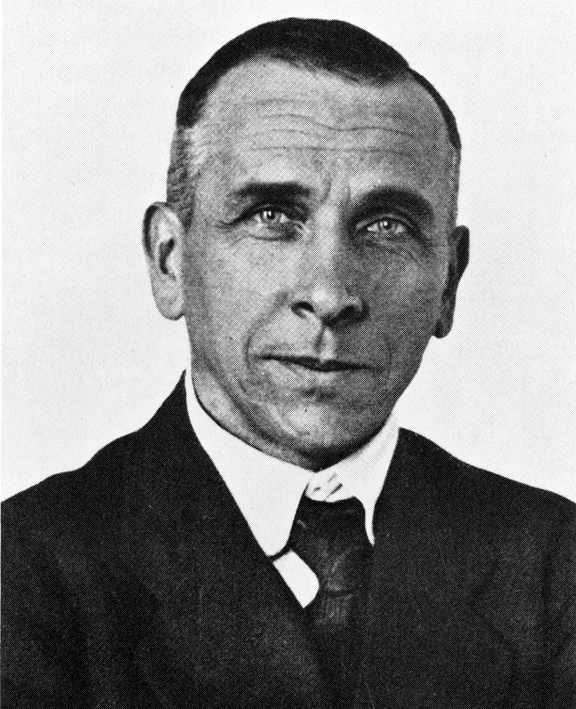
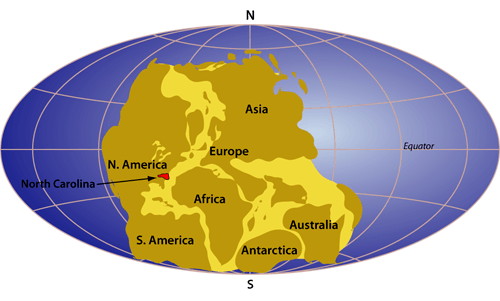

These are remains of dead plants or animals preserved in rock.
Glaciers
Dinosaurs
Bones
Fossils
What does the word Pangea mean?
supercontinent
old land
big land mass
all of the above
About 120 million years ago, the Pangaea had split into two major continents named ___________.
Eurasia and India
Australia and Antartica
South America and Africa
Laurasia and Gondwanaland
He has credited for the idea on Continental Drift.
Charles Darwin
Robert Dietz
Alfred Lothar Wegener
Harry Hammond Hess
All continents were once joined together forming a supercontinent called______.
Laurasia
Phanthalasa
Gondwanaland
Pangaea
It's possible the most important fossils plant evidence that continents are drifting.
Lystrosaurus
Glossopteris
Mesosaurus
Cygnonathus
Which among the choices was NOT used by Wegener as an evidence to support the Continental Drift Theory?
fossils
magnetic reversal
climate
rocks
What are the evidences gathered by Alfred Wegener to support his Continental Drift Theory.
observing the map
remains of dead plants and animals
continental fit, rocks, coal deposits, ancient climate and glaciers scars
ancient climate in Antarctica and Africa
The continents move very slowly, only a few ______ per year.
meters
kilometers
centimeters
miles
The east coast of South America seems to fit into the west coast of Africa, this evidence for Continental Drift is called
fossil evidence
fit/shape of continents
geologic evidence
climate evidence
Scientist did not believe Wegener's theory because continental Drift is a slow process and there is no explanation for
how the continents move
how to measure the continents
Wegener being a silly man
Antarctica having fern fossils.
Wegener noticed similar rock layers on different continents separated by oceans.
true
false
Scientists think that the continents once formed a giant landmass that broke apart, and then slowly drifted apart. What is the name given to this hypothesis?
seafloor spreading
plate tectonics
continental drift
Pangaea
The movement of the tectonic plates is caused by
the rotation of the Earth.
convection currents in the Asthenosphere
the gravity of the iron-nickel core.
the Moho discontinuity.
In some areas of the world, like California and Japan, earthquakes are a common occurrence. How can this best be explained?
The strong ocean currents are undermining both areas causing earthquakes.
Both areas are located near the edge of the Pacific Ocean, the unstable sand causes earthquakes.
Both areas are subjected to strong ocean wind and waves that causes earthquakes.
Both areas are on the boundary of active plates, the motion of the plates causes earthquakes.
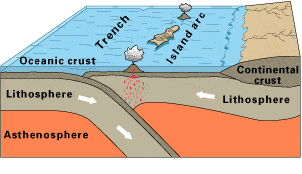
Observe this diagram of a plate boundary. One statement BEST describes what is happening. It is that
the oceanic crust is melting.
the denser ceanic crust is subducting under the less dense oceanic crust
volcanic islands are forming.
the tectonic plates are moving away from each other.
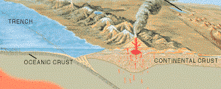
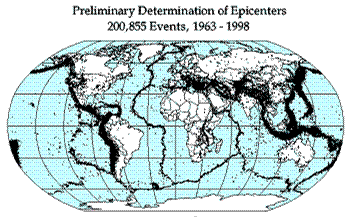
Earthquake epicenters (center of where the earthquakes started) were mapped for a 35 year period in the diagram above. The black dots indicate these epicenters. The black dots appear along what feature on Earth?
hot spots
plate boundaries
rift zones
sea floor spreading
The 2004 Indian Ocean tsunami was caused by a shift in two plates that pushed one section of the sea floor under another section of the sea floor by 5 meters. What type of boundary is this?
divergent
convergent
transform
metamorphic
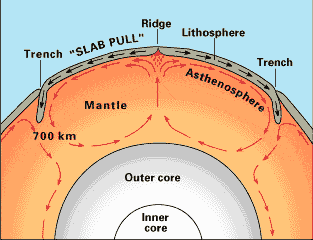
What is the source of energy that drives plate movement?
the subducton of the sea floor
the different densities of the oceanic and crustal plates
convection currents in the asthenosphere
the friction force between the plates that move past each other

Below is a picture of sea-floor spreading. How are the ocean crusts moving?
Converging
Diverging
Sliding
No movement
The San Andreas Fault in California is known as an active earthquake area. What type of
boundary is it?
Converging
Diverging
Transform
Sea Floor Spreading
The rigid section of the earth that move as a unit is called..........
Gravitational Pull
Tectonic plates
All of the following are geologic features except..........
rift valley
earthquake
moutains

