
 Worksheets
Fall Final 25/26
Total questions: 86
Worksheet time: 43mins
What is the main difference between RNA and DNA in terms of sugar composition?
RNA contains deoxyribose, while DNA contains ribose.
RNA contains ribose, while DNA contains deoxyribose.
Both RNA and DNA contain ribose.
Both RNA and DNA contain deoxyribose.
Which base is found in RNA but not in DNA?
Adenine
Cytosine
Thymine
Uracil
What are the three main types of RNA?
Messenger RNA, ribosomal RNA, and transfer RNA
Messenger RNA, transcription RNA, and exon RNA
Ribosomal RNA, promoter RNA, and intron RNA
Transfer RNA, exon RNA, and transcription RNA
What is the role of codons in protein synthesis?
Codons are used to replicate DNA.
Codons are sequences of three bases in mRNA that specify amino acids.
Codons are enzymes that break down proteins.
Codons are structures that transport RNA.
How many possible three-base codons exist in the genetic code?
20
32
64
128
What process involves the assembly of amino acids into polypeptide chains using mRNA?
Transcription
Translation
Replication
Anticodon synthesis
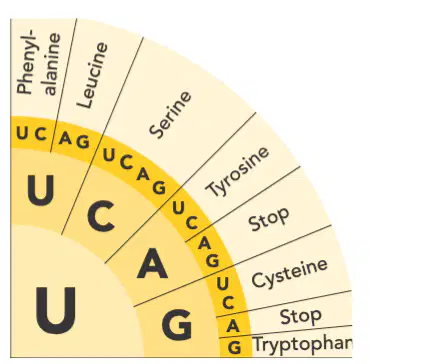
Which amino acid is specified by the codon UAC?
Tyrosine
Serine
Cysteine
Tryptophan
What is the function of ribosomes in protein synthesis?
Ribosomes replicate DNA.
Ribosomes use mRNA codons to assemble amino acids into polypeptide chains.
Ribosomes transport RNA molecules.
Ribosomes break down proteins into amino acids.
What is the genetic code composed of?
Four bases: adenine, cytosine, guanine, and uracil
Three bases: adenine, thymine, and guanine
Five bases: adenine, cytosine, guanine, thymine, and uracil
Two bases: adenine and guanine
What determines the shape and function of a protein?
The sequence of codons in DNA
The order in which amino acids are joined in a peptide
The number of ribosomes in a cell
The amount of RNA polymerase present
What is the role of DNA-binding proteins in prokaryotes?
They regulate genes by controlling transcription.
They bind amino acids to ribosomes.
They produce mutations in DNA.
They duplicate chromosomes.
Which of the following is an example of a master control gene?
Operon
Homeobox gene
Transcription factor
Introns
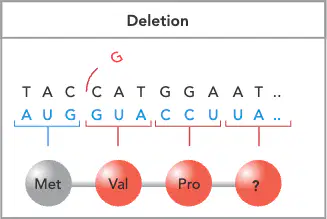
What is a frameshift mutation?
A change in a single base pair.
The insertion or deletion of one or many bases in DNA, shifting the "reading frame" of the genetic message.
Duplication of chromosomes.
Interaction of mutagens with DNA.
What is the most harmful effect of mutations caused by mutagens?
Duplication of chromosomes.
Production of genetic disorders such as cancer.
Translocation of DNA.
Inversion of chromosomes.
What is the function of tRNA in protein synthesis?
It regulates gene expression.
It binds amino acids, brings them to the ribosomes, and reads the mRNA codons by base pairing.
It transcribes DNA into RNA.
It duplicates chromosomes.
Which molecule is responsible for controlling transcription in eukaryotic genes?
Transcription factors
tRNA
rRNA
Introns
What did Hershey and Chase's experiment with bacteriophages confirm about DNA?
DNA is not found in viruses or bacteria.
DNA is the genetic material found in genes in all living cells.
Proteins are the genetic material in living organisms.
DNA cannot store or transmit genetic information.
What is the primary function of DNA in a cell?
To store, copy, and transmit genetic information.
To produce energy for cellular processes.
To create proteins directly.
To act as a structural component of the cell.
What is DNA made up of?
Proteins joined by peptide bonds.
Nucleotides joined into long strands or chains by covalent bonds.
Lipids joined by hydrogen bonds.
Amino acids joined by ionic bonds.
What did Franklin's X-ray pattern help Watson and Crick to do?
Discover the function of proteins.
Build a model explaining the structure and properties of DNA.
Identify the role of RNA in cells.
Prove that DNA is not a double helix.
What does the double-helix model of DNA explain?
The process of protein synthesis.
Chargaff's rule of base pairing and the way DNA strands are held together.
The role of RNA in genetic transmission.
The function of enzymes in DNA replication.
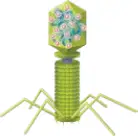
Which radioactive isotope was used to label DNA in Hershey and Chase's experiment?
Sulfur-35
Phosphorus-32
Carbon-14
Hydrogen-3
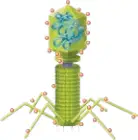
Which radioactive isotope was used to label proteins in Hershey and Chase's experiment?
Sulfur-35
Phosphorus-32
Carbon-14
Hydrogen-3
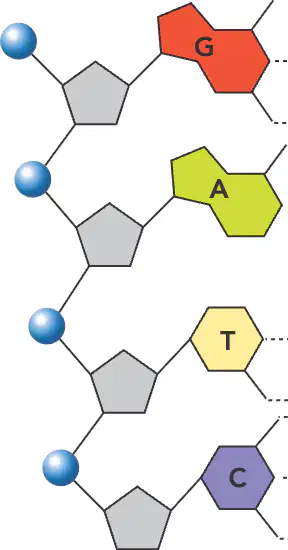
What is the base pairing rule in DNA?
A pairs with G, and T pairs with C.
A pairs with T, and G pairs with C.
A pairs with C, and G pairs with T.
A pairs with A, and G pairs with G.
What is the role of DNA polymerase during DNA replication?
It separates the two strands of DNA.
It joins individual nucleotides to produce a new strand of DNA.
It replicates the telomeres in eukaryotic cells.
It activates cancer cells for rapid growth.
Which enzyme is responsible for replicating the telomeres in eukaryotic cells?
DNA polymerase
Telomerase
Helicase
Ligase
In prokaryotic cells, DNA replication starts at:
Dozens of points on the DNA molecule.
Hundreds of points on the DNA molecule.
A single point and proceeds in two directions.
The telomeres of the chromosome.
What is the significance of telomerase being switched off in adult cells?
It prevents cancer cells from growing.
It allows chromosomes to replicate faster.
It limits the growth and proliferation of cells.
It enables DNA polymerase to function effectively.
Which rule explains the pairing of nitrogenous bases in DNA?
Hershey-Chase experiment
Chargaff's rule
Watson-Crick model
Franklin's discovery
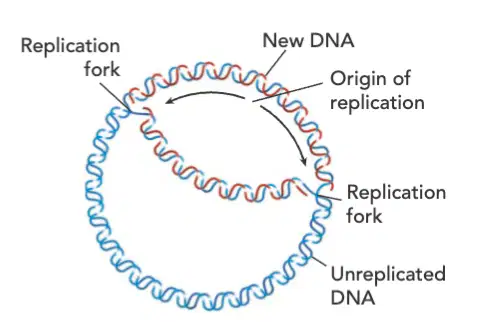
Diagram showing the replication fork, origin of replication, and unreplicated DNA.
This diagram illustrates the replication fork, origin of replication, and unreplicated DNA.
This diagram shows only the replication fork and no origin of replication.
This diagram displays only unreplicated DNA without a replication fork.
This diagram represents the process of transcription, not replication.
What is the scientific study of biological inheritance called?
Evolution
Genetics
Ecology
Anatomy
According to Gregor Mendel's experiments, traits are passed from one generation to the next by means of what?
Cells
Chromosomes
Genes
Proteins
What happens to recessive traits during gamete formation?
They are masked by dominant alleles.
They disappear permanently.
They combine with dominant traits.
They are expressed more frequently.
What does the principle of independent assortment state?
Traits are inherited together.
Genes for different traits segregate independently during gamete formation.
Dominant traits always mask recessive traits.
Traits are passed only through dominant alleles.
Which tool is used to predict genotype and phenotype combinations in genetic crosses?
Genetic map
Punnett square
DNA sequence
Chromosome chart
What is the term for an organism that has two different alleles for a particular trait?
Homozygous
Heterozygous
Genotype
Phenotype
Which of the following is NOT a concept related to Mendel’s principles?
Probability
Independent assortment
Segregation
Photosynthesis
What is the term used to describe a situation where the alleles for a particular trait are neither completely dominant nor completely recessive?
Codominance
Incomplete dominance
Polygenic trait
Multiple alleles
Which of the following is an example of a non-Mendelian pattern of inheritance?
Dominance
Codominance
Recessive traits
Independent assortment
What is the result of meiosis in terms of daughter cells?
Two diploid cells
Four haploid cells
Two haploid cells
Four diploid cells
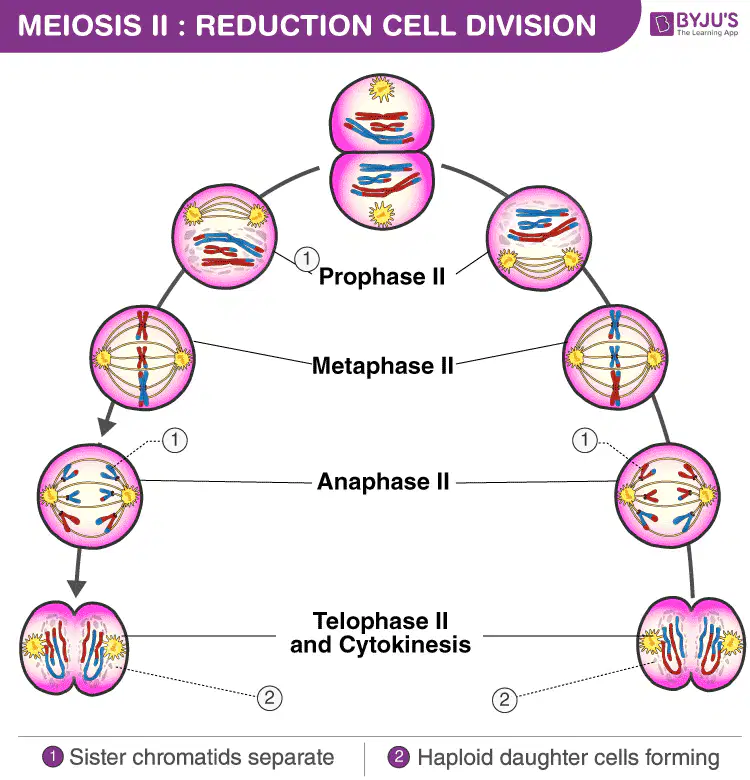
During which phase of meiosis do homologous chromosomes line up across the center of the cell?
Prophase I
Metaphase I
Anaphase I
Telophase I
What is the main difference between mitosis and meiosis in terms of chromosome number?
Mitosis reduces the chromosome number by half, while meiosis does not.
Meiosis reduces the chromosome number by half, while mitosis does not.
Both mitosis and meiosis reduce the chromosome number by half.
Neither mitosis nor meiosis changes the chromosome number.
What is the term for the process where homologous chromosomes are separated during meiosis?
Crossing-over
Cytokinesis
Tetrad formation
Anaphase I
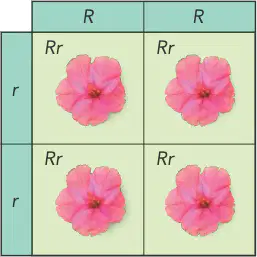
What pattern of inheritance is shown in the diagram above?
Complete dominance
Incomplete dominance
Codominance
Polygenic inheritance
How many cell divisions occur during meiosis?
One
Two
Three
Four
Which of the following terms refers to a set of four chromatids formed during meiosis?
Tetrad
Diploid
Haploid
Homologous
What is the role of mitosis in an organism?
Production of gametes
Growth and repair of tissues
Reduction of chromosome number
Formation of haploid cells
What is the smallest living unit of any organism?
Tissue
Cell
Organ
Molecule
Who discovered cells, and in which century?
Scientists in the 1500s
Scientists in the 1600s
Scientists in the 1700s
Scientists in the 1800s
What is the main difference between prokaryotic and eukaryotic cells?
Prokaryotic cells have a nucleus, while eukaryotic cells do not.
Eukaryotic cells have a nucleus, while prokaryotic cells do not.
Prokaryotic cells are larger and more complex than eukaryotic cells.
Eukaryotic cells lack DNA, while prokaryotic cells contain DNA.
What is the function of the Golgi apparatus in a cell?
Produces energy for the cell
Sorts and packages proteins and other materials
Stores water, salts, and carbohydrates
Breaks down nutrients in the cell
Which organelle is responsible for producing energy-rich compounds using sunlight in plant cells?
Mitochondrion
Chloroplast
Ribosome
Lysosome
What is the primary role of the cytoskeleton in eukaryotic cells?
Stores nutrients
Maintains shape and aids in movement
Produces proteins
Breaks down waste
What is the composition of cell membranes that regulate substances entering and leaving the cell?
Protein and carbohydrates
Lipid bilayer and selectively permeable structure
DNA and ribosomes
Chloroplasts and mitochondria
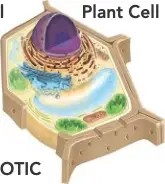
Which of the following is NOT a function of lysosomes?
Breaking down nutrients
Storing water and salts
Digesting waste materials
Enzymatic breakdown of carbohydrates
What is the role of ribosomes in a cell?
Assembling proteins
Storing genetic material
Producing energy
Breaking down waste
What is the function of mitochondria in cells?
Producing energy the cell can use
Storing water and salts
Breaking down carbohydrates
Sorting and packaging proteins
What is the movement of molecules across the cell membrane without the use of energy called?
Active transport
Passive transport
Facilitated diffusion
Osmosis
Which type of solution has a higher concentration of solutes compared to another solution?
Isotonic
Hypotonic
Hypertonic
Osmotic
What is the role of aquaporins in the cell membrane?
Transport of large molecules
Movement of water through the membrane
Facilitating active transport
Breaking down solutes
What is the process called when water moves across a membrane from an area of low solute concentration to high solute concentration?
Diffusion
Osmosis
Active transport
Facilitated diffusion
In multicellular organisms, what is a group of similar cells that perform a specific function called?
Organ
Tissue
Organ system
Receptor
Which of the following is an example of active transport?
Diffusion
Osmosis
Molecular transport of small molecules using proteins
Movement of molecules through aquaporins
What do all forms of active transport have in common?
They require energy
They occur without energy
They involve aquaporins
They only move water molecules
How do unicellular organisms maintain homeostasis?
By forming tissues and organs
By growing, responding to the environment, using energy, and reproducing
By relying on multicellular organisms
By forming organ systems
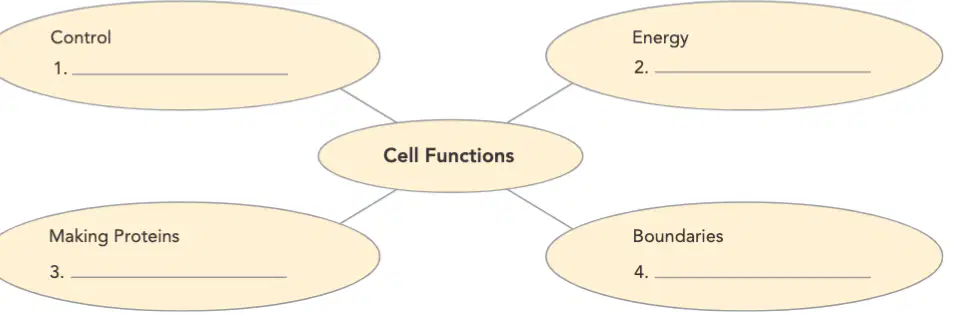
A concept map shows cell functions with blanks for control, energy, making proteins, and boundaries. Which of the following correctly matches a cell function to its role?
Control - Nucleus
Energy - Ribosome
Making proteins - Cell membrane
Boundaries - Mitochondria
What is the smallest living unit of any organism?
Tissue
Organ
Cell
Molecule
Who discovered cells, and in which century?
Scientists in the 1500s
Scientists in the 1600s
Scientists in the 1700s
Scientists in the 1800s
What is the main difference between prokaryotic and eukaryotic cells?
Prokaryotic cells have a nucleus, while eukaryotic cells do not.
Eukaryotic cells have a nucleus, while prokaryotic cells do not.
Prokaryotic cells are larger and more complex than eukaryotic cells.
Eukaryotic cells lack DNA, while prokaryotic cells contain DNA.
What is the function of the Golgi apparatus in a cell?
Produces energy for the cell
Sorts and packages proteins and other materials
Stores water, salts, and carbohydrates
Breaks down nutrients in the cell
Which organelle is responsible for producing energy-rich compounds using sunlight in plant cells?
Mitochondrion
Chloroplast
Ribosome
Lysosome
What is the role of the cytoskeleton in eukaryotic cells?
Stores nutrients
Maintains shape and aids in movement
Produces proteins
Protects the cell from external damage
What is the primary function of lysosomes in a cell?
Store water and salts
Break down nutrients and waste
Produce proteins
Regulate substances entering and leaving the cell
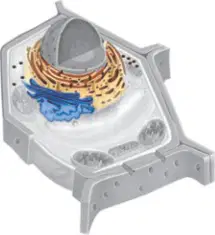
What is the composition of cell membranes that regulate substances entering and leaving the cell?
Protein and carbohydrates
Lipid bilayer and selectively permeable structure
DNA and ribosomes
Chloroplasts and mitochondria
Which organelle is responsible for assembling proteins in the cell?
Ribosome
Lysosome
Chloroplast
Vacuole
What is the role of mitochondria in cells?
Produces proteins
Converts chemical energy into compounds the cell can use
Stores water and salts
Breaks down waste materials
What is the movement of molecules across the cell membrane without the use of energy called?
Active transport
Passive transport
Facilitated diffusion
Osmosis
Which type of solution has a higher concentration of solutes compared to another solution?
Isotonic
Hypotonic
Hypertonic
Osmotic
What is the role of aquaporins in the cell membrane?
Transport of proteins
Movement of water
Diffusion of gases
Active transport of ions
What is the process called when water moves across a membrane from an area of low solute concentration to high solute concentration?
Diffusion
Osmosis
Active transport
Facilitated diffusion
In multicellular organisms, what is a group of similar cells that perform a specific function called?
Organ
Tissue
Organ system
Receptor
Which of the following is an example of active transport?
Diffusion
Osmosis
Molecular transport of small molecules using proteins
Movement of water through aquaporins
How do unicellular organisms maintain homeostasis?
By forming tissues and organs
By growing, responding to the environment, using energy, and reproducing
By communicating with other cells
By forming organ systems
What is the term for the movement of molecules through protein channels in the cell membrane?
Active transport
Facilitated diffusion
Osmosis
Passive transport
What do all forms of active transport have in common?
They require energy.
They occur without energy.
They involve water movement.
They use aquaporins.
How is the pumping action of contractile vacuoles an example of how a cell maintains homeostasis?
It helps in the diffusion of gases.
It regulates water balance in the cell.
It facilitates the movement of proteins.
It aids in the transport of ions.

