
 Worksheets
Chapter 8 Cells and Cell processes
Total questions: 81
Worksheet time: 1hrs 21mins
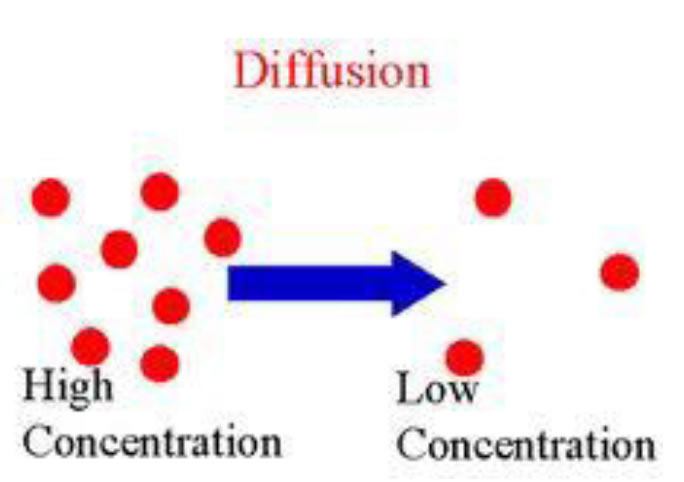
What is it called when molecules move across the cell membrane from an area of high concentration to an area of low concentration through a helper protein?
Active transport is when molecules move ________ the concentration gradient.
against
up
down
with
A membrane that lets some things in and out but not everything is called?
Movement of water from an area of higher concentration to an area of lower concentration.
Molecules naturally move from areas of _______ to ______ concentration.
In osmosis, water moves ________ areas of higher solute concentration.
into
up
down
out of

What part of the cell regulates what can enter and leave the cell?

Some cells move large particles out of the cell through the process of:
Protein Synthesis
Endocytosis
Exocytosis
Cytoplasmic Streaming

The picture shows
Osmosis
Diffusion
Endocytosis
Exocytosis
What is homeostasis?
Balance, or maintaining relatively stable conditions.
The cell component that controls what can enter and exit the cell.
The idea that phospholipids and proteins slide past one another in the membrane.
The transport of molecules
What is the main difference between passive and active transport?
There is no difference.
Passive Transport moves molecules out of the cell, while Active Transport moves molecules into the cell.
Passive Transport ALWAYS transports with the help of proteins, while Active Transport does NOT.
Passive Transport does NOT require energy, while Active Transport DOES require energy.
Equilibrium refers to when the concentration of molecules on one side of the membrane are _________ to the other side of the membrane.
Greater than or equal to
Less
Equal
Greater
What is the main difference between diffusion and facilitated diffusion?
Diffusion requires the help of a protein to transport molecules, whereas in facilitated diffusion the molecules transport directly across the membrane.
Diffusion requires energy, whereas facilitated diffusion does not require energy.
Facilitated diffusion requires the help of a protein to transport molecules, whereas in diffusion the molecules transport directly across the membrane.
Facilitated diffusion requires energy, whereas diffusion does not require energy.
What role do chlorophyll play in photosynthesis?
Captures energy from the sun to make food in a plant cell
lysosomes
vacuoles
Golgi bodies
ribosomes
Chloroplasts
Diffusion is a form of...
Active Transport
Passive Transport
Which of the following is NOT a type of passive transport?
Osmosis
Diffusion
Endocytosis
Facilitated Diffusion

The movement of water through a semi-permeable membrane is called ___________.
active transport
respiration
osmosis
diffusion
Which type of movement requires cellular energy?
osmosis
active transport
diffusion
facilitated diffusion


cell membrane
In active transport, cells need _ to move particles cross the cell membrane.
Sleep
Movement
Energy
Sun
Proteins are synthesis by
nucleus
mitochondria
Golgi apparatus
ribosomes
Which of the following organelles modifies and packages for secretion the materials produced by the ribosomes
chloroplast
Golgi apparatus
nucleus
nucleolus
Amino acids link together by peptide bonds to form proteins. In which cellular organelle would this process occur?
mitochondria
golgi apparatus
ribosomes
lysosomes

Controls what comes into and out of the cell...
cell membrane
chloroplast
cytoplasm
nucleus

Gel-like fluid wher the organells are found
chloroplast
chlorophyll
pigment
cytoplasm

Control center of the cell; contains DNA
mitochondria
cell membrane
nucleus
chromatin

Uses enzymes to break down food and worn out cell parts
lysosomes
ribosomes
ER
Golgi Bodies

Produces the energy a cell needs to carry out its functions
mitochondria
ER
Golgi bodies
vacuoles
Stores food, water, wastes and other materials
mitochondria
chloroplast
vacuole
nucleus

Receives proteins and materials from the ER, packages them and distributes them
Golgi bodies
ribosomes
cell wall
nucleus
What does a plant cell have that an animal cell doesn't have?
Cell Membrane and Cell Wall
Cell Wall and Mitochondria
Cell Wall and Nucleus
Cell Wall and Chloroplast
Which type of cells have a membrane bound nucleus and membrane bound organelles?
Eukaryotic Cells
Prokaryotic Cells
Which organelle transports proteins throughout the cell?
Cytoplasm
Lysosomes
Cell Wall
Endoplasmic Reticulum (ER)
Which organelle is the control center of the cell?
Ribosomes
Nucleus
Cell Membrane
Chloroplasts
Which organelle makes proteins for the cell?
Mitochondria
Cell Wall
Nucleus
Ribosomes
Which organelle produces food through photosynthesis (ONLY IN PLANT CELLS)?
Mitochondria
Vacuole
Chloroplasts
Nucleus
Which organelle is responsible for maintaining the cell's shape and providing structural support?
Golgi apparatus
Mitochondria
Endoplasmic reticulum
Cytoskeleton
What is the function of the Golgi apparatus?
Modifying, sorting, and packaging proteins and lipids
Storing genetic information
Producing energy for the cell
Regulating cell growth and division
Not found in animal cells. This rigid outer covering helps to support and protect plant cells while letting some substances like water and oxygen into the cell.
Cell membrane
Cell wall
Cytoplasm
Which cellular part is known as the 'powerhouse' of the cell and makes energy (ATP) for the cell?
Vacuole
Nucleus
Mitochondria
Ribosomes
What is the function of the lysosome in a cell?
Stores water and waste
Makes proteins
Cleans the cell
Packages and ships protein
What is the function of the cell wall in a plant cell?
Stores water and waste
Protection and structure support
Controls what enters and leaves the cell
Makes energy for the cell

Part C is called the _____________________?
chloroplasts
cell membrane
mitochondria
cytoplasm

In the diagram of animal & plant cells, part E is the ______________?
cell membrane
cytoplasm
nucleus
chloroplasts

Part A is the ______________________.
cell wall
cell membrane
nucleus
mitochondria
The function of the cytoplasm is _______________________.
to control what goes in and out of the cell
support the cell organelles and hold them in place
make food for the plant cell
make energy for the cell
Match the following cell parts to their functions.
Makes proteins
Ribosomes
Stores the DNA
Nucleus
Produces energy
Mitochondria
Synthesizes glucose
Chloroplast
Fluid filling the cell
Cytoplasm

What is the function of the organelle in the picture?
To support the outside of the cell and block molecules
To make glucose by doing photosynthesis
To sort, modify and package proteins
To detoxify the cell and break down fatty acids

What is the function of the organelle found in this picture?
To break down food particles, wastes and old organelles
To control cellular activities like protein synthesis
To make energy by the process of cellular respiration
To store water, nutrients and wastes
The endoplasmic reticulum has two parts. The (a) ER has ribosomes attached to it. It is the site of protein and lipid synthesis. The (b) ER is responsible for detoxification.

What are the 3 parts of cell theory?
Select all that apply: Which of the following cell parts would be found in a plant but NOT an animal?
cytoplasm
cell wall
large central vacuole
chloroplast
Organelles in the cell work together to keep the cell alive. (a) make proteins. Often, these ribosomes are attached to the (b) . Then, proteins are sorted, modified and packaged by the (c) .

Identify the organelle marked #5.
Rough ER
Smooth ER
Nucleus
Golgi Apparatus
Identify the organelle marked #7.
Rough ER
Mitochondria
Nucleus
Chloroplast
Identify the organelle marked #8.
Central vacuole
Mitochondria
Nucleus
Chloroplast
Identify the organelle marked #9.
Central vacuole
Mitochondria
Nucleus
Chloroplast
Identify the organelle marked #10.
Central vacuole
Cytoplasm
Cell membrane
Chloroplast

If the dots represent sugar what direction will the water flow?
Into the cell
Out of the cell
Both equally (equilibrium)

Which molecule is in equilibrium? How can you tell?
Molecule A; equal amounts inside and outside
Molecule B; passive movement into the cell
Molecule C; equal amounts inside and outside
Molecule C; all molecules are inside the cell

In an isotonic solution which way will the water flow
it will not flow at all
it will flow into the cell
it will flow both ways at equal rates
out of the cell
What happens to a cell in a hypotonic solution?
it shrinks
it swells and gets bigger
it stays the same
What happens to a cell in a hypertonic solution?
it shrinks
it swells and gets bigger
it stays the same
In an isotonic solution the water will
move in and out at an equal rate
not move at all
When water rushes into a PLANT cell and it fills with water and gets stiff
cytolysis
plasmolysis
turgor pressure

You put a cell into a solution, the cell SWELLS. Is the solution hypotonic or hypertonic to the cell?
hypertonic
hypotonic
isotonic
not enough information


Is it safe to drink salt water?
Yum, so salty!
No, you could die of dehydration.

