
Font size
 Worksheets
Unit 6 AP Bio Pre assessment
Total questions: 94
Worksheet time: 1hrs 25mins
What does DNA stand for?
Deoxynitrogenous Acid
Deribo Nuclein Acid
Deoxyribonucleic Acid
Denatured Nucleic Acid
What is the shape of a DNA molecule?
double helix
a single helix (one strand)
square
5 sided ring
There are four nitrogenous bases found in DNA. Three are cytosine, thymine, and guanine. What is the fourth?
cytosinez
purine
uracil
adenine

What makes up the SIDES of a DNA ladder?
nitrogen bases
Deoxyribose sugars & phosphates
genes & chromosomes
RNA

What makes up the rungs (center) of a DNA ladder?
sugars & phosphates
nitrogen bases
sugars
genes & chromosomes

What is DNA made up of?
nucleotides
cytoplasm
RNA
cells
According to the Base pair rule, if a DNA molecule contains 2 cytosine's how many guanines will it contain?
1500
2
0
1000
DNA is located in the _____ in eukaryotic cells.
nucleus
cytoplasm
mitochondria
ribosome
Nucleotides consist of all of the following except:
a phosphate
a sugar
a base
a nucleic acid
Which of the following is not a DNA base?
adenine (A)
guanine (G)
cytosine (C)
histidine (H)
What is the backbone of DNA made of?
sugar and phosphate
nitrogen bases
sugar and nitrogen bases
phosphate and nitrogen bases
What are the correct base pair rules in DNA?
A-T and C-G
A-C and T-G
A-G and C-T
A-A, C-C, G-G, and T-T
How is everyone's DNA different if there are only 4 bases in DNA?
the base are arranged differently in each person
each person has 4 different bases
DNA is NOT different, everyone's is the same
I don't know :(
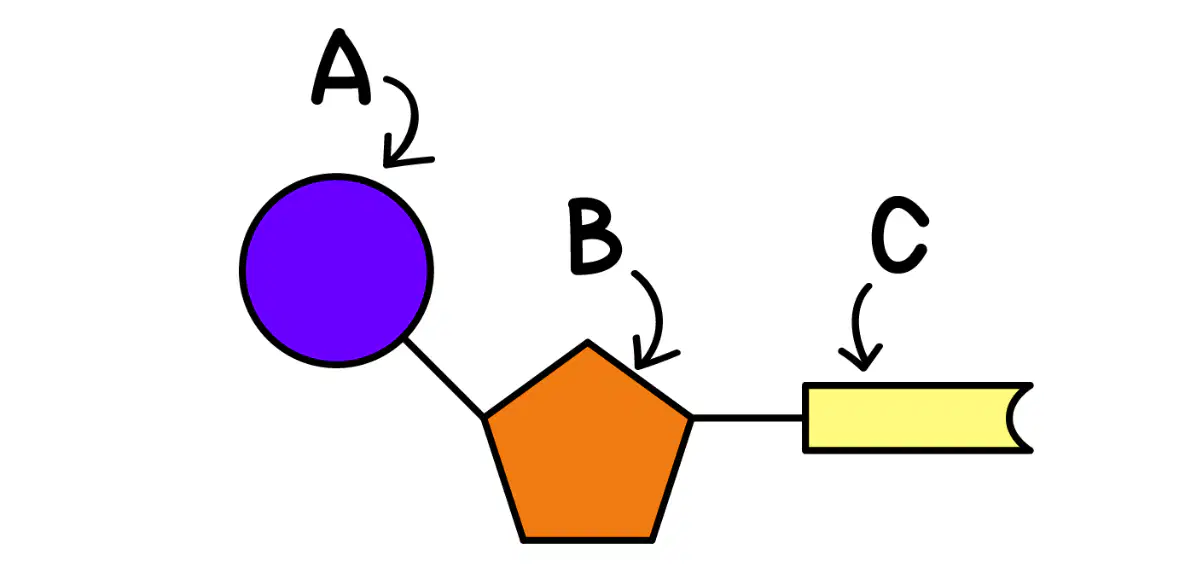
The diagram shows the parts of a nucleotide for DNA. What part does "A" represent?
Phosphate
Deoxyribose Sugar
Nitrogenous Base
Ribose Sugar
The diagram shows the parts of a nucleotide for DNA. What part does "B" represent?
Phosphate
Deoxyribose Sugar
Nitrogenous Base
Ribose Sugar
The diagram shows the parts of a nucleotide for DNA. What part does "C" represent?
Phosphate
Deoxyribose Sugar
Nitrogenous Base
Ribose Sugar
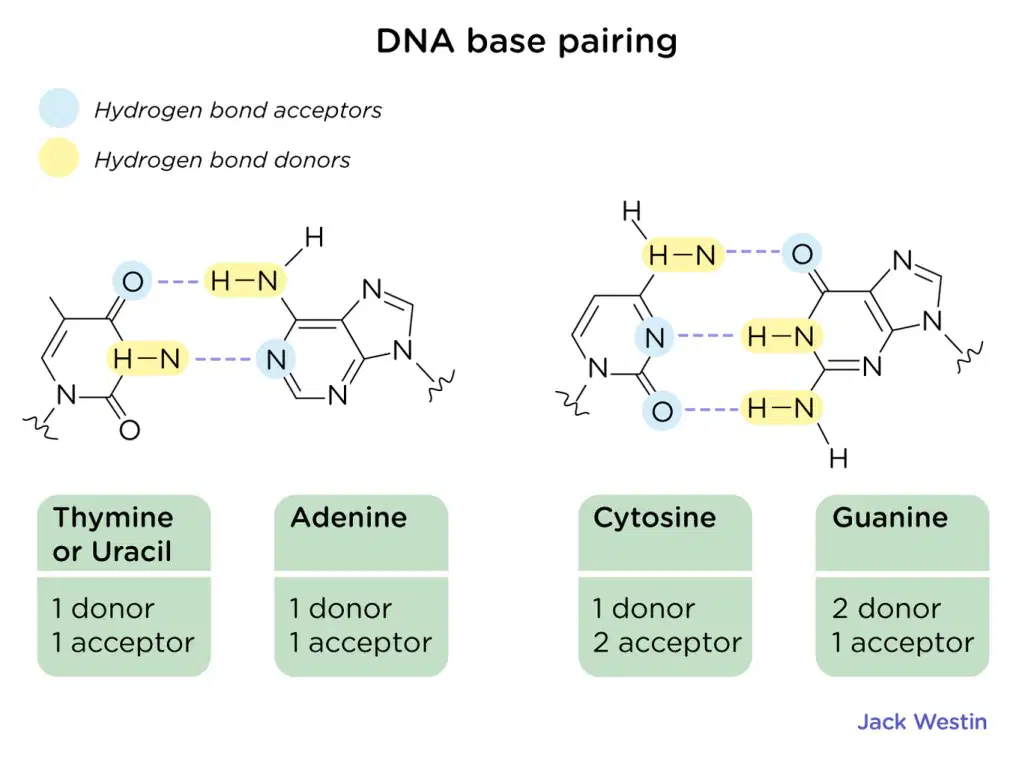
Which type of bonds form between complementary base pairs?
Covalent
Ionic
Hydrogen
Water


AATCATGGA


Replication is occurring AWAY FROM the replication fork on strand
I, the leading strand
I, the lagging strand
H, the leading strand
H, the lagging strand
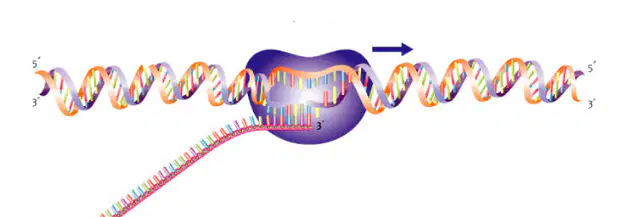


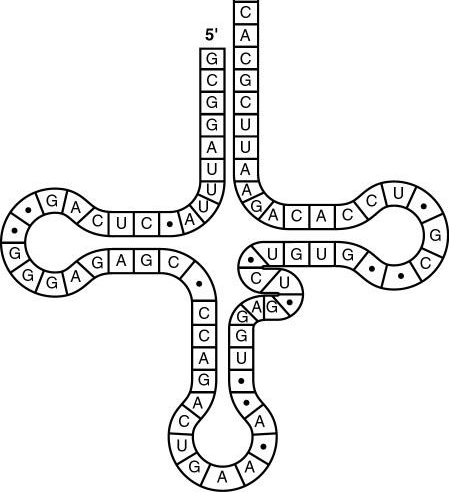
What is this a picture of?
DNA
mRNA
rRNA
tRNA

GAT-TAC-AGA-TTA-CAT?

What is gene expression regulation and why is it important in biology?
Gene expression regulation is important in biology because it allows cells to mutate and become cancerous
Gene expression regulation is not important in biology because it only affects non-essential functions
Gene expression regulation is not important in biology because it has no impact on the organism's overall health
Gene expression regulation is important in biology because it allows cells to respond to their environment, differentiate into specific cell types, and maintain proper functioning of the organism.
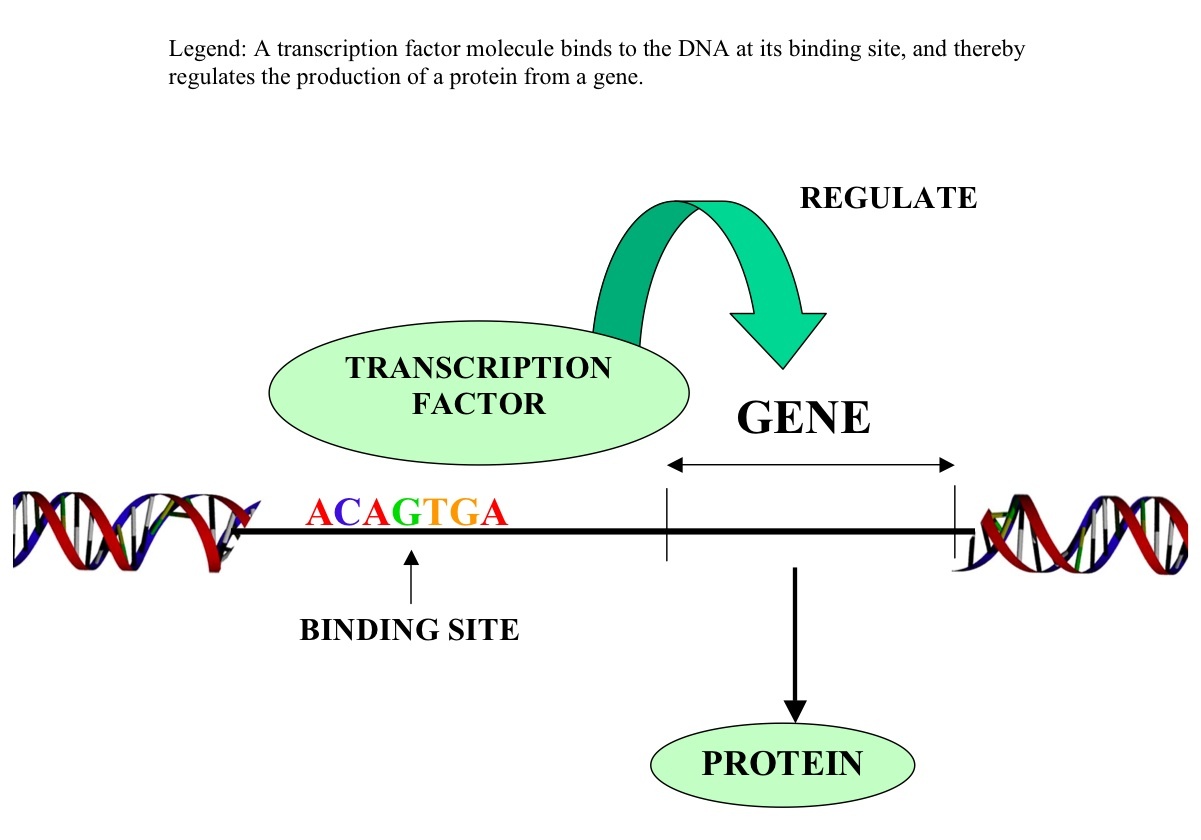
Explain the role of transcription factors in gene expression regulation.
Transcription factors have no role in gene expression regulation.
Transcription factors regulate the initiation of transcription by binding to specific DNA sequences.
Transcription factors regulate the initiation of translation by binding to specific RNA sequences.
Transcription factors are only involved in DNA replication and not gene expression regulation.
What is cell specialization?
A) A process where cells become identical
B) A process where cells differentiate and perform specific functions
C) A process where cells reproduce rapidly
D) A process where cells lose their functions

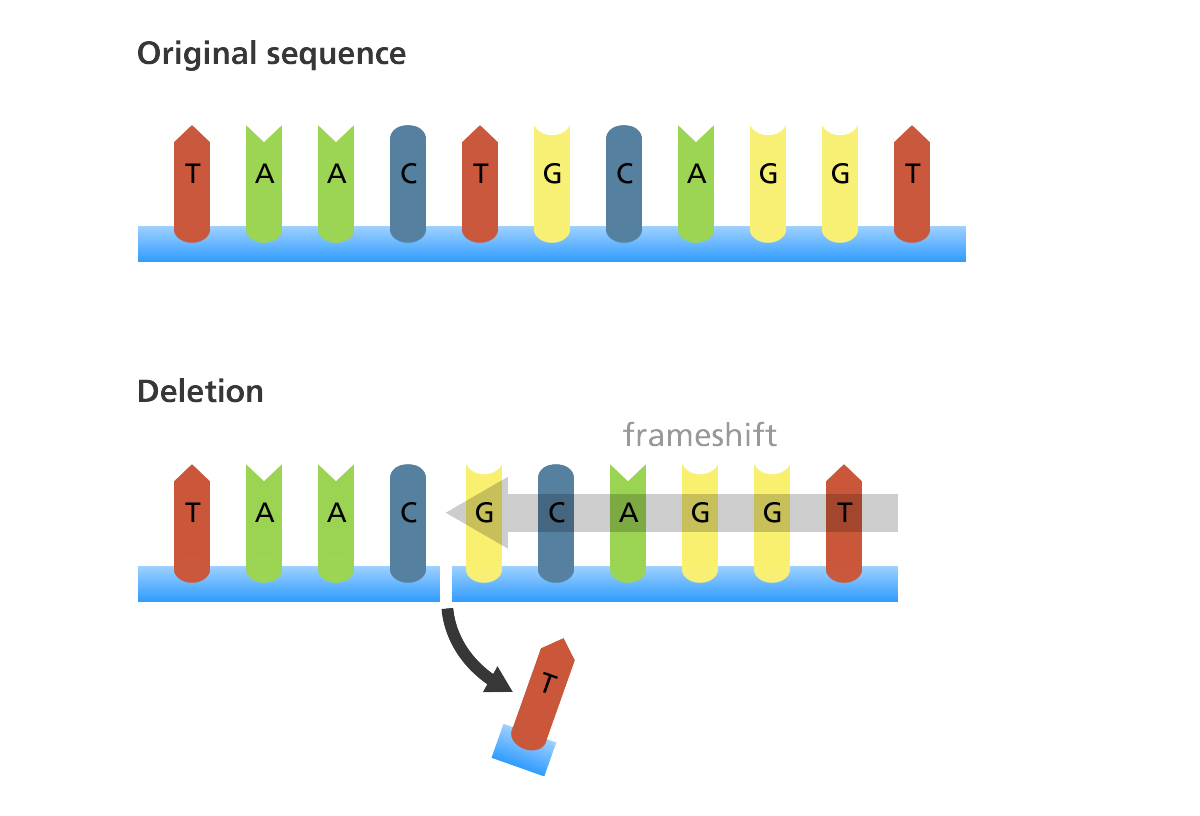
What mutation has occurred here?
T-G-A-C-C-A
T-G-A-G-C-A
Substitution
Deletion
Insertion
Frameshift

DNA molecule segment is : TTACGCAAG
The mutated DNA segment is TTACGCAAC. This is an example of ___ mutation.
Substitution
Insertion
Inversion
Translocation

ATT-TGA-GCC- Original
ATT-GAG-CC - Mutated
The example above is an example of a
Insertion- Frameshift
Deletion- Substitution
Deletion -Frameshift
All of the above

DNA molecule segment is : TTA-CGC-AAG
The mutated DNA segment is TTC-GCA-AG. This is an example of ___ mutation.
Substitution
Deletion
Insertion
Inversion

Original DNA: CAT GAT CCA
New DNA: CAT TGA TCC A
What mutation occurred?
deletion
substitution
tranverse
insertion
Mutation: ATC GCAT
What mutation occurred?

What type of gene mutation has occurred here? Normal-
AGA-TTC-ATA-GCG
Mutant-
AGA-TTC-AAT-AGC-G
deletion frameshift
insertion frameshift
substitution
nonsense

Why are insertion and deletion mutations so harmful?
They change all of the codons from the mutation on down the line, which changes the amino acid sequence
They insert things that an organism doesn't need.
They often delete things that organisms need.
Insertion and deletions are not any more harmful than substitution mutations.


Which of the following is true regarding substitution mutations ...
a missense mutation. This could affect the 3D structure of the protein.
a silent mutation. The mutation causes no effect as the first mRNA codon still codes for the same amino acid even though the base has been substituted.
a nonsense mutation. The mutation causes the second mRNA codon to become a stop codon, which means it stops synthesis of the amino acid chain prematurely. This will likely result in a non-functional protein.
frameshift mutation. This causes all of the amino acids shown to change. This will cause a non-functional protein.
have no effect on the amino acids produced during protein synthesis.
silent mutation
causes a stop codon instead of a normal amino acid codon. This causes translation to be terminated prematurely, causing a shorter protein.
nonsense mutation
causes a codon to code for a different amino acid than the original one.
missence mutation
causes the “reading frame” of the codons to shift forwards or backwards. This can change the entire sequence of amino acids.
frameshift mutation
causes a change to one base and potentially one amino acid of the polypeptide chain
point mutation
Label each of the following chromosomal mutations
Identify which of the following are true and which are false
What is NOT an accurate difference between the organization of prokaryotic genomes vs. eukaryotic genomes?
Prokaryotes possess a single circular chromosome whereas eukaryotes possess multiple linear chromosomes
Prokaryotes do not organize their DNA around histones, while eukaryotes do
Prokaryotes can have plasmids while eukaryotes cannot
Prokaryotic genomes contain operons whereas eukaryotic genomes do not
A cluster of genes in a prokaryote that code for proteins all performing related functions in the cell is called a...
Regulatory Sequence
Distal Control Element
Open Reading Frame (ORF)
Operon
An operon is best defined as...
transcription and translation happening simultaneously
a group of genes that share the same operator and promoter in a prokaryote
polycistronic mRNA
a gene that requires activation by a transcription factor to be expressed.
A structural gene...
turns other genes on or off
codes for proteins to be translated in the cell
is a sequence of nucleotides where regulatory proteins bind
codes for cell parts that provide rigidity to the cell
A researcher is studying a particular operon and notices that under very specific environmental conditions, the repressor is bound to the operator. The most reasonable conclusion is that...
the environment dictates that the structural genes within the operon should not be transcribed
the regulatory gene coding for the repressor protein must contain a mutation
the operon is an inducible system
the structural genes within the operon must not be essential for the bacterium's survival

If a researcher studying an inducible operon system in a particular strain of bacteria suspects that the operator sequence might have experienced a loss-of-function mutation, what experiment would provide evidence to support the hypothesis?
Artificially synthesize proteins using the structural genes of another population of similar bacteria and then insert these into the cell. Observe whether the operon turns off in response.
Use restriction (cutting) enzymes to cut out the operator and see if the operon regains function.
Induce a mutation in the promoter sequence as well and observe whether the structural genes can be transcribed.
Bioengineer a plasmid containing an unmutated copy of the operator and insert it into a bacterium. Ensure there are no inducers in the cell and observe whether a repressor binds the operator.

What is true about this operon?
The regulatory gene codes for protein A.
RNA polymerase binds to a sequences of nitrogen bases called the operator.
Four RNA polymerases are required to work on this operon --- one for each structural gene.
The mRNA transcribed is polycistronic (containing nucleotide sequences containing multiple start/stop codons and coding for more than one protein)
What DNA base sequence in an operons is responsible for holding the genetic information for the making of the operon repressor
Regulatory Gene
Promoter
Operator
First Structural Gene
Reorder the following steps to illustrate how an inducible operon system is turned on.
RNA polymerase binds the promoter and the inducer binds the repressor, which unbinds from the operator.
RNA proceeds past the operator and moves along the structural genes transcribing mRNA.
A polycistronic mRNA is produced at the end of transcription.
Multiple ribosomes work on the mRNA strand to translate the structural proteins.
The newly synthesized proteins carry out a related function in the cell.
Match the following.
Is normally "off" but can be turned "on".
Turned on by the presence of an INDUCER.
Allows for the synthesis of enzymes only when needed.
Example includes the lac operon.
The operator is usually bound by the repressor.
Can be activated by small molecules that interact with the repressor.
Facilitates the breakdown of lactose when it is present.
Is normally "on" but can be turned "off".
Regulates the synthesis of enzymes continuously unless a corepressor is present.
The operator is usually free of the repressor.
Turned off by the build up of a COREPRESSOR.
All the genes in both a prokaryotic cell and a eukaryotic cell are expressed at the same time.
True
False
In order for a gene to be expressed, ___ must bind to the gene's ___, a specific sequence of nucleotides at one end of the gene, thus initiating transcription.
DNA polymerase, promotor
DNA polymerase, operator
RNA polymerase, promotor
RNA polymerase, operator
An operon is
a genetic on/off switch in prokaryotes
a genetic on/off switch in eukaryotes
a group of related genes and the associated gene switches in prokaryotes
a group of related genes and the associated gene switches in eukaryotes
Genes can be shut off (not expressed) when a ___ binds to the ____.
activator, operator
repressor, operator
corepressor, operator
repressor, promotor
What is the inducer in the lac operon?
cAMP
glucose
lactose
CRP
Negative control of gene expression is mediated by __ and results in a(n) __ in the frequency of transcription.
activators, increase
activators, decrease
repressors, increase
repressors, decrease
In an operon, the sequence of DNA that serves as a binding site for a repressor, and thereby regulates the expression of structural genes.
promoter
inducer
operator
repressor


In the top picture the operon is
on
off
What is 1 (the YELLOW molecule) in the diagram?
RNA polymerase
Inducer
Repressor
Operator
In eukaryotes, DNA is tightly coiled around ____ in chromatin
Histones
Whey
Casein
Hemoglobin

Gene regulation is the process that is used to:
help make sugars for cells in plants.
make glycosomes in cells.
turn genes on and off.
Not sure, need help.

Operons are found in the cells of which of the following types of organisms?
prokaryotes
eukaryotes
animals only
viruses

