
Font size
 Worksheets
GEC 10 - Midterm Exam
Total questions: 50
Worksheet time: 39mins
ICT primarily refers to::
A simple calculator for solving numbers.
The combination of technology used to handle, process, and share information.
A tool designed only for online chatting and texting.
The use of typewriters for producing documents.
The “Father of Computers” is:
Blaise Pascal
Charles Babbage
Gottfried Leibniz
Herman Hollerith
The Pascaline was designed to:
Store information digitally.
Perform arithmetic operations like addition and subtraction.
Analyze complex data using punch cards
Send messages across long distances
The Analytical Engine was considered revolutionary because:
Store information digitally.It used electricity instead of gears.
It had the concept of input, process, and output similar to modern computers.
It was the first machine to connect to the internet.
It was only used for gaming purposes.
UNIVAC I is important in history because it was:
The first commercial computer
The first smartphone invented
The machine that introduced Wi-Fi
An analog calculating device
Which of the following is NOT an advantage of ICT?
Faster access to information
Improved communication globally
Increase in job opportunities
Elimination of cybercrime threats
The following are the uses of ICT in communication EXCEPT:
Sending instant messages through online platforms
Conducting video conferences with people in different locations
Accessing and analyzing large sets of scientific data
Sharing information and updates through social media
A disadvantage of ICT is:
Faster access to information worldwide
Increased risk of cybercrimes and online fraud
Improved communication through various platforms
Easier data storage and retrieval
Cloud computing is best described as:
A system where data is stored on personal USB drives only
Internet-based storage and computing services
A weather system affecting global communication
An advanced email application
Which of the following is a current trend in ICT?
Typewriters for faster typing
Blockchain technology and cryptocurrency
Manual filing of documents
Fax machines for data transmission
Which device used punch cards for data processing?
Analytical Engine
Hollerith’s Tabulating Machine
Pascaline
ENIAC
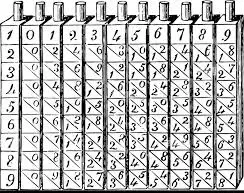
This device allows the user to multiply, divide, and calculate cube roots by moving the rods around and placing them in specially in constructed boards.
Tally Sticks
Abacus
Napier Bones
Slide Rule
Which of the following is NOT a disadvantage of ICT in society?
Cybercrime
Addiction to technology
High dependency on gadgets
Improved access to learning resources
A computer is BEST defined as:
A programmable device that processes, stores, and retrieves data
A device for entertainment only
A machine used exclusively by engineers
An automatic calculator with no memory
Which of the following BEST describes the Web?
A collection of interlinked hypertext documents accessed through the Internet.
A global system of interconnected computer networks that transmit data.
A software program that allows users to view and navigate websites.
A communication tool used for sending electronic mail across networks.
Web 3.0 is mainly used for:
Static display of text and images without user interaction
Social networking and sharing of user-generated content
Intelligent data understanding and personalized web experiences
Simple hyperlink navigation across different websites
The difference between data and information is:
Data is organized; information is raw
Data is raw facts; information is processed and meaningful
Both are exactly the same
Information is meaningless while data is meaningful
Which of the following BEST describes the process of technological change?
The complete elimination of old technologies once new ones appear.
A continuous cycle of invention, innovation, and diffusion of technologies.
The sudden and unpredictable replacement of manual work with machines.
A one-time shift from traditional to digital systems without further updates.
Which generation of computers introduced the microprocessor?
First Generation
Second Generation
Third Generation
Fourth Generation
Netiquette refers to:
The etiquette of using the internet properly
Rules in sports competitions
Computer programming styles
The ability to hack systems responsibly
5G technology is mainly about:
Fifth generation of computer processors
High-speed wireless communication network
Five gigabytes of memory storage
Fifth-generation antivirus software
What is the difference between Technological Determinism and Social Constructivism?
Technological Determinism sees society as shaping technology, while Social Constructivism views technology as shaping society.
Technological Determinism views technology as the main driver that shapes society, while Social Constructivism argues that society and culture shape the development and use of technology.
Both theories agree that technology and society evolve independently without influencing each other.
Both theories focus only on the economic impact of technology and ignore social aspects.
Which of the following is an example of using ICT in healthcare?
Maintaining electronic health records (EHR) for patient history
Using social media platforms to promote hospital events
Designing posters for health awareness campaigns using graphic software
Printing brochures about disease prevention for distribution in clinics
Which of the following is NOT a module discussed in Living in the IT Era?
Introduction to ICT
IoT and Emerging Trends
Ancient Literature Studies
Netiquette and Digital Citizenship
The use of ICT in business is BEST represented by:
Manual accounting using ledger books
Online transactions, e-commerce, and automation systems
Oral agreements without written records
Filing paper receipts in cabinets
Which of the following is the BEST example of practicing proper netiquette?
Promote faster internet speeds nationwide
Protect individuals’ personal and sensitive information
Allow unlimited free access to social media sites
Regulate the price of computer devices in the Philippines
RA 10173, also known as the Data Privacy Act of 2012, primarily aims to:
Promote faster internet speeds nationwide
Protect individuals’ personal and sensitive information
Allow unlimited free access to social media sites
Regulate the price of computer devices in the Philippines
Which of the following is considered unethical online behavior?
Giving credit to original authors when quoting their work
Copy-pasting without citation (plagiarism)
Respecting copyright laws
Using strong passwords for security
The use of emojis and proper tone in online communication mainly helps in:
Avoiding misinterpretation of messages
Hacking into private conversations
Stopping cybercrime completely
Speeding up computer processing power
A common security practice that reduces the risk of unauthorized access is:
Using the same weak password for all accounts
Updating passwords regularly and enabling two-factor authentication
Posting login credentials on social media for safekeeping
Ignoring suspicious links and clicking them anyway
The Pascaline was invented by (a) .
It is a computer program that provides service to another program and its user is called (a) .
It is an organization that provides services for accessing, using or participationg in the internet (a) .
(a) threats are often spread via USB drives, infected attachments, or malicious download links.
ICT stands for (a) .
(a) is a type of malware that locks or encrypts files and demands payment to restore access.
An ICT advantage in education is access to (a) learning platforms.
One disadvantage of ICT is (a) addiction, which may reduce productivity.
The integration of ICT in workplaces often results in (a) efficiency.
The intentional misuse of ICT systems that results in the loss or theft of information is termed (a) .
(a) in it refers to safeguarding personal information from unauthorized access.
(a) refers to acknowledging the sources of ideas, words, or works used in academic or digital content.
It is an old internet that only allows people to read from the internet.
(a)
Fake emails, tect messages and websites created to look like they’re from authentic companies. This is also known as “spoofing”. This is called (a) .
This theory strongly believe that technology shapes the culture, values, social structures of a society.
(a)
It is an action taken by someone to gain unathorized access to a computer.
(a)
The inventor of the World Wide Web is (a) .
A (a) is a destructive program that cannot run independently but multiplies by attaching itself to executable files.
(a) is the wireless network technology after 4G, enabling higher speed and lower latency.
The Cybercrime Prevention Act of 2012 in the Philippines is Republic Act No. (a) .

