
 Worksheets
1.2 Review Organization of the Human Body
Total questions: 81
Worksheet time: 41mins
What are the two main portions into which the human body can be divided?
Cranial and Vertebral
Axial and Appendicular
Thoracic and Abdominal
Pelvic and Mediastinum
Which cavity contains the brain?
Thoracic cavity
Abdominal cavity
Cranial cavity
Pelvic cavity
What is the location of the diaphragm in the human body?
It houses the brain
It separates the thoracic and abdominopelvic cavities
It contains the spinal cord
It supports the heart
Which organs are found in the thoracic cavity?
Stomach, liver, spleen
Heart, lungs, mediastinum
Kidneys, intestines
Brain, spinal cord
Which cavity in the head contains the tongue and teeth?
Nasal cavity
Oral cavity
Orbital cavities
Middle ear cavities
What is the function of the nasal septum?
To contain the middle ear bones
To divide the nasal cavity into left and right portions
To support the tongue and teeth
To protect the eyes and their nerves
Which cavities contain the eyes along with their nerves and skeletal muscles?
Oral cavity
Nasal cavity
Orbital cavities
Middle ear cavities
Which cavity is directly involved in the process of hearing?
Cranial cavity
Middle ear cavity
Orbital cavities
Sphenoidal sinus
What is the function of the parietal portion of the thoracic and abdominal membranes?
It lines the wall of the cavity.
It covers each internal organ.
It separates the two layers with serous fluid.
It forms the pleural cavity.
Which part of the pleural membranes covers the lungs?
Parietal pleura
Visceral pleura
Serous fluid
Pleural cavity
What separates the two layers of the pleural membranes?
Parietal pleura
Visceral pleura
Serous fluid
Pleural cavity
What is the potential space between the layers of the pleural membranes called?
Parietal pleura
Visceral pleura
Serous fluid
Pleural cavity
What separates the two layers of the pericardial membrane?
Visceral pericardium
Parietal pericardium
Serous fluid
Peritoneal cavity
What is the potential space between the layers of the peritoneal membrane called?
Pericardial cavity
Peritoneal cavity
Visceral peritoneum
Parietal pericardium
Which membrane lines the abdominopelvic cavity?
Pericardial membrane
Visceral pericardium
Peritoneal membrane
Parietal pericardium
What does viscera mean?
Bones
Internal organs
Muscles
Skin
Which of the following are cavities of the head?
Thoracic and Abdominal
Cranial and Vertebral
Nasal and Oral
Pelvic and Spinal
Describe the membranes associated with the thoracic, and abdominopelvic cavities?
Pericardium and Peritoneum
Pleura and Peritoneum
Meninges and Synovial
Cutaneous and Mucous
What is the primary role of organ systems in the body?
To store energy
To work independently
To accomplish specific functions
To produce hormones
How do organ systems contribute to homeostasis?
By storing nutrients
Through specific functions they perform
By producing waste
By increasing body temperature
Which system provides the body covering?
Digestive system
Integumentary system
Respiratory system
Circulatory system
What components are included in the integumentary system?
Bones and muscles
Skin, hair, nails, sweat and sebaceous glands
Heart and blood vessels
Brain and nerves
What is one of the functions of the integumentary system?
Digests food
Circulates blood
Protects underlying tissues
Transmits nerve signals
Which components are part of the skeletal system?
Muscles and tendons
Bones, ligaments, and cartilages
Nerves and blood vessels
Skin and hair
What is one of the primary functions of the muscular system?
Storing inorganic salts
Producing blood cells
Providing body movement and posture
Protecting soft tissues
How does the skeletal system contribute to the production of blood cells?
By providing body movement
By housing tissues that produce blood cells
By generating body heat
By storing energy
Which system is a major source of body heat?
Skeletal system
Nervous system
Muscular system
Digestive system
Which components are part of the nervous system?
Heart, lungs, and liver
Brain, spinal cord, nerves, and sense organs
Kidneys, bladder, and urethra
Stomach, intestines, and pancreas
How do cells in the nervous system communicate with each other and with muscles and glands?
Through hormones
Via neurotransmitters
By electrical impulses only
Through direct contact
What is one of the functions of nerve cells in the nervous system?
Digestion of food
Sensory reception
Production of red blood cells
Regulation of blood sugar
Which of the following is a function of the endocrine system?
Transmitting electrical signals
Secreting chemical messengers called hormones
Filtering blood
Producing red blood cells
Which glands are included in the endocrine system?
Salivary and sweat glands
Hypothalamus, pituitary, thyroid, and parathyroid glands
Lymph nodes and tonsils
Sebaceous and mammary glands
How do hormones differ from neurotransmitters in terms of response time and effect duration?
Hormones respond faster and have shorter effects
Hormones respond slower and have longer-lasting effects
Hormones respond at the same speed but have shorter effects
Hormones respond slower and have shorter effects
Which organs are part of the cardiovascular system?
Heart, blood vessels, and blood
Lymph nodes, thymus, and spleen
Kidneys, liver, and pancreas
Stomach, intestines, and liver
What is the primary function of the lymphatic system?
Distributes oxygen and nutrients
Drains excess tissue fluid and returns it to the bloodstream
Produces digestive enzymes
Regulates body temperature
Which type of cells are lymphocytes?
Red blood cells
Platelets
White blood cells
Neurons
What substances does the cardiovascular system distribute throughout the body?
Oxygen, carbon dioxide, nutrients, and hormones
Lymph, enzymes, and bile
Water, electrolytes, and proteins
Vitamins, minerals, and glucose
Which organs are part of the digestive system?
Lungs and trachea
Mouth, tongue, and stomach
Heart and blood vessels
Kidneys and bladder
What is the primary function of the respiratory system?
To break down food and absorb nutrients
To move air into and out of the lungs and exchange gases
To pump blood throughout the body
To filter waste from the blood
Which of the following is NOT a component of the respiratory system?
Pharynx
Larynx
Esophagus
Bronchi
How does the digestive system contribute to the body's absorption and excretion processes?
It filters waste from the blood
It receives, breaks down, and absorbs nutrients, and excretes wastes
It exchanges oxygen and carbon dioxide
It circulates blood throughout the body
Which organs are part of the urinary system?
Heart, lungs, liver, and pancreas
Kidneys, ureters, bladder, and urethra
Stomach, intestines, liver, and gallbladder
Brain, spinal cord, nerves, and eyes
What is one of the primary functions of the urinary system?
To digest food and absorb nutrients
To remove wastes from the blood and maintain water and electrolyte balance
To circulate blood throughout the body
To protect the body from infections
How does the urinary system contribute to homeostasis?
By producing hormones that regulate metabolism
By removing wastes and maintaining water and electrolyte balance
By transporting oxygen to cells
By breaking down food into energy
Which of the following organs is part of the male reproductive system?
Ovaries
Uterus
Testes
Clitoris
What is the primary function of the female reproductive system?
Produces and maintains sperm
Conducts sperm to the male reproductive tract
Houses the developing offspring and functions in childbirth
Produces seminal fluid
Which structure is responsible for producing female sex cells?
Testes
Ovaries
Prostate gland
Bulbourethral glands
How do the male and female reproductive systems work together?
They produce and maintain sperm
They produce new organisms together
They conduct sperm to the male reproductive tract
They produce seminal fluid
What is the correct description of the anatomical position?
Body erect, face forward, upper limbs at sides with palms facing backward, feet together
Body erect, face forward, upper limbs at sides with palms forward, feet shoulder width apart
Body leaning forward, face down, upper limbs raised, feet apart
Body reclined, face upward, upper limbs at sides, feet together
Why is the anatomical position important in medical terminology?
It allows for varied interpretations of body positions
It provides a standard reference for describing body parts and positions
It is only used in surgical procedures
It is primarily used for athletic training
What does the term "Superior" refer to in terms of relative body position?
Below another part
Toward the front
Above another part
Toward the side
Which term describes a body part that is located below another part?
Anterior
Inferior
Medial
Lateral
If a body part is described as "Anterior," where is it located?
Toward the back
Toward the front
Closer to the midline
Above another part
What does the term "Medial" indicate about the position of a body part?
Toward the side
Toward the back
Closer to the midline
Below another part
Which term is used to describe a body part that is toward the side, away from the midline?
Superior
Posterior
Lateral
Anterior
What does the term "Bilateral" refer to in terms of relative position?
Structures on the same side of the body
Paired structures with one on each side
Structures on the opposite sides of the body
More internal than other structures
Which term describes structures on the same side of the body?
Contralateral
Ipsilateral
Proximal
Distal
What is the meaning of "Contralateral" in anatomical terms?
Closer to the point of attachment
Structures on the opposite sides of the body
Near the surface or outward
More internal than other structures
How is "Proximal" defined in terms of relative position?
Further from the point of attachment
Closer to the point of attachment to trunk or another referenced body part
Near the surface or outward
More internal than other structures
What does "Distal" refer to in anatomical terminology?
Closer to the point of attachment
Further from the point of attachment to trunk or another referenced body part
Near the surface or outward
Structures on the same side of the body
Which term is used to describe a position near the surface or outward?
Deep
Proximal
Superficial or peripheral
Contralateral
What does the term "Deep" indicate in terms of relative position?
Near the surface or outward
More internal than other structures
Structures on the opposite sides of the body
Closer to the point of attachment
What is a sagittal section?
A section that divides the body into superior and inferior portions
A section that divides the body into anterior and posterior portions
A longitudinal section that divides the body into right and left portions
A section that divides the body into equal quadrants
What is a midsagittal section?
A section that divides the body into anterior and posterior portions
A section that passes along the midline and divides the body into equal parts
A section that divides the body into superior and inferior portions
A section that is lateral to the midline
Which section divides the body into superior and inferior portions?
Sagittal section
Frontal (coronal) section
Transverse (horizontal) section
Midsagittal section
What is the function of a frontal (coronal) section?
Divides the body into right and left portions
Divides the body into superior and inferior portions
Divides the body into anterior and posterior portions
Divides the body into equal quadrants

What type of section is shown in image (a)?
Cross Section
Oblique Section
Longitudinal Section
Horizontal Section

Which section is represented by image (b)?
Cross Section
Oblique Section
Longitudinal Section
Vertical Section
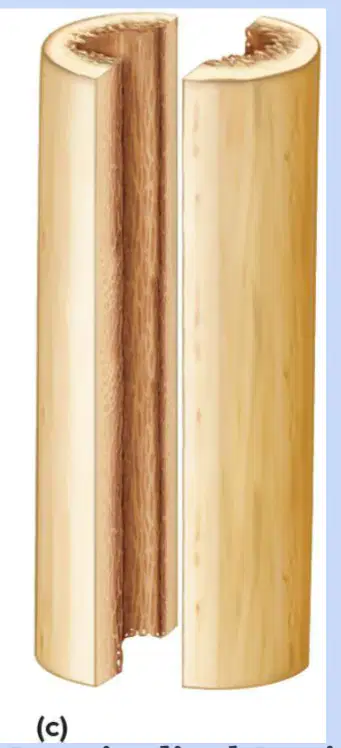
Identify the section shown in image (c).
Cross Section
Oblique Section
Longitudinal Section
Diagonal Section
What is a cross section in cylindrical organs?
A lengthwise cut through the structure
An angular cut through the structure
A cut across the structure
A diagonal cut through the structure
Which type of section is an angular cut through a cylindrical organ?
Cross section
Oblique section
Longitudinal section
Horizontal section
What does a longitudinal section refer to in the context of cylindrical organs?
A cut across the structure
An angular cut through the structure
A lengthwise cut through the structure
A circular cut through the structure
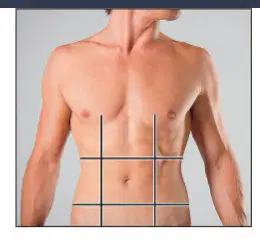
Which region of the abdominal area is located in the upper middle part?
Umbilical
Epigastric
Pubic (hypogastric)
Right inguinal (iliac)
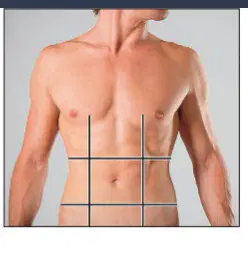
What are the regions located to the sides of the epigastric region called?
Right and left lateral (lumbar)
Right and left inguinal (iliac)
Right and left hypochondriac
Umbilical
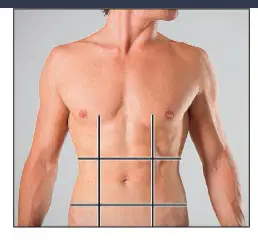
Which region is found in the middle part of the abdominal area?
Umbilical
Epigastric
Right lateral (lumbar)
Left inguinal (iliac)
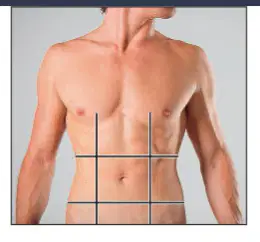
Identify the region located in the lower middle part of the abdominal area.
Right hypochondriac
Pubic (hypogastric)
Left lateral (lumbar)
Epigastric

Which of the following is a quadrant of the abdominal area?
Right middle quadrant
Left upper quadrant
Central quadrant
Lower middle quadrant
What is the anatomical term for the "forehead"?
Frontal
Occipital
Temporal
Parietal
Which term refers to the "armpit" area?
Axillary
Brachial
Carpal
Cubital
Identify the anatomical term for the "back of the knee".
Popliteal
Patellar
Femoral
Crural
What is the term for the "eye cavity"?
Orbital
Nasal
Buccal
Oral

