
NEW
Font size
 Worksheets
National EMS Education Standard Competencies (1 of 3)
Total questions: 37
Worksheet time: 19mins
What fundamental knowledge does the 'Preparatory' competency of the National EMS Education Standard Competencies require?
Knowledge of the emergency medical services (EMS) system, safety/well-being of the emergency medical technician (EMT), medical/legal, and ethical issues to the provision of emergency care.
Knowledge of advanced surgical procedures and hospital administration.
Understanding of pharmaceutical manufacturing and drug approval processes.
Expertise in environmental engineering and urban planning.
Fill in the blank: The _________ of EMS is an important topic in the National EMS Education Standard Competencies.
History of EMS
Future of EMS
Equipment of EMS
Uniforms of EMS
Fill in the blank: _________ is a process aimed at making improvements in EMS systems and is a key competency.
Quality improvement
Incident reporting
Resource allocation
Patient transport
Fill in the blank: Ensuring _________ is a fundamental aspect of Emergency Medical Services (EMS) Systems.
Patient safety
Financial gain
Equipment maintenance
Public relations
What is the impact of research on emergency medical responder (EMR) care?
Research improves the quality and effectiveness of EMR care by providing evidence-based practices.
Research decreases the need for training among EMRs.
Research limits the use of new technology in EMR care.
Research increases the risk of errors in EMR procedures.
What does public health refer to in the context of EMS education standard competencies?
Public health refers to the science and practice of protecting and improving the health of a community through education, policy making, and preventive medicine.
Public health refers to the management of emergency vehicles and their maintenance schedules.
Public health refers to the financial planning and budgeting for EMS organizations.
Public health refers to the recruitment and training of EMS personnel only.
What is the primary resource for the emergency medical technician (EMT) course?
The text
Online videos
Peer-reviewed journals
Hands-on workshops
EMS is a ________.
system
device
protocol
language
Which of the following is a key component of the EMS system?
A) Team of health care professionals
B) Only doctors
C) Only police officers
D) Only firefighters
The EMS system is governed by which of the following?
Federal laws
State laws
International laws
Hospital policies
Most states have four training and licensure levels. Fill in the blank: The first level is _____?
EMR
Paramedic
RN
MD
Most states have four training and licensure levels. Fill in the blank: The second level is _____?
EMT
Paramedic
First Responder
Medical Assistant
Most states have four training and licensure levels. Fill in the blank: The third level is _____?
AEMT
EMR
Paramedic
EMT-Basic
Most states have four training and licensure levels. Fill in the blank: The fourth level is _____?
Paramedic
Nurse
Firefighter
Physician
Fill in the blank: An EMR has very ______ training.
basic
advanced
extensive
specialized
Fill in the blank: An EMR provides care before ______ arrives.
ambulance
doctor
police
firefighter
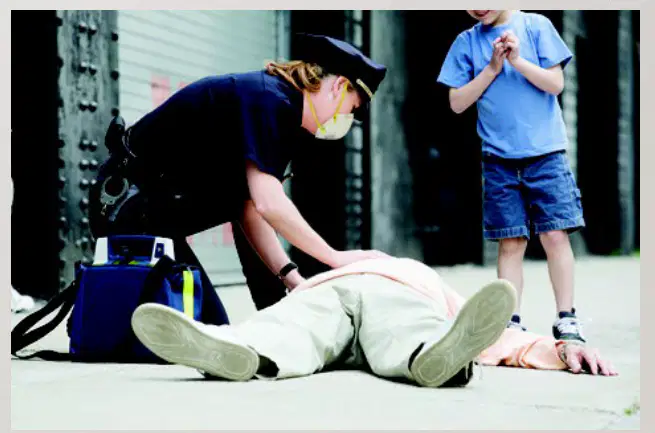
What is the primary role of Emergency Medical Responders (EMRs)?
Provide advanced medical care at hospitals
Provide immediate basic life support until EMTs arrive on the scene
Drive ambulances only
Perform surgeries
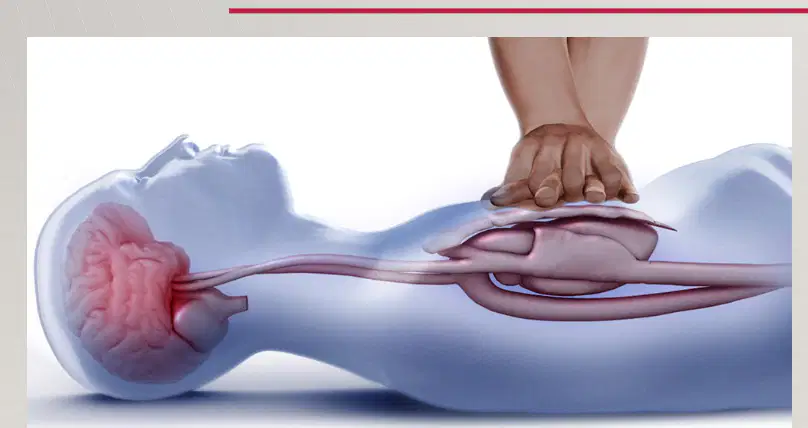
Which of the following is included in an EMT's training in basic life support (BLS)?
Automated external defibrillation
Surgery
Physical therapy
Dental care
According to the course description, an AEMT has training in specific aspects of advanced life support (ALS), including ________ therapy.
Intravenous (IV)
Respiratory (R)
Muscular (M)
Digestive (D)
According to the course description, an AEMT has training in the administration of a limited number of ________ medications.
emergency
oral
prescription
herbal
What does ALS stand for in the context of AEMT training?
Advanced Life Support
Acute Life Services
Ambulance Life Safety
Advanced Learning System
Cardiac monitoring is part of a paramedic's ALS training.
True
False
Fill in the blank: EMRs are the backbone of the ______ system in the United States.
EMS
Judicial
Educational
Financial
What do EMRs provide?
Legal advice
Emergency care to the sick and injured
Financial support
Transportation services
Fill in the blank: One general requirement to be an EMR is a ________ or equivalent.
High school diploma
Bachelor's degree
Driver's license
Medical license
Fill in the blank: Proof of ________ is a general requirement to be an EMR.
immunization
citizenship
employment
residence
Fill in the blank: Successful completion of a background check and ________ screening is a general requirement to be an EMR.
drug
vision
hearing
literacy
Fill in the blank: A valid ________ is a general requirement to be an EMR.
driver’s license
passport
credit card
library card
Fill in the blank: One of the licensure requirements is the successful completion of required courses and ________ exams.
certification
practice
oral
final
Fill in the blank: Demonstration of the mental and physical ________ necessary to perform the job is a licensure requirement.
abilities
locations
documents
uniforms
Fill in the blank: Compliance with other state, local, and ________ provisions is a licensure requirement.
employer
federal
personal
international
What does the Americans With Disabilities Act (ADA) prohibit employers from doing?
Providing extra benefits to employees
Failing to provide full and equal employment
Hiring only people with disabilities
Requiring background checks
Title I of the ADA protects which group of people who are seeking employment?
EMTs with disabilities
All job applicants
Only managers
Only people without disabilities
Background checks are a part of licensure requirements.
True
False
Who published the first EMT training curriculum in the early 1970s?
DOT
American Heart Association
Red Cross
National Fire Protection Association
Who published the first EMT textbook in 1971?
AAOS
American Heart Association
Red Cross
National Safety Council
Fill in the blank: In the 1970s, the DOT’s National _______ Curriculum was established as part of national standardization efforts in the EMS system.
Standard
Basic
Advanced
Emergency

