
 Worksheets
PETE 3050 Exam 1
Total questions: 109
Worksheet time: 1hrs 22mins
to drill the well so that the target hydrocarbon bearing formation is accessed in the subsurface
drilling engineer
production engineer
completion engineer
reservoir engineer
optimizes the contact surface area with the formation (e.g. by perforation and fracturing) so the hydrocarbons can flow to the wellbore.
drilling engineer
production engineer
completion engineer
reservoir engineer
makes sure that the wellbore is optimized in order to bring as much fluid as possible from the reservoir depth to the surface (e.g. by use of artificial lift)
drilling engineer
production engineer
completion engineer
reservoir engineer
the one who is looking at the reservoir holistically and aims to manage the reservoir development to achieve maximum recovery. Reservoir engineering is more about overall reservoir management than day-to-day activities.
drilling engineer
production engineer
completion engineer
reservoir engineer
What are the Reservoir Engineer's responsibilities?
Prospect appraisal
Resource/reserve estimation
Performance prediction
Analyzing performance with the aim to improve it
Economic evaluation
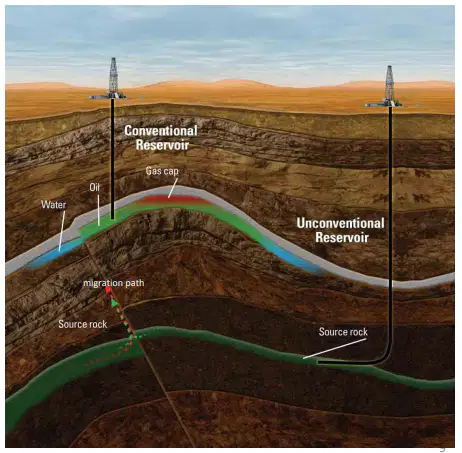
Petroleum System Processes
(a)
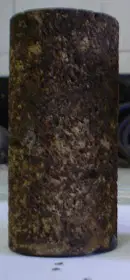
Oil bearing rock
Non oil bearing rock
oil bearing tight rock
none of the above

Oil bearing rock
Non oil bearing rock
oil bearing tight rock
none of the above
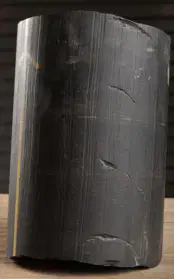
Oil bearing rock
Non oil bearing rock
oil bearing tight rock
none of the above
the most common way of producing tight hydrocarbon resources
(a)
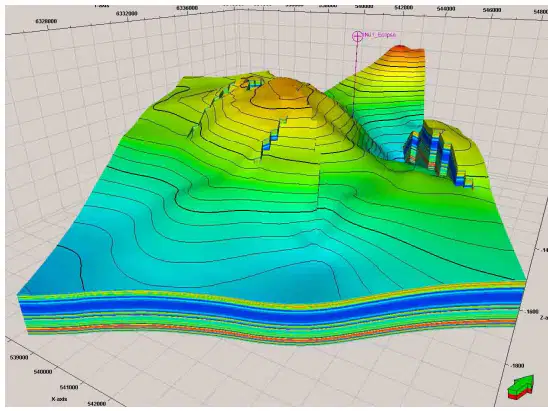
Is an oil/gas reservoir actually a pool or a porous rock containing hydrocarbons?
a pool
porous rock containing hydrocarbons
What are the most important reservoir characteristics?
(a)
the potential of the rock to store hydrocarbons (bucket size)
(a)
a measure of the flow potential of the oil and gas from the reservoir all the way to the surface (pipe size)
(a)
Examples of Storativity
Drainage area
Saturation
Porosity
Permeability
Relative permeability
Examples of Productivity
Permeability
Relative permeability
Compressibility
Viscosity
none of the above
What are examples of both Storativity and Productivity?
Thickness
Phase behavior
Drainage area
Permeability
Saturation
Can the reservoir rock be accessed on the surface?
Yes
No
Maybe
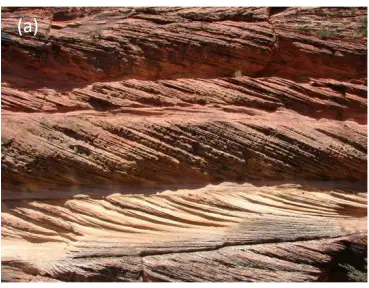
A relatively homogeneous rock in horizontal direction with vertical heterogeneity
A rock with dissolution-triggered heterogeneity
A rock with fracturing-induced heterogeneity
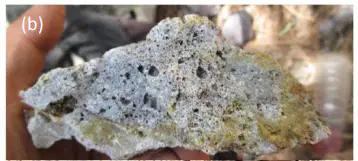
A relatively homogeneous rock in horizontal direction with vertical heterogeneity
A rock with dissolution-triggered heterogeneity
A rock with fracturing-induced heterogeneity
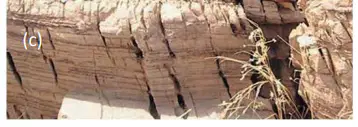
A relatively homogeneous rock in horizontal direction with vertical heterogeneity
A rock with dissolution-triggered heterogeneity
A rock with fracturing-induced heterogeneity
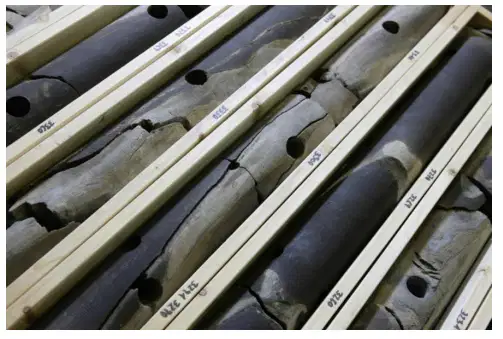
(a)
Reservoir geometry and properties are (a) .
Reservoir properties are (a) .
two fundamental characteristics related to single-phase flow in rocks
(a)
porosity formula
(a)
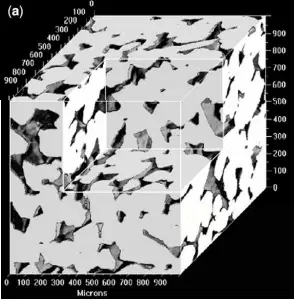
(a)
types of porosity
(a)
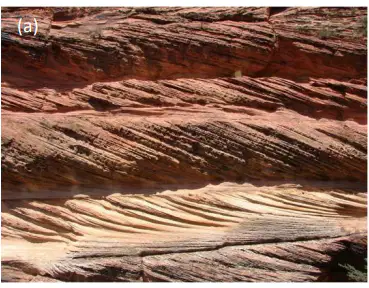
develops during rock deposition
primary porosity
secondary porosity
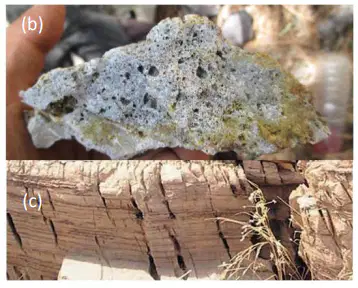
developed after initial rock deposition due to diagenetic processes such as dissolution vugs and faulting/fracturing
primary porosity
secondary porosity
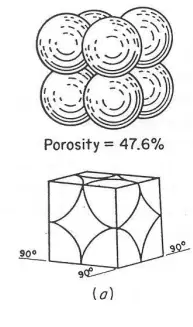
(a)
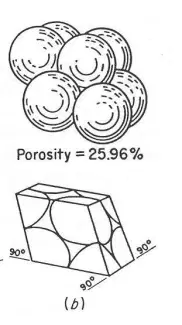
(a)
Porosity is larger for larger grain spheres, assuming identical grain size.
True
False
Porosity cannot be lower than 25.96%
True
False
Porosity is independent of the average grain size assuming that the grain size follows a normal grain size distribution around an average value.
True
False
a measure of the rock ability to transmit fluids
(a)
However, theoretically, it is possible that the rock is (a) . This is when the pores are disconnected.
Similar to porosity, some (a) is required in order to reach a fundamental understanding of the rock permeability.
Due to the rock complex pore and granular space, it is (a) flow through a rock.
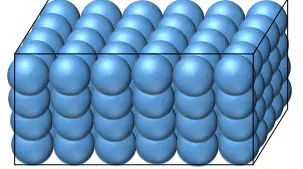
(a)

(a)
10-12 m2
(a)
A rock with permeability R2/8 is (a) to a capillary tube with radius 𝑅.
Permeability of a capillary tube with radius 𝑅 is (a)
(qμL/AΔP) is not constant.
True
False
m2 is the unit for permeability.
True
False
Calculate the radius of a capillary tube which is equally permeable to a 1×1×1 mm3 rock with k=0.125×10⁻¹² m2
0.1 μm
1 μm
0.8 μm
8 μm
Calculate the permeability of a human-hairlike capillary tube with R=10 μm in Darcy
0.125
1.25
12.5
125
Calculate the permeability of the steel block below (1×1×1 mm3 ) containing a capillary tube with R=10 μm.
1 md
2 md
3 md
4 md
The permeability of a flow path is renamed as (a) since it intrinsically represents the permeability of the flow path by itself
For instance, the capillary tube intrinsic permeability is the (a) .
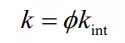
SIngle flow path
Multiple flow paths
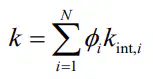
Single flow path
Multiple flow paths
The permeability of the steel block below (1×1×1 mm3 ) containing a capillary tube with R=10 μm is ~4 md in the direction shown below
True
False
Number of holes drilled in a steel block are doubled. Its permeability:
Remains the same
Is halved
Increases 2x
Increases 4x
if the flow path is not along the flow direction
(a)
There are n capillary tubes all with same radius (R) and tortuosity (τ) in an otherwise impermeable rock. The effective permeability of the rock is given by 𝑘 = (𝑅2𝜙/8𝜏) where Φ is the fraction of the bulk volume taken by all capillary tubes.
True
False
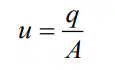
flow rate divided by the area
Superficial velocity
Advance velocity
Interstitial velocity
Streamline velocity
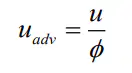
velocity to external observer
Superficial velocity
Advance velocity
Interstitial velocity
Streamline velocity
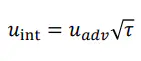
average velocity within the flow passage
Superficial velocity
Advance velocity
Interstitial velocity
Streamline velocity
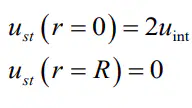
it varies within the flow passage
Superficial velocity
Advance velocity
Interstitial velocity
Streamline velocity
Which one is largest?
Superficial velocity
Advance velocity
Interstitial velocity
Kf =
(a)
kf[mD]
(a)
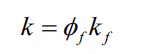
single fracture
multiple fractures
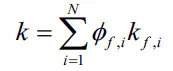
single fracture
multiple fractures
Based on simple form Carman-Kozeny equation, which parameter affects the permeability the most?
Porosity
Tortuosity
Grain diameter
As a result of doubling the grain size, the permeability
Is halved
Remains the same
Increases 2x
Increases 4x
All else held constant, what would be the permeability ratio (k2 /k1 ) when porosity is increased from 1=10% to 2=20%? Use simple form of CK equation.
36.8
26.7
16.6
10.1
Increasing the grain size increases both permeability and porosity.
True
False
Based on Carman-Kozeny equation (fitting form), which of the following graphs is linear?
k vs Φ
log(k) vs Φ
k vs log(Φ)
log(k) vs log(Φ)
What are the types of complications?
Inertia
Slippage
Heterogeneity and anisotropy
Multi-phase flow
all of the above
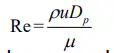
(a)
At high Re, the flow becomes ______________ and more energy will be _____ for same flow rate.
(a)
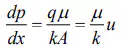
(a)
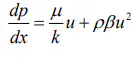
(a)

(a)
most significant for low porosity rock flowing at high rates
(a)
Low porosity implies ____________ resulting in __________ of the fluid in the more tortuous paths at higher velocities.
(a)
In short, for the same pressure drop, the velocity will be higher for what?
Darcy flow
non-Darcy flow.
Also, for the same velocity, pressure drop will be larger for what?
non-Darcy flow
Darcy flow
Non-Darcy flow develops only if Reynolds number exceeds 2100
True
False
Non-Darcy flow makes production less efficient.
True
False
Non-Darcy effect is more significant in lower porosity rock.
True
False
Absolute permeability is independent of fluid type.
True
False
At low pressures in small pores, gas slippage on the pore wall leads to an apparent permeability larger than the actual permeability of the rock.
(a)
Apparent permeability with gas at low pressure is higher than absolute permeability.
True
False
Klinkenberg effect is generally visible at conventional reservoir conditions.
True
False
Permeability of a rock is measured using Nitrogen at average pressures of 0.5 and 1 atm. The resulting apparent permeabilities are 45 and 35 mD, respectively. Calculate the absolute permeability.
35 mD
25 mD
15 mD
The permeability can vary from one location to another
(a)
Heterogeneity may be experienced at small- or large-scale.
True
False
Near-wellbore damages associated with well drilling can induce (a) .
Sparse distribution of shale facies in a sandstone reservoir
small-scale heterogeneity.
large-scale heterogeneity
Reservoir layering where the fluid flows toward the well through multiple contiguous layers with different permeabilities
small-scale heterogeneity.
large-scale heterogeneity
Such a large-scale heterogeneities can be formulated under (a) to obtain an equivalent (average) permeability representing the reservoir.
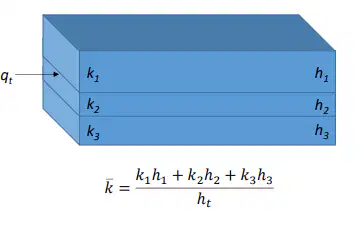
(a)
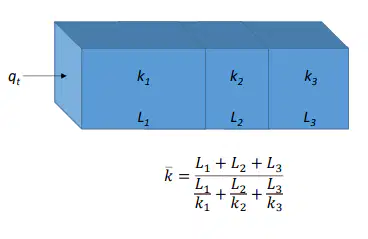
(a)
The flow in a beadpack with different bead sizes is shown below. Streamlines are marked with dye. Flow is from
High to low permeability
Low to high permeability
Variation of permeability in different directions for a given location
(a)
If permeabilities in different directions are identical for any given location, the rock is considered (a)
Flow is affected by both (a) .
The most significant anisotropy is evident in the ratio of (a) (kv /kh ) which can be very low but a default number may be 0.1.
known to alter the grains roundness during deposition.
(a)
Consequently, (a) increases with rock compaction.
As a consequence of increased angularity, the rock presents less continuity to flow in vertical direction, hence, (a) .
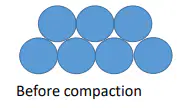
(a)

(a)
A medium is (a) with respect to a given property if that property is independent of position.
A medium is (a) with respect to a given property if that property is independent of direction.

