
 Worksheets
untitled
Total questions: 114
Worksheet time: 2hrs 9mins
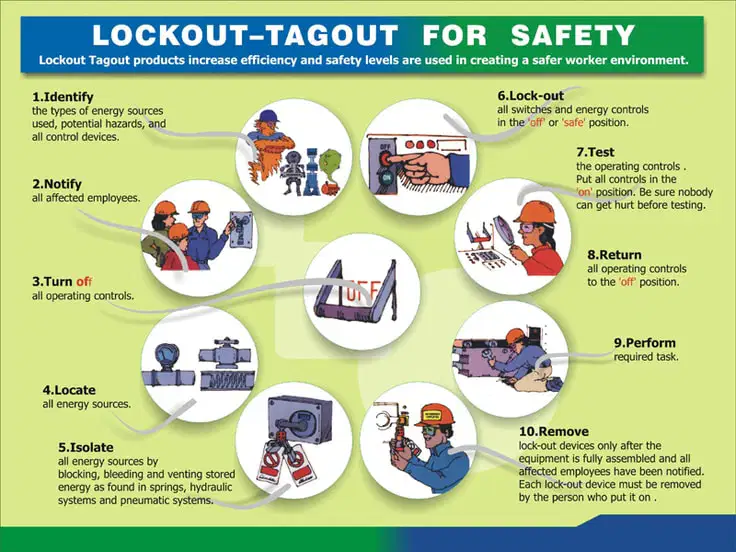
What is the purpose of a lockout/tagout procedure?
To ensure the safety of workers during maintenance or repair of equipment.
To shut down the equipment for a long period of time.
To test the equipment's performance.
To reset the equipment to its default settings.
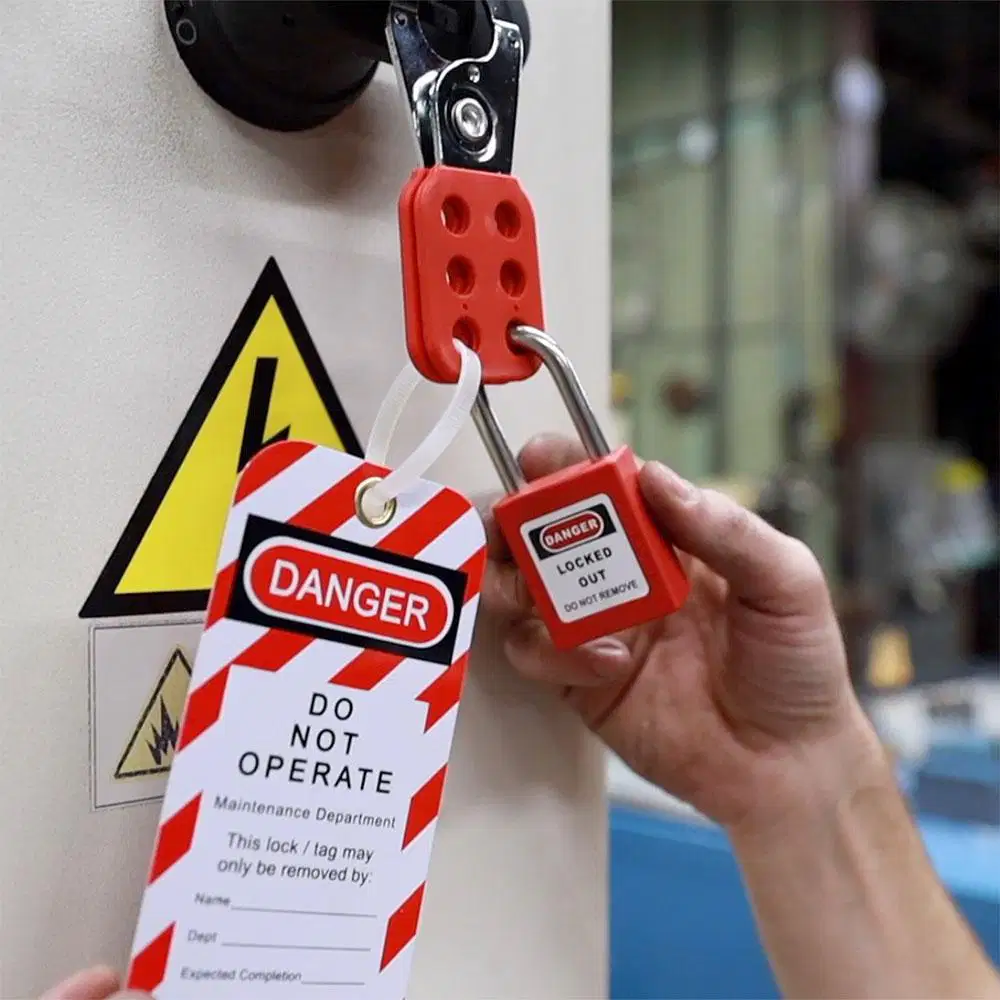
Who is required to install at least one padlock during a
lockout tagout procedure?
All the affected employees.
The supervisor only
All the employees working on the machine or equipment.
Only the trainees.
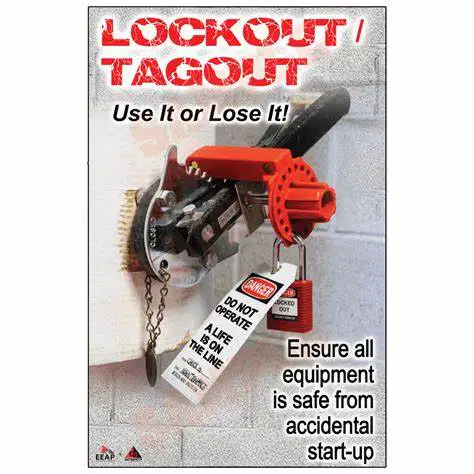
Who must be advised that a lockout/tagout procedure is going to be
performed?
The maintenance department workers only.
The foreman only.
All affected employees.
All employees of the company.

What has to be done before lockout/tagout procedures can be implemented?
Identification of hazards to which workers can be exposed
Collection of information coming from a sufficient number of accidents.
Wait for the government to ask the company to carry out such
procedures.
All of the answers above are corre
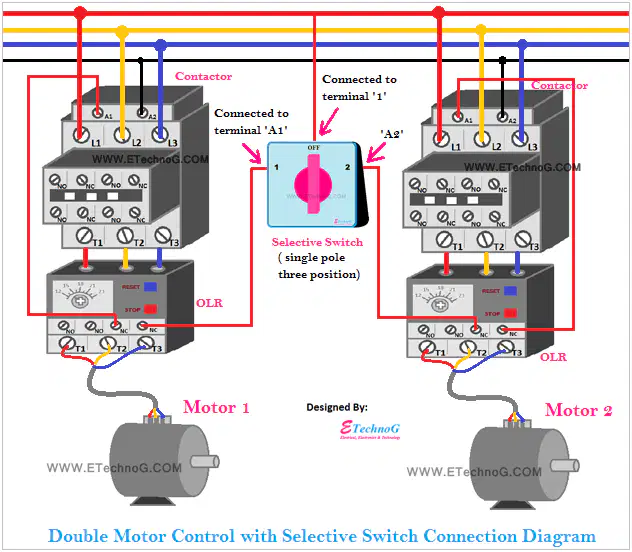
Which devices may be used to reverse the sequence of three-phase power lines?
Toggle switch and pilot light.
Selector switch and control relay.
Push button and emergency button.
Cam switch and dual contactors.

What is the name of the coil of wire around a soft iron core used to operate
magnetic contactors and relays?
Lever
Plunger
Solenoid
Drum
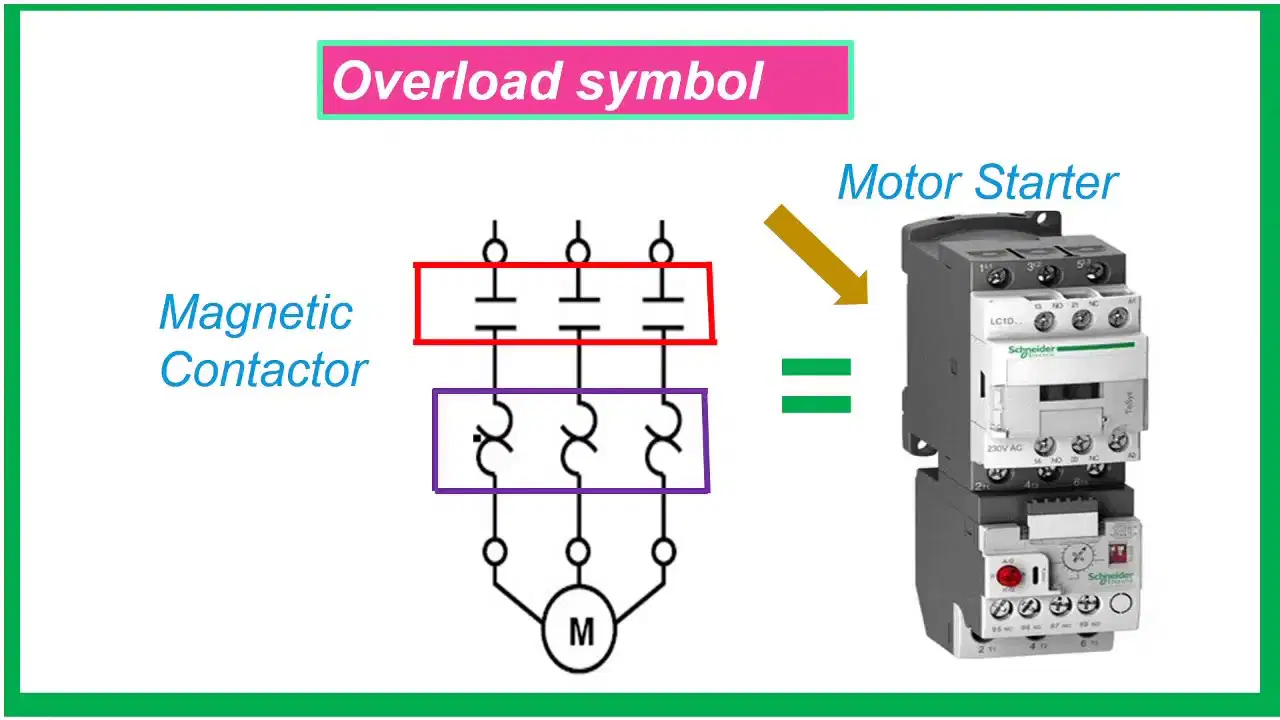
What are the two essential components of a magnetic motor starter?
Auxiliary contacts and overloads.
Pilot lights and auxiliary contacts.
Contactors and pilot lights.
Contactors and overloads.

What is the name of the highest current that a device can interrupt at a rated
voltage?
Interrupting current
Excessive current
Overload current
High-level current
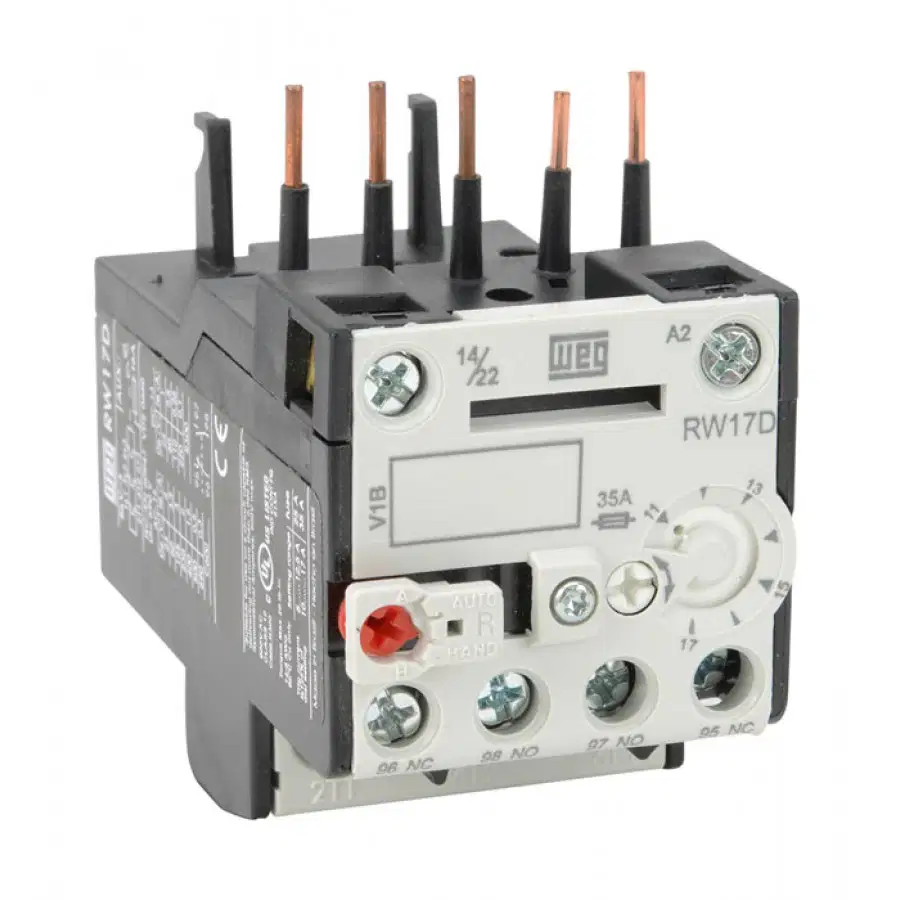
What components offer protection against a sustained low level of excessive current?
Fuses
Overload relays
Circuit breakers
Solenoids
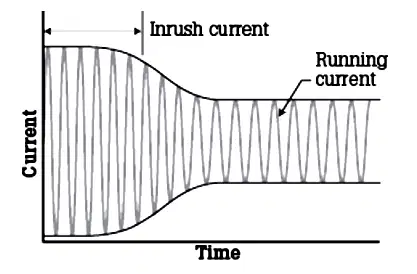
What phenomenon happens immediately after full voltage is applied to start a motor?
Full-load current
Pressure overload
Mechanical overload
Inrush current
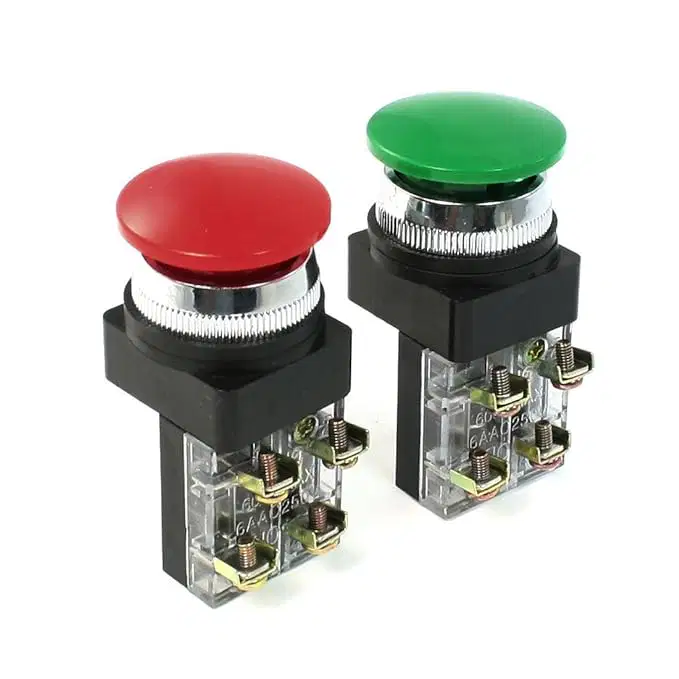
Which of the following control devices does not hold its state?
Cam switch
Selector switch
Toggle switch
Push button
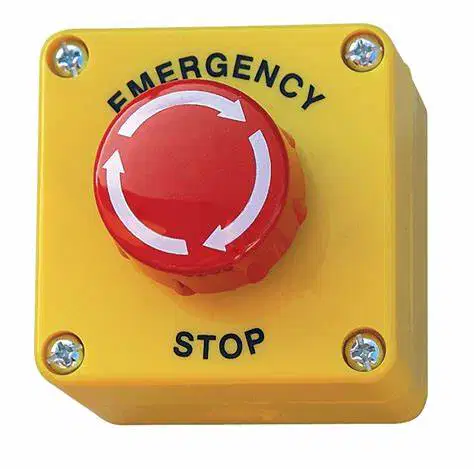
What device is designed to stop the equipment rapidly and easily?
Pilot light
Emergency Stop
button
Cam switch
Overload relay
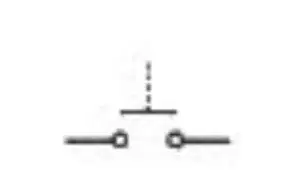
When is the normally open contact of a push button actuated?
When the push button is released.
When the push button is pressed
When the coil is energized.
When the coil is de-energized.
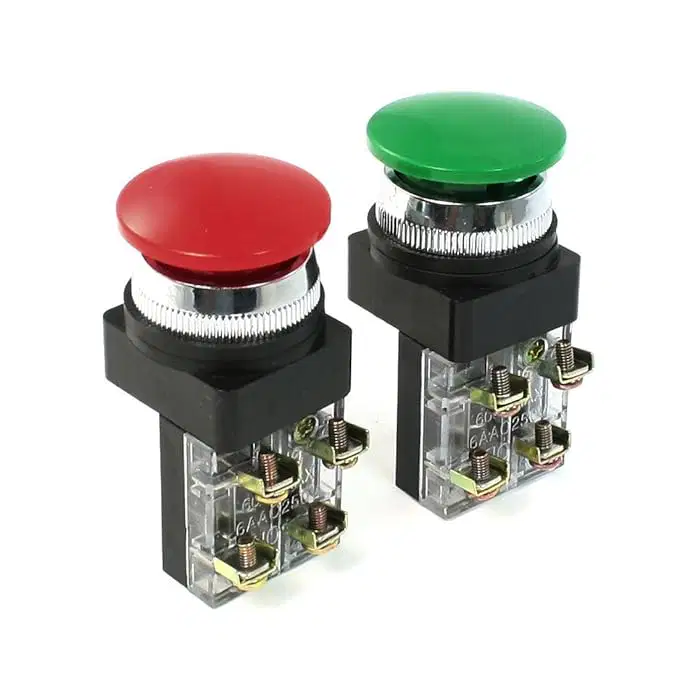
What color is generally used for a stop push button?
Blue
Yellow
Red
Green
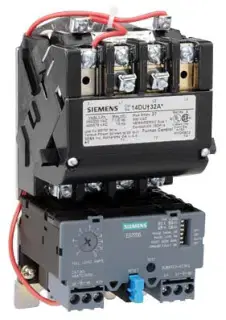
What does the term three-pole refer to when talking about motor starters?
Number of auxiliary contacts.
Number of windings.
Number of control contacts.
Number of power contacts.

What is the purpose of auxiliary contact switches on motor starters?
Switch power lines.
Receive information from the PLC.
Provide feedback about the motor condition.
Connect a multimeter.

How do bimetallic overload relays operate?
Sensors measure the strength of the magnetic field around the power
line.
Metal alloys melt as heat goes up with the current rise.
Heat goes up as the current rises, causing bimetal strips to bend.
Bimetal strips are actuated by radio-frequency signals.
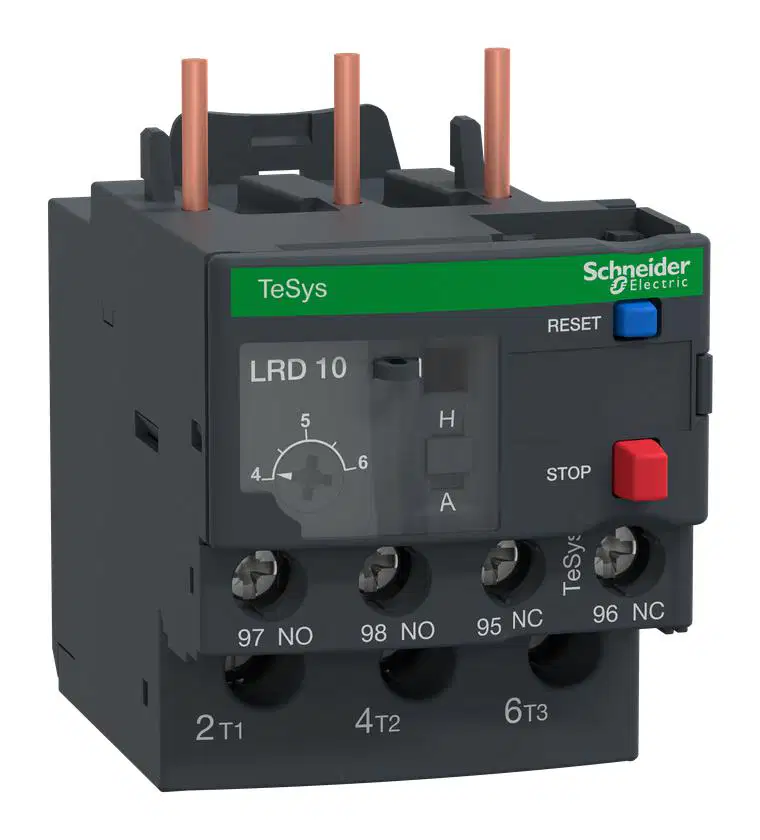
What is the class of a 6 A overload, if it trips in 20 seconds at a current
of 36 A?
Class 10
Class 20
Class 30
Class 40
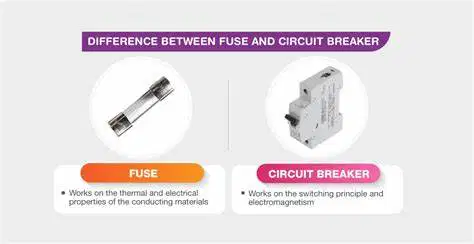
What is the main difference between circuit breakers and fuses?
Fuses may be reset, circuit breakers have to be replaced.
Fuses open circuits when the current is too high.
Circuit breakers open circuits when the current is too high.
Fuses have to be replaced; circuit breakers may be reset.
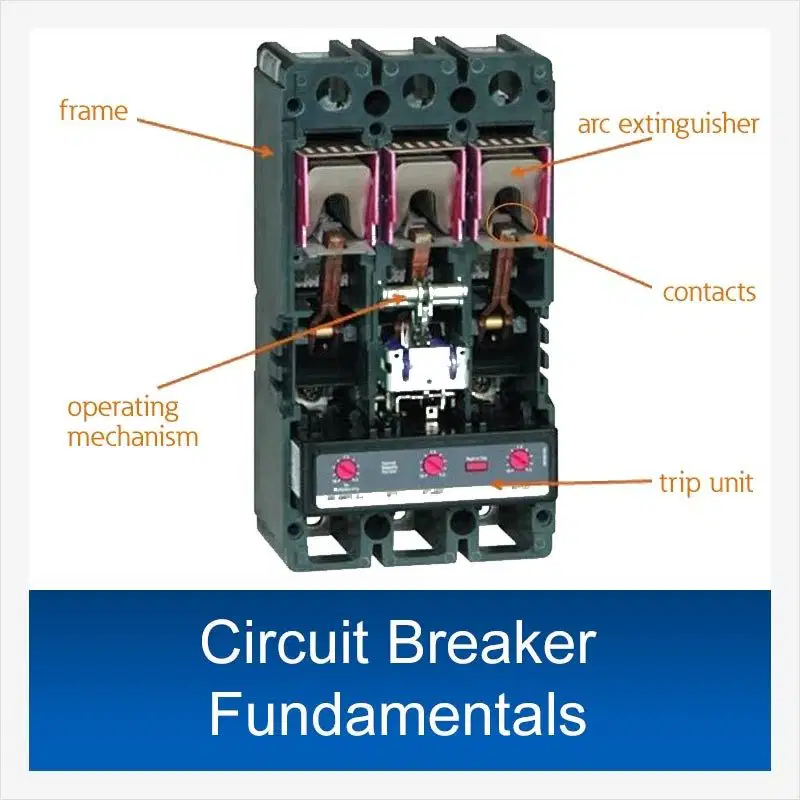
What is the function of a circuit breaker in an electrical system?
To increase the current flow in the circuit.
To decrease the voltage in the circuit.
To interrupt the circuit when the current is too high.
To convert AC current to DC current.
A motor overload relay consists of a current-sensing unit and a mechanism activated by the sensing unit that ____.
dissipates excess current
opens the motor circuit
trips an alarm
decreases motor speed
On magnetic contactors, which contacts are said to be normally open (NO)?
All contacts that are functioning correctly
Those that are together when the relay is de-energized
Those that are apart when the relay is de-energized
All contacts that are not functioning correctly
Which of the following can provide motor overload protection but have the disadvantage of being nonrenewable?
Dual-element or time-delay fuses
Circuit breakers
Solenoids
Overload relays
The two classifications of overload relays are thermal and ____.
magnetic
shading
eutectic
bimetallic
When making connections to reverse the rotation of a motor, ____. connect lines L1, L2, and L3 to the motor terminals T1, T2, and T3, respectively
L1 is connected to motor terminal T3, and L3 is connected to motor terminal T1
L1 is connected to motor terminal T2, and L3 is connected to motor terminal T1
L1 is connected to motor terminal T2, and L3 is connected to motor terminal T3
L1 is connected to motor terminal T3, and L2 is connected to motor terminal T1
PLC stands for
people lie to cops
programmable
logic controller
Public Limited Company

A circuit breaker is an electrical safety device designed to protect an electrical circuit from damage caused by an overcurrent or short circuit.
Is needed in motor control
T/F
True
False

A_____is an electrically operated switch. It consists of a set of input terminals for a single or multiple control signals, and a set of operating contact terminals.
contactor
circuit breaker
relay
solenoid

What type of contact is this
N.O. normally open
N.C. normally close
Explain the difference between a contactor and a relay.
The color of the casing
The shape of the internal components
The main difference between a contactor and a relay is the current load capacity they are designed for.
The number of terminals
What is the function of a motor starter?
Regulates the temperature of an electric motor.
Monitors the voltage of an electric motor.
Controls the starting, stopping, and protection of an electric motor.
Adjusts the speed of an electric motor.
Describe the role of overload relays in motor control circuits.
Overload relays regulate the temperature of the motor by controlling the cooling system
Overload relays increase the motor speed by adjusting the voltage
Overload relays are used to change the direction of motor rotation
Overload relays protect the motor from overheating by monitoring current flow and tripping the circuit if it exceeds a set limit.
What are the common types of motor starters used in industrial applications?
Variable frequency drives
Direct On-Line (DOL) starters, Star-Delta starters, and Soft starters
Autotransformer starters
Reversing starters
What safety precautions should be taken when working with industrial motor control systems?
Ignore safety protocols
Use equipment without training
Disregard PPE
Wear appropriate PPE, follow lockout/tagout procedures, inspect and maintain equipment, follow proper training and procedures
Discuss the importance of proper grounding in motor control circuits.
Proper grounding in motor control circuits is important for safety, preventing electrical shocks, reducing the risk of short circuits, ensuring stable operation, and protecting equipment from damage.
Improper grounding enhances the stability of motor control circuits
Proper grounding is not necessary in motor control circuits
Grounding can lead to increased risk of electrical shocks
What must be complete for a circuit to work?
The wires must be colored
A light bulb must be present
A battery must be fully charged
The path must be complete
What happens when the poles of two magnets are brought close to each other?
Nothing happens
They always repel
They merge into a single magnet
Opposite poles attract and the same poles repel
What is an electromagnet?
A natural magnet found in the earth
A magnet that can be turned on or off
A magnet that can only attract metals
A type of permanent magnet
What is the stator in an electric motor?
The part that spins
The switch that controls the motor
The part that doesn't move
The battery that powers the motor
What is the rotor in an electric motor?
The outer casing of the motor
The wires inside the motor
The battery connection
The part that spins
What is the role of brushes in an electric motor?
To clean the commutator
To maintain electrical contact with the commutator
To lubricate the motor
To cool down the motor
What happens when you flip the battery in a circuit?
The current flows the other way
The device connected to the circuit turns off
The current stops flowing
The circuit breaks
What is the function of the armature in an electric motor?
To spin and create motion
To act as a permanent magnet
To supply power to the motor
To hold the motor together
What is the significance of the commutator's design in an electric motor?
It makes the motor more energy-efficient
It prevents the motor from overheating
It switches the direction of current automatically
It allows the motor to spin in one direction only

Which description below best matches the symbol shown?
Pilot lamp with pushbutton test
Wall light
Pilot lamp
Pilot lamp (red)

Which description below best matches the symbol shown?
Bus duct
Fuse
Inductor
Solenoid

Which description below best matches the symbol shown?
Control relay coil
Motor starter coil
Contactor coil
Indicating light

Which description below best matches the symbol shown?
Horn
Bell
Buzzer
Siren
What are the 3 MAIN types of Sensors?
Limit Switch, Proximity sensor, and Photoeyes
Pushbutton, Limit Switch, Pretravel
Initial, Operating point, Overdue
What is a Proximity sensor?
is a solid state sensor that detects the presence of an object by means of an electronic sensing field
a solid-state sensor that can detect the presence of an object by emitting and receiving high-frequency sound waves
– A mechanical input that requires physical contact of the object with the switch actuator
What is a Inductive sensor?
a sensor that only detects metallic target
a sensor that detects either nonmetallic or metallic targets
What is a Photoelectric sensor?
– a solid-state sensor that can detect the presence of an object by emitting and receiving high-frequency sound waves
a solid-state that can detect the presence of an object without touching the object
– is a sensor that detects either nonmetallic or metallic targets
What is a Limit Switch?
a sensor that detects the proximity of a magnetic field
a solid-state sensor that can detect the presence of an object by emitting and receiving high-frequency sound waves
A mechanical input that requires physical contact of the object with the switch actuator
A transformer works by ______?
an electric device that uses electromagnetism to change voltage from one level to another or to isolate one voltage from another
a device that has a preset time period that must pass after the timer has been energized before any action occurs on the contacts.
a device is a that does not start its timing function until the power is removed from the timer
What are the 3 MAIN timer types?
on-delay, off-delay, interval
jogged, 3 phase, interval
Off-delay, interval, semi-delay
A On-delay timer is a ______?
is a device in which the contacts change position immediately and remain changed for the set period of time after the timer has received power
is a device is a that does not start its timing function until the power is removed from the timer
is a device that has a preset time period that must pass after the timer has been energized before any action occurs on the contacts.
A Off-delay timer is _____?
is a device that has a preset time period that must pass after the timer has been energized before any action occurs on the contacts
is a device in which the contacts change position immediately and remain changed for the set period of time after the timer has received power
is a device is a that does not start its timing function until the power is removed from the timer
A Interval timer is a _______?
is a device that has a preset time period that must pass after the timer has been energized before any action occurs on the contacts.
is a device in which the contacts change position immediately and remain changed for the set period of time after the timer has received power
is a device is a that does not start its timing function until the power is removed from the timer
How does a 3-phase motor work?
Works by harnessing three alternating currents to produce a rotating magnetic field, which, in turn, drive the motor's rotor and induces rotation.
Works by harnessing two alternating currents to produce a rotating magnetic field, which, in turn, drive the motor's rotor and induces rotation.
Works by harnessing single alternating currents to produce a rotating magnetic field, which, in turn, drive the motor's rotor and induces rotation.
What are the 3 types of three-phase motors?
Induction, Synchronous, Brushless DC motor
Suction, Desynchronous, Debrush AC motor
Induction, Brushless AC motor, Synchronous
What makes up a the three-phase motor?
Stator, Rotor, Frame (enclosure)
Armature, Rotor, Stator
Overloaded, Safety Switch, Pushbutton
4. A(n) ______________ diagram illustrates the actual wiring of the control circuit
wiring
operational
block
line
6. When an overload contact trips, power is reestablished by ________________
replacing the overload contacts wit the same size
replacing the overload contacts with one size larger
replacing the overload contacts with one size smaller
resetting the overload contacts
7. ______________ are devices that convert electrical energy to mechanical energy, heat, light or sound
Fuses
Loads
Switches
Transformers
8. To check if voltage is being delivered from the power circuit to the transformer, the voltage on the ____________ side of the transformer is measured.
secondary
fused
terminal
primary
9. To check if voltage is being delivered from the transformer to the control circuit, the ______________side of the transformer is measured.
primary
terminal
fused
secondary


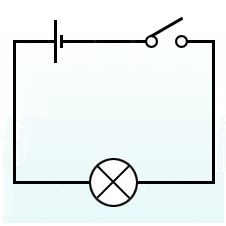
This circuit is .....?
open
parallel
closed

Which of the following schematic diagrams represents this circuit?


Select the symbol for LIGHT BULB


What does DPDT stand for in electrical terminology?
Double-pole, double-time switch
Double-pole, double-throw switch
Dual-pole, dual-throw switch
Double-panel, double-throw switch
Which term describes a switch that returns to its default state when released?
Momentary switch
Continuous switch
Permanent switch
Temporary switch
What is the term used for a switch configuration that has one input and can connect to one of two outputs?
SPST
SPDT
DPST
DPDT
What does the abbreviation 'N.C.' stand for in the context of switches?
Not connected
Normally closed
Nearly closed
Non-conductive
What information is typically included on most wiring diagrams regarding the wiring itself?
The length and flexibility of the wires
The gauge and color of the wiring
The manufacturer of the wiring
The cost of the wiring
What does the abbreviation "BRN/WHT" signify in wiring schematics?
Brown wire with a white tracer or stripe
White wire with a brown tracer or stripe
Solid brown wire without any tracers
Solid white wire without any tracers
According to the chart, what color does the abbreviation "BLK" represent?
Blue
Black
Brown
Green
Identify the symbol used for a ground connection.
A triangle
Three horizontal lines of decreasing length
An arrow pointing downwards
A vertical line intersecting three horizontal lines
What could be a consequence if a connector becomes disconnected?
The circuit will increase its efficiency
The circuit will stop using any power
The wire may become shorted to ground or another circuit
The wire will automatically reconnect

What symbol is that?
Push button switch
Slide Switch
2 Way Switch
Capacitor

What symbol is that?
Push button switch
Slide Switch
2 Way Switch
Capacitor

What does the following component symbolize?
resistor
capacitor
conductor
switch

What circuit element is this?
Potentiometer
Photoresistor
2 way Switch
In the connection diagram, what color wire is used for the ground connection?
Black
White
Green
Blue

What does this symbol show
Battery
Power Supply
Connected Wires
Wires that Cross but don't connect

What does this symbol show
Battery
Power Supply
Connected Wires
Wires that Cross but don't connect
Wiring Color code DC: A (a) conductor represents DC positive conductors. A (b) conductor represents DC Negative. (c) is the preferred alternate color for DC Negative conductors. (d) is the primary color for DC grounding conductors.

Why is electrical wiring usually made from copper?
Because copper is shiny
Because copper conducts electricity
Because copper is not magnetic
Because copper insulate electricity

