
Font size
 Worksheets
ASE B2 Practice
Total questions: 64
Worksheet time: 1hrs 7mins
The air pressure at the inlet of an HVLP gun is normally between:
10-30 psi
30-50 psi
50-70 psi
None of the above
Painter A says that urethane-based primer-surfacer will cure faster if sprayed in several coats with flash time between coats. Painter B says that a single-component primer-surfacer will be less likely to have sand scratch swelling. Who is right?
Painter A only
Painter B only
Both A and B
Neither A or B
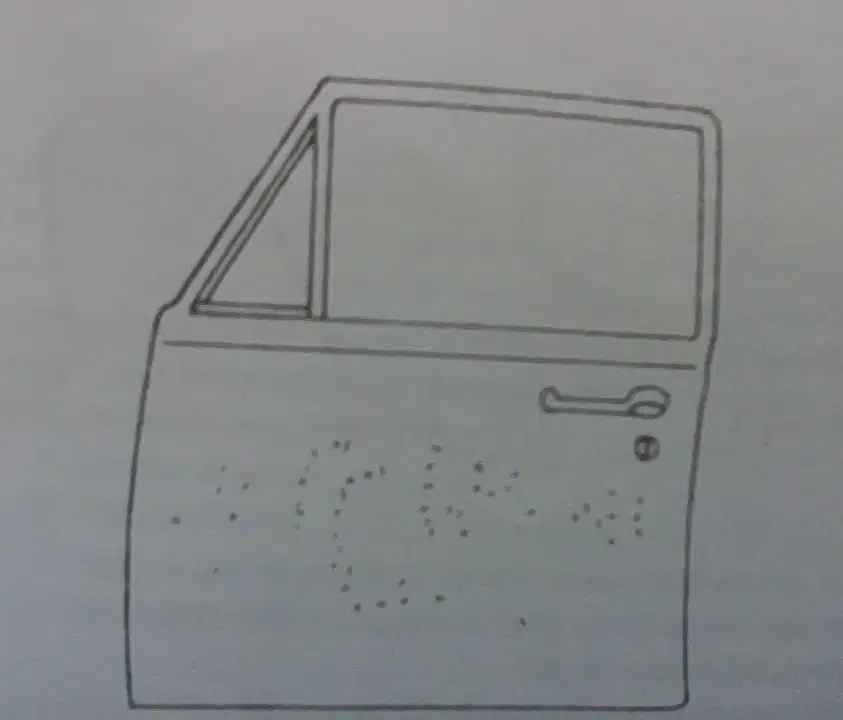
The door shown above has a large number of paint chips, but no dents. The paint is the original finish. Painter A says that the chips could be filled with an application of polyester glazing putty before refinishing. Painter B says that the chips could be sanded out before refinishing. Who is right?
Painter A only
Painter B only
Both A and B
Neither A or B
Which of these procedures would help find pits, blisters and small shrunken impressions after priming on an area repaired with body filler?
Blowing the repaired area with compressed air
Wire brushing and dusting the repaired area
Block sanding the area with a P320-400 grit sand paper
Wiping off the repaired area with thinner
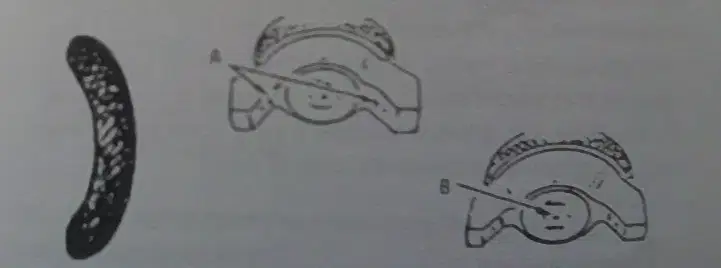
Painter A says that if one of the air holes labeled 'A' is partly blocked with dried paint, it will cause the spray gun pattern shown above. Painter B says that is the paint hole labeled 'B' is partly blocked with dried paint, it will cause the spray gun pattern shown above. Who is right?
Painter A only
Painter B only
Both A and B
Neither A or B
An application of a solvent-based basecoat metallic color has been made in which streaks indicate each pass of the spray gun. Painter A says that too slow of a reducer could be cause. Painter B says that incorrect pattern overlap could be the cause. Who is right?
Painter A only
Painter B only
Both A and B
Neither A or B
Which of these should be done to paint that has dried and separated in a can for an extended storage time?
Strain and reduce
Strain and over-reduce
Strain, over-reduce and then strain again
None of these; dispose of the paint
Bare metal was just sprayed with a self-etching primer. Painter A says it must be sanded before applying another primer. Painter B says 180-grit should be used instead. Who is right?
Painter A only
Painter B only
Both A and B
Neither A or B
Which of the following may cause solvent popping?
Painting over rust spots
Insufficient flash time for undercoats
Using the wrong primer
Appling topcoat too wet
The repaired and primed areas of a vehicle that were refinished with metallic basecoat/clearcoat show through the paint refinish in a shadowy manner when the vehicle is in direct sunlight. Painter A says that not mixing enough catalyst in the paint before application could be the cause. Painter B says that failure to apply a solid color base before refinishing could be the cause. Who is right?
Painter A only
Painter B only
Both A and B
Neither A or B
The next two questions are based on the following color: Medium Shadow Blue Metallic is composed of 001 Blue 21.1g, 002 LS White 16.7g, 003 HS Black 13.5g, 004 Magenta 8.0g, 005 Medium Fine Aluminum 7.9g, and 006 Medium Course Aluminum 6.9g. The vehicle is redder than the paint mix.
Painter A says to add more Magenta to the paint mix. Painter B says to add more Blue. Who is right?
Painter A only
Painter B only
Both A and B
Neither A or B
After the color was adjusted the car was lighter than the paint that was mixed. Painter A says to add some LS White. Painter B says to add Medium Fine Aluminum. Who is right?
Painter A only
Painter B only
Both A and B
Neither A or B
All of these may cause fish-eyes EXCEPT:
Tire dressing from the detail area
Paint sealant residue
Airborne contaminants
Using the incorrect reducer or thinner
About a week after painting a vehicle with a single-stage enamel, many areas of the finish show severe wrinkling. Painter A says this could be due to the paint being sprayed on too thickly. Painter B says it could have been caused by spraying the paint with the air pressure too high. Who is right?
Painter A only
Painter B only
Both A and B
Neither A or B
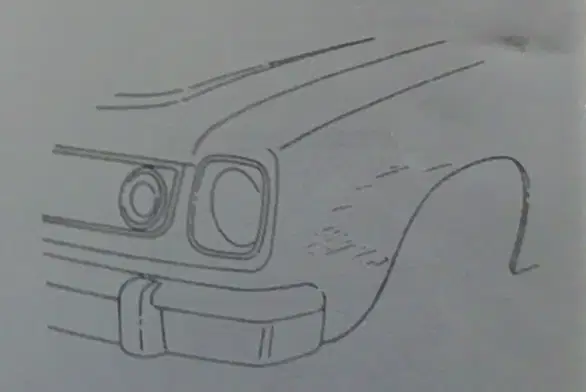
The illustration below shows a fender that has been metal-repaired and refinished. There are longitudinal scratches visible in the clearcoat. Painter A says the scratches are due to not allowing the primer-surfacer to cure (dry) sufficiently. Painter B says the prep person used sandpaper on a dual-action (DA) sander that was too coarse when featheredging the paint film edge surrounding the repair. Who is right?
Painter A only
Painter B only
Both A and B
Neither A or B
A vehicle that was refinished overall with basecoat/clearcoat lost its shine after drying overnight. Which of these could be the cause?
The paint was under-reduced
Too much drying time was allowed between coats
Too few coats were applied
There was lack of airflow in the paint booth when the paint was drying
Sand scratch swelling could be caused by all of these EXCEPT:
Applying primer surface in thin, wet coats
Cold shop conditions
Using the wrong hardener
Applying too much material
All of the following panels require an etch primer EXCEPT:
Fiberglass
Stainless steel
Galvanized Steel
Aluminum
A painter wanting to color-match a metallic paint would make the least change in paint shade by changing the:
Air pressure
Gun distance
Amount of thinner or reducer
Number of coats applied
All of these could cause wheel burn when buffing or polishing a topcoat EXCEPT:
Cold shop conditions
Use of an abrasive compund
Insufficiently cured paint
Using a high-speed polisher
At what metal temperature can urethane clearcoats be force dried to achieve a good hard finish without damaging the plastic components?
300*F
250*F
200*F
140*F
Fish-eyes appear randomly on a complete refinish job. The car was thoroughly washed with a wax and grease remover. Painter A says the fish-eyes may have been caused by tire dressing being used in the shop. Painter B suspects pressed air supply. Who is right?
Painter A only
Painter B only
Both A and B
Neither A or B
Which of these contains the highest concentration of volatile organic compounds (VOC)?
Acrylic enamel
High solids urethane primer
Acrylic lacquer
Urethane topcoat
All of these protect the painter from isocyanide exposure EXCEPT:
Nitrile gloves
Safety goggles
Supplied air respirator
Dust mask
Ensuring the availability and access to MSDS (Material Safety Data Sheets) is the responsibility of the:
Employee
Jobber
Employer
Paint manufacturer
Which of the following would be likely cause for fish-eye contamination?
Using contaminated towels for cleaning
Using too fast or reducer
Expired hardener or catalyst
Humid shop conditions
When a vehicle is removed from the booth six hours after painting, the gloss has diminished. Painter A says the cause could be that there was too much flash time between coats. Painter B says the cause could be lack of sufficient airflow and the booth filters should be changed. Who is right?
Painter A only
Painter B only
Both A and B
Neither A or B
A urethane bumper cover peeled its paint six months after the car was painted. Which was the MOST probable cause?
Wrong paint was used
Improper bake time
Mold release agent remained on the part
Someone leaned against the bumper
Which of these could be done to remove a static charge from a vehicle's body?
Wet down the spray booth
Attach a ground strap to the vehicle
Use a clean tack rag
Wait 20 minutes before spraying
Two painters are discussing methods of sanding a vehicle before painting. Painter A says that a dual action sander will perform adequately in most conditions. Painter B says wet sanding with wet or dry sandpaper will perform adequately in most conditions. Who is right?
Painter A only
Painter B only
Both A and B
Neither A or B
Rail dust appears as:
Black marks in the clear coat
Longitudinal tracks in the topcoat
Small points of rust in the finish
Craters in the clearcoat
Decal residue can be removed by:
Sanding with 220-grit paper
Cleaning with lacquer thinner
Sanding with 1200-grit paper
Cleaning with adhesive remover
The fluid needle of a spray gun seats in the:
Air cap
Fluid tip
Cup
Needle packing
A properly applied self-etching primer can lead to:
Sand scratch swelling
Color bleeding
Peeling
Corrosion resistance
Acid rain damage can appear as:
Water spots on the finish
Scratches in the clear
Paint chips in the clearcoat
Swirl marks in the clearcoat
Shrinking after topcoat application could be caused by all of these EXCEPT:
Using the wrong temperature hardener
Using the wrong temperature reducer
Not applying enough material
Allowing too much cure time
Painter A says that a charcoal cartridge respirator is sufficient protection when applying urethane paints. Painter B says that a supplied air respirator is sufficient protection when applying urethane material. Who is right?
Painter A only
Painter B only
Both A and B
Neither A or B
Automotive paint should be flexible so that:
It won't split when panels are damaged
Moisture won't affect it
It can expand and contract with the vehicle body
Minor dents can be repaired
An air compressor can be the source of:
Runs in the paint
Discoloration
Fish-eyes
Dry spray
Painter A says that a urethane primer-surfacer can be used to fill minor scratches in body filler on repaired areas. Painter B says epoxy primer could also be used for filling scratches. Who is right?
Painter A only
Painter B only
Both A and B
Neither A or B
Color matching should be performed in which environment?
The spray booth
Inside the shop near a window
Inside the shop with a direct fluorescent lighting
Under natural lighting
Mold release agent is:
For removing decal adhesive residue
For removing wax and grease
Used in the manufacture of bumper covers
Used to shape a body filled area
When chemical paint strippers are used to remove coatings, they can result in all of these EXCEPT:
Hazardous waste
Fumes in the shop
Injury to workers
Dust in the shop
When preparing a blend panel:
Remove moldings and trim
Sand the panel more than one would a primary panel
Sand only the part that gets color applied
Abrade the entire surface with P320 sandpaper
When cleaning new bumper covers, the use of VOC- based soviet is discouraged because:
It soaks into the substrate
It harms the urethane
It is flammable
It harms the environment
Clearcoat is used primarily for its:
UV protection
Corrosion resistance
Odor
Ease of application
When reducer evaporates too slowly when applying clearcoat, the result is called:
Holdout
Pinholes
Die back
Solvent popping
Most airborne contaminants that land on a freshly applied topcoat come from:
Outside
Within the spray booth
The painter
The vehicle itself
Preventing dry spray conditions is a matter of:
Using extremely high pressure
Handling the spray gun properly
Masking the car properly
Allowing sufficient dry time
Which of the following will NOT correct a dry spray condition?
Re-spray the panel
Changing air caps
Sand and polish
Use a heat lamp to bake the finish
The color of a vehicle can be identified by all of these EXCEPT:
Matching the paint to a color chip index
Calling a dealer
Cross-referencing according to factory color code
Using toners to make up a color
The first step a painter should take when preparing a car for paint is:
Water and detergent wash
Blow off time vehicle with compressed air
Test a sample of the paint
Measuring film thickness
Stone chip resistant coatings are applied:
After color coats
Before clearcoats
According to the manufacturer's directions
And mixed in with the paint
Cavity wax is used to:
Increase gloss on a finished panel
Prevent corrosion
Seal welded seams
Lubricate hinges
Which of the following is NOT a component of etch primer?
Chromates
Acid
Isocyanides
VOC
The process of crosslinking is associated with:
Lacquers
Solvents
Urethanes
Self-etching primers
Graduated mixing sticks are marked for the addition of what to painting materials:
Solvents
Corrosion preventatives
Wax
Toners
Painter A says that all the trim should be removed on a panel that is being finished. Painter B says that flush-mounted moldings may be masked with lift tape, provided that a hard line will not be left behind. Who is right?
Painter A only
Painter B only
Both A and B
Neither A or B
A bull's eye is a condition created by:
Hail damage
Paint contamination
Buffing at high speeds
Failure to properly featheredge a repaired area
Painter A says that a sanding stick can be used when sanding a hard-to-reach area. Painter B says the edge of a dual-action (DA) sander can be used to get in tight areas. Who is right?
Painter A only
Painter B only
Both A and B
Neither A or B
All of these are primary functions of a primer sealer EXCEPT:
Protect the substrate from solvent in the topcoat
Protect moldings and trim from enamels
Provide corrosion resistance to bare metal
Provide a uniform color for easier coverage
Painter A says that self-etching primer should be applied over the factory E-coat on a new replacement part. Painter B says a primer-surfacer should replace the E-coat. Who is right?
Painter A only
Painter B only
Both A or B
Neither A or B
Gravity feed spray guns can be identified by:
A cup located on the bottom of the gun
A cup located on top of the gun
A fluid tip that extends beyond the face of the air cup
A fluid tip flush with the face of the air cup
All of these are considerations when selecting fluid tip and needle combinations for an HVLP gun EXCEPT:
Viscosity of the painting material
Size of the object being painted
Quality of the finish
The drying time of the product being applied
Clogged air cap holes in a spray gun should be cleaned with which of the following?
Needle
Small nail
Toothpick
Wire

