
 Worksheets
25/26 Unit 1: Atoms, Charges, Valence, and Fusion in Stars
Total questions: 63
Worksheet time: 1hrs 29mins
Where is the nucleus found in this picture?
Protons have what charge?
Positive
Neutral
Negative
Neutrons have what charge?
Protons
Neutral
Negative
Electrons have what charge?
Positve
Neutral
Negative
Where do you find protons?
Nucleus
Electrons cloud
Outside the nucleus
Where do you find neutrons?
Nucleus
Electrons cloud
Outside the nucleus
Where do you find electrons? Check all that apply.
Nucleus
Electrons cloud
Outside the nucleus
A proton is found in the (a) and has a (b) charge.
A electron is found in the (a) and has a (b) charge.
A neutron is found in the (a) and has a (b) charge.
Which arrow points to the protons?
Which arrow points to the neutrons?
Which arrow points to the electrons?
Drag the correct response to the appropriate box on the chart.
Same mass as a neutron
Same mass as a proton
much less mass then protons and neutrons
Nucleus
Nucleus
Electron Cloud
Positive
Negative
Neutral/No charge
Two or more atoms joined together for a(n)...
Element
Compound
Molecule
Mixture

The smallest particle into which an element can be divided and still be the same element is a(n)
proton
neutron
electron
atom

What is an atom?
The smallest unit of matter
The smallest unit of measurement
Your next door neighbor

A chemical change is something that can be undone
True
False

Fireworks in an example of
Physical change
Chemical change
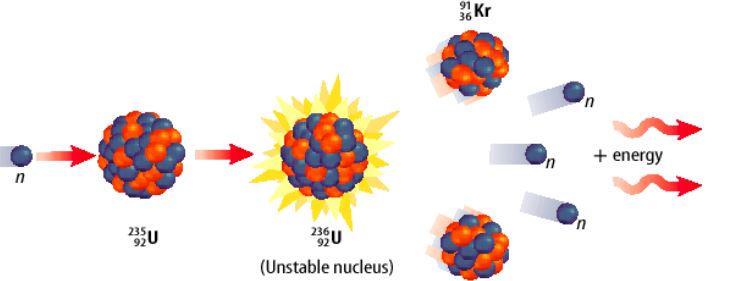
What is the main process that main sequence stars use to produce energy?
Nuclear fission
Hydrogen fusion
Carbon fusion
Helium fusion
What is the color of stars that are more massive and hotter?
Red
Yellow
Green
Blue
What is the next stage in the life cycle of a main sequence star after it leaves the main sequence?
Supernova explosion
Collapse into a white dwarf
Expansion into a red giant
Formation of a black hole
What is the estimated age of the universe?
5 billion years
13.8 billion years
20 million years
10 billion years
This element is the lightest,most abundant in the universe and is the key component of stars
Hydrogen
Helium
Oxygen
Carbon
Which subatomic particle has a negative charge?
Electron
Nucleus
Neutron
Proton
Which process splits a large nucleus into smaller nuclei, releasing energy?
Condensation
Fusion
Fission
Evaporation
Which of the following is a chemical change?
Water boiling
Paper burning
Ice melting
Salt dissolving in water

