wayground logo

Free Printable Worksheets

NEW

Font size

S
M
L
XL
Worksheets

Pre-AP Fall Semester Science Review

Total questions: 60

Worksheet time: 51mins

Name
Class
Date
1.
A collection of stars, dust, and gas bound together by gravity.
a)
Nebula
b)
Galaxy 
c)
Universe
d)
Protostar
2.
 A large cloud of gas and dust in interstellar space; a region in Space where stars are born.
a)
Protostar 
b)
Nebula
c)
Galaxy 
d)
Star
3.
The most commonly accepted theory that explains the beginning of our known universe is the -
a)
Theory of Evolution
b)
Big Bang Theory
c)
Cell Theory
d)
Blackhole theory
4.
Which of the following is the largest?
a)
star
b)
universe
c)
cluster
d)
galaxy
5.
Proxima Centauri is the closest star to Earth after the Sun and is located 4.3 light years away from Earth. How long does it take light from Proxima Centauri to reach Earth?
a)
1 year
b)
4.3 years
c)
43 years
d)
10 trillion years
6.
Gravity is the force objects put on each other because of their ______.
a)
mass
b)
friendliness
c)
acceleration
d)
speed
7.
In the diagram given, what happens as we move to the left?
a)
Stars get larger
b)
Stars get colder
c)
Stars get hotter
d)
Stars get smaller
8.
Which star is the coldest?
a)
Yellow Star
b)
Red Star
c)
Orange Star
d)
Blue Star
9.
Which category is our Sun located in?
a)
White Dwarfs
b)
Supergiants
c)
Main Sequence
d)
Giants
10.

Which wave has the longest wavelength?

a)

Infrared Rays

b)

Gamma Rays

c)

Ultraviolet Waves

d)

Radio Waves

11.

Which wave has the shortest wavelength?

a)

Infrared Rays

b)

Gamma Rays

c)

Ultraviolet Waves

d)

Radio Waves

12.

Which wave has the lowest frequency?

a)

Infrared Rays

b)

Gamma Rays

c)

Ultraviolet Waves

d)

Radio Waves

13.

Which wave has the highest frequency?

a)

Infrared Rays

b)

Gamma Rays

c)

Ultraviolet Waves

d)

Radio Waves

14.

Red Shift shows galaxies moving

a)

away

b)

toward

15.

Blue Shift shows galaxies moving

a)

away

b)

toward

16.
The Earth's axis is tilted _____ degrees.
a)
23.5
b)
25.3
c)
30.2
d)
24
17.
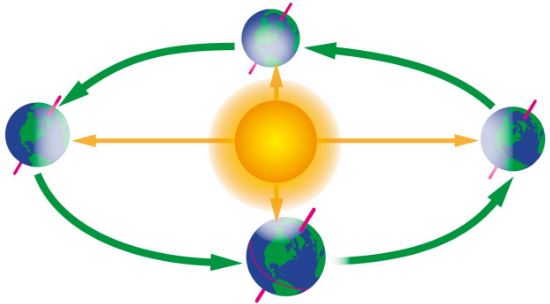
At position A, which hemisphere would have summer?
a)
Northern hemisphere
b)
Southern hemisphere
18.
What happens when the area in which you live tilts away from the sun?
a)
It is summer.
b)
It is spring.
c)
It is winter.
d)
It is fall.
19.
The term equinox means....
a)
equal amount of day light and equal amount of night
b)
Equal amount of winter and summer
c)
Equal amounts of hot dogs for everyone
d)
The longest day of the year
20.
What do June 21 and December 21 have in common?
a)
equinox dates
b)
the moon is full
c)
solstice dates
d)
the cold fronts blow in
21.
What is the longest day of the year?
a)
winter solstice
b)
summer solstice
c)
fall equinox
d)
spring equinox
22.
Why is the Equator warmest?
a)
Because it is closest to the sun.
b)
Because it receives the most direct sunlight
c)
Because no clouds form here.
d)
Because it is far from the sun
23.

In spring the axis of the earth is pointed away or toward the sun?

a)

towards

b)

Neither away or toward

c)

away

24.
Which season is taking place in the Southern Hemisphere in Position 1?
a)
Winter
b)
Spring
c)
Summer
d)
Fall
25.
Which season is taking place in the Northern Hemisphere in Position 2?
a)
Winter
b)
Spring
c)
Summer
d)
Fall
26.
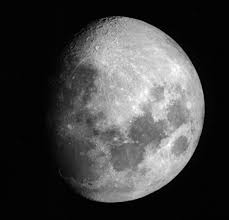
Name the moon phase
a)
waning crescent
b)
waxing crescent
c)
waning gibbous
d)
waxing gibbous
27.
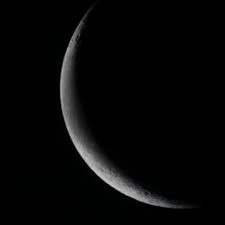
Name the moon phase
a)
waning crescent
b)
waxing crescent
c)
waning gibbous
d)
waxing gibbous
28.
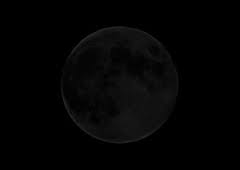
Name the moon phase
a)
waning crescent
b)
waxing crescent
c)
waning gibbous
d)
waxing gibbous
29.
Name the moon phase
a)
First Quarter
b)
Last Quarter
c)
New Moon
d)
Full Moon
30.
Name the moon phase
a)
First Quarter
b)
Last Quarter
c)
New Moon
d)
Full Moon
31.
What is the difference between a gibbous moon and a crescent moon?
a)
The gibbous shows more than half of the bright side of the moon.
b)
The crescent shows more than half of the bright side of the moon.
c)
The gibbous shows less than half of the bright side of the moon. 
32.
How many phases does the moon go through?
a)
4
b)
8
c)
10
d)
16
33.
Phases of the moon in which the moon appears to be getting larger are referred to as _.
a)
waxing
b)
waning
c)
new
d)
eclipse
34.
The cycle of the moon lasts about a _.
a)
day
b)
year
c)
week
d)
month
35.
The moon ____________ around the Earth.
a)
revoloves
b)
rotates
c)
up
d)
down
36.
A[n] ______________ tide occurs when the sun is at right angles to the line between Earth and the moon. 
a)
high
b)
neap
c)
low
d)
spring
37.
A[n] ___________ tide occurs when the sun, Earth, and the moon are nearly in a line. 
a)
spring
b)
high
c)
low
d)
neap
38.
The bulge of water on the side of the Earth closest to the moon produces ___________.
a)
high tide
b)
low tide
c)
neap tide
d)
spring tide
39.
A new moon results in a ____ Tide
a)
Neap
b)
Spring
c)
Neither
40.
A 3rd Quarter moon results in a ____ Tide
a)
Neap
b)
Spring
c)
Neither
41.
A __________ is the lines between air masses.
a)
low pressure system
b)
high pressure system
c)
front
42.
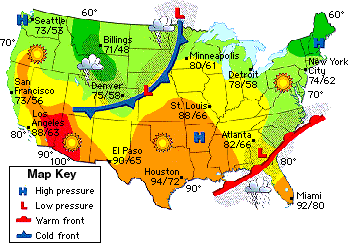
A low pressure system is located over Georgia. What type of weather will they have?
a)
clear, sunny skies
b)
cloudy and rainy
43.
A high pressure system is located north of New York City. What type of weather will be experienced there?
a)
clear, sunny skies
b)
cloudy and rainy
44.
a)
Warm Front
b)
High Air Pressure
c)
Cold Front
d)
High Temperatures
45.
a)
Low Clouds
b)
Low Temperatures
c)
Light Wind
d)
Low Air Pressure
46.
a)
High Air Pressure
b)
High Temperatures
c)
Heavy Rain
d)
Hail
47.
a)
High Pressure
b)
Warm Front
c)
Cold Front
d)
Mountains
48.
A cold front moving into an area can bring this type of weather...
a)
Warmer Temperatures, Clear Skies
b)
Colder Temperatures, Clear Skies
c)
Warmer Temperatures, Clouds
d)
Colder Temperatures, Clouds, and Precipitation
49.

In which direction is Mill River flowing?

a)

Southeast

b)

Southwest

c)

Northeast

d)

Northwest

50.
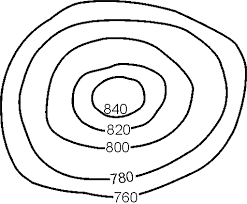
Determine the contour interval:
a)
5 m
b)
10 m
c)
15 m
d)
20 m
51.
What do contour lines that are farther apart represent?
a)
waterfall
b)
steep area
c)
gentle slope
d)
river
52.
The type of plate boundary where two plates come together is a .....
a)
Convergent Boundary
b)
Divergent Boundary
c)
Transform Boundary
d)
Plate Boundary
53.
Which of the following causes Earth's tectonic plates to move?
a)
Energy from the Sun
b)
Magnetic Pole Reversal
c)
Convection currents in the mantle
d)
Faults in Mountain Ranges
54.
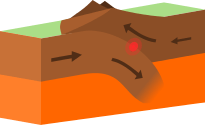
What type of plate boundary is this?
a)
Plate
b)
Divergent
c)
Convergent
d)
Transform
55.
What type of event will occur at this boundary?
a)
Earthquake
b)
Volcano Eruption
c)
Tornado
d)
Mountain Building
56.
Which of the following is the name of the ancient supercontinent formed 28 Million Years ago.
a)
Pangea
b)
Gondwanda
c)
Laurasia
d)
Neverland
57.

Oceanic Trenches are formed by _______ plate boundaries

a)

Convergent

b)

Transform

c)

Plate

d)

Divergent

58.
A fault is formed by the movement of a __________ plate boundary
a)
Transform
b)
Convergent
c)
Divergent
59.
How is it possible for new crust to be formed without increasing the surface area of the Earth?
a)
Crust is destroyed at the same time it is created
b)
New crust is underwater where it sinks
c)
New crust breaks more easily than old crust
60.

Folded Mountains are created when....

a)

Two continental plates collide

b)

Two oceanic plates pull apart

c)

An Oceanic plate subducts under a Continental Plate

d)

Two continental plates pull apart