
Font size
 Worksheets
BTA CHEM Unit 1 Atomic Structure
Total questions: 94
Worksheet time: 2hrs 43mins
What is the atomic number?
the number of protons in the nucleus
the number of protons and neutrons in the nucleus
the number of neutrons in the nucleus
the number of protons in the energy levels
What is the mass number?
the number of protons in the nucleus
the number of protons and neutrons in the nucleus
the number of neutrons in the nucleus
the number of protons and electrons in the atom
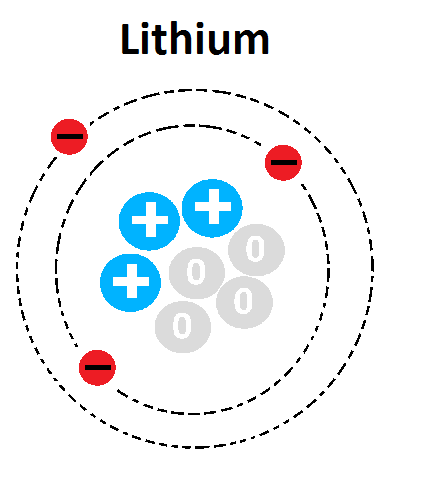
What is the atomic number of this atom?
1
3
4
7
What is the atomic number?
the number of protons in the nucleus
the number of protons and neutrons in the nucleus
the number of neutrons in the nucleus
the number of protons in the energy levels
What is the mass number?
the number of protons in the nucleus
the number of protons and neutrons in the nucleus
the number of neutrons in the nucleus
the number of protons and electrons in the atom
What is the atomic number of this atom?
1
3
4
7
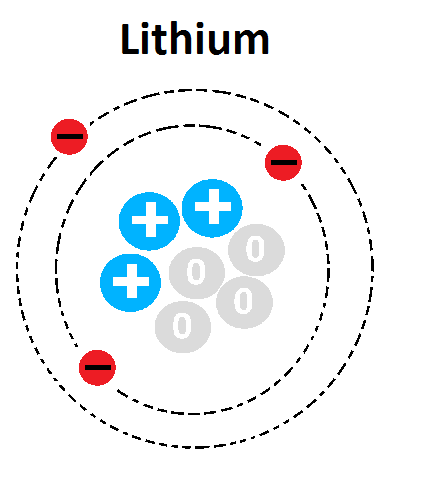
What is the mass number of this atom?
1
3
4
7
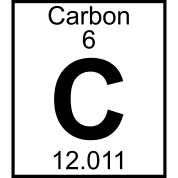

What does the 6 represent?
Atomic mass
atomic number
chemical symbol
element name
An atom has 10 protons, 15 neutrons and 10 electrons what is its mass number.
20
10
35
25
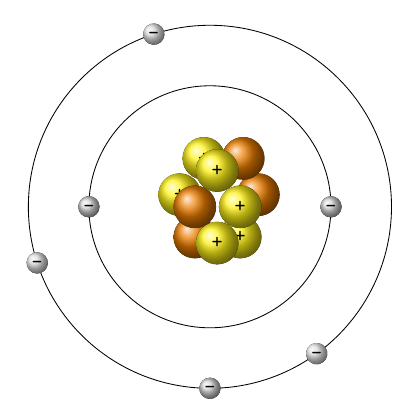
How many electrons does this atom have?
2
4
6
10


Which of the following determines the identity of an element?
number of protons
atomic mass
number of neutrons
number of shells
What does the 6 represent?
Atomic mass
atomic number
chemical symbol
element name
What does the 6 represent?
Atomic mass
atomic number
chemical symbol
element name

A student needs to know which element this is? What is the first thing she should be counting?
A
B
C
D

What is the mass of this atom?
10
9
6
3

Valence electrons determine an element's reactivity (chemical properties). How many valence electrons does this atom have?
8
2
1
11

What is the atomic number of this atom?
7
14
21
9
Which of the following is correct?
Protons (positive);
Neutrons (negative);
Electrons (neutral)
Protons (positive); Neutrons (neutral); Electrons (negative)
Protons (negative);
Neutrons (neutral);
Electrons (positive)
Protons (neutral);
Neutrons (positive);
Electrons (negative)
An atom has 9 protons, 10 neutrons, and 9 electrons.
What is the charge on this atom?
-1
0
+1
19
18
An atom has 8 protons, 8 neutrons, and 10 electrons.
What is the mass of this atom?
8
16
18
-2

How many neutrons does a Hydrogen atom have?
1
2
3
0

How many electrons does an Iodine atom have?
53
126
73
179

How many neutrons does an Oxygen atom have?
8
16
24
7.999

How many electrons does a Copper atom have?
63
29
92
34


How many protons does sulfur have?
32
16
48
12

What are the three subatomic particles?
Brotons, Negatrons, Effectrons
Notrons, Flotrons, Votrons
Untrons, Icetrons, Joltrons

Which subatomic particle(s) will be located in the cloud?
Electrons
Electrons and Protons
Protons and Neutrons
Neutrons and Electrons

How do you calculate atomic mass?
Protons + Electrons
Neutrons + Electrons
Protons + Protons
Protons + Neutrons

Isotopes of an element have a different number of...
Protons
Neutrons
Electrons
Mass

What number represents an element's identity? (How do we know what element it is?)
Atomic Smell
Atomic Number
Atomic Mass
Atomic Temperature
If a proton is added or removed from an atom, what happens?
It becomes a different element.
It becomes a different isotope.
Nothing happens.
What is the difference between Neon-20 and Neon-22?
They have different numbers of electrons.
They have different numbers of neutrons.
Only 1 is radioactive.
No difference.

Which atom of these isotopes has 3 protons? The symbol for lithium is Li.
Lithium-6
Lithium-7
All of them.
Lithium-9

How many neutrons are in this isotope?
20
41
61
21
Which is the correct symbol for Fluorine-18?


How many protons are in the isotope pictured above?
29
34
63
92
What is the mass number of this atom?
1
3
4
7

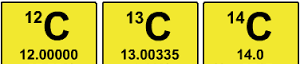
Isotopes are atoms of the same element with different #’s of __________ & therefore different __________.
neutrons ; atomic numbers
protons ; atomic numbers
electrons ; mass numbers
neutrons ; mass number


When an electron absorbs a quantum of energy
the electron gets "excited" and "jumps out" away from the nucleus
the electron gets "excited" and "drops back down" closer to the nucleus
the electron "calms down" and "jumps out" away from the nucleus
the electron gets "calms down" and "drops back down" closer to the nucleus
When an electron emits light
the electron gets "excited" and "jumps out" away from the nucleus
the electron gets "excited" and "drops back down" closer to the nucleus
the electron "calms down" and "jumps out" away from the nucleus
the electron "calms down" and "drops back down" closer to the nucleus
The further an electron is away from the nucleus, the electron requires
less and less energy to move even further away from the nucleus
much more energy to move even further away from the nucleus
the input of light to move even further away from the nucleus
the nucleus to have less neutrons than protons
To move an electron from energy level 1 to energy level 2
requires the most amount of energy
requires the least amount of energy
requires no energy at all
requires the aid of light

Why are ions formed?
To make our lives difficult
Because atoms want to be stable
Because atoms have the same number of protons and electrons
Because atoms gained neutrons


Cations are...
Positive
Negative
Neutral

Anions are...
Positive
Negative
Neutral

A neutral atom of Magnesium (shown in image) will...
Lose 2 electrons when it becomes an ion
Gain 2 electrons when it becomes an ion
Gain 6 electrons when it becomes an ion
Lose 1 electron when it becomes an ion
Think fast! An element has 25 protons and 22 electrons. It has a charge of...
3+
3-
2+
1-

