
 Worksheets
Bio Unit 2 Full Review
Total questions: 65
Worksheet time: 33mins
Unlike a eukaryotic cell, a prokaryotic cell does not have
DNA.
a nucleus.
a cell membrane.
cytoplasm.
Unlike a prokaryotic cell, a eukaryotic cell has
chromosomes.
cytoskeleton.
membrane-bound organelles.
cytoplasm.
Unlike a prokaryotic cell, a eukaryotic cell can
only be unicellular.
only be multicellular.
be unicellular or multicellular.
Which of the following statements about cell types is true?
Prokaryotic cells have membrane-bound organelles.
Animal cells have cell walls.
Plant cells have pili.
All cells have ribosomes.
Which of the following statements about cell types is true?
Prokaryotic cells have lysosomes.
Animal cells have chloroplasts.
Plant cells have mitochondria.
All cells have Golgi.
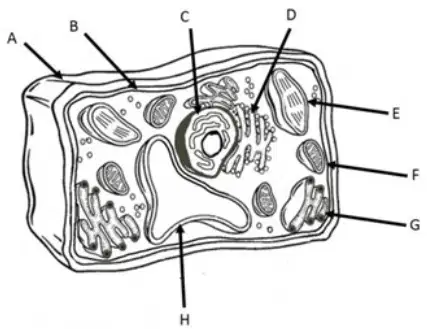
Classify the following cell:
This is a prokaryote because it has a cell wall.
This is an animal cell because it has a Golgi body.
This is a plant cell because it has chloroplasts.
This is a eukaryote because it lacks a nucleus.
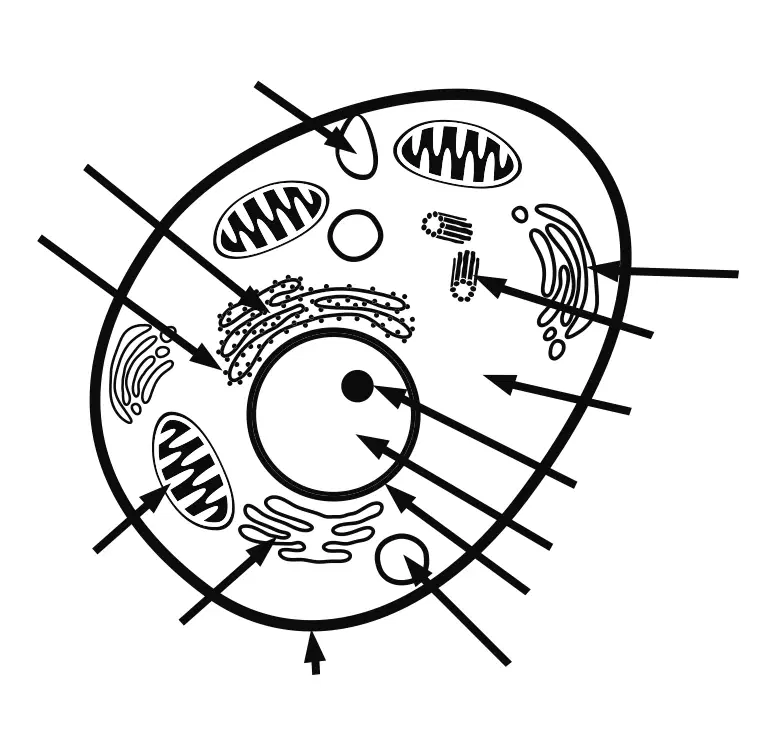
Classify the following cell:
This is an animal cell because it has mitochondria.
This is an animal cell because it lacks a cell wall.
This is a plant cell because it has chloroplasts.
This is a plant cell because it has Golgi.
A team of researchers that specialize in cell structures are sent a sample of cells from an unknown organism. They examine the cells using an electron microscope. It is determined that the cells contain the following structures: cell membrane, cytoplasm, chromosomes
Based on the structures found, what type of organism could these cells have originated from?
I. Plant
II. Animal
III. Bacteria
I. only
II. only
III. only
I. or II.
I., II., or III.
A team of researchers that specialize in cell structures are sent a sample of cells from an unknown organism. They examine the cells using an electron microscope. It is determined that the cells contain the following structures: nucleus, ribosomes, mitochondria.
Based on the structures found, what type of organism could these cells have originated from?
I. Plant
II. Animal
III. Bacteria
I. only
II. only
III. only
I. or II.
I., II., or III.
A team of researchers that specialize in cell structures are sent a sample of cells from an unknown organism. They examine the cells using an electron microscope. It is determined that the cells contain the following structures: Golgi, cell membrane, lysosomes.
Based on the structures found, what type of organism could these cells have originated from?
I. Plant
II. Animal
III. Bacteria
I. only
II. only
III. only
I. or II.
I., II., or III.
Which organelle packages substances in vesicles for transport in the cell?
Rough ER
Vacuole
Golgi
Cytoskeleton
Which organelle creates proteins by joining amino acids?
Rough ER
Ribosomes
Golgi
Nucleus
What is the function of the lysosome?
Break down damaged cell parts to be reused by the cell.
Synthesize proteins by joining amino acids together.
Store nutrients, water, and waste for later use by the cell.
Regulate substances that enter/exit the cell.
What is the function of the cell membrane?
Break down damaged cell parts to be reused by the cell.
Synthesize proteins by joining amino acids together.
Store nutrients, water, and waste for later use by the cell.
Regulate substances that enter/exit the cell.
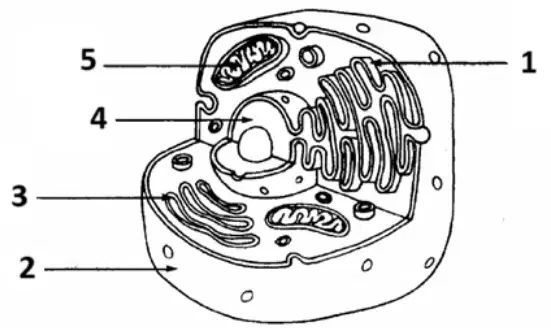
What is the function of structure #5 in the diagram above?
Break down sugars to make ATP energy to use in the cell.
External support to help the cell keep its shape.
Regulate what enters and exits the cell.
Contains chromosomes and directs the activities of the cell.
What is the function of structure #4 in the diagram above?
Break down sugars to make ATP energy to use in the cell.
External support to help the cell keep its shape.
Regulate what enters and exits the cell.
Contains chromosomes and directs the activities of the cell.
What do the cell wall and cytoskeleton have in common?
Both are involved in energy production.
Both are found in all cells.
Both are involved in protein synthesis.
Both provide support to help keep a cell's shape.
What do the chromosomes and ribosomes have in common?
Both are involved in energy production.
Both form the outside layer of all cells.
Both are involved in protein synthesis.
Both provide support to help keep a cell's shape.
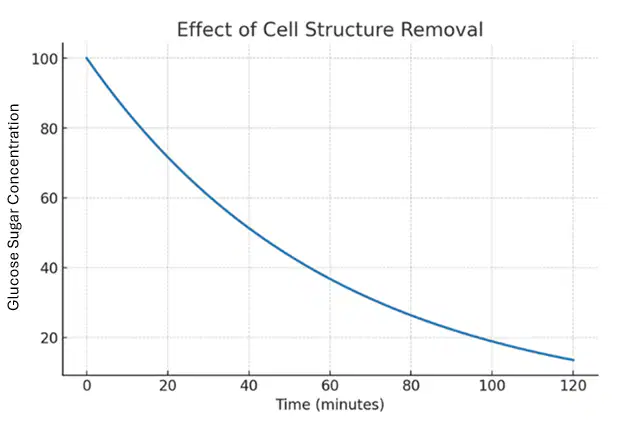
Based on the data in the graph, which cellular structure was removed from the cell?
mitochondria
ribosomes
vacuole
chloroplast
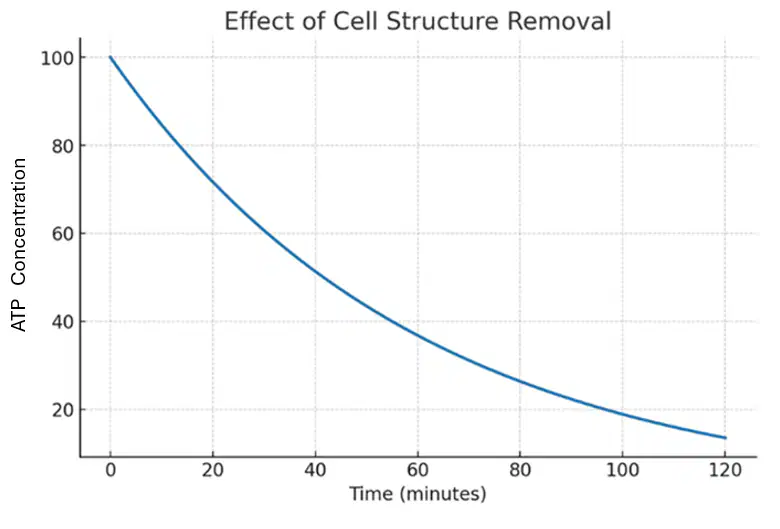
Based on the data in the graph, which cellular structure was removed from the cell?
mitochondria
ribosomes
vacuole
chloroplast
Some cells produce proteins that are secreted from the cell and then sent through the blood stream to other parts of the body. To do this, many different cell structures must work together to synthesize the protein and then transport it out of the cell. Which of the following correctly describes how cell structures must interact as a system to accomplish this goal?
The nucleus sends genetic information to a ribosome on the Endoplasmic Reticulum (ER) which creates the protein. The protein travels through the Endoplasmic Reticulum (ER) to the Golgi. The Golgi packages the protein in a vesicle and sends it out of the cell through the cell membrane.
The Endoplasmic Reticulum creates the protein. The protein travels through the cell membrane to the nucleus. The nucleus packages the protein in genetic information and sends it out of the cell.
The cell membrane sends genetic information to a lysosome which creates the protein. The protein travels through the cell membrane to a vacuole. The vacuole stores the protein for later use.
The vacuole sends genetic information to the mitochondria which creates the protein. The protein travels through the cytoplasm to the Golgi. The Golgi packages the protein in a vesicle and sends it out of the cell through the cell membrane.
Which of the following processes uses sunlight energy to produce carbohydrates?
photosynthesis
glycolysis
fermentation
aerobic respiration
Which of the following processes uses oxygen to break down carbohydrates and produce ATP?
photosynthesis
glycolysis
fermentation
aerobic respiration
Which organelle breaks down molecules from the food you eat to produce usable energy?
mitochondrion
chloroplast
lysosome
ribosome
Which organelle produces glucose?
mitochondrion
chloroplast
lysosome
ribosome
How much ATP is produced during glycolysis?
0
2
34
340
During which step of Aerobic Cellular Respiration is the most ATP produced?
Krebs Cycle
Electron Transport Chain
Glycolysis
Calvin Cycle
What is the purpose of fermentation?
produce ATP when oxygen is present
allow Glycolysis to continue producing 2 ATP
allow Krebs Cycle and Electron Transport Chain to continue without oxygen
produce lactic acid or alcohol
What does the Light Reactions of Photosynthesis do?
uses sunlight to split glucose and produce oxygen
uses sunlight to split glucose and produce water
uses sunlight to split water and produce oxygen
uses sunlight to split water and produce glucose
What does the Calvin Cycle of photosynthesis do?
uses CO2 to produce glucose
uses oxygen to produce glucose
uses glucose to produce water
uses glucose to produce oxygen
How is energy stored in an ATP molecule during cellular respiration?
a phosphate is attached to ADP
a phosphate is removed from ADP
a phosphate is attached to ATP
a phosphate is removed from ATP
How is energy released from an ATP molecule for use in the cell?
a phosphate is attached to ADP
a phosphate is removed from ADP
a phosphate is attached to ATP
a phosphate is removed from ATP
What is the chemical equation for cellular respiration?
glucose + oxygen --> carbon dioxide + water
glucose + water --> carbon dioxide + oxygen
carbon dioxide + water --> oxygen + glucose
carbon dioxide + oxygen --> glucose + water
What is the chemical equation for photosynthesis?
glucose + oxygen --> carbon dioxide + water
glucose + water --> carbon dioxide + oxygen
carbon dioxide + water --> oxygen + glucose
carbon dioxide + oxygen --> glucose + water
Early this morning, one of your friends ran sprints. Now they are complaining that their muscles are sore. What happened to cause the soreness?
the muscle cells produced too much oxygen
the muscle cells produced too much ATP
the muscle cells continued to work even after they used up all of the ATP
the muscle cells continued to work even after they used up all of the oxygen
Your neighbor is making kimchi (a fermented cabbage). Why do they need to seal the container to ensure the cabbage ferments?
prevent bacteria from entering
prevent oxygen from entering
prevent carbon dioxide from escaping
prevent yeast from escaping
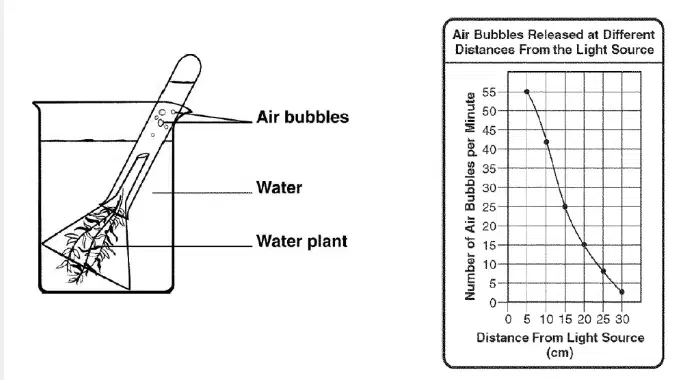
A student prepared two beakers with identical sprigs of a water plant as shown below. She placed one beaker in the shade and the other beaker beside a fluorescent lamp. She then systematically changed the distance of the beaker from the lamp. She counted the bubbles given off by each sprig of the water plant. Shown here is the graph of the data for the beaker she placed in the light.
Students conducted this investigation to answer the question, "What distance from the lamp will produce the most bubbles?"
5
15
25
30
A student prepared two beakers with identical sprigs of a water plant as shown below. She placed one beaker in the shade and the other beaker beside a fluorescent lamp. She then systematically changed the distance of the beaker from the lamp. She counted the bubbles given off by each sprig of the water plant. Shown here is the graph of the data for the beaker she placed in the light.
Students conducted this investigation to answer the question, "Will oxygen be produced in both beakers?"
YES - plants can perform photosynthesis in both light and dark conditions
YES - plants can perform cellular respiration in both light and dark conditions
NO - plants cannot perform photosynthesis in dark conditions
NO - plants cannot perform cellular respiration in dark conditions
Bromothymol blue (BTB) is a pH indicator that is also used to detect carbon dioxide (CO2) in water. BTB is blue when the pH of water is basic and CO2 is low. BTB is yellow when the pH of water is acidic and CO2 is high. BTB is green when the pH of water is neutral.
Students are planning an investigation in which they will place Java Fern (an aquatic plant) in a test tube that contains water with a neutral pH of 7 and BTB. They will place a fish in another test tube with a neutral water and BTB. The students will then place both Java Fern and a fish in a third test tube with neutral water and BTB. Once the setup is complete, the students will place each test tube under a growth light for several hours and observe how the color of the BTB solutions change.
What color change should they expect to find in the first test tube that contains only Java Fern?
BTB will become yellow, indicating that CO2 was produced during cellular respiration
BTB will become yellow, indicating that CO2 was produced during photosynthesis
BTB will become blue, indicating that CO2 was used during cellular respiration
BTB will become blue, indicating that CO2 was used during photosynthesis
Bromothymol blue (BTB) is a pH indicator that is also used to detect carbon dioxide (CO2) in water. BTB is blue when the pH of water is basic and CO2 is low. BTB is yellow when the pH of water is acidic and CO2 is high. BTB is green when the pH of water is neutral.
Students are planning an investigation in which they will place Java Fern (an aquatic plant) in a test tube that contains water with a neutral pH of 7 and BTB. They will place a fish in another test tube with a neutral water and BTB. The students will then place both Java Fern and a fish in a third test tube with neutral water and BTB. Once the setup is complete, the students will place each test tube under a growth light for several hours and observe how the color of the BTB solutions change.
What color change should they expect to find in the second test tube that contains only a fish?
BTB will become yellow, indicating that CO2 was produced during cellular respiration
BTB will become yellow, indicating that CO2 was produced during photosynthesis
BTB will become blue, indicating that CO2 was used during cellular respiration
BTB will become blue, indicating that CO2 was used during photosynthesis
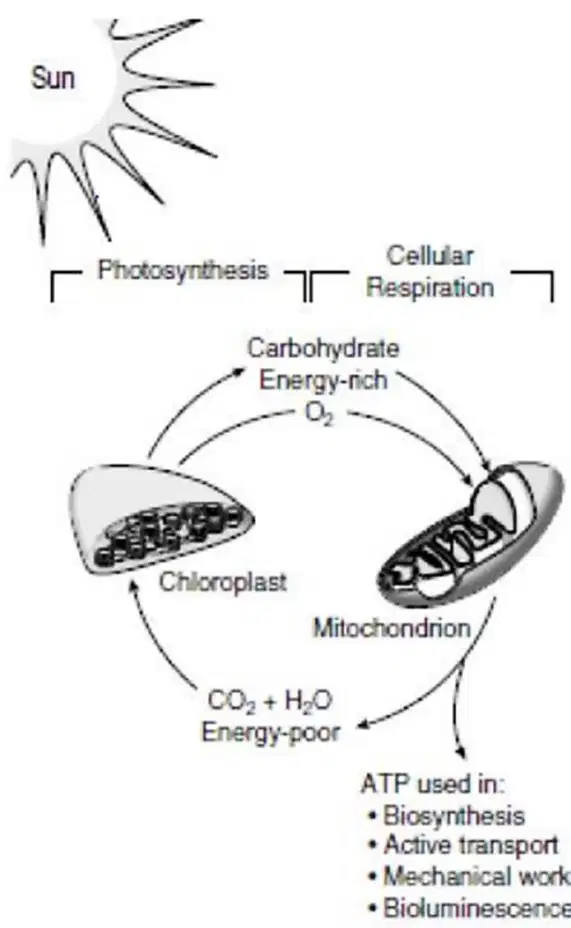
The diagram above shows the relationship between photosynthesis and cellular respiration.
Which of the following is a question that can be answered using the information in the diagram?
How do plants produce enough carbohydrates to last through the winter when they shed their leaves?
How does bioluminescence help some animals glow in the dark?
What is the pigment in chloroplasts that allows them to capture sunlight?
Do the products of photosynthesis or cellular respiration contain more energy?
The diagram above shows the relationship between photosynthesis and cellular respiration.
Which of the following is a question that can be answered using the information in the diagram?
Do plants perform photosynthesis, respiration, or both?
Does fermentation occur with or without oxygen?
Which organelle uses the energy from sunlight to produce carbohydrates?
Do the products of photosynthesis or cellular respiration contain more mass?
To produce daughter cells, eukaryotes use a process called mitosis. What is the result of mitosis?
Four daughter cells, each with exactly half of the parent cell's DNA.
Four daughter cells, each with an exact copy of the parent cell's DNA.
Two daughter cells, each with an exact copy of the parent cell's DNA.
Two daughter cells, each with exactly half of the parent cell's DNA.
To produce daughter cells, prokaryotes use a process called binary fission. What is the result of binary fission?
Four daughter cells, each with exactly half of the parent cell's DNA.
Four daughter cells, each with an exact copy of the parent cell's DNA.
Two daughter cells, each with an exact copy of the parent cell's DNA.
Two daughter cells, each with exactly half of the parent cell's DNA.
During which stage of the cell cycle does the cell replicate the DNA?
S-phase of interphase
G2 of interphase
Prophase of mitosis
G1 of interphase
During which stage of the cell cycle does the cell increase in size, duplicate organelles, and carry out its normal functions?
S-phase of interphase
G1 of interphase
Prophase of mitosis
G2 of interphase
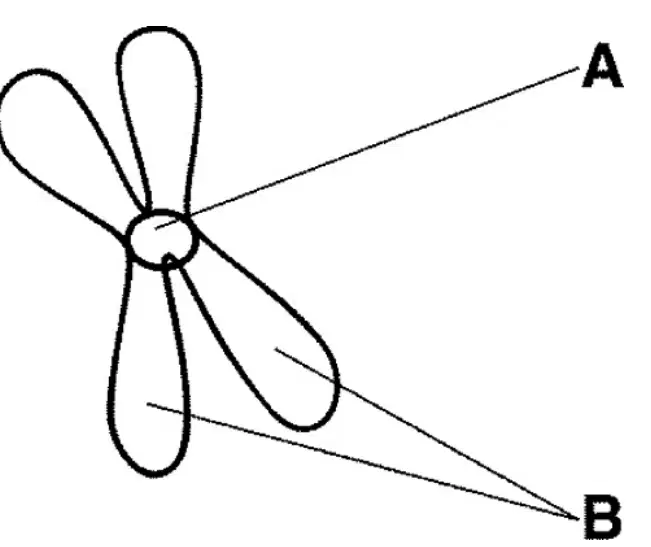
Refer to the diagram of the chromosome. Structure A in the diagram ___.
is the spindle fiber
is the sister chromatid
is the centromere
is the centriole
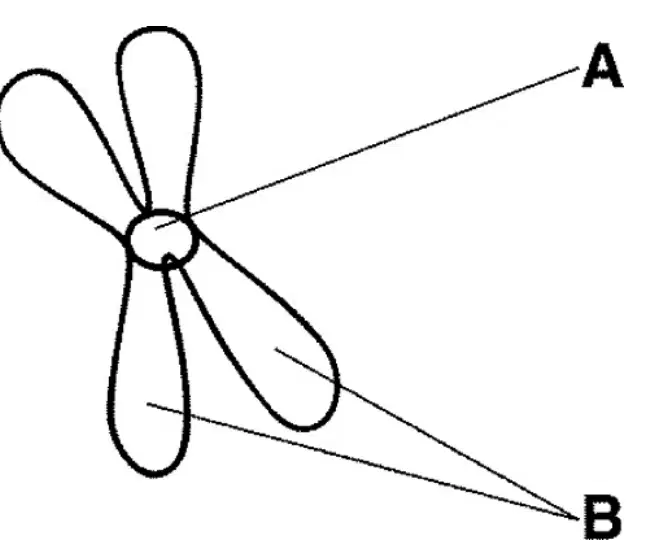
Refer to the diagram of the chromosome. Structures B in the diagram ___.
are the spindle fibers
are the sister chromatids
are the centromeres
are the centrioles
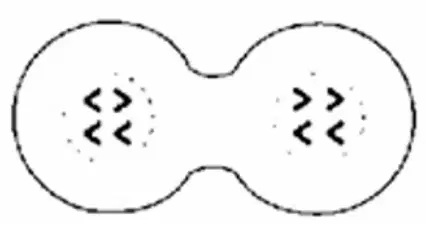
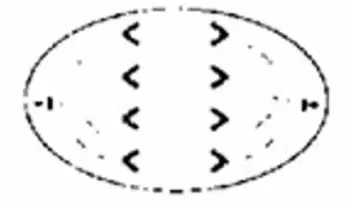
Students are constructing a model of the stage of mitosis during which the sister chromatids separate and move toward opposite sides of the cell.
Which of the following images should their finished product look like?
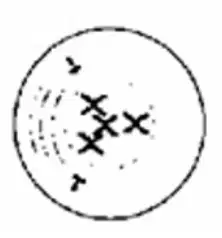
Students are constructing a model of the stage of mitosis during which the nuclear membrane breaks down, chromosomes condense, and spindle fibers attach to chromosomes.
Which of the following images should their finished product look like?
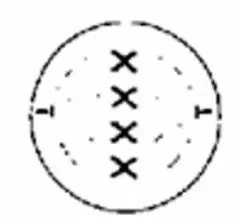
Students are constructing a model of metaphase.
Which of the following images should their finished product look like?
Students are constructing a model of anaphase.
Which of the following images should their finished product look like?
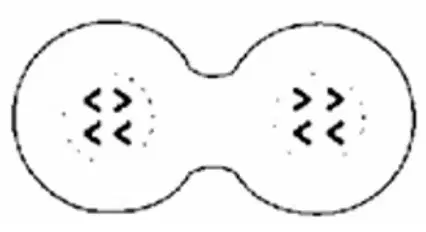
Students constructed a model of one of the phases of mitosis.
Which phase did they make?
telophase
anaphase
metaphase
prophase
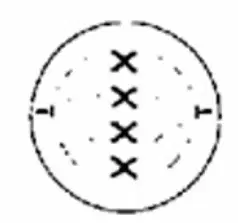
Students constructed a model of one of the phases of mitosis.
Which phase did they make?
telophase
anaphase
metaphase
prophase
If a parent cell has 46 chromosomes, how many chromosomes will each daughter cell have after mitosis?
2
4
23
46
If a parent cell has 20 chromosomes, how many chromosomes will each daughter cell have after mitosis?
23
46
20
40
If a parent cell has 1 chromosomes, how many chromosomes will each daughter cell have after binary fission?
0
1
2
4
Cancer cells contain mutated DNA that cause problems with regulating the cell cycle. They do not stop at the appropriate checkpoints and move through the cell cycle more rapidly than normal, healthy cells. Which statement best explains why the type of unregulated cell cycle described above causes cancer cells to be harmful to healthy cells?
Cancer cells attack nearby healthy cells by using chemicals that cause normal cells to undergo apoptosis and die.
Cancer cells cannot make a copy of the DNA and therefore are unable to reproduce like healthy cells.
Cancer cells cannot progress past G1 of interphase and continuously grow larger, using up valuable nutrients that would otherwise support healthy cells.
Cancer cells progress through mitosis more often than normal cells, causing excessive reproduction of cancer cells that crowd out healthy cells.
Which of the following phrases best describes cancer?
uncontrolled cell division
cell cycle regulation
increased apoptosis
coordinated mitosis
In a biology lab, students observed fish cells under a microscope. The chromosomes had been stained so that the students could observe various stages of the cell cycle, including mitosis and cytokinesis. The students created simple models of the various stages they observed.
One of the models showed separated sister chromatids moving toward opposite poles of the cell and cytokinesis beginning to separate the parent cell into two daughter cells.
What is the best label for the student's model?
Telophase with cell plate forming.
Telophase with cleavage furrow forming.
Anaphase with cell plate forming.
Anaphase with cleavage furrow forming.
In a biology lab, students observed fish cells under a microscope. The chromosomes had been stained so that the students could observe various stages of the cell cycle, including mitosis and cytokinesis. The students created simple models of the various stages they observed.
One of the models showed two nuclei surrounding each set of separated chromosomes and cytokinesis beginning to separate the parent cell into two daughter cells.
What is the best label for the student's model?
Telophase with cell plate forming.
Telophase with cleavage furrow forming.
Anaphase with cell plate forming.
Anaphase with cleavage furrow forming.
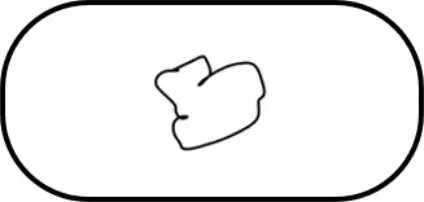
A student is making a model of binary fission and begins with this as the parent cell.
Which of the following models and descriptions best represents this process?
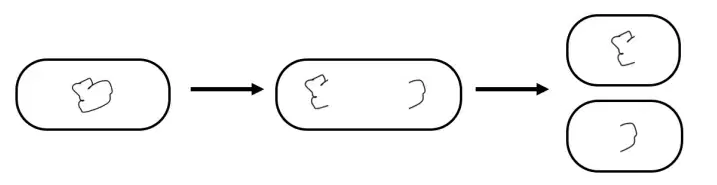
Prokaryote divides into two daughter cells, each with one exact copy of the DNA.
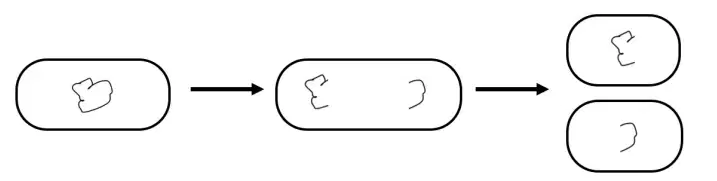
Eukaryote divides into two daughter cells, each with one exact copy of the DNA.
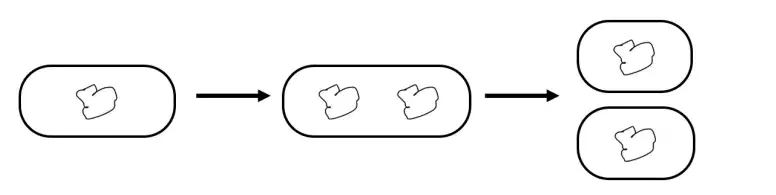
Prokaryote divides into two genetically identical daughter cells.
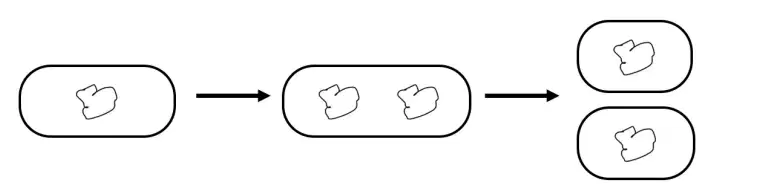
Eukaryote divides into two genetically identical daughter cells.
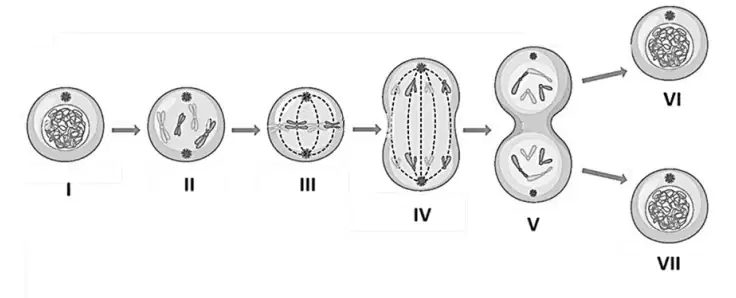
A group of students used AI to generate the following model of cell division. Which of the following prompts could they have used to generate this model?
Create a model that shows each step of binary fission, the process that prokaryotes use to make two genetically identical daughter cells.
Create a model that shows each step of binary fission, the process that eukaryotes use to make two genetically identical daughter cells.
Create a model that shows each step of mitosis, the process that prokaryotes use to make two genetically identical daughter cells.
Create a model that shows each step of mitosis, the process that eukaryotes use to make two genetically identical daughter cells.
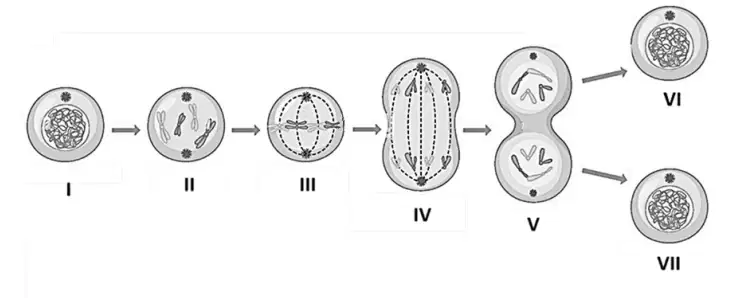
In order to demonstrate how this type of cell division maintains genetic continuity, the students were asked to use the model to identify the number of chromosomes present in the parent (Cell I) and daughter cells (Cells VI and VII). The four students that created the model disagree on the number of chromosomes. Which student uses the model to correctly identify the number of chromosomes in the parent and daughter cells?
Student A: "The parent cell must have four chromosomes and the daughter cells must have two chromosomes in each."
Student B: "The parent cell must have four chromosomes and the daughter cells must have four chromosomes in each."
Student C: "The parent cell must have eight chromosomes and the daughter cells must have four chromosomes in each."
Student D: "The parent cell must have eight chromosomes and the daughter cells must have eight chromosomes in each."
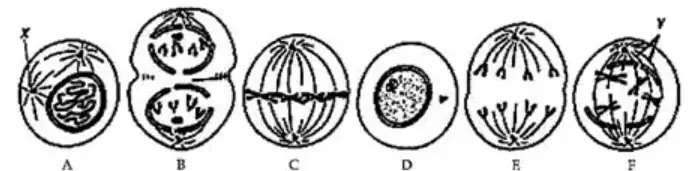
A group of students used AI to generate the following model of cell division. However, the order of the cells was incorrect.
What is the correct order of these steps?
D-A-F-C-E-B
D-C-E-A-F-B
B-E-C-F-A-D
B-C-A-F-D-E

