
 Worksheets
A&P: Chemistry Part I
Total questions: 53
Worksheet time: 30mins
The study of living materials requires an understanding of chemistry. Which of the following is an example of this?
Understanding how enzymes catalyze reactions in cells
Learning about the history of ancient civilizations
Studying the structure of a poem
Analyzing the causes of World War II
The relationships among matter, atoms, and molecules can be described as:
Matter is made up of atoms, which combine to form molecules.
Atoms are made up of molecules, which combine to form matter.
Molecules are made up of matter, which combine to form atoms.
Matter is made up of molecules, which combine to form atoms.
The general structure of an atom can be described as:
A nucleus containing protons and neutrons, surrounded by electrons
A solid sphere with no internal structure
A core of electrons surrounded by protons and neutrons
A shell of neutrons with protons and electrons inside
Atomic structure determines how atoms interact by:
Determining the arrangement of electrons and their ability to form bonds
Controlling the size of the nucleus only
Affecting only the mass of the atom
Having no effect on atomic interactions
Atomic structure determines how atoms interact by:
Determining the arrangement of electrons, which affects bonding and interactions
Controlling the number of protons, which affects color
Setting the atomic mass, which determines reactivity
Defining the nucleus size, which affects melting point
Fill in the blank: The medical term 'Di-' means (a) .
Fill in the blank: The medical term 'Glyc-' means (a) .
The medical term 'Lip-' means (a) .
Fill in the blank: The medical term '-lyt' means _______.
dissolvable
painful
swollen
infected
Fill in the blank: The medical term 'Mono-' means (a) .
The medical term 'Poly-' means (a) .
Fill in the blank: The medical term 'Sacchar-' means _______.
sugar
salt
fat
protein
Fill in the blank: The medical term 'Syn-' means _______.
together, with
before
against
under
Chemistry is the branch of science that considers the composition of matter and how this composition changes over _____
time
space
weight
color
Why is understanding chemistry essential to understanding anatomy and physiology?
Because chemicals participate in body processes.
Because chemistry is unrelated to biology.
Because anatomy is only about bones.
Because physiology is only about muscles.
Our foods, liquids, and medications are composed of chemicals.
True
False
Cells and their organelles are assemblies of molecules, which are composed of _____?
chemicals
cells
tissues
organs
What is matter? Fill in the blank: Matter is anything that has (a) and takes up space (living and nonliving things).
All matter is composed of ______.
elements
cells
molecules
compounds
Elements are the smallest units of matter with specific chemical properties.
True
False
Living organisms require about how many elements?
5
10
20
50
Which elements are most abundant in living organisms?
Oxygen, Carbon, Hydrogen, Nitrogen
Iron, Calcium, Sodium, Potassium
Gold, Silver, Copper, Zinc
Helium, Neon, Argon, Krypton
Elements are composed of ______.
atoms
molecules
ions
compounds
What is the smallest unit of an element?
Atom
Molecule
Cell
Compound
Attractions between two or more atoms are called ______ bonds.
chemical
ionic
hydrogen
covalent
Match the major elements in the human body with their symbols:
O
Oxygen
C
Carbon
H
Hydrogen
N
Nitrogen
Ca
Calcium
Which element makes up the largest percentage of the human body by weight?
Carbon
Oxygen
Hydrogen
Nitrogen
Fill in the blank: The symbol for Sodium is _____
Na
So
Sd
Sn
Trace elements together make up less than 0.1% of the human body by weight.
True
False
Which subatomic particle has a positive charge and is about equal in size to a neutron?
Electron
Proton
Neutron
Ion
Neutrons are _________.
uncharged
positively charged
negatively charged
magnetic
Which subatomic particle is much smaller than protons and neutrons and has a negative charge?
Electron
Proton
Neutron
Ion
An electrically neutral atom has equal numbers of ________ and ________.
protons; electrons
protons; neutrons
neutrons; electrons
isotopes; ions
Atoms that gain or lose one or more electrons become charged and are called (a) .
The center of the atom, containing protons and neutrons, is called the ________.
nucleus
electron cloud
valence shell
isotope
What are atoms that gain or lose electrons called?
Molecules
Ions
Isotopes
Compounds
Ions are derived mostly from salts dissolved in what substance?
Water
Oil
Alcohol
Air
What is the atomic number of an element?
The number of neutrons in the atom
The number of protons in the atom
The number of electrons in the atom
The sum of protons and neutrons in the atom
The number of protons plus the number of neutrons in the nucleus of an atom is its _________.
mass number.
atomic number.
isotope number.
atomic mass unit.
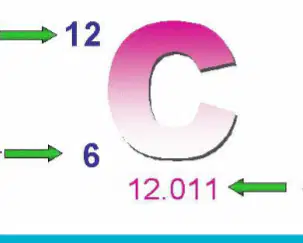
What is the atomic number of the element shown in the diagram?
12
6
12.011
18
All atoms of an element have the same atomic number because they have the same number of _______.
protons
neutrons
electrons
isotopes
Atoms with the same atomic number, but different mass numbers, are called:
Ions
Isotopes
Molecules
Compounds
All carbon atoms have 6 protons, but may have 6, 7, or 8 neutrons.
True
False
Unstable isotopes have unstable atomic nuclei that decompose, releasing energy. What is this process called?
Radiation
Fusion
Fission
Ionization
Unstable isotopes are called ________.
radioactive
stable
neutral
inert
A radioactive isotope can be introduced into an organism and then traced as it enters into ________ activities.
metabolic
reproductive
digestive
respiratory
The human thyroid is unique in using the element ______ in its metabolism.
iodine
calcium
iron
potassium
The first shell, closest to the nucleus, holds a maximum of how many electrons?
Two
Four
Six
Eight
The second and third energy shells each hold a maximum of ________ electrons.
eight
ten
twelve
six
Atoms of elements that have their outermost shells filled are ________ and chemically inert (inactive).
stable
radioactive
unstable
reactive
Atoms with incompletely filled outermost shells tend to be ________, in order to form stable outer shells of 2 or 8 electrons.
reactive
inert
neutral
radioactive
When atoms gain or lose electrons, they become ________ with a charge.
ions
molecules
neutrons
protons
Oppositely-charged ions attract each other and form an ________ (electrovalent) bond.
ionic
covalent
metallic
hydrogen

