
 Worksheets
BIO 108 CHP:3
Total questions: 76
Worksheet time: 38mins
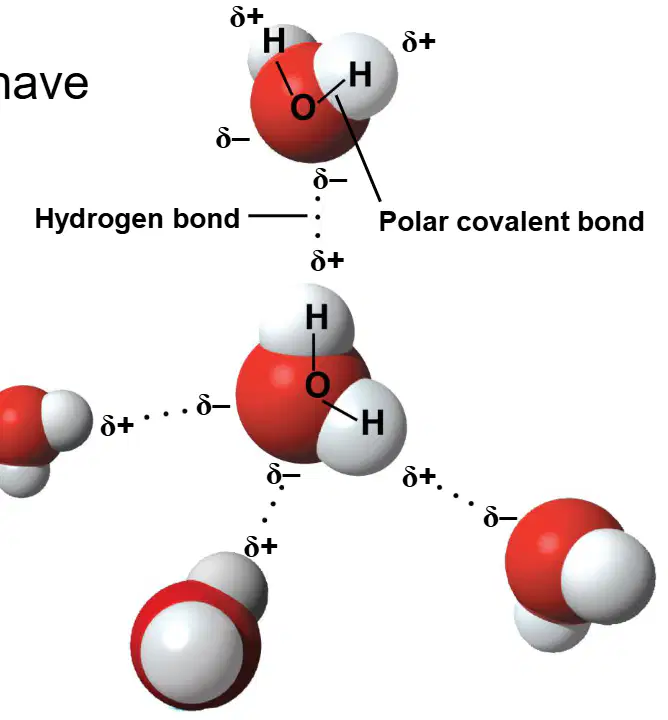
What type of molecule is water due to its opposite ends having opposite charges?
Nonpolar molecule
Ionic molecule
Polar molecule
Metallic molecule
What does the polarity of water molecules allow them to form with each other?
Ionic bonds
Covalent bonds
Hydrogen bonds
Metallic bonds
How frequently do hydrogen bonds in water form, break, and reform?
~10⁻⁶ S
~10⁻¹² S
~10⁻⁹ S
~10⁻³ S
Which of the following is a property of water that contributes to Earth's fitness for life by allowing it to stick to itself and other substances?
Ability to moderate temperature
Cohesive behavior
Expansion upon freezing
Versatility as a solvent
What property of water helps it to maintain stable temperatures in environments, making it crucial for life?
Cohesive behavior
Expansion upon freezing
Ability to moderate temperature
Versatility as a solvent
Which property of water is responsible for ice being less dense than liquid water, allowing it to float?
Cohesive behavior
Versatility as a solvent
Ability to moderate temperature
Expansion upon freezing
Water's ability to dissolve a wide range of substances is known as what?
Cohesive behavior
Versatility as a solvent
Expansion upon freezing
Ability to moderate temperature
What is the phenomenon called when hydrogen bonds hold water molecules together?
Adhesion
Cohesion
Evaporation
Condensation
How does cohesion help plants?
It helps in photosynthesis.
It aids in the transport of water against gravity.
It provides nutrients to the leaves.
It protects the plant from pests.

What role does adhesion play in plants?
It helps in the absorption of sunlight.
It aids in the transport of nutrients.
It helps water adhere to plant cell walls to counter gravity.
It assists in the reproduction of plants.
What is surface tension a measure of?
The temperature of a liquid
The color of a liquid
How hard it is to break the surface of a liquid
The volume of a liquid
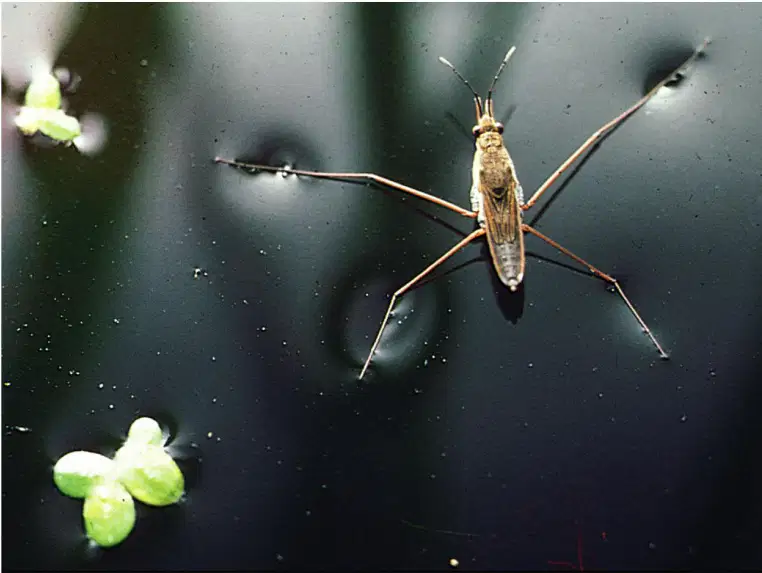
Surface tension is related to which of the following concepts?
Adhesion
Cohesion
Evaporation
Condensation
What role does water play in moderating temperature?
Water absorbs heat from cooler air and releases it to warmer air.
Water absorbs heat from warmer air and releases it to cooler air.
Water does not absorb or release heat.
Water absorbs heat equally from both warmer and cooler air.
How does water's ability to absorb and release heat affect its temperature?
Water's temperature changes significantly with heat absorption or release.
Water's temperature remains constant regardless of heat absorption or release.
Water can absorb or release a large amount of heat with only a slight change in its own temperature.
Water cannot absorb or release heat.
What is kinetic energy?
The energy of motion
The energy of rest
The energy of light
The energy of sound
What does heat depend on?
The matter's volume
The matter's color
The matter's shape
The matter's density
What does temperature measure?
The average kinetic energy of molecules
The total kinetic energy of molecules
The potential energy of molecules
The chemical energy of molecules
What is a calorie (cal) defined as?
The amount of heat it takes to raise the temperature of 1 g of water by 1 °C
The amount of heat it takes to raise the temperature of 1 kg of water by 1 °C
The amount of heat it takes to raise the temperature of 1 g of water by 10 °C
The amount of heat it takes to raise the temperature of 10 g of water by 1 °C
What is the specific heat of a substance?
The amount of heat required to change the state of a substance.
The amount of heat absorbed or lost to change the temperature of 1 gram of a substance by 1°C.
The amount of heat needed to melt a substance.
The amount of heat required to evaporate a substance.
Why does water have a high specific heat?
Because it has a low density.
Because hydrogen bonds absorb heat when they break and release heat when they form.
Because it is a good solvent.
Because it evaporates quickly.
How does water's high specific heat benefit living organisms?
It allows water to freeze quickly.
It minimizes temperature fluctuations to within limits that permit life.
It increases the rate of evaporation.
It decreases the boiling point of water.
What is evaporation?
Transformation of a substance from liquid to gas
Transformation of a substance from gas to liquid
Transformation of a substance from solid to liquid
Transformation of a substance from solid to gas
What is the heat of vaporization?
The heat a liquid must absorb to freeze
The heat a liquid must absorb to be converted to gas
The heat a liquid must release to condense
The heat a liquid must release to solidify
Approximately how many calories are required to evaporate 1 gram of water at 25 °C?
100 cal
250 cal
580 cal
750 cal
What is the process called when a liquid's remaining surface cools as it evaporates?
Condensation
Sublimation
Evaporative cooling
Freezing
How does evaporative cooling of water benefit organisms and bodies of water?
It increases their temperature
It stabilizes their temperature
It decreases their temperature rapidly
It has no effect on their temperature
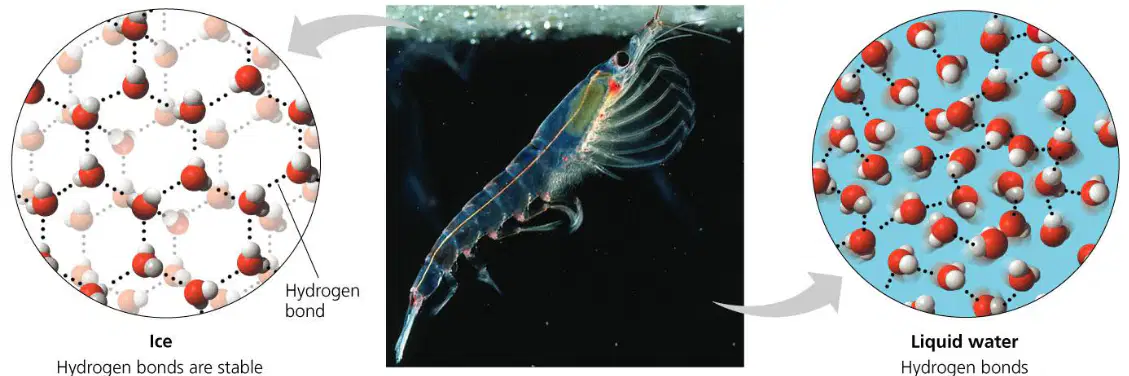
Why does ice float in liquid water?
Ice is more dense than liquid water.
Ice is less dense than liquid water.
Ice has no hydrogen bonds.
Ice molecules are closer together than in liquid water.
What would happen if ice sank in water?
All bodies of water would remain liquid.
All bodies of water would eventually freeze solid.
Ice would melt faster.
Water would become more dense.
What role do hydrogen bonds play in the structure of ice?
They make ice more dense than water.
They push water molecules further apart.
They cause ice to sink.
They have no effect on ice structure.
What is a solution?
A liquid that is a homogeneous mixture of two or more substances
A solid that is a heterogeneous mixture of substances
A gas that is a mixture of different elements
A liquid that is a heterogeneous mixture of substances
What is the dissolving agent in a solution called?
Solute
Solvent
Aqueous
Mixture
What is the substance that is dissolved in a solution?
Solvent
Solute
Aqueous
Mixture
Why is water considered a versatile solvent?
Because it is non-polar
Because it is polar
Because it is a solid
Because it is a gas
What is an aqueous solution?
A solution where water is the solute
A solution where water is the solvent
A solution where water is neither solute nor solvent
A solution where water is a gas
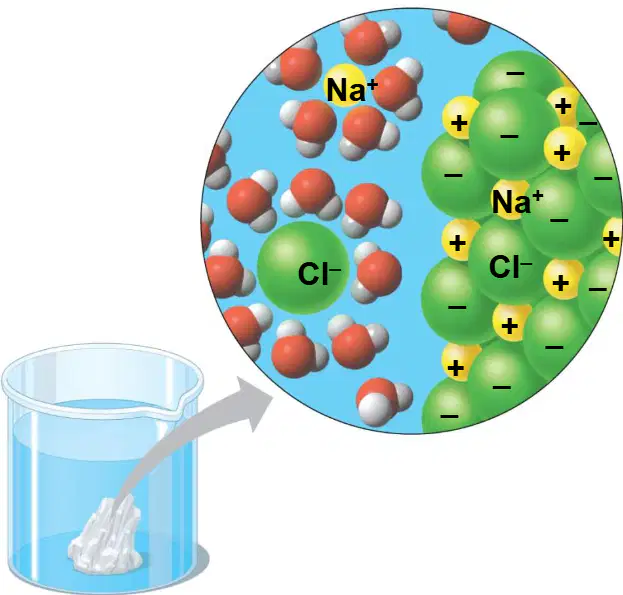
What happens to each ion of an ionic compound when it is dissolved in water?
Each ion is surrounded by a sphere of water molecules.
Each ion forms a solid precipitate.
Each ion evaporates into the air.
Each ion loses its charge.
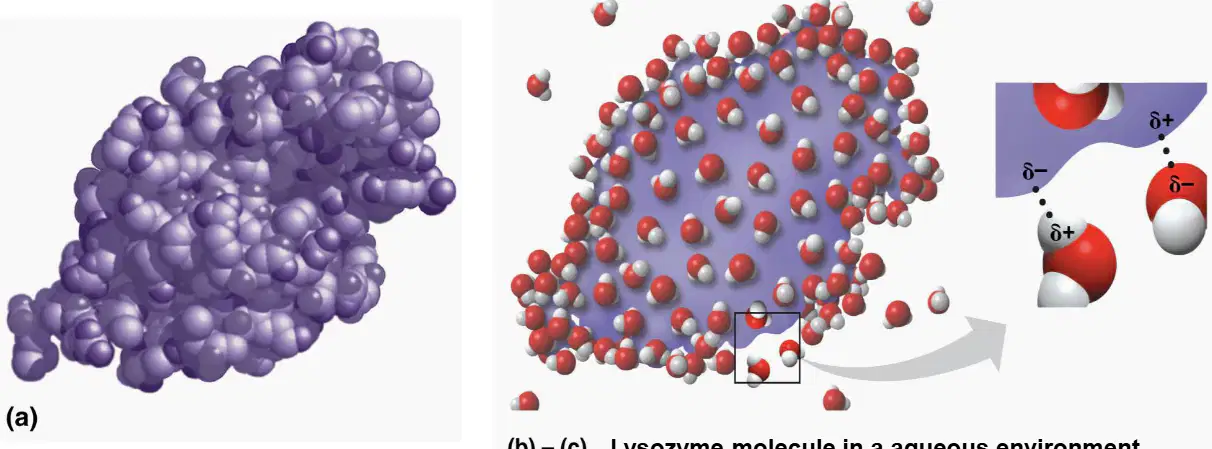
What type of molecules can water dissolve due to its ability to form hydrogen bonds?
Nonionic polar molecules
Nonpolar molecules
Ionic nonpolar molecules
Metallic molecules
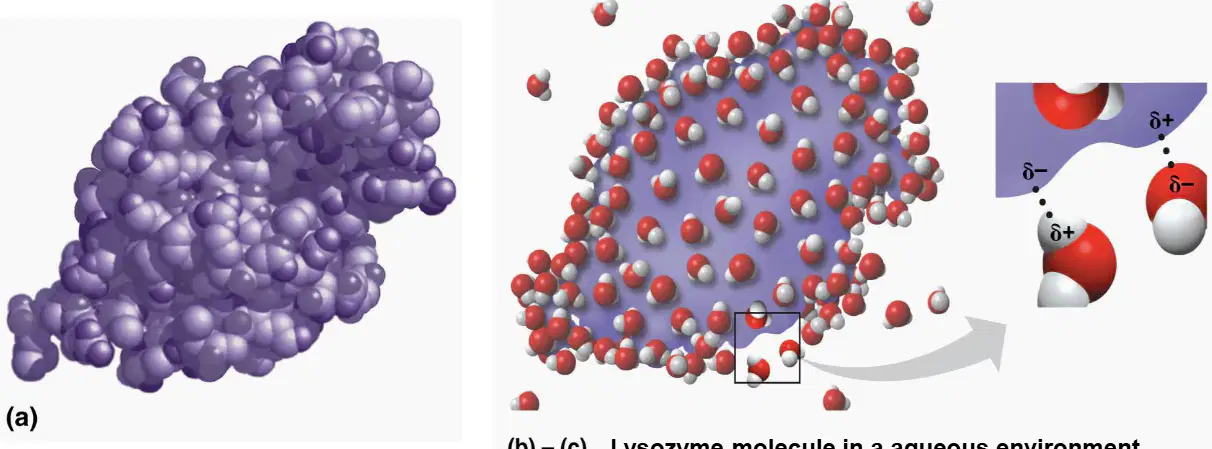
Why can large polar molecules like proteins dissolve in water?
They have ionic and polar regions
They are nonpolar
They are metallic
They lack hydrogen bonds
What is a hydrophilic substance?
A substance that repels water
A substance that has an affinity for water
A substance that is neutral to water
A substance that dissolves in oil
What do some large hydrophilic molecules form in water?
Solutions
Colloids
Precipitates
Emulsions
What is a hydrophobic substance?
A substance that has an affinity for water
A substance that dissolves in water
A substance that does not have an affinity for water
A substance that forms colloids in water
Where do most biochemical reactions occur?
In the air
In water
In soil
In oil
What do chemical reactions depend on in an aqueous solution?
Temperature
Light
Collisions of molecules
Pressure
What is the molecular mass?
The mass of one mole of a substance
The sum of all the masses of all the atoms in a single molecule
The number of molecules in a mole
The mass of a single atom
How is molecular mass measured?
In grams per mole
In liters
In Daltons (Da) or atomic mass units (u)
In meters
What is Avogadro’s number?
1.660 x 10^-24
6.02 x 10^23
1.00 x 10^3
9.81x10²
What does the molar mass represent?
The mass of one atom
The mass of one mole of a given substance
The volume of a gas
The density of a liquid
What is molarity?
The number of moles of solute per liter of solution
The number of grams of solute per liter of solution
The number of moles of solute per kilogram of solvent
The number of grams of solute per kilogram of solvent
Which unit of concentration is most often used by biologists for aqueous solutions?
Molality
Molarity
Normality
Parts per million
How would you make a liter (L) of a 1M solution of glucose?
Dissolve 1 mole of glucose in enough water to make 1 liter of solution
Dissolve 1 gram of glucose in enough water to make 1 liter of solution
Dissolve 1 mole of glucose in 1 liter of water
Dissolve 1 gram of glucose in 1 liter of water
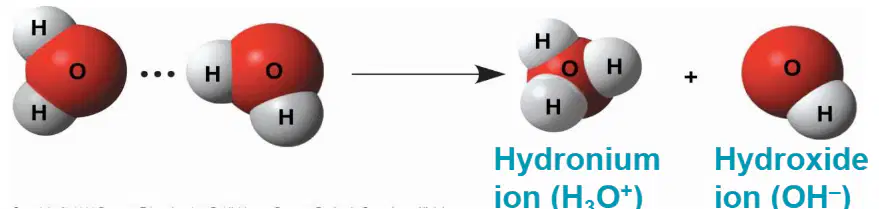
What happens to a hydrogen atom in a hydrogen bond between two water molecules?
It gains an electron and becomes a hydroxide ion.
It leaves its electron behind and is transferred as a proton.
It becomes a neutral atom.
It forms a covalent bond with another hydrogen atom.
What is the molecule called that gains an extra proton?
Hydroxide ion (OH⁻)
Hydronium ion (H₃O⁺)
Hydrogen ion (H⁺)
Oxygen molecule (O₂)
What is the molecule called that loses a proton?
Hydroxide ion (OH⁻)
Hydronium ion (H₃O⁺)
Hydrogen ion (H⁺)
Water molecule (H₂O)
What is the simplified description of the process involving the separation of a water molecule?
Formation of oxygen and hydrogen gas
Separation into a hydrogen ion (H⁺) and a hydroxide ion (OH⁻)
Conversion into carbon dioxide and water
Transformation into glucose and oxygen
At 25 °C, what is the concentration of each ion in water?
10⁻¹⁴ M
10⁻⁷ M
10⁻¹ M
10⁻⁹ M
How can changes in concentrations of H⁺ and OH⁻ affect a cell?
They have no effect
They can drastically affect the chemistry of a cell
They only affect the cell's temperature
They only affect the cell's color
What can modify the concentrations of H⁺ and OH⁻ in pure water?
Adding solutes like acids and bases
Increasing the temperature
Decreasing the pressure
Adding salt
What is the effect of an acid on the H⁺ concentration of a solution?
It increases the H⁺ concentration.
It decreases the H⁺ concentration.
It has no effect on the H⁺ concentration.
It neutralizes the H⁺ concentration.
What is the effect of a base on the H⁺ concentration of a solution?
It increases the H⁺ concentration.
It decreases the H⁺ concentration.
It has no effect on the H⁺ concentration.
It doubles the H⁺ concentration.
What is the constant product of H⁺ and OH⁻ concentrations in any aqueous solution at 25 °C?
10⁻⁷
10⁻¹⁴
10⁻¹
10⁻¹⁰
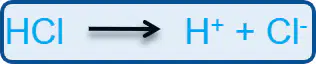
Which of the following equations represents the dissociation of hydrochloric acid (HCl) in water?
HCl → H⁺ + Cl⁻
HCl → H₂ + Cl₂
HCl → H⁺ + OH⁻
HCl → Cl⁺ + H⁻
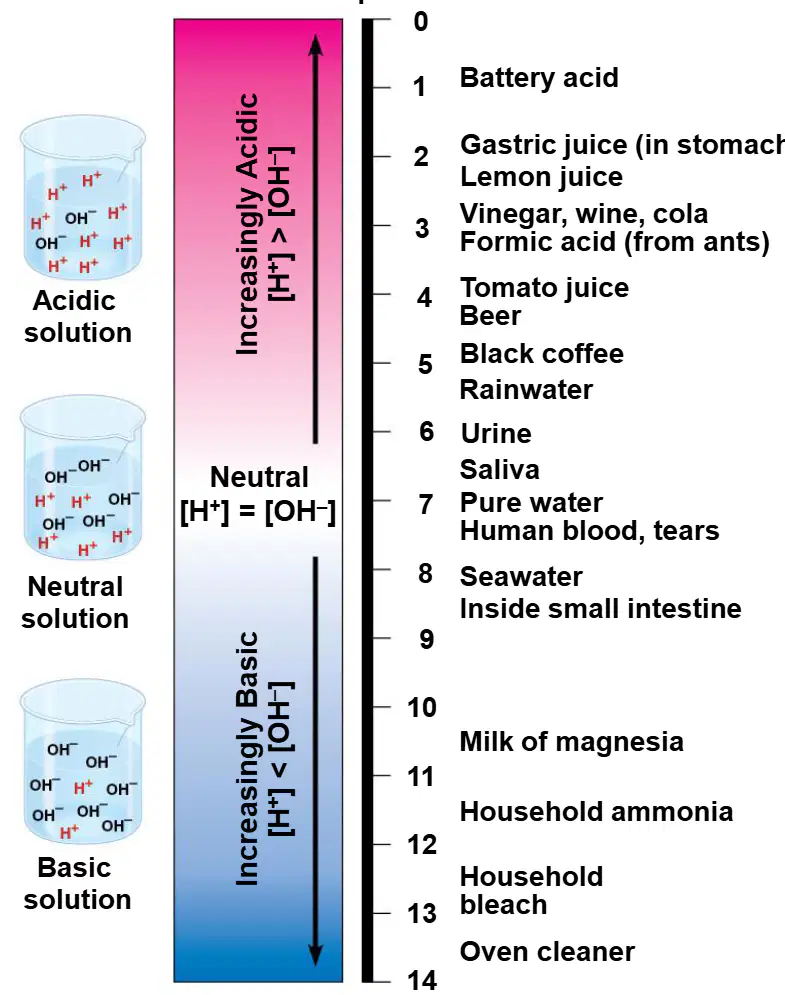
What is the pH value of a neutral solution?
0
7
14
10
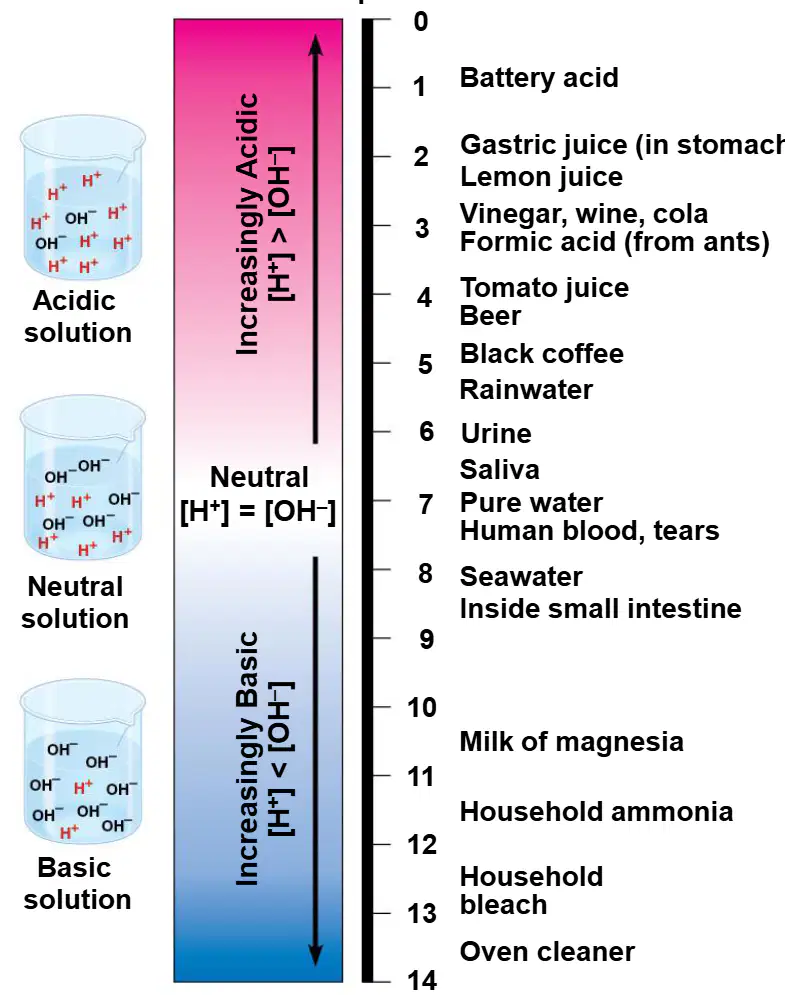
Which of the following substances is most acidic according to the pH scale?
Seawater
Lemon juice
Household ammonia
Pure water
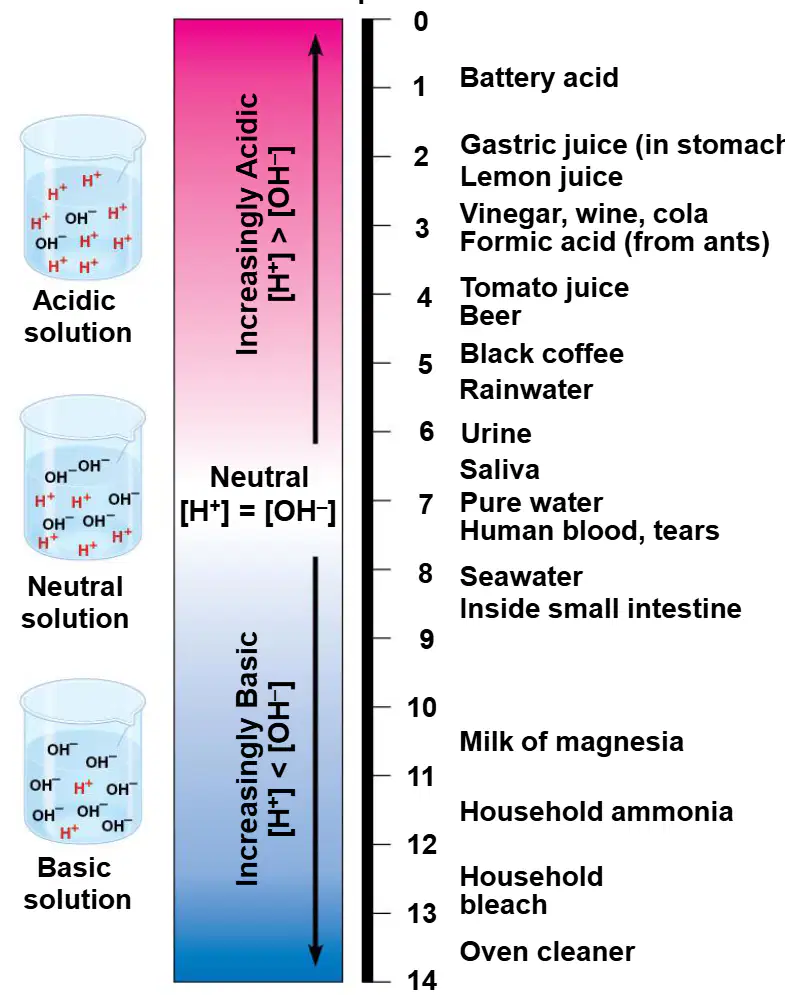
What is the pH range of most biological fluids?
0 to 2
3 to 5
6 to 8
9 to 11
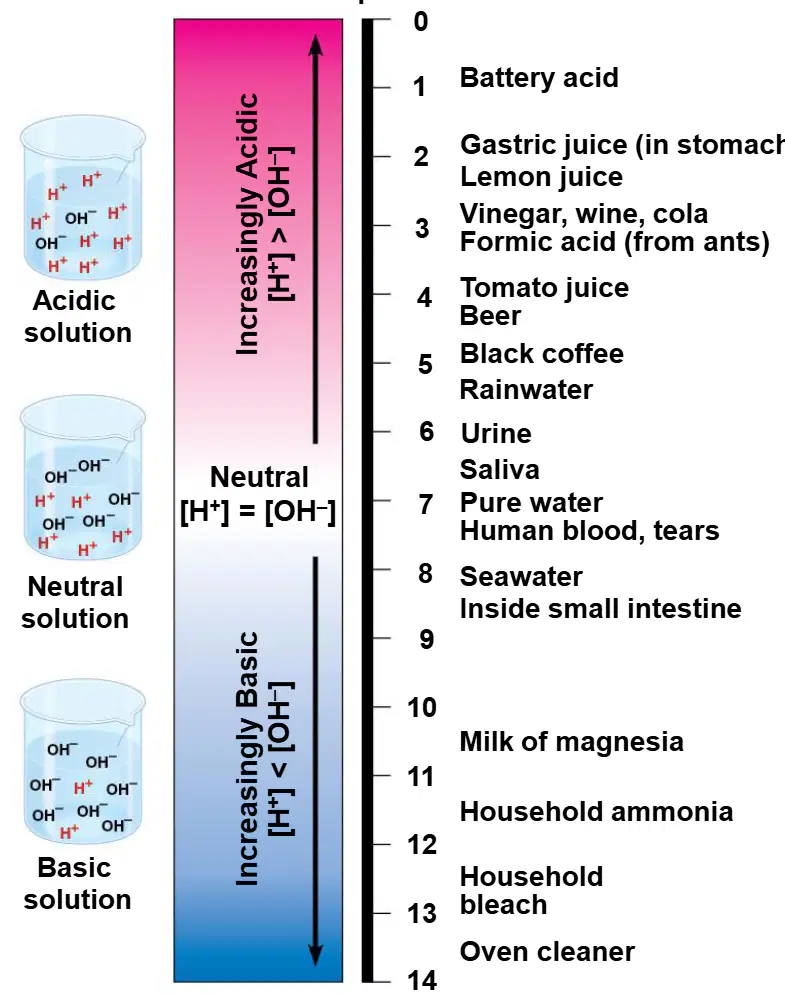
How is the pH of a solution calculated using hydrogen ion concentration?
pH = [H+]
pH = -log [H+]
pH = log [H+]
[H+]2
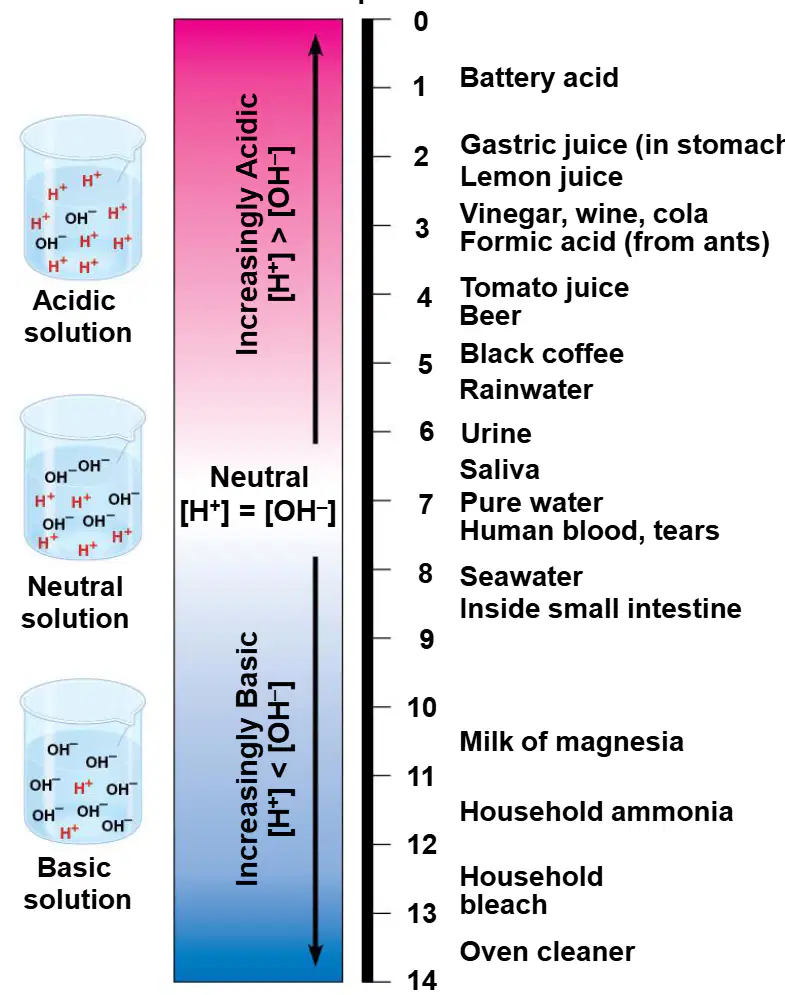
Which of the following solutions is considered basic?
Vinegar
Tomato juice
Household bleach
Black coffee
What is the approximate pH level of human blood?
pH 6.5
pH 7.4
pH 8.0
pH 5.5
What is the primary function of buffers in a solution?
Increase the concentration of H+ ions
Minimize changes in concentrations of H+ and OH- ions
Neutralize all acids
Convert acids to bases
Which of the following best describes the composition of most buffers?
A single strong acid
A single strong base
An acid-base pair that reversibly combines with H+
A neutral salt
What role does the chemical equilibrium between carbonic acid and bicarbonate play in the body?
It acts as a pH regulator
It increases blood pressure
It decreases oxygen levels
It enhances glucose absorption
What is the first step in participating in the poll according to the instructions?
Select the 'details' button for 'Biol 108'
Launch and login
Enter your answer
Submit your answer
What should you do after entering your answer in the app?
End the poll
Select the 'details' button
Submit your answer
Launch and login
How many times can you submit an answer according to the instructions?
Twice
As many times as needed
Only once
Three times
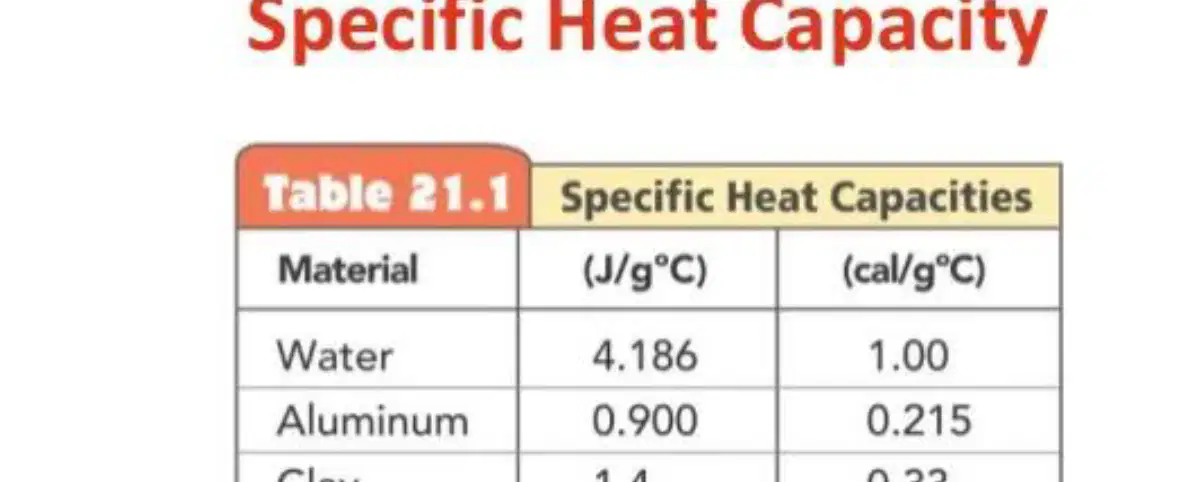
Which material has the highest specific heat capacity in J/g°C?
Aluminum
Water
Copper
Lead
What is the biological medium on Earth?
Air
Soil
Water
Sunlight
What percentage of cells is made up of water?
10-20%
30-50%
70-95%
100%
Why do all living organisms require water more than any other substance?
It provides energy
It is a biological medium
It is a source of food
It is a waste product

