
 Worksheets
Unit 1 and 2 Midterm Review
Total questions: 75
Worksheet time: 40mins
The CFTR protein is made up of 1,480 amino acids linked together in a chain. Some humans produce a version of the CFTR protein in which phenylalanine (an amino acid) has been deleted from position 508 of the amino acid chain. Which of the following best predicts how the amino acid deletion will affect the structure of the CFTR protein?
It will have no observable effect on the structure of the CFTR protein.
It will affect the primary structure of the CFTR protein, but the other levels of protein structure will not be affected.
It will affect the secondary and tertiary structures of the CFTR protein, but the primary structure will not be affected.
It will affect the primary, secondary, and tertiary structures of the CFTR protein.
Which of the following describes a key difference among the 20 amino acids that are used to make proteins?
Only some amino acids have an R-group.
Only some amino acids have a carboxyl group (COOH).
Some amino acids are hydrophobic.
Some amino acids contain the element phosphorus.
Scientists examined the folded structure of a purified protein resuspended in water and found that amino acids with nonpolar R groups were primarily buried in the middle of the protein, whereas amino acids with polar R groups were primarily on the surface of the protein. Which of the following best explains the location of the amino acids in the folded protein?
Polar R groups on the surface of the protein can form ionic bonds with the charged ends of the water molecules.
Polar R groups are too bulky to fit in the middle of the protein and are pushed toward the protein’s surface.
Nonpolar R groups that cannot form hydrogen bonds with water are pushed into the middle of the protein.
Nonpolar R groups from different parts of the protein form covalent bonds with each other to maintain the protein’s structure.
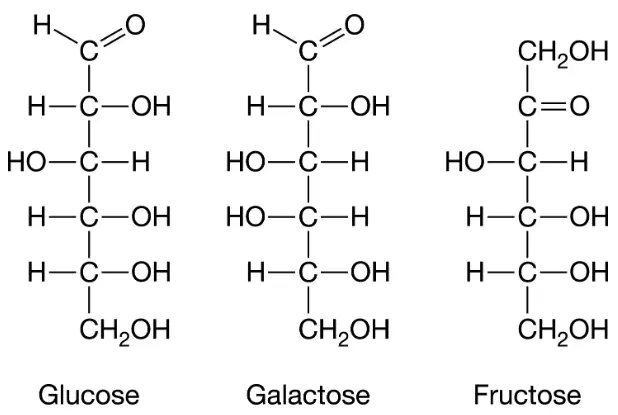
The carbohydrates glucose, galactose, and fructose have the same chemical formula (C6H12O6) but different structural formulas, as represented in the figure. Which of the following statements about glucose, galactose, and fructose is most likely true?
The carbohydrates have the same properties because they have the same number of carbon, hydrogen, and oxygen atoms.
The carbohydrates have the same properties because they each have a single carbon-oxygen double bond.
The carbohydrates have different properties because they have different arrangements of carbon, hydrogen, and oxygen atoms.
The carbohydrates have different properties because they have different numbers of carbon-carbon bonds.
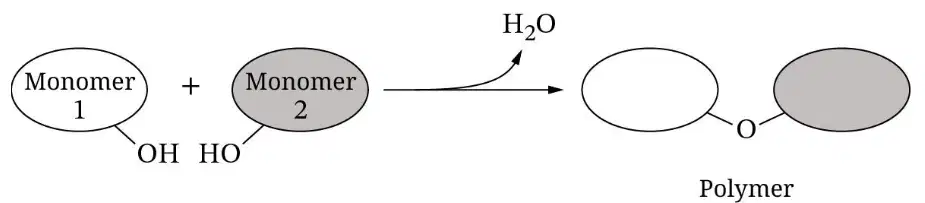
Which of the following best describes how the carbohydrate polymer is being built in Figure 1?
A water molecule is added to form a hydrogen bond between two monomers.
A water molecule is added to form a covalent bond between two monomers.
A water molecule is removed to form a hydrogen bond between two monomers.
A water molecule is removed to form a covalent bond between two monomers.

Different polysaccharides are used by plants for energy storage and structural support. The molecular structures for two common polysaccharides are shown in Figure 1. Starch is used by plants for energy storage, and cellulose provides structural support for cell walls. The monomer used to construct both molecules is glucose. A study determined the effect of two different digestive enzymes, A and B, on these two polysaccharides. Table 1 presents the data from the study. Mammals do not produce digestive enzyme B. However, sheep and cattle are two types of mammals that contain microorganisms in their digestive tract that produce enzyme B. Which of the following would most likely occur if cattle lost the ability to maintain a colony of microorganisms in their digestive tract?
(A) Cattle would no longer be able to synthesize cellulose.
(B) Cattle would have to convert cellulose to starch before digesting it.
(C) Cattle would have to start producing enzyme B without the help of the bacteria.
(D) Cattle would no longer be able to use cellulose as a primary source of glucose.
Which of the following is responsible for the cohesive property of water?
Hydrogen bonds between the oxygen atoms of two adjacent water molecules
Covalent bonds between the hydrogen atoms of two adjacent water molecules
Hydrogen bonds between the oxygen atom of one water molecule and a hydrogen atom of another water molecule
Covalent bonds between the oxygen atom of one water molecule and a hydrogen atom of another water molecule
Hydrogen bonds between water molecules and other types of molecules
A typical bag of fertilizer contains high levels of nitrogen, phosphorus, and potassium but trace amounts of magnesium and calcium. Which of the following best matches the fertilizer component with the molecule in which it will be incorporated by organisms in the area?
Nitrogen will be incorporated into nucleic acids.
Phosphorus will be incorporated into amino acids.
Potassium will be incorporated into lipids.
Magnesium will be incorporated into carbohydrates.
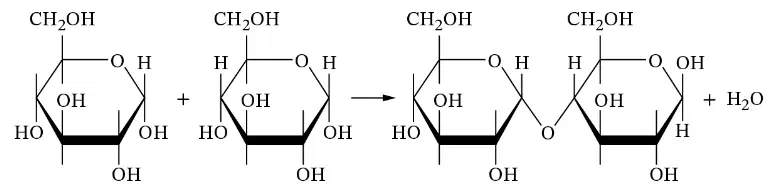
Which of the following statements best describes the molecular changes that occur during the reaction shown in Figure 1?
Two hydroxyl groups are removed from each glucose molecule, and one water molecule is formed.
A water molecule is added to the hydroxyl groups to form the covalent bond between the two glucose molecules.
A hydroxyl group from one glucose molecule and a hydrogen atom from the other glucose molecule are removed, and one water molecule is formed.
A hydrogen atom in one glucose molecule and a hydroxyl group in the other glucose molecule form a hydrogen bond.
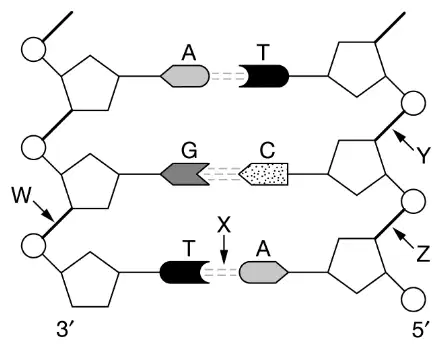
Figure 1 represents a segment of DNA. Radiation can damage the nucleotides in a DNA molecule. To repair some types of damage, a single nucleotide can be removed from a DNA molecule and replaced with an undamaged nucleotide. Which of the four labeled bonds in Figure 1 could be broken to remove and replace the cytosine nucleotide without affecting the biological information coded in the DNA molecule?
Bond X only
Bond W only
Bonds Y and Z at the same time
Bonds W and Z at the same time
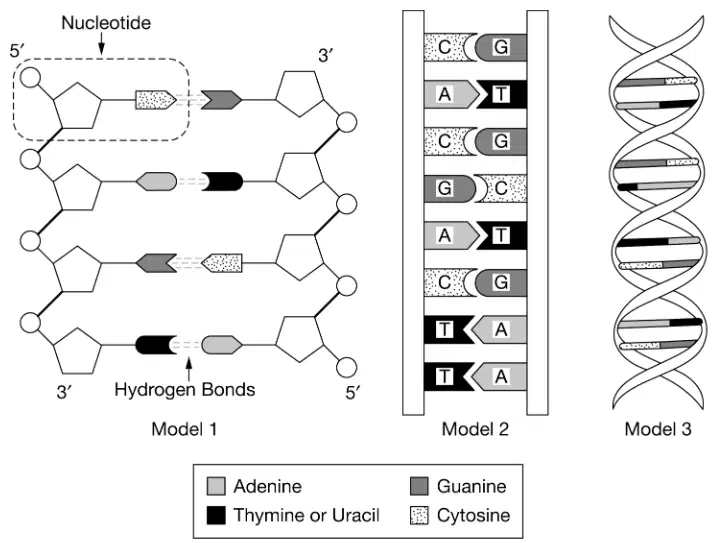
The feature of model 1 that best illustrates how biological information is coded in a DNA molecule is:
the sequence of bases
the double helix shape
the sugar-phosphate backbone
the hydrogen bonds between strands
A student wants to modify model 1 so that it represents an RNA double helix instead of a DNA double helix. Of the following possible changes, which would be most effective in making model 1 look more like RNA than DNA?
Changing the sequence of the base pairs
Changing the deoxyriboses to riboses by adding —OH groups
Changing the shapes of the nitrogenous bases to match those shown in model 2
Changing the sugar-phosphate backbone to a ribbon, as shown in model 3

Which of the following best describes a structural difference between DNA and RNA?
DNA contains four types of nitrogenous bases, whereas RNA contains only two types of nitrogenous bases.
The backbone of DNA contains deoxyribose, whereas the backbone of RNA contains ribose.
A DNA molecule is composed of two parallel strands with the same 5′ to 3′ directionality, whereas an RNA molecule is composed of only one 5′ to 3′ strand.
Phosphate groups provide rigidity to DNA, but RNA is flexible and contains no phosphate groups.
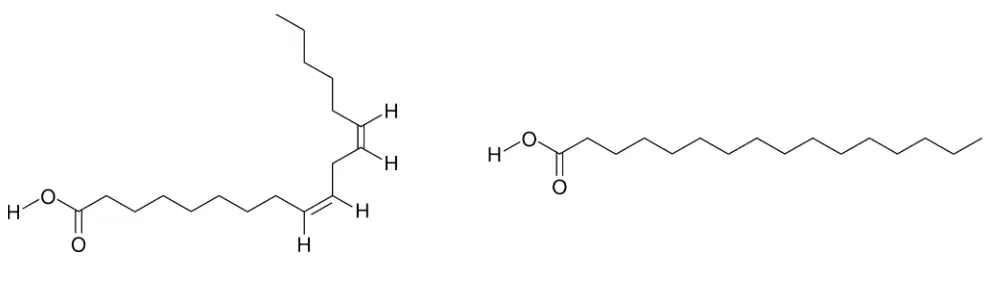
Based on the molecular structures shown in the figure, which molecule is likely to be solid at room temperature?
Linoleic acid, because the absence of carbon-carbon double bonds allows the molecules to pack closely together.
Linoleic acid, because the presence of carbon-carbon double bonds prevents the molecules from packing closely together.
Palmitic acid, because the absence of carbon-carbon double bonds allows the molecules to pack closely together.
Palmitic acid, because the presence of carbon-carbon double bonds prevents the molecules from packing closely together.
The fluid mosaic model of cell membranes describes proteins and steroids associated with a phospholipid bilayer. Which of the following membrane components affect membrane stability?
Embedded proteins give plasma membranes less stability.
Steroids, such as cholesterol, give membranes more stability.
Proteins in the hydrophilic region of the plasma membrane create more stability.
Polar heads of phospholipids give plasma membranes less stability.
Water molecules are polar covalent molecules. There is a partial negative charge near the oxygen atom and partial positive charges near the hydrogen atoms due to the uneven distribution of electrons between the atoms, which results in the formation of hydrogen bonds between water molecules. The polarity of water molecules contributes to many properties of water that are important for biological processes.
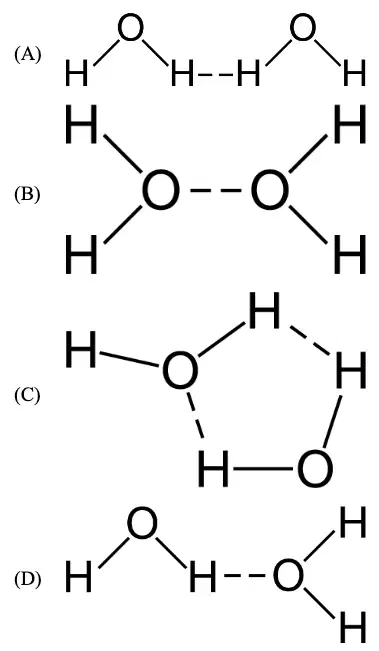
Which of the following diagrams best represents the hydrogen bonding between water molecules?
(A)
(B)
(C)
(D)
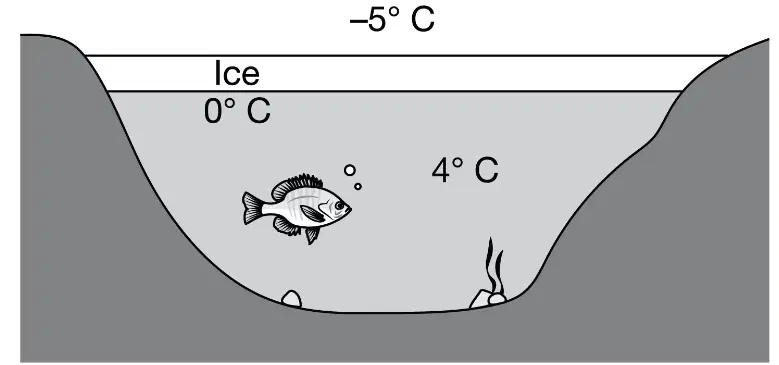
Which of the following best describes how the structure of ice benefits the organisms that live in the water below?
Ice provides a habitat for aquatic organisms.
Ice prevents the water below from freezing completely.
Ice allows sunlight to penetrate the water.
Ice acts as a barrier against predators.
The water molecules in ice are closer together than those in liquid water, so the ice prevents the passage of air to the water, maintaining a constant gas mixture in the water.
The water molecules in ice are closer together than those in liquid water, so the ice prevents the passage of air to the water, maintaining a constant gas mixture in the water.
The water molecules in ice are closer together than those in liquid water, so the ice forms a barrier that protects the organisms in the water from the freezing air temperatures.
The water molecules in ice are farther apart than those in liquid water, so the ice floats, maintaining the warmer, denser water at the lake bottom.
The water molecules in ice are farther apart than those in liquid water, so the ice floats, preventing the escape of gases from the liquid water.
The process of hydrogenation is used in the food industry to convert lipids that are liquids at room temperature into solids at room temperature. The process involves the chemical addition of hydrogen atoms to the fatty acid tails of lipids, breaking some or all of the carbon-carbon double bonds in the fatty acid tails. Which of the following best explains why hydrogenation converts liquid lipids to solid lipids?
Hydrogenation makes the fatty acids more saturated, enabling them to be more densely packed together.
Hydrogenation makes the fatty acids less saturated, enabling them to be more densely packed together.
Hydrogenation makes the fatty acids more saturated, resulting in fewer lipid molecules fitting within a given space.
Hydrogenation makes fatty acids less saturated, resulting in fewer lipid molecules fitting within a given space.
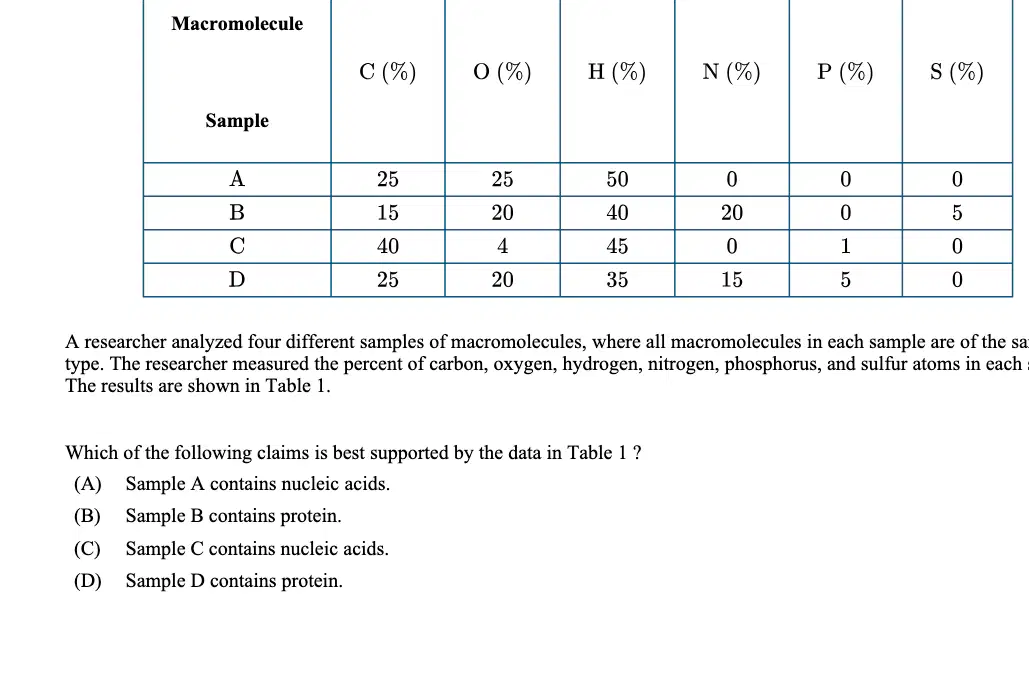
Which of the following claims is best supported by the data in Table 1?
Sample A contains nucleic acids.
Sample B contains protein.
Sample C contains nucleic acids.
Sample D contains protein.
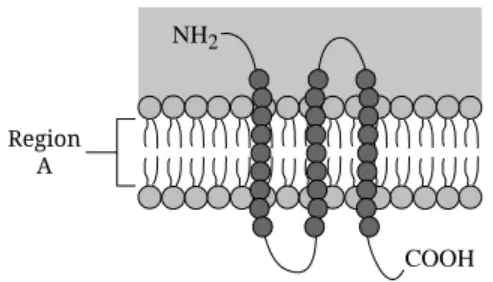
Based on Figure 1, the amino acids in region A are most likely to have which of the following characteristics?
Most amino acids will be hydrophobic because they interact most favorably with the phospholipid tails.
Most amino acids will be hydrophilic because they interact most favorably with the phospholipid heads.
Most amino acids will be ionic amino acids because they interact most favorably with the phospholipid tails.
Most amino acids will be polar amino acids because they interact most favorably with the phospholipid heads.
Which of the following statements best describes the structure of complex carbohydrates?
Several polysaccharide chains are linked via hydrogen bonds.
Monosaccharides are connected by covalent bonds.
Several polysaccharide chains are linked via ionic bonds.
Monosaccharides are joined by peptide bonds.
A feature of organic compounds NOT found in inorganic compounds is the presence of
ionizing chemical groups
electrons
carbon atoms covalently bonded to each other
oxygen
hydrogen bonds
The amino acid in Figure 1 is found in a region of a polypeptide that folds away from water. Which part of the amino acid most likely contributes to the hydrophobic behavior of this region of the polypeptide?
Amine (NH2) group
Carboxyl (COOH) group
Methyl (CH3) group
Hydrogen (H) atom
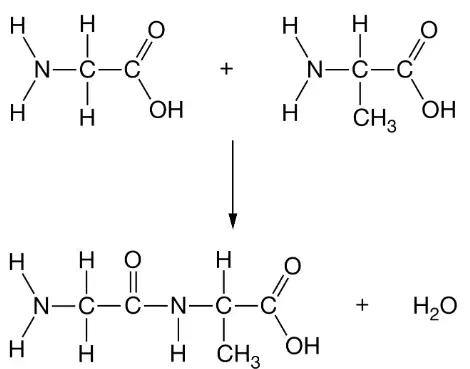
Figure 1 represents a common process that occurs in organisms. Which of the following is an accurate description of the process shown in Figure 1?
The linking of amino acids with an ionic bond as an initial step in the protein synthesis process
The formation of a more complex carbohydrate with the covalent bonding of two simple sugars
The hydrolysis of amino acids with the breaking of covalent bonds with the release of water
The formation of a covalent peptide bond in a dehydration synthesis reaction
Which of the following best describes the role of phospholipids?
Phospholipids provide structural stability to animal cell membranes.
Phospholipids support physiological functions, including growth.
Phospholipids provide energy storage and support cell function.
Phospholipids form the lipid bilayer found in cell membranes.
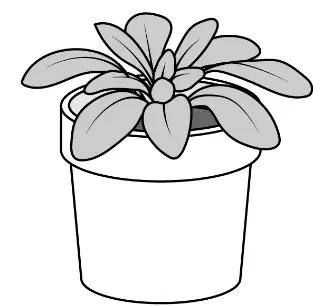
Phosphorous (P) is an important nutrient for plant growth. Figure 1 shows Arabidopsis thaliana plants grown under phosphorus-sufficient (left) and phosphorus-starved (right) conditions for six weeks. Which of the following is the most likely reason for the difference in leaf growth?
The phosphorus-starved plant was unable to synthesize both the required proteins and lipids, limiting growth.
The phosphorus-starved plant was unable to synthesize both the required proteins and carbohydrates, limiting growth.
The phosphorus-starved plant was unable to synthesize both the required nucleic acids and lipids, limiting growth.
The phosphorus-starved plant was unable to synthesize both the required carbohydrates and nucleic acids, limiting growth.
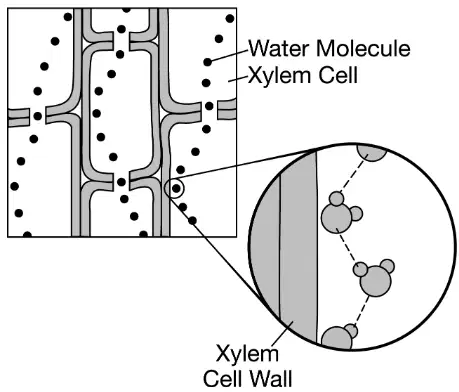
Which of the following best explains how water is able to move upward from the roots of a plant, through its xylem in the stem, and out to the leaves?
Water moves upward due to capillary action, cohesion, and transpiration pull.
Water is pushed upward by gravity acting on the plant.
Water moves upward because of active transport in the xylem.
Water is carried upward by the plant's phloem tissue.
Water is polar, and the walls of the xylem are nonpolar. Water molecules have the ability to form hydrogen bonds with one another but not with the xylem walls.
Water is polar, and the walls of the xylem are nonpolar. Water molecules have the ability to form hydrogen bonds with one another but not with the xylem walls.
Water is nonpolar, and the walls of the xylem are polar. Water molecules are able to form hydrogen bonds with the xylem walls, and they are pulled up the xylem.
Water and the xylem are both nonpolar. Water molecules have the ability to form hydrogen bonds with one another but not with the xylem walls.
Water and the xylem are both polar. Water molecules have the ability to form hydrogen bonds with each other and with the walls of the xylem.
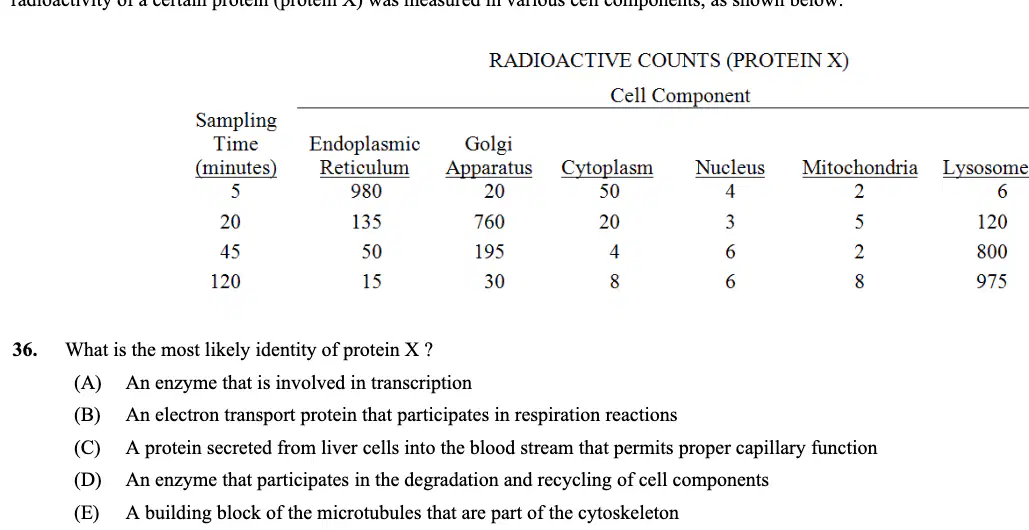
Which of the following correctly shows the order in which protein X moves through the cell?
Endoplasmic reticulum→Golgi apparatus→lysosomes
Endoplasmic reticulum→Golgi apparatus→nucleus→cytoplasm→lysosomes
Extracellular space→mitochondria→cytoplasm
Golgi apparatus→cytoplasm→lysosomes
Cytoplasm→mitochondria→extracellular space
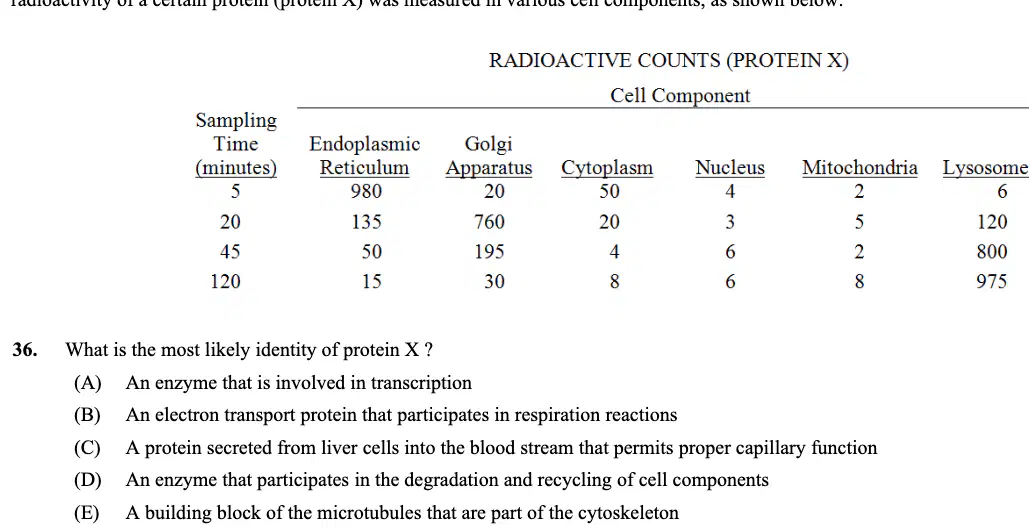
In the first step of an experiment, rat liver cells were exposed for 5 minutes to amino acids labeled with a radioactive isotope. The cells were then washed to stop any further incorporation of radioactive amino acids. The cells were sampled periodically thereafter, and the radioactivity of a certain protein (protein X) was measured in various cell components, as shown below. The same procedure was repeated with a second protein (protein Y). If the function of Y is protein processing and packaging, the most radioactivity would be found in the
Endoplasmic reticulum
Golgi apparatus
Cytoplasm
Nucleus
Lysosomes
In graphing the data from this experiment, the sampling time would be shown on the x-axis because
cell components were shown on the y-axis
radioactivity level shows the most variation
time values are always located on the horizontal axis
all quantitative values are represented on the x-axis
sampling time is the independent variable
Which of the following components of the cell membrane is responsible for active transport?
Golgi apparatus
Nucleus
Mitochondria
Lysosomes
Cytoplasm
Which of the following best describes the relationship between the size and shape of a cell and the ability of the cell to move substances across the membrane?
Larger and more round-shaped cells are more efficient at moving substances across the membrane than small round-shaped cells.
Smaller and more oval-shaped cells release waste more slowly than large oval-shaped cells.
Larger cube-shaped cells obtain nutrients more quickly than small cube-shaped cells.
Smaller irregularly shaped cells are more efficient at dissipating heat than large irregularly shaped cells.
Plant cell walls are composed of cellulose, while fungal cell walls are composed of chitin. A group of scientists hypothesize that this difference means the cell wall has largely different functions in plant cells and fungal cells. Alternatively, another group of scientists hypothesize that despite their biochemical differences, plant and fungal cell walls serve similar functions. Which of the following observations would best support the alternative hypothesis described above?
Plant cell walls are found just outside the plasma membrane, while fungal cell walls are found just beneath the plasma membrane.
In both plant cells and fungal cells, the cell wall surrounds the outside of the cell membrane.
Some plant cells have secondary cell walls that confer additional rigidity, while fungal cells do not.
Photosynthesis occurs in plant cells, but it does not occur in fungal cells.
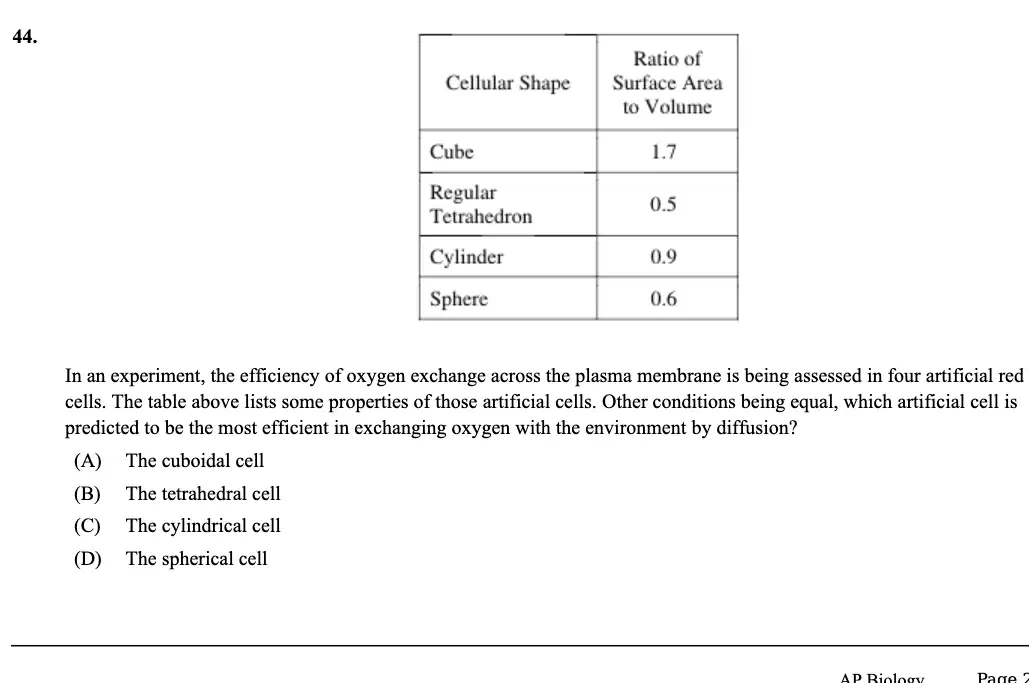
In an experiment, the efficiency of oxygen exchange across the plasma membrane is being assessed in four artificial red blood cells. Other conditions being equal, which artificial cell is predicted to be the most efficient in exchanging oxygen with the environment by diffusion?
The cuboidal cell
The tetrahedral cell
The cylindrical cell
The spherical cell
Researchers have proposed a model of chloroplast evolution. According to the model, chloroplasts evolved from a small prokaryotic organism that was engulfed by an ancestral eukaryote. The engulfed prokaryote then formed an endosymbiotic relationship with the eukaryotic host. Which of the following observations best supports the model?
Chloroplasts are separated from other subcellular compartments by semipermeable membranes.
Prokaryotic and eukaryotic organisms both acquire nutrients from the surrounding environment.
Eukaryotes evolved after prokaryotes and have more complex structures.
Chloroplasts and some prokaryotes share similar photosynthetic reactions.
When a substance moves across the plasma membrane along a concentration gradient at a rate faster than would be expected by simple diffusion alone but without the expenditure of metabolic energy, the process is best described as
facilitated diffusion
osmosis
active transport
pinocytosis
the work of an ion pump
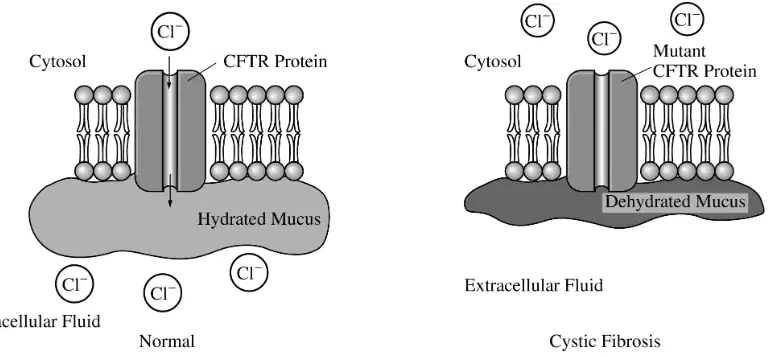
Cystic fibrosis is a recessively inherited disorder that results from a mutation in the gene encoding CFTR chloride ion channels located on the surface of many epithelial cells. As shown in the figure, the mutation prevents the normal movement of chloride ions from the cytosol of the cell to the extracellular fluid. As a consequence of the mutation, the mucus layer that is normally present on the surface of the cells becomes exceptionally dehydrated and viscous. An answer to which of the following questions would provide the most information about the association between the CFTR mutation and the viscous mucus?
Is the mucus also secreted from the cells through the CFTR proteins?
How does the disrupted chloride movement affect the movement of sodium ions and water by the cell?
How does the mutation alter the structure of the CFTR proteins?
What is the change in nucleotide sequence that results in the CFTR mutation?
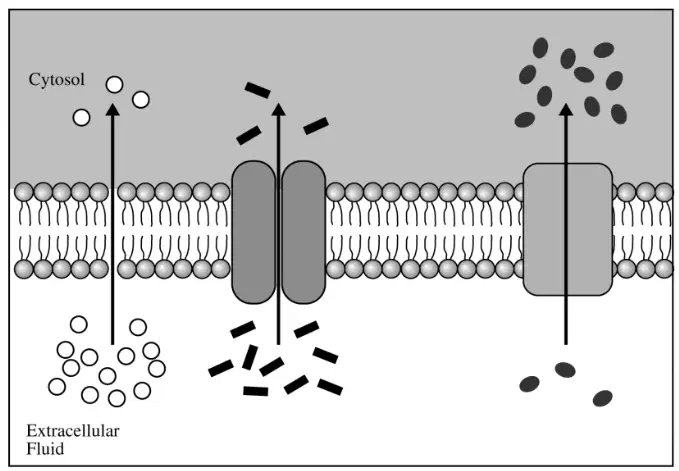
Which of the following scientific questions is most relevant to the model represented in the figure above?
Is ATP required for the transportation of sugars across the outer mitochondrial membrane?
Do the types of phospholipids in a membrane affect the rate at which molecules enter a cell by passive diffusion?
Which molecular substance is actively transported across the plasma membrane?
How does temperature affect the movement of molecules into lysosomes?
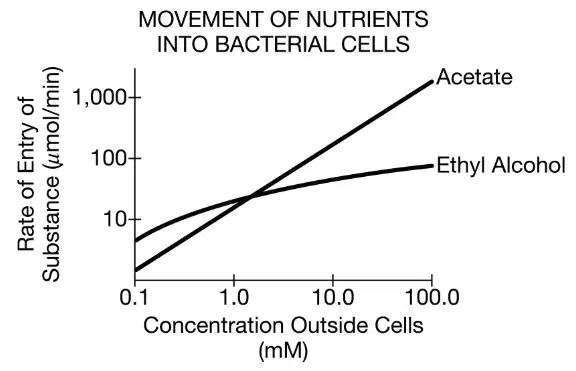
What additional procedure would best help determine whether these movements are due to active transport or to passive transport?
Measure the effect of temperature on the rate of movement.
Change the pH of the solution and observe the movement.
Add a specific enzyme and observe the movement.
Increase the concentration of the substance outside the cell.
Repeat the original experiment, but at three different temperatures. Compare the transport rates among the three temperatures.
Repeat the original experiment, but at three different temperatures. Compare the transport rates among the three temperatures.
Repeat the original experiment, but add a substance known to block movement of molecules across aquaporins. Compare the rates on the two graphs.
Use two additional treatments, one containing only ethyl alcohol and one containing only acetate. Compare the graphs of these two treatments with the original graph.
Use two additional treatments, one containing only ethyl alcohol and one containing only acetate. Include a substance known to block ATP use by the plasma membrane. Compare the graphs of these two treatments to the original graph.
All eukaryotic cells contain at least one Golgi complex, typically located in the cytoplasm and near the endoplasmic reticulum. Which of the following best describes a process that occurs within the Golgi complex?
Enzymatic modification of newly synthesized integral membrane proteins
Synthesis of cytosolic proteins based on the nucleotide sequences of mRNAs
Degradation of proteins by hydrolytic enzymes contained within the complex
Synthesis of various types of lipids
Gaucher disease is an inherited disorder in which cells of the body are unable to break down a particular type of lipid, resulting in a buildup of the lipid in some tissues and organs. Based on the information provided, Gaucher disease results most directly from a defect in the function of which of the following organelles?
The smooth endoplasmic reticulum
The nucleus
The lysosome
The mitochondrion
Which of the following best explains how the phospholipid bilayer of a transport vesicle contributes to cellular functions?
The phospholipid bilayer allows the vesicle to fuse with the Golgi apparatus and the plasma membrane, allowing the exocytosis of proteins.
The phospholipid bilayer physically connects the nuclear envelope to the rough endoplasmic reticulum, thus increasing the rate of transcription and translation.
The phospholipid bilayer of a transport vesicle contains chemicals that digest the proteins made in the rough endoplasmic reticulum.
The phospholipid bilayer contains enzymes that catalyze the conversion of hydrogen peroxide to water and oxygen.
Organelles such as mitochondria and the endoplasmic reticulum have membranes that compartmentalize reactions and other metabolic processes. To function properly, the organelles must move substances across their membranes. Which of the following statements describes a feature shared by mitochondria and the endoplasmic reticulum that increases the efficiency of their basic functions?
They have rigid, nonfluid membranes.
They have highly folded membranes.
They have membranes composed of many carbohydrates.
They have double membranes, with one membrane enclosed within the other.
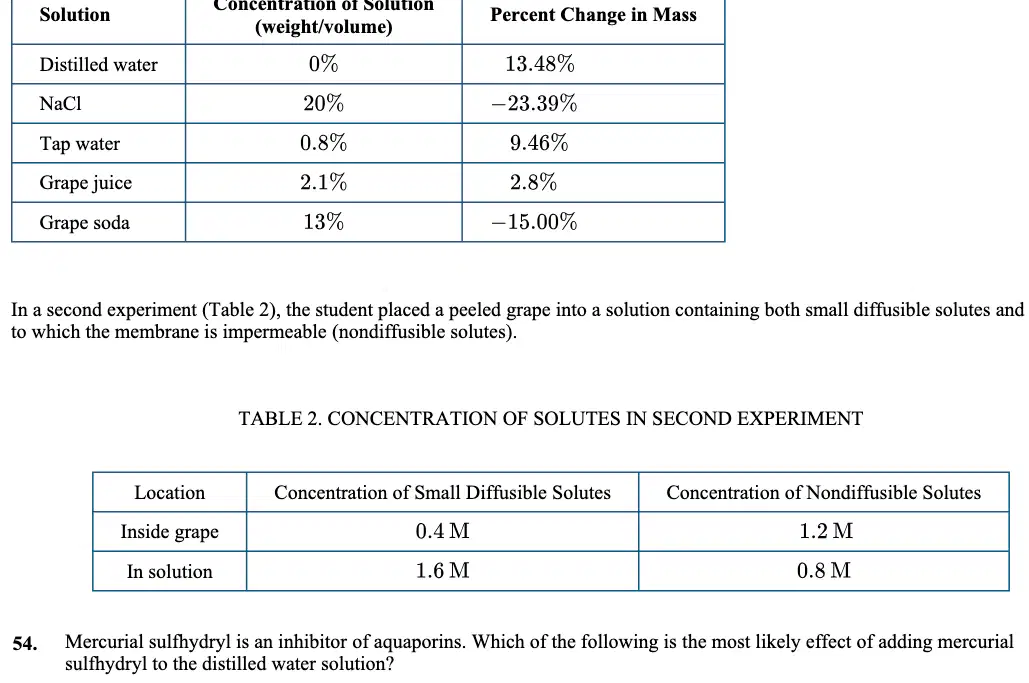
A student peeled the skins from grapes, exposing cells with membranes that are only permeable to water and small diffusible solutes. The student measured the mass of the peeled grapes. The student then placed each peeled grape into one of five solutions. After 24 hours, the student removed the peeled grapes from the solutions, measured their final mass, and calculated the percent change in mass (Table 1). Mercurial sulfhydryl is an inhibitor of aquaporins. Which of the following is the most likely effect of adding mercurial sulfhydryl to the distilled water solution?
The grape cells will burst because of excess water entering by active transport.
The grape cells will gain more water because of the activation of the transport protein.
The grape cells will shrink because active transport has been inhibited.
The grape cells will gain water more slowly because of a lack of facilitated diffusion.
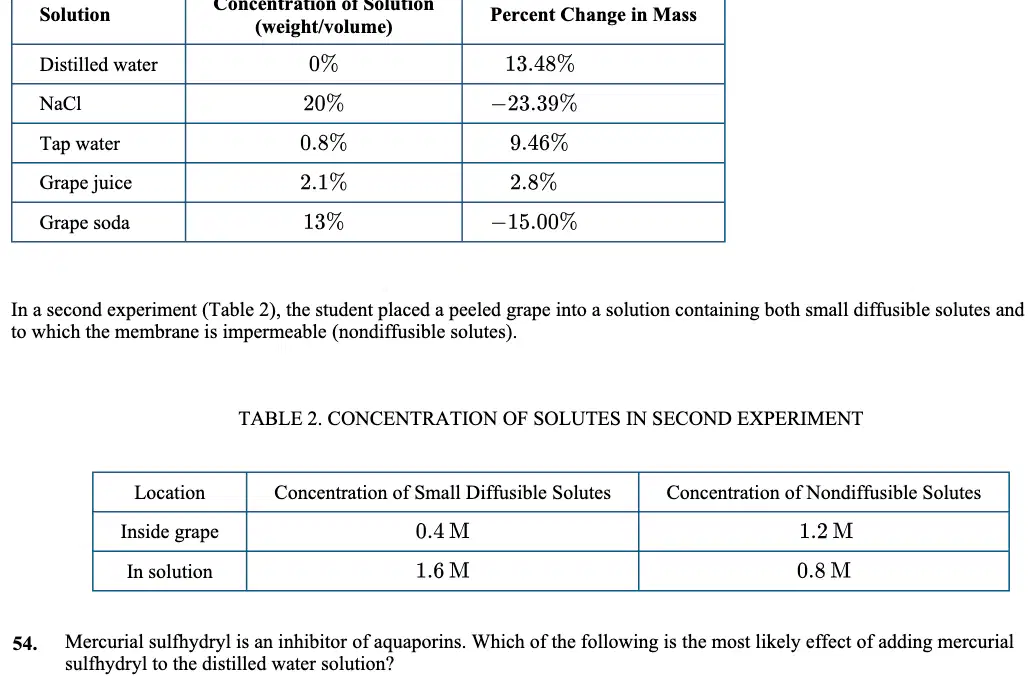
Assuming a negligible pressure potential, which of the following best predicts the net movement of the small diffusible solutes and water in the second experiment?
Small diffusible solutes will diffuse into the grape cells, followed by water.
Small diffusible solutes will diffuse out of the grape cells and water will diffuse into the cells.
Small diffusible solutes will diffuse out of the grape cells, followed by water.
Small diffusible solutes will diffuse into the grape cells and water will diffuse out of the cells.
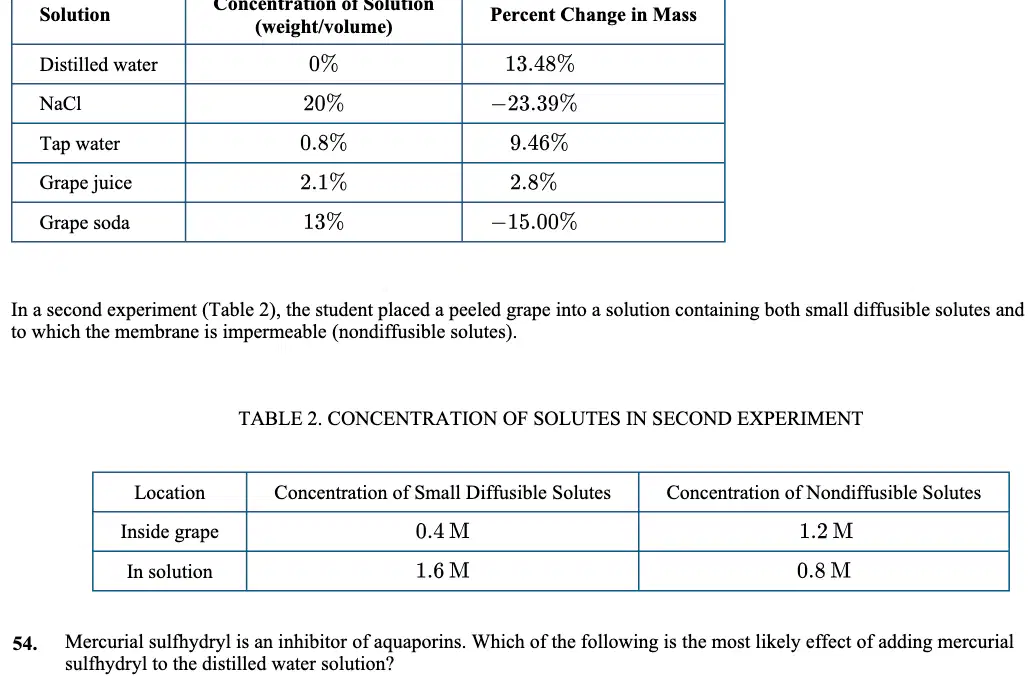
A student peeled the skins from grapes, exposing cells with membranes that are only permeable to water and small diffusible solutes. The student measured the mass of the peeled grapes. The student then placed each peeled grape into one of five solutions. After 24 hours, the student removed the peeled grapes from the solutions, measured their final mass, and calculated the percent change in mass (Table 1). Based on Table 1, which of the following percentages is closest to the solute concentration of the grape?
0.8%
2.1%
13%
20%
What is the percentage of water absorption per gram of mass for the given data?
0.0%
1.3%
5.5%
10.1%
Which of the following best explains why larger grapes have a different rate of water absorption per gram of mass than smaller grapes do?
The rate is slower because smaller grapes have a larger surface-area-to-volume ratio than the larger grapes do.
The rate is slower because larger grapes have a larger surface-area-to-volume ratio than the smaller grapes do.
The rate is slower because smaller grapes can expand more than larger grapes to hold excess water.
The rate is slower because larger grapes have more volume to hold excess water than smaller grapes do.
A human kidney filters about 200 liters of blood each day. Approximately two liters of liquid and nutrient waste are excreted as urine. The remaining fluid and dissolved substances are reabsorbed and continue to circulate throughout the body. Antidiuretic hormone (ADH) is secreted in response to reduced plasma volume. ADH targets the collecting ducts in the kidney, stimulating the insertion of aquaporins into their plasma membranes and an increased reabsorption of water. If ADH secretion is inhibited, which of the following would initially result?
The number of aquaporins would increase in response to the inhibition of ADH.
The person would decrease oral water intake to compensate for the inhibition of ADH.
Blood filtration would increase to compensate for the lack of aquaporins.
The person would produce greater amounts of dilute urine.
Changing the shape or morphology of the mitochondrial inner membrane can change the efficiency of mitochondrial function. Which of the following outcomes will most likely result from a change in the shape of the mitochondrial inner membrane from a highly folded surface to a smooth, flat surface?
Mitochondria will become more efficient because the inner mitochondrial membrane will become more permeable to ions.
Mitochondria will become more efficient because the total volume of the mitochondria will increase.
Mitochondria will become less efficient because the inner mitochondrial membrane will become less permeable to large molecules.
Mitochondria will become less efficient because the surface area of the inner mitochondrial membranes will decrease.
Intravenous (IV) solutions administered to patients are normally isotonic. Which of the following is most likely if an IV of distilled water is administered to a patient?
The cells that are exposed to hypotonic solutions will shrink as a result of salt moving into the blood.
The liver will secrete additional bile salts into the blood to raise the tonicity of the administered fluid.
The cells that are exposed to hypotonic solutions will expand as water moves osmotically into the cells from the blood.
The patient’s respiration rate will slow to compensate for the higher levels of circulating blood.
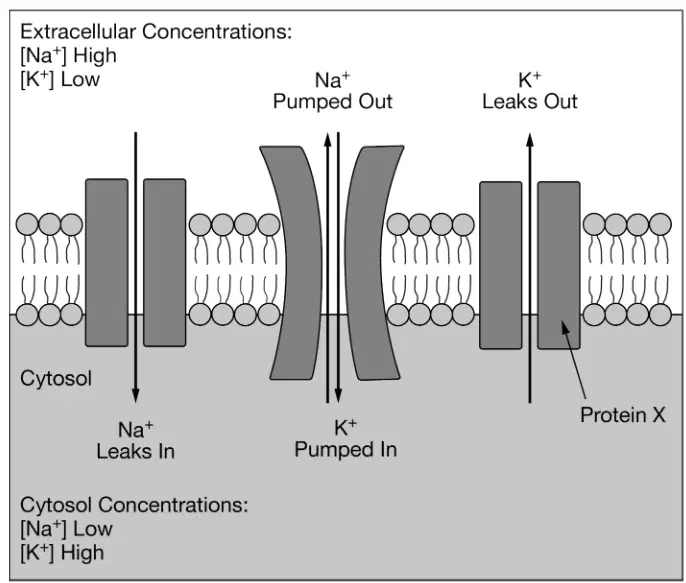
A cell’s membrane potential is maintained by the movement of ions into and out of the cell. A model showing the influence of membrane proteins on the movement of sodium (Na⁺) and potassium (K⁺) ions across the plasma membrane is presented in Figure 1. Based on the model presented in Figure 1, which of the following outcomes will most likely result from a loss of protein X function?
The membrane potential will be disrupted by an increase in Na⁺ concentration inside the cell.
The membrane potential will be disrupted by an increase in K⁺ concentration inside the cell.
The membrane potential will be maintained by the Na⁺ – K⁺ pump moving more K⁺ ions into the cell.
The membrane potential will be maintained by the diffusion of Na⁺ ions into the cell.
The organelle that is a major producer of ATP and is found in both heterotrophs and autotrophs is the
chloroplast
nucleus
ribosome
Golgi apparatus
mitochondrion
Researchers investigate the transport of a certain protein into cells by endocytosis. In an experiment, the researchers incubate the cells in the presence of the protein and measure the amount of the protein that is absorbed into the cells over a five-minute period. Based on their observations, what should the researchers do to further clarify how the availability of the protein outside the cells affects the rate of endocytosis of the protein?
Incubate the cells in the absence of the protein.
Incubate the cells in the presence of several different proteins.
Incubate the cells in the presence of several different concentrations of the protein.
Incubate the cells in the presence of the protein for several different lengths of time.

Based on the data in Table 1, which of the following statements best supports the hypothesis that only certain types of molecules can move freely across the cell membranes?
Large, nonpolar solutes showed an increase in the concentration inside the cell, while small, nonpolar solutes showed a slow increase in the concentration inside the cell.
Ionic solutes showed equal movement of solutes inside and outside the cell internal and external concentrations.
Small, nonpolar solutes showed the greatest increase in internal concentration, while large, nonpolar solutes showed little to no increase.
None of the solutes showed any change in internal concentration, regardless of their size, polarity, and charge.
Membrane-bound organelles have been an important component in the evolution of complex, multicellular organisms. Which of the following best summarizes an advantage of eukaryotic cells having internal membranes?
Eukaryotic cells are able to reproduce faster because of the presence of organelles.
Some organelles, such as mitochondria and chloroplasts, are similar to prokaryotic cells in structure.
Organelles isolate specific reactions, increasing metabolic efficiency.
Compartmentalization leads to a higher mutation rate in DNA, which leads to more new species.
Mitochondria are found in most eukaryotic cells and contain their own DNA and ribosomes that are similar to those typical of many prokaryotic cells. Which of the following statements is justified by these observations?
The mitochondrion is the only location in which eukaryotic cells can synthesize ATP.
An ancestral cell most likely engulfed an aerobic prokaryote in a relationship that proved beneficial for both cells.
Mitochondrial membranes provide abundant surface area for reactions because of the infoldings called cristae.
The mitochondrion plays a role in respiration, but it also stores the cell’s extra mRNA.
Which of the following accurately describes a model of active transport?
A membrane channel protein facilitates the movement of molecules from an area of high concentration on the outside of the cell to an area of lower concentration on the inside.
A cell in a hypotonic solution swells as water moves into it.
A membrane protein binds a specific molecule outside of the cell and moves the molecule into the cell where there is already a high concentration of the molecule compared with the outside.
A membrane protein binds a specific molecule on the inside of the cell and moves the molecule to an area of lower concentration on the outside of the cell.
Which of the following best explains why a cell’s plasma membrane is composed of two layers of phospholipids rather than just a single layer?
Having two oppositely oriented layers of phospholipids allows only the hydrophilic heads to interact with water inside and outside of the cell.
Having two oppositely oriented layers of phospholipids allows the hydrophilic heads to repel water both inside and outside of the cells.
Having two identically oriented layers of phospholipids gives cells more protection from the exterior environment than just a single layer would.
Having two identically oriented layers of phospholipids allows for the production of vacuoles while still maintaining a protective barrier.
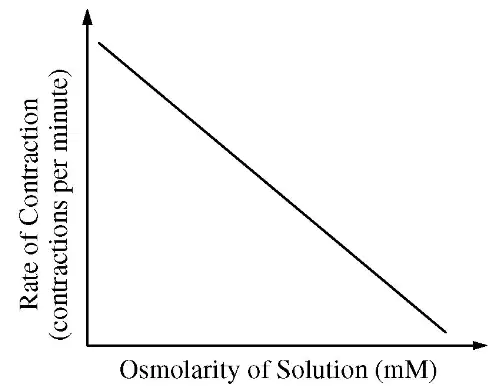
Paramecia are unicellular protists that have contractile vacuoles to remove excess intracellular water. In an experimental investigation, paramecia were placed in salt solutions of increasing osmolarity. The rate at which the contractile vacuole contracted to pump out excess water was determined and plotted against osmolarity of the solutions, as shown in the graph. Which of the following is the correct explanation for the data?
As the osmolarity of the solution increases, the rate of contraction of the contractile vacuole increases because more water enters the cell.
As the osmolarity of the solution increases, the rate of contraction of the contractile vacuole decreases because less water enters the cell.
As the osmolarity of the solution increases, the rate of contraction of the contractile vacuole remains constant because water movement is not affected by osmolarity.
As the osmolarity of the solution increases, the rate of contraction of the contractile vacuole increases because less water enters the cell.
At higher osmolarity, lower rates of contraction are required because more salt diffuses into the paramecia. Which of the above statements is correct?
The contraction rate increases as the osmolarity decreases because the amount of water entering the paramecia by osmosis increases.
The contractile vacuole is less efficient in solutions of high osmolarity because of the reduced amount of ATP produced from cellular respiration.
In an isosmotic salt solution, there is no diffusion of water into or out of the paramecia, so the contraction rate is zero.
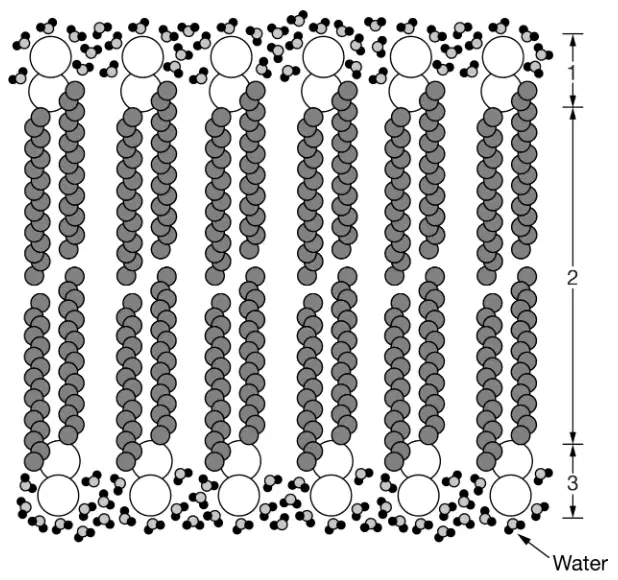
Refer to the diagram of the cell membrane with numbered areas 1, 2, and 3. Which of the following best describes the numbered areas?
Areas 1 and 3 are polar, since the membrane molecules are aligned with water molecules.
Area 2 is polar, since water has been excluded from this area of the membrane.
Areas 1 and 3 are hydrophilic, since membrane molecules formed covalent bonds with water.
Area 2 is nonpolar, since hydrogen bonds between the adjacent lipids hold the membrane together.
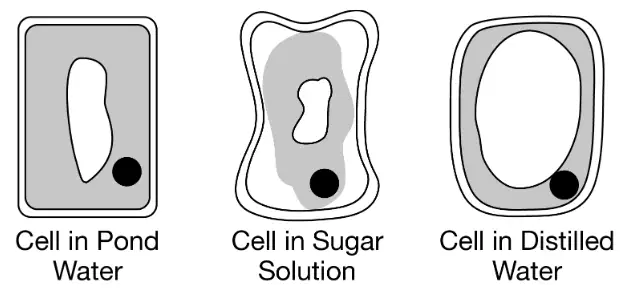
In an experiment, cells were isolated from an aquatic plant and suspended in pond water, a sucrose sugar solution, or distilled water. All of the cells were then viewed under a microscope. Compared with the cell in the pond water, the cell in the sugar solution appeared shriveled, and the cell in the distilled water appeared inflated. The results of the experiment are represented in Figure 1.
There was a net movement of sucrose out of the cell suspended in the sugar solution and a net movement of sucrose into the cell suspended in the distilled water.
There was a net movement of sucrose into the cell suspended in the sugar solution and a net movement of sucrose out of the cell suspended in the distilled water.
There was a net movement of water out of the cell suspended in the sugar solution and a net movement of water into the cell suspended in the distilled water.
There was a net movement of water into the cell suspended in the sugar solution and a net movement of water out of the cell suspended in the distilled water.
Researchers propose a model to explain variation in phytoplankton cell sizes in a marine environment. They base their model on the idea that smaller cells absorb nutrients more efficiently. The researchers predict that the mean diameter of phytoplankton cells will change by 50 micrometers for every 5-kilometer increase in distance from the shore because of a gradual decrease in nutrient availability. To test their model, the researchers determine that the phytoplankton cells found closest to shore have a mean diameter of 900 micrometers. Based on the model, what will be the mean diameter of the phytoplankton cells that are found 25 kilometers from shore?
650 micrometers
875 micrometers
925 micrometers
1150 micrometers
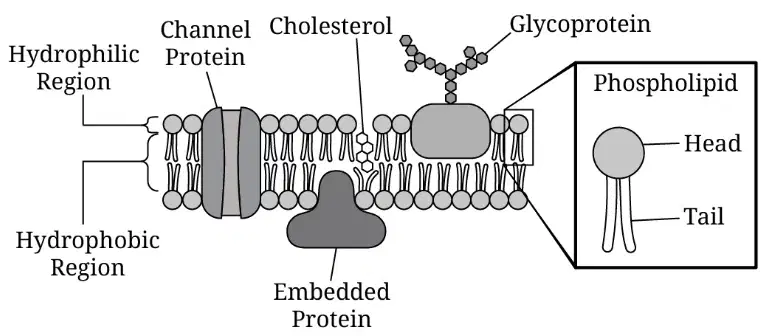
Based on Figure 1, which of the following membrane components are most likely nonpolar?
The phospholipid tails and cholesterol
The phospholipid heads and the channel protein
The phospholipid heads and the glycoprotein
The phospholipid tails and the embedded protein
Which of the following are characteristic of both prokaryotic and eukaryotic cells?
Cytoplasm and a well-defined nucleus surrounded by a membrane
Membranous sites of ATP synthesis, Golgi complex, and ribosomes
Mitochondria, nucleus, and ribosomes
Cell wall, several chromosomes, and cytoplasm
Cell membrane, ribosomes, DNA, and RNA
Which of the following groups of cellular components are found in eukaryotic cells but not prokaryotic cells?
Ribosomes, a nucleus, and chloroplasts
Circular chromosomes, mitochondria, and an endoplasmic reticulum
A nucleus, ribosomes, and cell walls
An endoplasmic reticulum, mitochondria, and a nucleus
Cells contain smaller components called organelles that are necessary for a cell’s survival. Organelle functions have often been compared to components of larger systems. Which of the following functional differences between the rough and smooth endoplasmic reticulum (ER) is explained by the structural differences between them?
Rough ER breaks down toxic substances, and smooth ER only transports them out of the cell.
Rough ER can synthesize and package lipids for export, and smooth ER cannot.
Rough ER can produce ATP, and smooth ER cannot.
Rough ER can synthesize and package proteins for export, and smooth ER cannot.
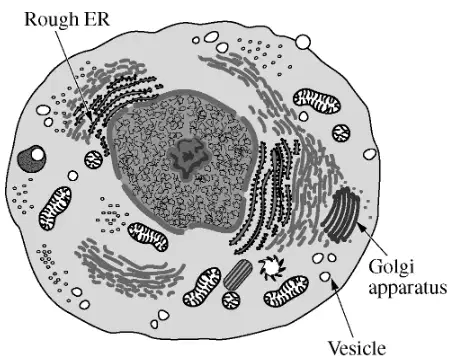
The figure below illustrates a eukaryotic cell. Which of the following best describes how the three structures indicated by the arrows work together?
To synthesize lipids and modify toxic substances in order to render them harmless
To synthesize and isolate proteins for secretion or for use in the cell
To catabolize nutrients and produce ATP for intracellular energy storage
To synthesize all ribosomal proteins
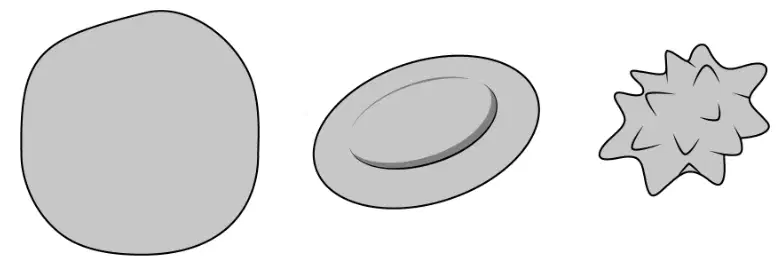
Intravenous (IV) therapy is used for fluid replacement in instances of dehydration in humans and other animals. One type of IV fluid is essentially a saltwater solution. To determine the best concentration for therapy in people, a team of students is researching the effects of solutions of different salt concentrations on red blood cells. The following observations were made from three different red blood cell samples viewed under a microscope. The team wants to extend the research project. What should the team of students do next to obtain data that are more conclusive?
Repeat the process with other salt concentrations.
Develop a model to explain why the cells react differently to different salt concentrations.
Repeat the process using red blood cells from other animals.
Develop an experimental procedure that uses a stain that makes the organelles of red blood cells more visible.
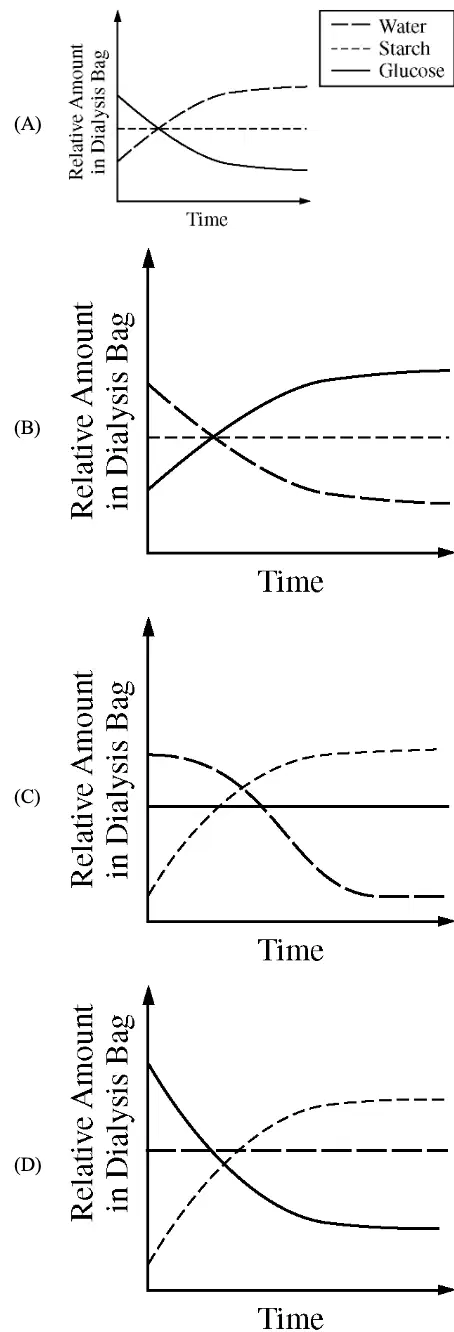
Which graph (A, B, C, or D) best represents the relative amount of water, starch, and glucose in a dialysis bag over time if the bag contains starch and glucose and is placed in pure water? Use the legend to identify the lines for water, starch, and glucose.
Graph A
Graph B
Graph C
Graph D

