
 Worksheets
Introduction to Pharmacy
Total questions: 67
Worksheet time: 34mins
Changes in the practice of pharmacy that have occurred over time include which of the following?
Increased focus on patient care and clinical services
Decreased use of technology in dispensing medications
Elimination of pharmacist involvement in healthcare teams
Reduction in the importance of medication safety
The different parts of a prescription include:
Superscription, inscription, subscription, and signature
Diagnosis, prognosis, treatment, and follow-up
Patient history, allergies, insurance, and billing
Symptoms, medications, diet, and exercise
The community setting is where pharmacy technicians interact with patients the _____.
most
least
rarely
never
Who was the ancient Greek physician who was the first to propose that disease was the result of natural causes?
Hippocrates
Galen
Aristotle
Pythagoras
Quinine from the bark of the cinchona tree was used to treat which disease?
malaria
tuberculosis
diabetes
influenza
What is salicylic acid, originally derived from the bark of the white willow tree, eventually synthesized into?
Acetylsalicylic acid, or aspirin
Ibuprofen
Paracetamol
Naproxen
Digitalis, developed from the foxglove plant, is now used to treat which condition?
Irregular heartbeats
Diabetes
Asthma
Arthritis
Which book eventually became the official book that describes medications and how to use them?
Pharmacopeia
Encyclopedia Britannica
Gray's Anatomy
Periodic Table
Which of the following is made from sources in nature?
Natural
Synthesized
Synthetic
Semi-Synthetic
Which type of medication is made artificially to imitate natural sources?
Natural
Synthesized
Synthetic
Semi-Synthetic
Which type of medication is made artificially?
Natural
Synthesized
Synthetic
Semi-Synthetic
Which type of medication is made with both natural and synthetic materials?
Natural
Synthesized
Synthetic
Semi-Synthetic
Who administered the first smallpox vaccine in the eighteenth century?
Zabdiel Boylston
Edward Jenner
Louis Pasteur
Jonas Salk
Who discovered that heat could kill microorganisms and prevent food from spoiling in the nineteenth century?
Louis Pasteur
Isaac Newton
Gregor Mendel
Marie Curie
Who discovered insulin could treat diabetes in the twentieth century?
Frederick Banting and Charles Best
Alexander Fleming and Howard Florey
Marie Curie and Pierre Curie
Jonas Salk and Albert Sabin
Who discovered penicillin, the first antibiotic?
Alexander Fleming
Louis Pasteur
Joseph Lister
Robert Koch
Who discovered the structure of DNA, forever altering the treatment of medical conditions?
James Watson and Francis Crick
Marie Curie and Pierre Curie
Rosalind Franklin and Maurice Wilkins
Gregor Mendel and Thomas Hunt Morgan
What year was the Pure Food and Drug Act passed in the United States?
1951
1906
2000
1800
What does the FDA do?
The FDA evaluates applications for new medications, monitors medications once on the market, and issues recalls when a medication is found to be a risk to public health.
The FDA manufactures medications and distributes them directly to pharmacies.
The FDA sets prices for all prescription drugs in the United States.
The FDA only approves food products and has no role in medication safety.
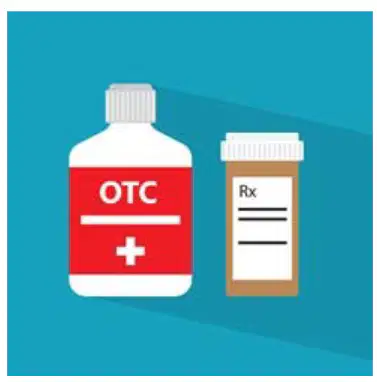
According to the passage, what are the two classifications of medications established by the Durham-Humphrey Amendment?
Prescription and herbal
Legend and over-the-counter (OTC)
Generic and brand-name
Controlled and uncontrolled
The FDA was created as a result of the Pure Food and Drug Act passed in 1906.
True
False
Which of the following is a term used for a medication that can be sold without a prescription?
legend
dangerous
over-the-counter
Schedule II
Which of the following schedules has the highest potential for abuse?
Schedule II
Schedule III
Schedule IV
Schedule V
Community pharmacies are also known as _______ pharmacies and offer services to the community and are accessible by the public.
retail
hospital
industrial
nuclear
Hospital pharmacies are departments within a hospital or _______ setting and serve patients receiving services there.
inpatient
outdoor
community
retail
Which type of pharmacy is described as being closed-door, not accessible by the public, and only used for maintenance prescriptions that are mailed to the patient?
Mail Order
Community Pharmacy
Hospital Pharmacy
Compounding Pharmacy
Which type of care is provided to patients who require more care than a family can provide or is allowed in a hospital stay, often in skilled nursing facilities or nursing homes?
Long Term Care
Acute Care
Outpatient Care
Home Health Care
Which type of pharmacy is associated with managed care organizations, such as health maintenance organizations (HMO), and provides their own pharmacies to enrolled patients?
Managed Care
Community Pharmacy
Hospital Pharmacy
Nuclear Pharmacy
Which type of pharmacy provides intravenous medications and equipment so patients may receive treatment in the comfort of their homes?
Home Infusion
Retail Pharmacy
Nuclear Pharmacy
Compounding Pharmacy
Which type of pharmacy has seen an increase in demand for individually compounded medications, even though it may not be cost-effective if done infrequently?
Compounding
Retail
Hospital
Mail-order

When pharmacies first began, who would help the pharmacist?
Helpers, or clerks.
Doctors.
Nurses.
Patients.
Which of the following is NOT a way pharmacies can receive prescriptions?
Written (brought to the pharmacy by a customer)
Electronic prescription (eScript)
By mail only
Fax
Telephone (called into the pharmacist)
Pharmacies can receive prescriptions by fax.
True
False
List all the ways pharmacies can receive prescriptions according to the passage.
Written (brought to the pharmacy by a customer), electronic prescription (eScript), fax, telephone (called into the pharmacist)
Only by written prescription brought by a customer
Only by electronic prescription (eScript) or fax
Only by telephone or fax
What are some ways the profession of pharmacy technician has evolved, according to the passage?
Clerks developed into technicians, there are now training programs, certification exams, and professional organizations for technicians.
Technicians now prescribe medication and diagnose illnesses.
Pharmacy technicians are now required to have a medical degree.
The profession has remained unchanged for decades.
According to the image, what information is included under prescriber information in a prescription?
Name, Address, Phone number, NPI (National Provider Identification) number, DEA number (not required if the prescription is not a controlled substance)
Patient's name, date of birth, and allergies
Medication name, dosage, and quantity
Pharmacy name, address, and license number
According to the image, what information is included under patient information in a prescription?
Name, Address, Phone number, Date of birth, Allergies
Doctor's name, License number, Clinic address, Signature, Date
Medication name, Dosage, Frequency, Route, Duration
Pharmacy name, Address, Contact number, License number, Expiry date
The DEA number is always required on a prescription, even if the prescription is not for a controlled substance.
True
False
Which of the following is NOT included in prescriber information?
Name
Address
Allergies
NPI number
The NPI stands for ________.
National Provider Identification
National Patient Index
Nursing Practice Initiative
Network Provider Information
If nothing but the name is written by the prescriber, the rest of the patient information can be added by the ________.
pharmacy
doctor
patient
insurance company
Which of the following is included in patient information?
DEA number
Allergies
NPI number
Medication order
The prescriber’s phone number is part of the ________ information in a prescription.
prescriber
patient
pharmacy
insurance
The patient’s date of birth is part of the ________ information in a prescription.
patient
medication
insurance
prescriber
The pharmacy can add patient information to a prescription if only the name is written by the prescriber.
True
False
One of the components of a handwritten prescription is the _________.
Date written
Patient's favorite color
Doctor's favorite food
Type of pen used
Weather on the day
A handwritten prescription must include the medication and __________.
strength
color
manufacturer
expiration date
The ________ ordered is a required part of a handwritten prescription.
Quantity
Date
Patient's address
Pharmacy name
A handwritten prescription should state the number of ________ allowed.
Refills
Doctors
Patients
Pharmacies
Directions for the ________ must be included in a handwritten prescription.
patient
doctor
pharmacist
nurse
The handwritten prescription must have the ________ of the prescriber.
Signature
Date of birth
Address
Phone number
What information is included in the 'Patient Information' section of a prescription?
The directions for use
The patient's name and address, and possibly other important information such as a child's weight
The number of refills authorized
The prescriber's name and address
What does 'Signa' refer to on a prescription?
The patient's address
The directions for use, and if a compound is prescribed, a list of ingredients and directions for mixing
The number of refills authorized
The prescriber's name
What does 'Refills Authorized' mean on a prescription?
The number of times the prescription can be refilled
The patient's date of birth
The prescriber's instructions
The directions for use
Which of the following is typically included in the pharmacy information on a prescription label?
Name
Address
Phone number
All of the above
A prescription label contains a unique number for each prescription. What is this number called?
Prescription number (Rx number)
Batch number
Patient ID
Pharmacy code
What information on a prescription label tells you when the medication was provided to the patient?
Date filled
Pharmacy address
Doctor's name
Dosage instructions
The name of the person who will take the medication is called the _________.
Patient name
Doctor name
Pharmacy name
Medicine name
Who is the person that prescribes the medication, as listed on the prescription label?
Prescriber name
Pharmacy address
Patient name
Medication name
What two pieces of information about the medication are typically included on a prescription label?
Medication name and strength
Patient's age and gender
Pharmacy's address and phone number
Doctor's specialty and office hours
Which company is usually listed on a prescription label for producing the medication?
Manufacturer
Pharmacy
Distributor
Insurance Company
What section of a prescription label tells the patient how to take the medication?
Directions for use
Pharmacy address
Refill information
Prescriber's name
The amount of medication given to the patient is called the _________.
Quantity dispensed
Dosage form
Expiration date
Prescription number
What information on a prescription label tells you when the medication should no longer be used?
Expiration date of the medication
Dosage instructions
Pharmacy address
Prescriber's phone number
Which of the following is required on a prescription label?
pharmacy information
patient name
medication name
All of the above
Choosing a pharmacy setting depends on whether you prefer working directly with people or behind the scenes with limited patient interaction.
Your preference for patient interaction influences your choice of pharmacy setting.
All pharmacy settings require direct patient interaction.
Pharmacy settings do not differ in patient interaction levels.
Working behind the scenes is not an option in pharmacy settings.
According to the passage, if a pharmacy technician prefers working with people, which type of pharmacy would they probably prefer to work in?
Community or specialty compounding pharmacies
Mail-order pharmacies
Nuclear pharmacies
Pharmaceutical manufacturing companies

