
 Worksheets
Cell Structures and Membrane Functions
Total questions: 92
Worksheet time: 46mins
What is the function of the plasma membrane in a cell?
The plasma membrane controls the movement of substances in and out of the cell.
The plasma membrane produces energy for the cell.
The plasma membrane stores genetic information.
The plasma membrane synthesizes proteins.
What is the main role of the nucleus in a cell?
The nucleus stores the cell's genetic material and coordinates activities like growth and reproduction.
The nucleus produces energy for the cell through cellular respiration.
The nucleus is responsible for protein synthesis in the cell.
The nucleus transports materials throughout the cell.
What is the cytoplasm?
The cytoplasm is the jelly-like substance within the cell that contains organelles and is the site of most cellular activities.
The cytoplasm is the outermost layer of the cell that protects it from the environment.
The cytoplasm is the genetic material found inside the nucleus of the cell.
The cytoplasm is a rigid structure that gives the cell its shape and support.
Which phase of the cell cycle involves the cell growing and replicating its DNA?
Interphase
Metaphase
Anaphase
Telophase
During which process does the cell divide its nucleus and genetic material?
Mitosis
Photosynthesis
Respiration
Osmosis
What is cytokinesis?
Cytokinesis is the process where the cytoplasm of a single eukaryotic cell is divided to form two daughter cells.
Cytokinesis is the process where DNA is replicated in the nucleus.
Cytokinesis is the process where chromosomes align at the cell equator.
Cytokinesis is the process where the nuclear envelope dissolves.
What is Brownian movement?
Brownian movement is the random motion of particles suspended in a fluid resulting from their collision with fast-moving molecules in the fluid.
Brownian movement is the uniform motion of particles in a straight line due to gravity.
Brownian movement is the process of particles settling at the bottom of a fluid due to their weight.
Brownian movement is the movement of particles caused by magnetic fields in a fluid.
What is diffusion?
Diffusion is the movement of molecules from an area of higher concentration to an area of lower concentration.
Diffusion is the process of water moving from a lower concentration to a higher concentration through a membrane.
Diffusion is the movement of molecules from an area of lower concentration to an area of higher concentration.
Diffusion is the process by which solids turn directly into gases.
What is osmosis?
Osmosis is the movement of water molecules through a selectively permeable membrane from an area of lower solute concentration to an area of higher solute concentration.
Osmosis is the movement of solute molecules through a membrane from an area of higher concentration to an area of lower concentration.
Osmosis is the process by which plants convert sunlight into energy.
Osmosis is the breakdown of food into smaller molecules in the stomach.

What is the structural and functional unit of all organisms?
Cell
Tissue
Organ
Organ system

Which part of the cell forms the outer boundary of a cell?
Plasma Membrane
Nucleus
Mitochondria
Cytoplasm

What is the control center of the cell where DNA is housed?
Nucleus
Mitochondria
Ribosome
Cell membrane

What is the relatively clear area between the nucleus and the plasma membrane called?
Cytoplasm
Nucleolus
Mitochondria
Ribosome
What does the plasma membrane consist of?
One layer of phospholipid molecules
Two layers of phospholipid molecules
Three layers of phospholipid molecules
Protein only
Fill in the blank: The plasma membrane is _________.
flexible
rigid
opaque
solid
What is selective permeability in the context of the plasma membrane?
Allows all molecules to pass through
Allows no molecules to pass through
Allows some molecules to pass through while preventing the passage of others
Allows only water to pass through

Refer to the labeled diagram of the cell. Which structure is labeled as the 'plasma membrane'?
The outermost boundary of the cell, highlighted and labeled as 'plasma membrane' in the diagram.
The central region containing genetic material, labeled as 'nucleus' in the diagram.
The small round structures scattered throughout the cytoplasm, labeled as 'ribosomes' in the diagram.
The network of membranes within the cytoplasm, labeled as 'endoplasmic reticulum' in the diagram.
What is the function of receptor proteins in the plasma membrane?
Allow passage of water and solutes
Receive chemical signals from other cells; enable communication between cells
Catalyze reactions that break down specific molecules
Attach cells to each other or to extracellular material
Which type of membrane protein allows passage of water and solutes, and can be open or closed under different conditions?
Carrier proteins
Channel proteins
Enzymes
Attachment proteins
Fill in the blank: ________ actively transport substances into, or out of, the cell.
Carrier proteins
Enzymes
Ribosomes
Lipids
Which protein type serves as an identity tag so other cells can distinguish between self and foreign cells?
Enzymes
Identity markers
Channel proteins
Receptors
What is the function of enzymes in the plasma membrane?
Attach cells to each other or to extracellular material
Catalyze reactions that break down specific molecules
Receive chemical signals from other cells
Allow passage of water and solutes
Fill in the blank: Attachment proteins ________.
Attach cells to each other or to extracellular material.
Are responsible for producing energy in the cell.
Synthesize DNA during cell division.
Transport oxygen in the bloodstream.

What is the shape of the nucleus?
Spherical
Cuboidal
Triangular
Rectangular

What surrounds the nucleus?
Nuclear envelope
Cell wall
Mitochondria
Cytoplasm
What is the function of the nuclear matrix?
Contains and organizes chromosomes
Forms ribosomes
Produces energy
Stores water
Chromatin is formed between DNA and ______ to help keep the chromosomes in the nucleus.
proteins
lipids
carbohydrates
water
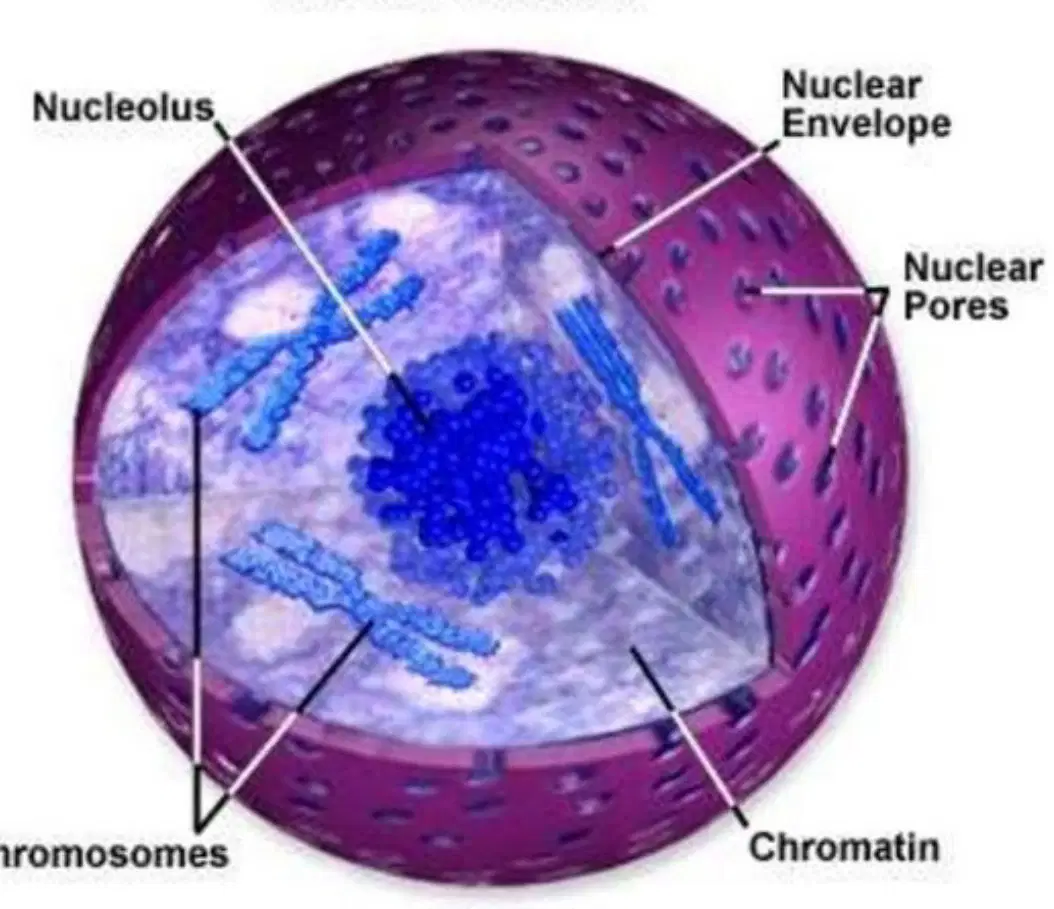
Which of the following is NOT a part of the cell nucleus as shown in the diagram?
Nucleolus
Mitochondria
Chromatin
Nuclear Envelope
Where does the cytoplasm lie in a cell?
Between the nucleus and the plasma membrane
Inside the nucleus
Outside the plasma membrane
Within the cell wall
What is the liquid portion of the cytoplasm called?
Cytosol
Organelle
Nucleus
Plasma membrane
The cytosol fills the cell and gives it _______.
shape
energy
color
sound
The cytosol allows nutrients to move about the cell.
True
False
Cellular functions are primarily performed by the _______.
organelles
nucleus
membrane
cytoplasm
What is the main function of the Rough Endoplasmic Reticulum (RER)?
Detoxification
Protein synthesis and sorting
Lipid modification
Carbohydrate metabolism
Which type of Endoplasmic Reticulum is involved in detoxification, carbohydrate metabolism, calcium balance, synthesis, and lipid modification?
Rough Endoplasmic Reticulum (RER)
Smooth Endoplasmic Reticulum (SER)
Ribosomes
Nucleus
Ribosomes are composed of _____?
RNA
DNA
Lipids
Carbohydrates
Ribosomes serve as sites of _____
protein synthesis
lipid storage
DNA replication
cellular respiration
True or False: The Smooth Endoplasmic Reticulum (SER) is involved in protein synthesis and sorting.
True
False
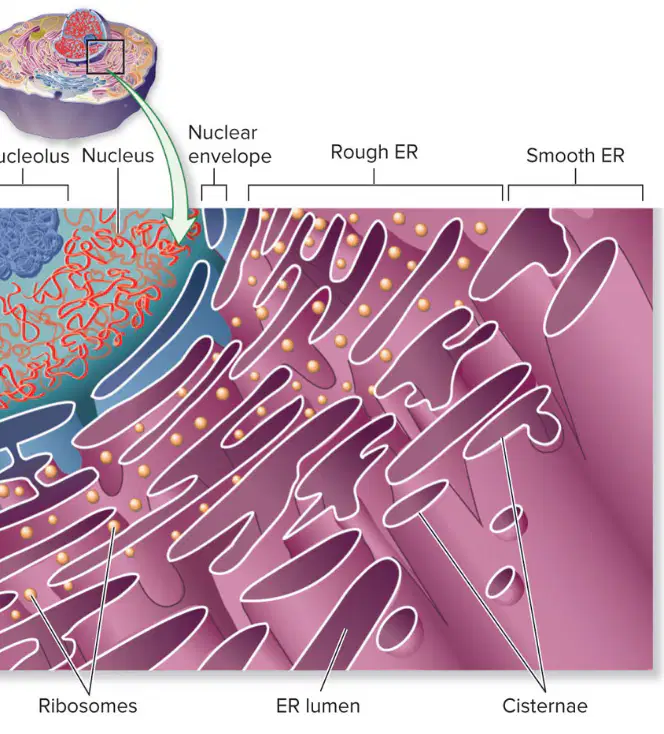
Which of the following lists correctly labels the parts in the diagram: Nucleolus, Nucleus, Nuclear envelope, Rough ER, Smooth ER, Ribosomes, ER lumen, Cisternae?
Nucleolus, Nucleus, Nuclear envelope, Rough ER, Smooth ER, Ribosomes, ER lumen, Cisternae
Nucleus, Nucleolus, Smooth ER, Rough ER, Ribosomes, Nuclear envelope, Cisternae, ER lumen
Nucleolus, Nuclear envelope, Nucleus, Smooth ER, Rough ER, Ribosomes, Cisternae, ER lumen
Nucleus, Nuclear envelope, Nucleolus, Rough ER, Smooth ER, ER lumen, Ribosomes, Cisternae
What is the Golgi Apparatus?
A stack of flattened, membrane-bounded compartments
A type of vesicle
The plasma membrane
The nucleus
Which of the following is NOT a function of the Golgi Apparatus?
A) Secretion
B) Processing
C) Protein sorting
D) DNA replication
Fill in the blank: Vesicles transport materials between ______ in the Golgi Apparatus.
stacks
cells
nuclei
ribosomes
Which three overlapping functions are performed by the Golgi Apparatus?
Secretion, processing, and protein sorting
Digestion, absorption, and excretion
Respiration, photosynthesis, and fermentation
Replication, transcription, and translation
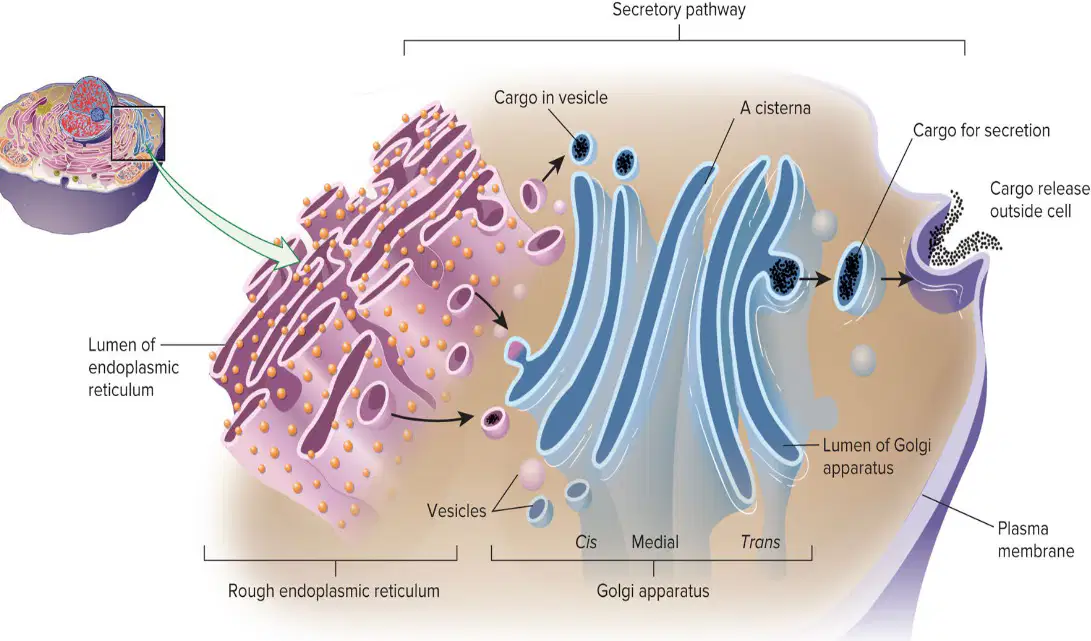
What is the function of vesicles in the secretory pathway?
To transport cargo between stacks and release it outside the cell
To produce energy
To synthesize DNA
To store water
Which organelle is known as the powerhouse of the cell?
Lysosome
Mitochondrion
Nucleus
Ribosome
What is the main function of lysosomes?
Protein synthesis
Contain digestive enzymes and digest molecules or entire cells
Store genetic information
Produce ATP
Fill in the blank: Mitochondria are the site of ______ synthesis.
ATP
Glucose
Protein
DNA
Lysosomes have their own DNA.
True
False

Which organelle is labeled as 'mitochondrion' in the diagram?
The organelle labeled 'mitochondrion' is the one responsible for ATP synthesis and is known as the powerhouse of the cell.
The organelle labeled 'mitochondrion' is the one responsible for protein synthesis and is known as the site of ribosome assembly.
The organelle labeled 'mitochondrion' is the one responsible for packaging and modifying proteins and is known as the Golgi apparatus.
The organelle labeled 'mitochondrion' is the one responsible for photosynthesis and is known as the chloroplast.
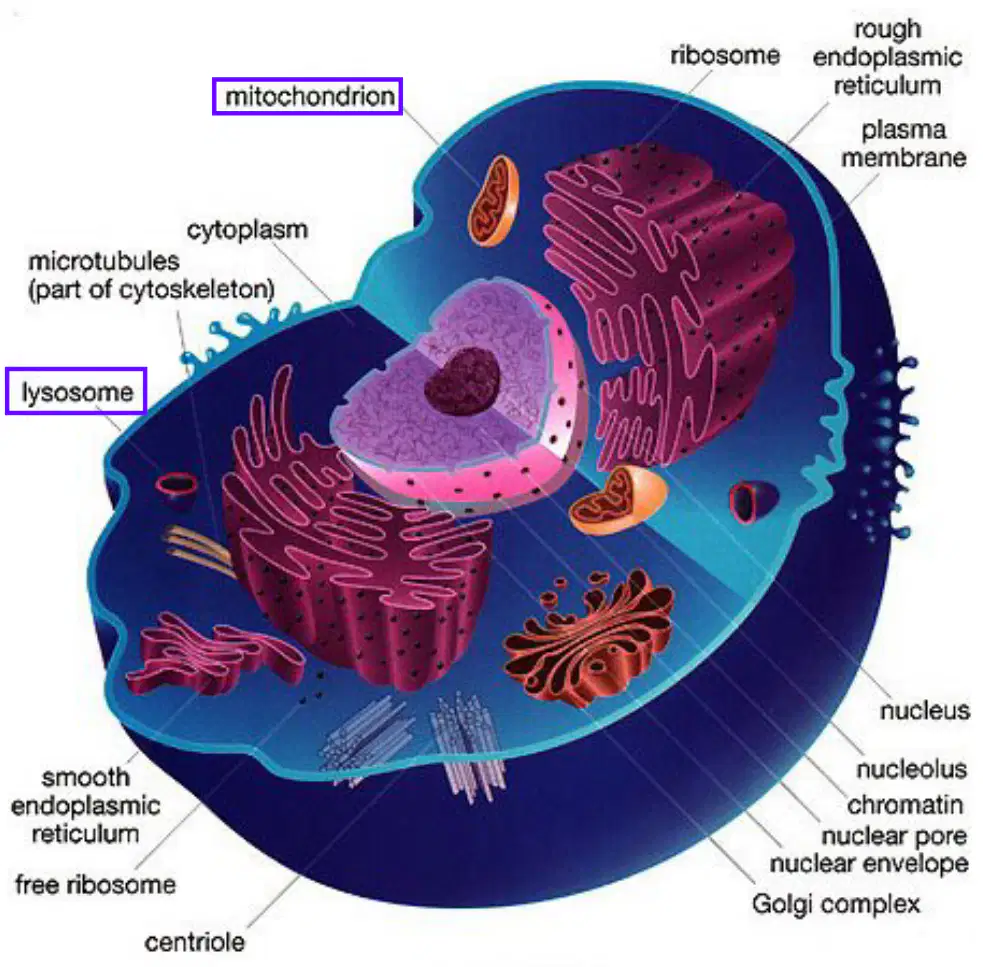
Which organelle in the diagram contains digestive enzymes?
Lysosome
Mitochondrion
Nucleus
Ribosome
What is the maintenance (resting) phase between cell divisions called?
Interphase
Prophase
Metaphase
Anaphase
Which phase preps the cell for division?
Interphase
Metaphase
Anaphase
Telophase
During which phase do cells divide to produce two daughter cells from a single parent cell?
Mitosis
Interphase
Cytokinesis
Prophase
Which phase facilitates the growth of an organism?
Mitosis
Meiosis
Apoptosis
Fertilization
What is the division of the parent cell into two daughter cells called?
Cytokinesis
Photosynthesis
Osmosis
Transcription
Which phase forms a cleavage furrow?
Cytokinesis
Prophase
Metaphase
Anaphase
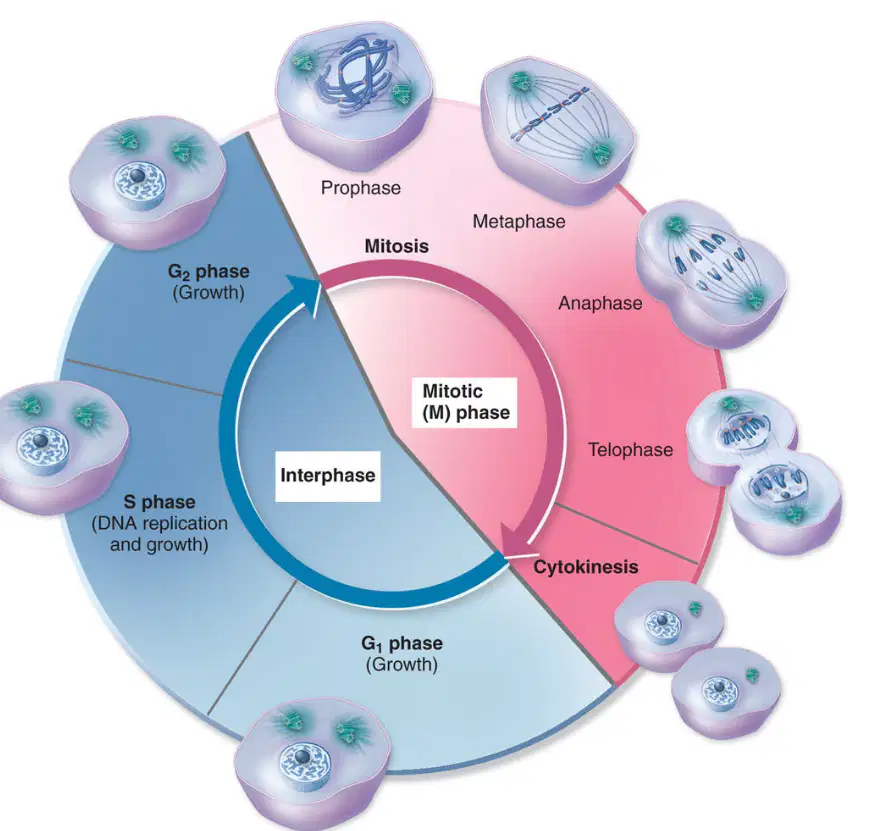
What happens during the G1 Phase of Interphase?
Cells growth
DNA replication
Chromosome separation
Cell division
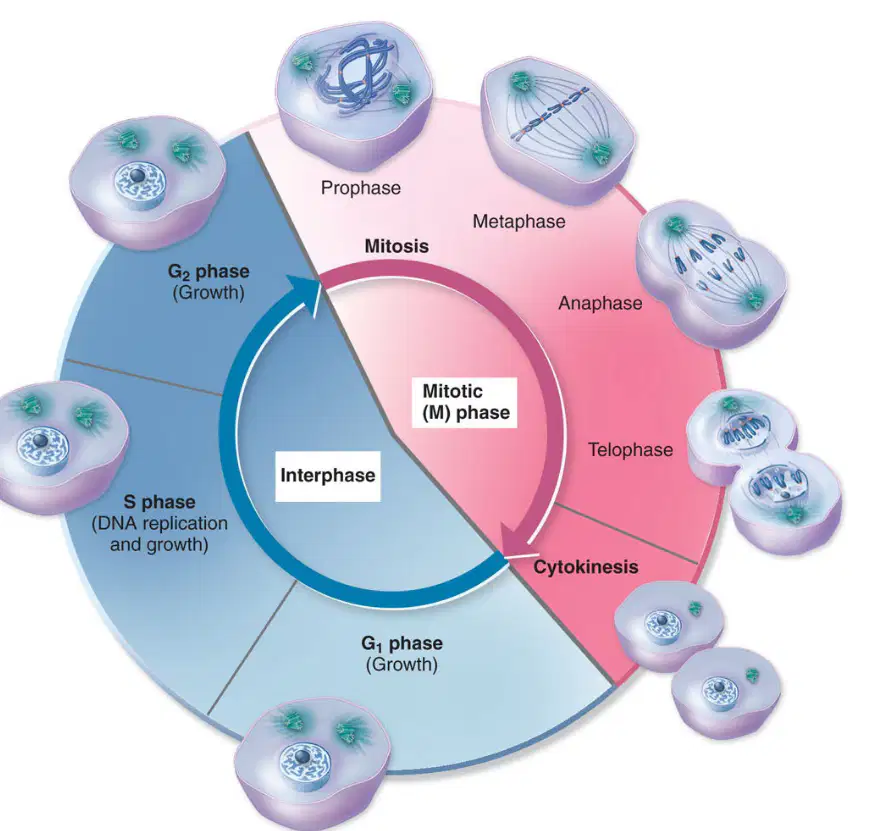
During which phase of Interphase do chromosomes replicate?
G1 Phase
S Phase
G2 Phase
What are chromosomes called when they stay connected to each other after replication during the S Phase?
Sister Chromatids
Homologous Chromosomes
Centromeres
Telomeres
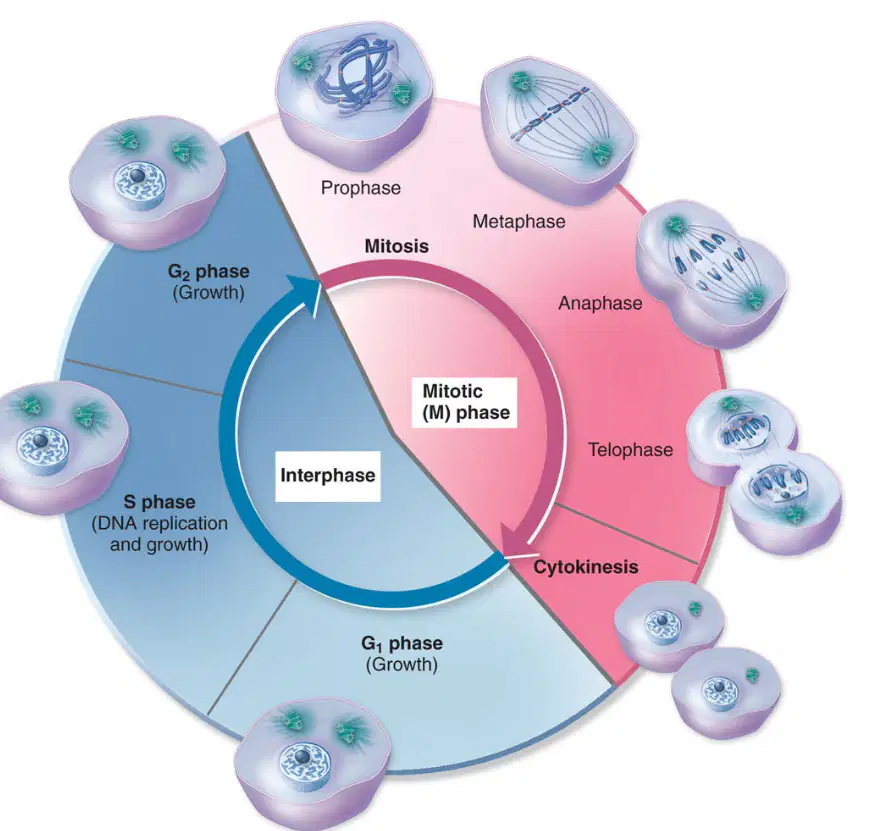
In which phase does the cell synthesize proteins needed during mitosis and cytokinesis?
G1 Phase
S Phase
G2 Phase
M Phase
Which stage of mitosis is characterized by the dissociation of the nuclear membrane?
Prophase
Metaphase
Anaphase
Telophase
During which stage of mitosis are chromosomes aligned along the metaphase plate?
Prophase
Metaphase
Anaphase
Telophase
In which stage of mitosis do chromosomes split and individual sister chromatids move towards opposite poles of the cells?
Prophase
Metaphase
Anaphase
Telophase
What happens to the chromosomes during telophase?
Chromosomes split
Chromosomes align along the metaphase plate
Chromosomes have reached their respective poles
Nuclear membrane dissociates
Fill in the blank: During prophase, the _______ dissociates.
nuclear membrane
cell wall
mitochondria
ribosome
Fill in the blank: During metaphase, chromosomes are aligned along the _______ plate.
metaphase
nuclear
spindle
equatorial
Fill in the blank: During anaphase, individual sister chromatids move towards _______ poles of the cells.
opposite
adjacent
same
central
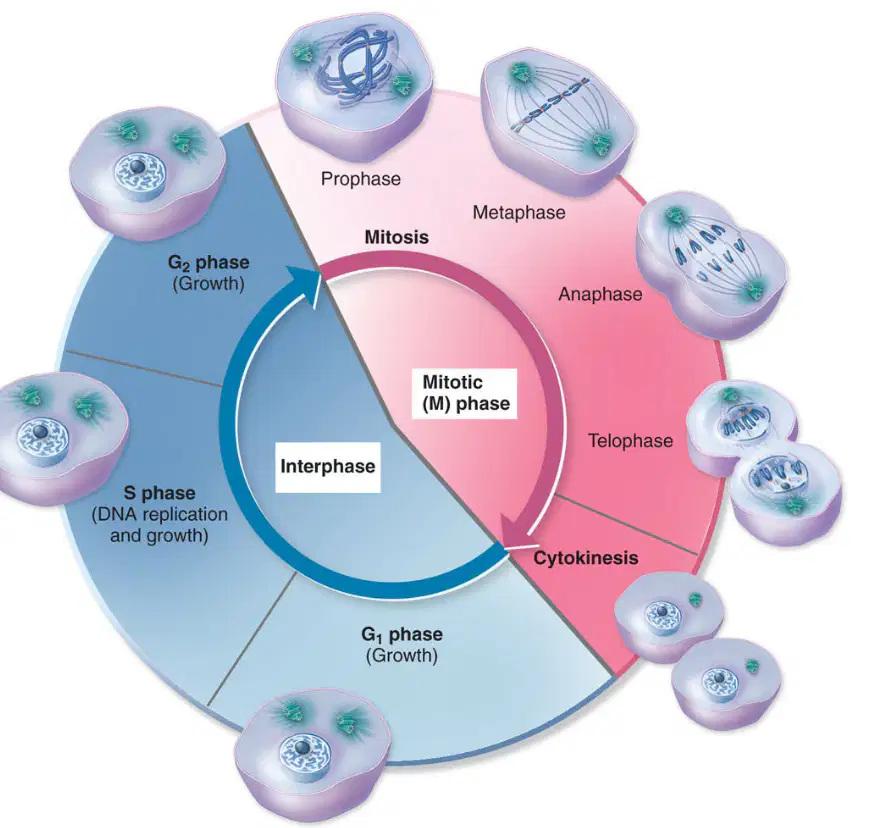
Which stage of mitosis is shown in the diagram where chromosomes are aligned at the center of the cell?
Metaphase
Prophase
Anaphase
Telophase

Which stage of mitotic cell division is characterized by a distinct nucleus with an intact nuclear envelope and chromatin granules?
Prophase
Interphase
Metaphase
Anaphase

Fill in the blank: During ________, the nuclear envelope disintegrates and replicated chromosomes become visible as rodlike structures.
Prophase
Metaphase
Anaphase
Telophase

Which structure is responsible for moving chromosomes during mitosis?
Nucleus
Spindle fibers
Chromatin
Centriole

Fill in the blank: The two cells formed at the end of mitosis are called ________ and are genetically identical to the original cell.
Daughter cells
Parent cells
Sperm cells
Egg cells
What is cytokinesis?
The division of the nucleus into two daughter nuclei
The division of the cytoplasm into two daughter cells
The replication of DNA
The formation of spindle fibers
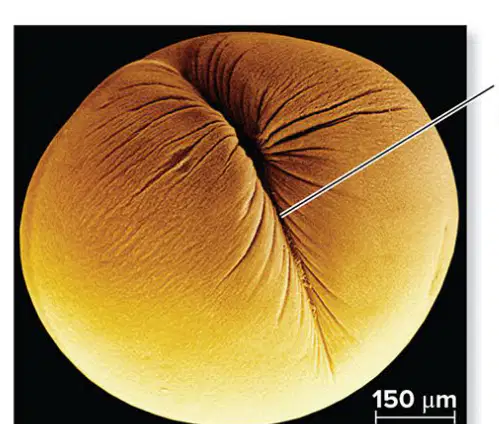
In animal cells, cytokinesis occurs through the formation of a _________.
cleavage furrow
cell plate
spindle fiber
nuclear envelope
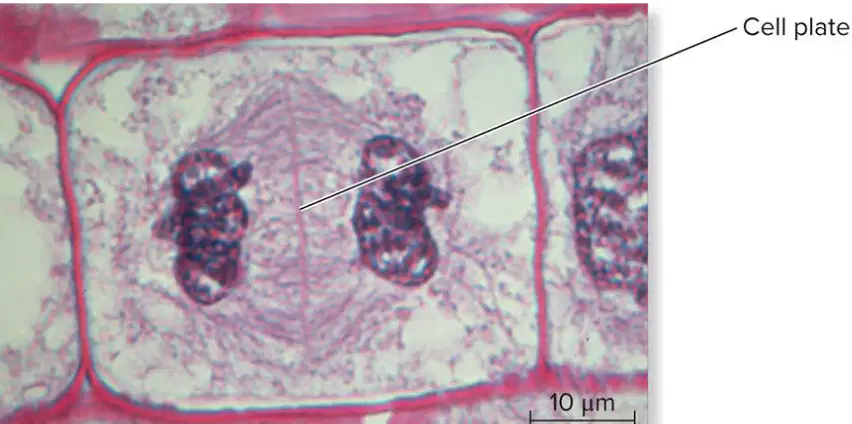
In plant cells, cytokinesis occurs through the formation of a _________?
cell plate
cleavage furrow
spindle fiber
nucleus

Look at the diagram showing the stages of mitosis. Which stage is represented by the first cell on the top left?
Prophase
Metaphase
Interphase
Telophase

Look at the diagram showing the stages of mitosis. Fill in the blank: The stage where chromosomes first become visible and the nuclear envelope starts to break down is called ________.
Prophase
Metaphase
Anaphase
Telophase

Look at the diagram showing the stages of mitosis. Which stage is characterized by chromosomes aligning at the center of the cell?
Anaphase
Metaphase
Telophase
Prophase

Look at the diagram showing the stages of mitosis. Fill in the blank: The stage where sister chromatids are pulled apart to opposite poles of the cell is called ________.
Anaphase
Prophase
Metaphase
Telophase
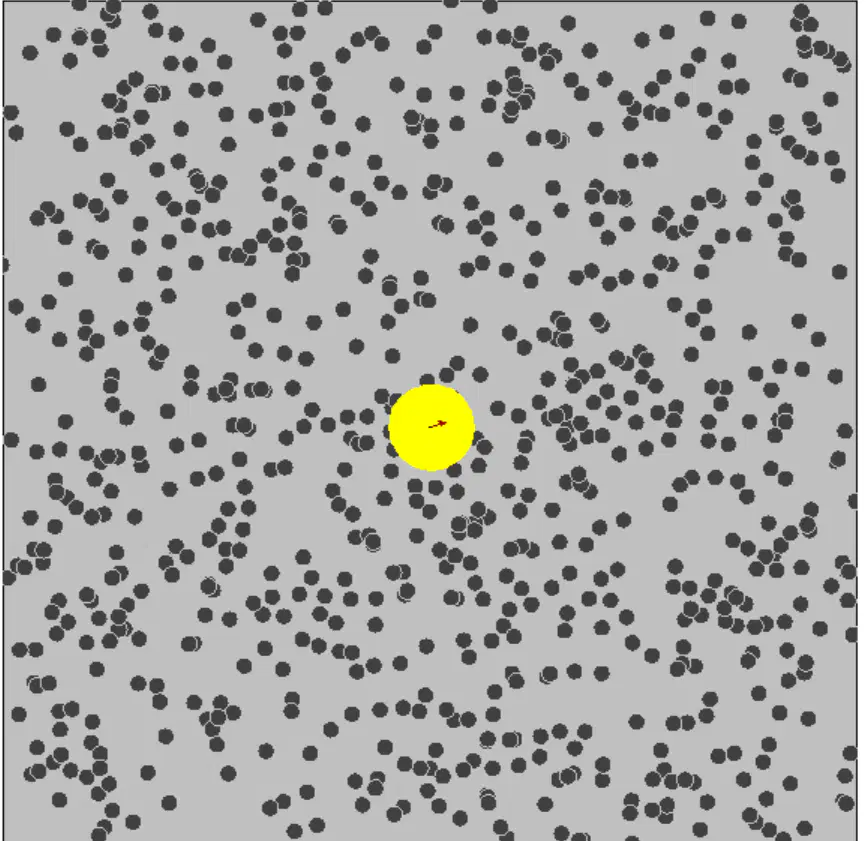
What is Brownian Movement?
The random movement of particles in a liquid or gaseous state
The movement of planets around the sun
The flow of electricity in a wire
The growth of plants towards light
Brownian Movement is caused by collisions with molecules of the surrounding _______.
medium
object
light
cell
True or False: Brownian Movement only occurs in solids.
True
False
What is diffusion?
Movement of solutes from low to high concentration
Movement of solutes from high to low concentration
Movement of solutes from solid to liquid
Movement of solutes from liquid to gas
Diffusion can happen in which phases?
Gas and liquid phases
Solid and gas phases only
Solid phase only
Plasma phase only
Which of the following factors affect diffusion?
Temperature and molecule size
Color and shape
Pressure and volume
Light and sound
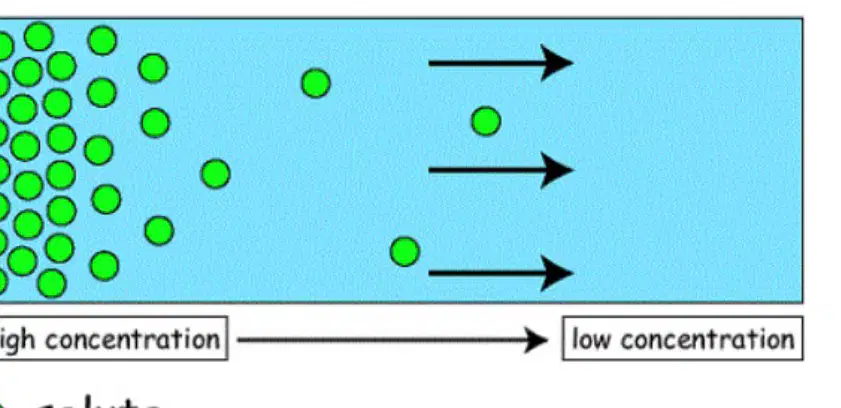
In the diagram, solute particles move from an area of ______ concentration to an area of ______ concentration.
high, low
low, high
equal, equal
none, some
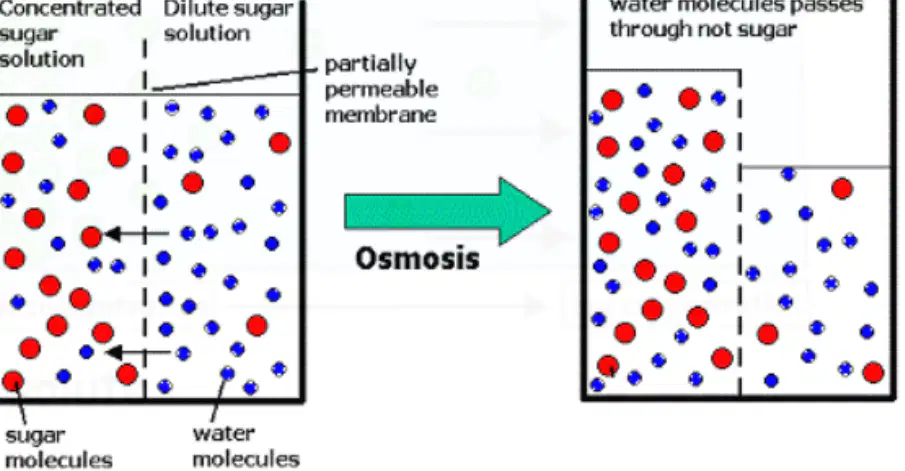
What is osmosis? Fill in the blank: Osmosis is the movement of solvent molecules (Water) from ______ to ______ solute concentration.
low to high
high to low
equal to unequal
hot to cold
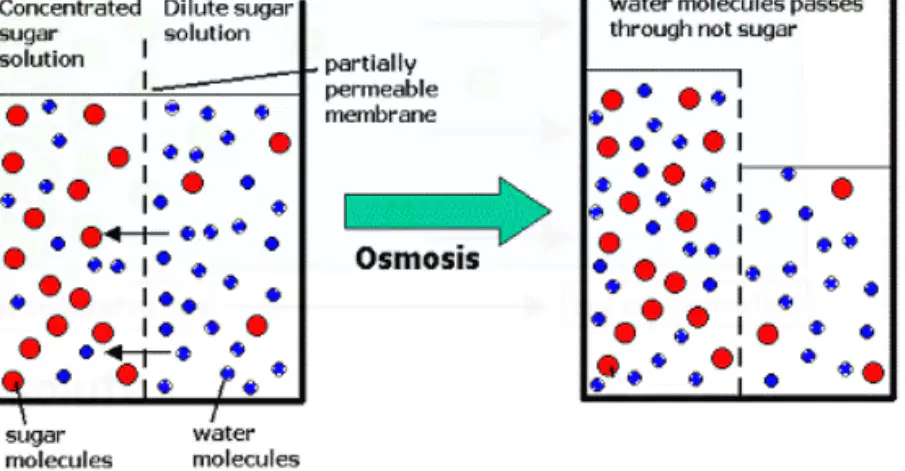
Osmosis diffuses through which type of membrane?
Impermeable membrane
Semipermeable membrane
Permeable membrane
Non-permeable membrane
What is an isotonic solution? Fill in the blank: An isotonic solution has ______ water and solute concentrations on either side of the membrane.
equal
different
higher
lower
What is a hypertonic solution? Fill in the blank: In a hypertonic solution, solute concentration is ______ (water concentration is lower) on one side of the membrane.
higher
lower
equal
unchanged
What is a hypotonic solution? Fill in the blank: In a hypotonic solution, solute concentration is ______ (water concentration is higher) on one side of the membrane.
lower
higher
equal
saturated
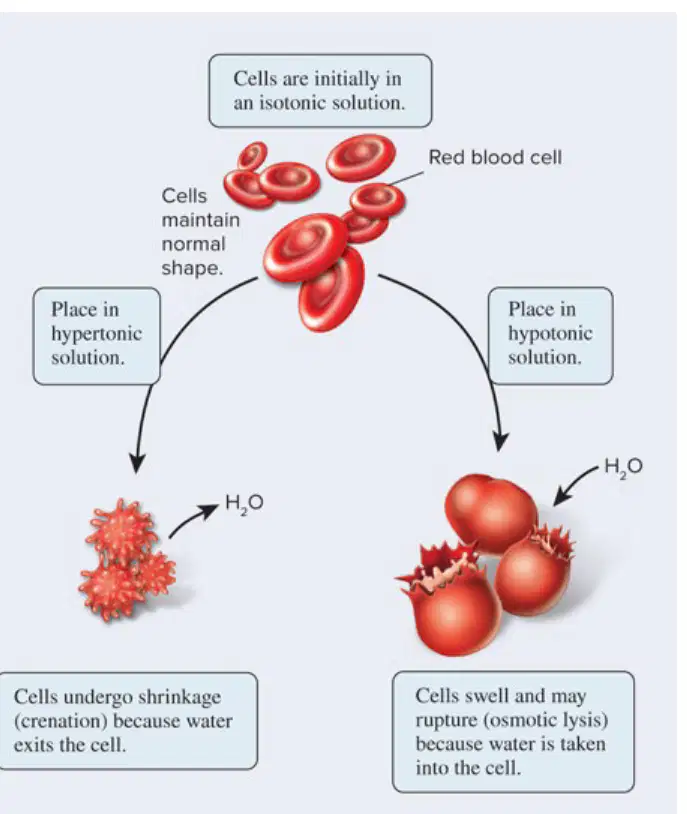
Based on the diagram, what happens to a red blood cell placed in a hypertonic solution?
The cell maintains normal shape
The cell swells and may rupture
The cell undergoes shrinkage (crenation) because water exits the cell
The cell divides rapidly

