
 Worksheets
ID 1 Exam 2 Introduction to chemo
Total questions: 93
Worksheet time: 47mins
Based on the title and references, which professional is most likely to benefit from this learning material?
Civil engineer
Pharmacist
Architect
Graphic designer
What is one of the major targets of antibacterial therapy?
Bacterial cell wall synthesis
Human DNA replication
Viral protein synthesis
Fungal spore formation
Which process helps differentiate between Gram positive and Gram negative bacteria?
Gram staining
PCR amplification
Western blotting
ELISA testing
Which of the following best describes the difference between bactericidal and bacteriostatic activity?
Bactericidal agents kill bacteria, while bacteriostatic agents inhibit their growth.
Bactericidal agents only work on viruses, while bacteriostatic agents work on fungi.
Bactericidal agents are always more effective than bacteriostatic agents.
Bacteriostatic agents kill bacteria, while bactericidal agents inhibit their growth.
Why is it important to understand the structural and pharmacological differences between Gram positive, Gram negative, and atypical bacteria?
It helps in selecting appropriate antimicrobial therapy.
It is only useful for laboratory experiments.
It is not relevant to clinical practice.
It only affects viral infections.
Which of the following is involved in the synthesis of bacterial cell walls?
Murein monomer synthesis
Protein phosphorylation
DNA methylation
Lipid oxidation
A researcher is interpreting a chart comparing bactericidal and bacteriostatic drugs. What should they focus on to make a clinical decision?
The ability of the drug to kill or inhibit bacteria
The color of the drug
The price of the drug
The manufacturer of the drug
Which reference would provide information on the general principles of antimicrobial therapy?
Goodman and Gilman’s The Pharmacological Basis of Therapeutics, 13th ed., Chapter 52
A cookbook
A physics textbook
A novel
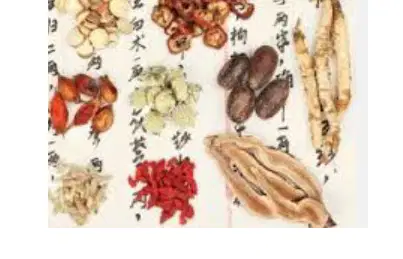
Which substance did Ancient China use to treat carbuncles?
Moldy soybean curd
Wine
Honey
Myrrh
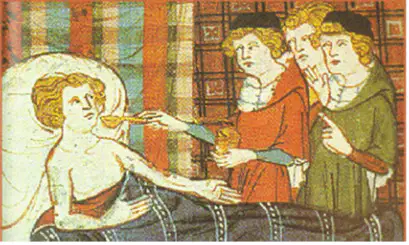
What did the Greeks use for medical treatments according to the background information?
Moldy bread and honey
Wine, myrrh, and inorganic salts
Antibiotics
Magic bullet chemotherapy
During the Middle Ages, what was used to prevent infection from arrow wounds?
Moldy soybean curd
Myrrh
Certain types of honey
Inorganic salts
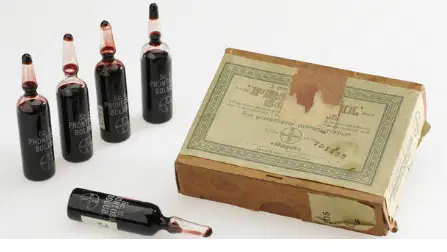
What is the principle of chemotherapy also known as?
Magic bullet
Golden shot
Silver arrow
Healing potion
Explain how the use of natural substances in ancient and medieval times contributed to the development of modern chemotherapy principles. (DoK Level 3)
The use of natural substances demonstrated the effectiveness of targeted treatments, which inspired the development of the "magic bullet" concept in chemotherapy.
Ancient and medieval treatments were unrelated to modern medicine.
The use of natural substances delayed the development of modern chemotherapy.
Modern chemotherapy was developed independently of any historical practices.
Which term refers to an organism that causes disease?
Pathogenic
Nonpathogenic
Antimicrobial
Atypical bacteria
What is the main function of an antimicrobial agent?
To kill or inhibit the growth of microorganisms
To stain bacterial cells
To synthesize proteins
To cross-link peptidoglycan
Which dye is commonly used as a counterstain in Gram staining?
Safranin
Crystal violet
Methylene blue
Eosin
What is the primary structural component of bacterial cell walls?
Murein/peptidoglycan
Lipopolysaccharide
Ribosome
Topoisomerase
Which enzyme is responsible for forming glycosidic bonds in bacterial cell wall synthesis?
Glycosyltransferases
Transpeptidases
Topoisomerases
Ribosome
How does a synergistic effect work in the context of antimicrobials?
Two drugs work together to produce a greater effect than either alone
One drug inhibits the effect of another
Two drugs have no effect on each other
One drug is used as a stain
Which of the following best describes the process of polymerization?
The joining of small molecules to form a larger molecule
The breakdown of large molecules into smaller ones
The transfer of genetic material
The staining of bacterial cells
What is the role of ribosomes in a cell?
Protein synthesis
DNA replication
Cell wall synthesis
Energy production
Which structure is found in the outer membrane of Gram-negative bacteria and can trigger immune responses?
Lipopolysaccharide
Peptidoglycan
Ribosome
Safranin
Why are atypical bacteria considered unique compared to typical bacteria?
They lack certain structural components found in typical bacteria
They are always pathogenic
They cannot be stained
They do not contain ribosomes
Which of the following is an example of an antimicrobial that targets bacteria?
Antibacterial
Antineoplastic
Antiprotozoal
Antiviral
Antimicrobials may be which of the following?
Only natural
Only synthetic
Only semisynthetic
Natural, synthetic, or semisynthetic
What is the main goal of chemotherapy in the context of infectious diseases?
To completely eliminate invading organisms with no effect on host cells
To increase the rate of infection
To target only host cells
To promote the growth of pathogens
Why is it rarely possible to achieve the ideal of chemotherapy, which is complete inhibition of invading organisms with no effect on host cells?
Because host and pathogen cells often share similar biological processes
Because antimicrobials are always toxic to humans
Because pathogens are always resistant to drugs
Because chemotherapy is only used for cancer
Which of the following is NOT a type of antimicrobial listed in the material?
Antibacterial
Antifungal
Antineoplastic
Antiviral
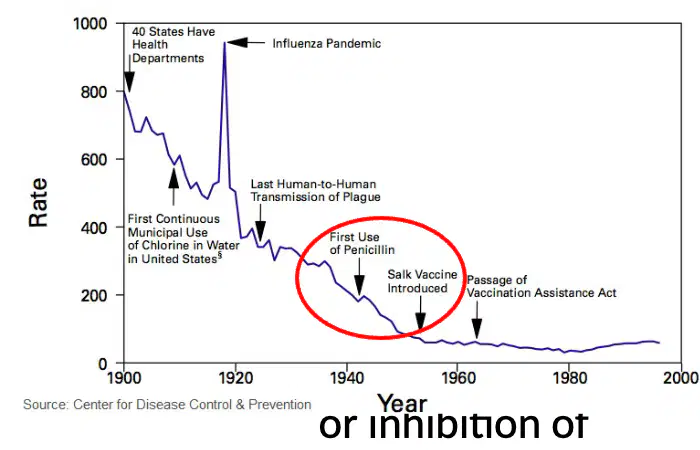
Based on the graph, what was the impact of the first use of penicillin on the crude death rate for infectious diseases in the United States?
The death rate increased
The death rate remained the same
The death rate decreased
The death rate fluctuated randomly
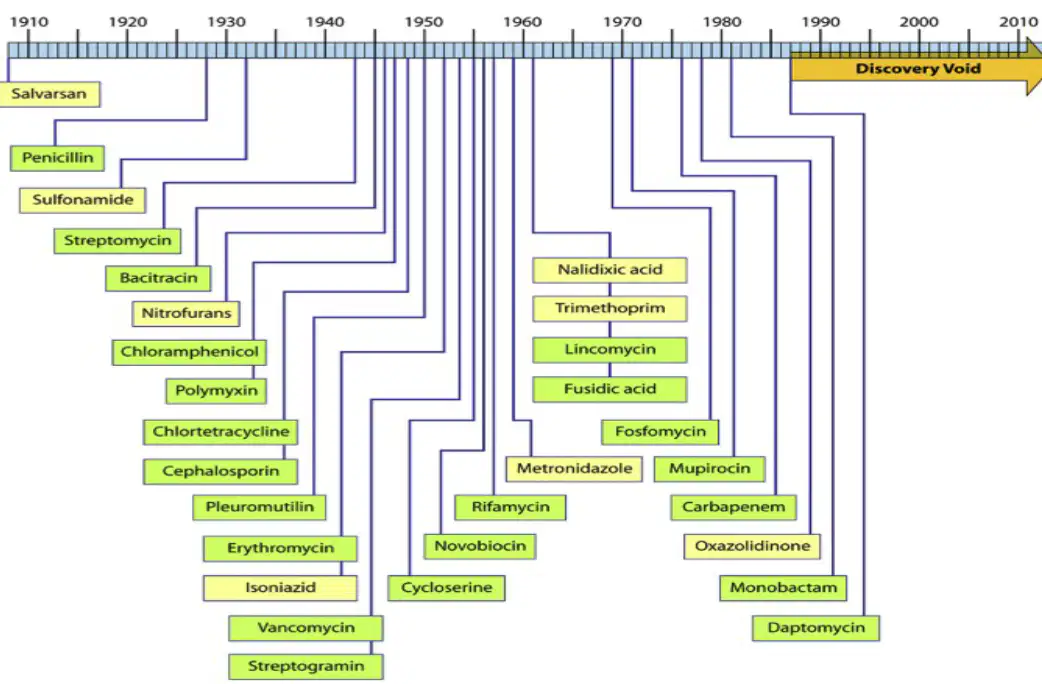
Which of the following drugs was discovered earliest according to the "History of Drug Development" timeline?
Penicillin
Salvarsan
Streptomycin
Cephalosporin

According to the timeline, which drug was discovered after Penicillin but before Chloramphenicol?
Bacitracin
Nitrofurans
Sulfonamide
Streptomycin
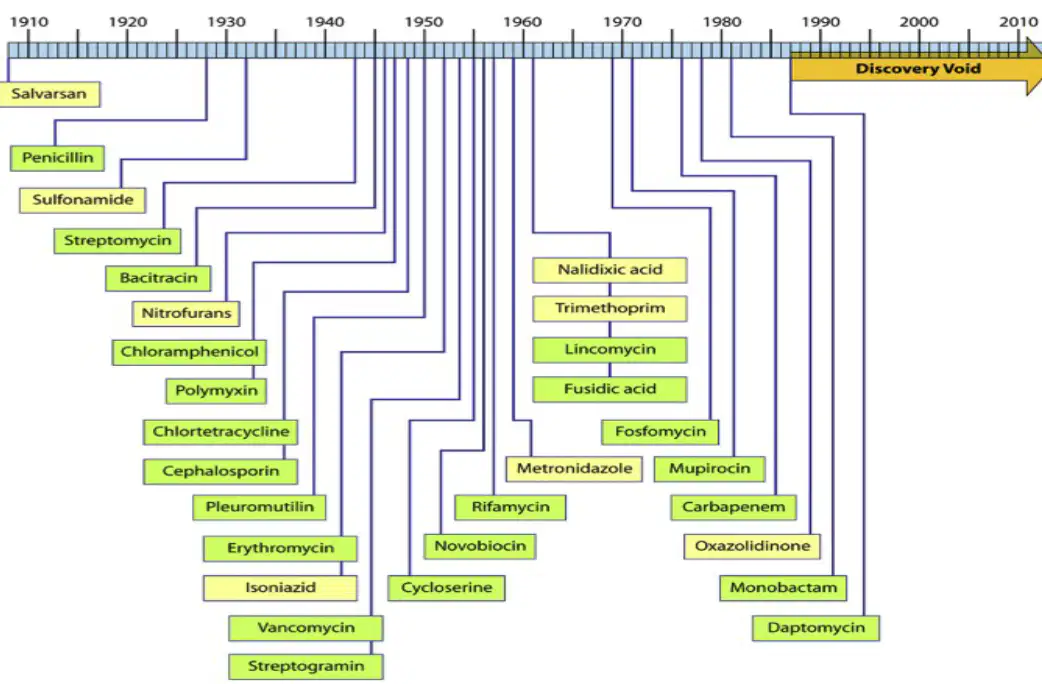
What does the term "Discovery Void" refer to in the context of the history of drug development?
A period when no new drugs were discovered
A time when drug resistance increased
A phase of rapid drug discovery
A time when old drugs were reintroduced
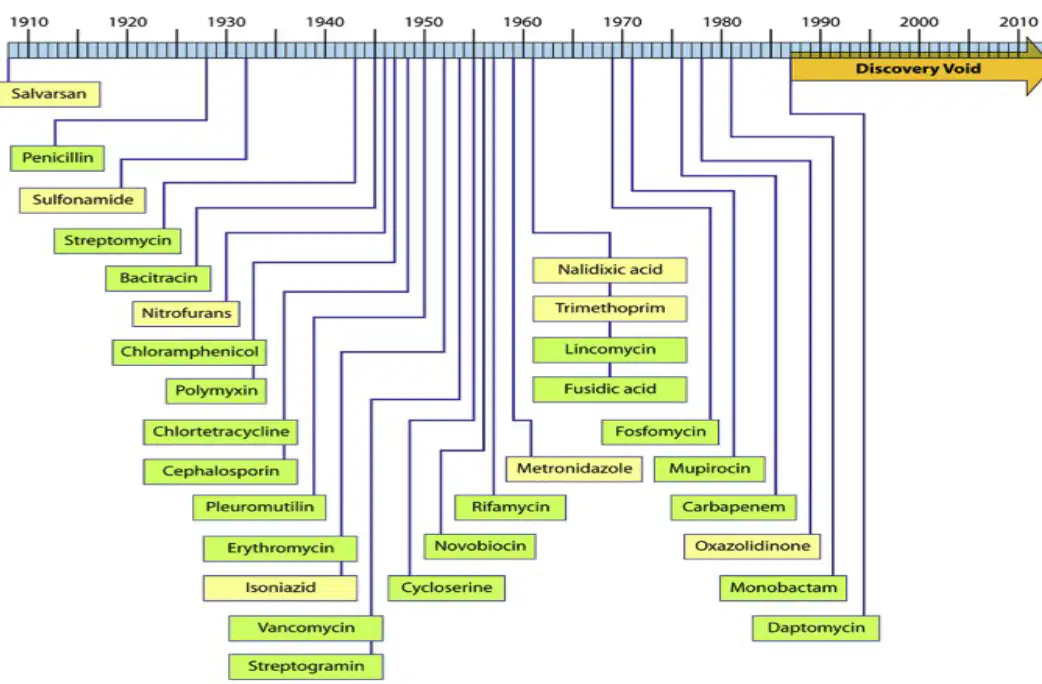
Based on the timeline, analyze the trend in antimicrobial drug discovery from 1910 to 2010 and discuss its implications for public health.
Drug discovery was consistent throughout the century, indicating no challenges in finding new antimicrobials.
Most drugs were discovered before 1990, followed by a "Discovery Void," suggesting a slowdown in new drug development, which may contribute to challenges in combating antimicrobial resistance.
The majority of drugs were discovered after 1990, showing recent advancements in drug development.
There was no significant change in the rate of drug discovery over time.
What is the definition of selective toxicity in the context of selective targeting?
Inhibiting pathways or targets critical for the survival and replication of pathogens at concentrations lower than required to affect critical host pathways
Inhibiting all pathways in both host and pathogen equally
Targeting only the host's pathways to prevent infection
Increasing the concentration of drugs to affect both host and pathogen
Which of the following is considered a key consideration in selective targeting?
Therapeutic index
Pathogen size
Host immune response
Drug solubility
Which type of target is completely unique to the pathogen and absent in the host?
Targets completely unique to pathogen
Targets that are similar but not identical to those in host
Targets that are shared with the host
Targets that are only present in the host
Which of the following best describes targets that are similar but not identical to those in the host?
Targets that are similar but not identical to those in host
Targets completely unique to pathogen
Targets that are only present in the host
Targets that are shared and identical in both host and pathogen
Why is the therapeutic index an important consideration in selective targeting?
It helps determine the safety margin between effective and toxic doses
It measures the speed of drug absorption
It indicates the color of the drug
It shows the cost of the drug
Given the three modes of selective targeting listed, how would you strategically rank them in terms of their potential for selective toxicity? (Consider reasoning and planning in your answer.)
1. Unique to pathogen, 2. Similar but not identical, 3. Shared but differ in importance
1. Shared but differ in importance, 2. Unique to pathogen, 3. Similar but not identical
1. Similar but not identical, 2. Shared but differ in importance, 3. Unique to pathogen
1. Shared but differ in importance, 2. Similar but not identical, 3. Unique to pathogen
Which type of targeting involves a drug acting on a genetic or biochemical pathway that is unique to the pathogen?
Unique
Selective
Common
Non-specific
What is an example of a drug that targets a protein isoform unique to a pathogen or cancer cell?
Bacterial cell wall synthesis inhibitor
Dihydrofolate reductase (DHFR) inhibitor
5-Fluorouracil
Penicillin
Which mechanism describes a drug that targets a host protein or pathway that is more important to the pathogen or cancer cell than to the host cell?
Unique
Selective
Common
Universal
A new chemotherapeutic agent is found to inhibit a pathway present only in bacteria and not in human cells. Based on the table, which type of targeting does this agent most likely use?
Unique
Selective
Common
Non-selective
Explain why 5-Fluorouracil is considered an example of "common" targeting in chemotherapy. Use evidence from the table to support your answer.
It targets a pathway unique to pathogens
It targets a protein isoform unique to cancer cells
It targets a host protein or pathway more important to cancer cells than to host cells
It targets all cells equally
What is the general purpose of antibiotics?
To treat or prevent bacterial infections
To cure viral infections
To increase metabolism
To enhance protein synthesis in humans
Which of the following is NOT a major target of antibacterials?
Cell wall synthesis
Protein synthesis
Nucleic acid homeostasis
Blood glucose regulation
Antibiotics were historically produced by which of the following?
Plants
Microorganisms
Animals
Minerals
Which statement best describes the terminology of "antibiotics"?
It is always used precisely to refer to synthetic drugs.
It is used imprecisely and generally refers to medications for bacterial infections.
It only refers to drugs produced by plants.
It is only used for medications that treat viral infections.
Which of the following is a correct application of antibiotics based on their major targets?
Using antibiotics to disrupt cell wall synthesis in bacteria
Using antibiotics to increase human protein synthesis
Using antibiotics to regulate human metabolism
Using antibiotics to treat viral infections

Which of the following drug classes acts as inhibitors of bacterial cell wall synthesis?
Penicillins
Macrolides
Sulfonamides
Quinolones

Which antibacterial drug class targets bacterial DNA synthesis and integrity?
Cephalosporins
Sulfonamides
Aminoglycosides
Tetracyclines

Which of the following is a target for inhibitors of transcription and translation in bacteria?
Ribosome
Peptidoglycan cell wall
Plasmid
Pteridine

Which of the following best explains why inhibitors of cell wall synthesis are effective antibacterial agents?
They disrupt the formation of peptidoglycan, weakening the bacterial cell wall and causing cell lysis.
They prevent the synthesis of bacterial DNA, stopping replication.
They inhibit protein synthesis at the ribosome, halting bacterial growth.
They block the production of purines and pyrimidines, interfering with nucleic acid synthesis.

A patient is prescribed a drug that inhibits the 30S subunit of the bacterial ribosome. Which class of drugs is most likely being used?
Aminoglycosides
Penicillins
Sulfonamides
Quinolones
Which of the following best describes bacteriostatic agents?
Agents that inhibit bacterial growth without causing cell death
Agents that cause bacterial death by destroying cell walls
Agents that enhance bacterial growth
Agents that only affect viruses
What is the primary target of most protein synthesis inhibitors?
Viral replication
Metabolic pathways necessary for bacterial growth
Human cell membranes
Fungal cell walls
Which statement is true about bactericidal agents?
They only slow down bacterial growth
They cause bacterial death by inhibiting essential structures or functions
They are ineffective against bacteria
They only work on viruses
Why is it not possible for bacteria to survive when treated with bactericidal agents?
Because bactericidal agents enhance bacterial metabolism
Because bactericidal agents inhibit a process or target essential for survival
Because bactericidal agents only slow down growth
Because bactericidal agents are not absorbed by bacteria
A patient is prescribed a drug that targets metabolic pathways necessary for bacterial growth but does not kill the bacteria. What type of drug is this?
Bactericidal
Antiviral
Bacteriostatic
Antifungal
Explain why the clinical efficacy of bacteriostatic drugs may depend on the patient’s immune system.
Because bacteriostatic drugs kill all bacteria instantly
Because bacteriostatic drugs require the immune system to eliminate inhibited bacteria
Because bacteriostatic drugs only work on viruses
Because bacteriostatic drugs enhance immune cell production
What is the main reason for using more than one antibacterial drug to treat infections?
To increase the cost of treatment
To ensure all bacteria are killed instantly
Because certain combinations are more effective than single drugs
To reduce the number of side effects
What does the term "bactericidal" refer to?
An agent that inhibits bacterial growth
An agent that kills bacteria
An agent that promotes bacterial growth
An agent that has no effect on bacteria
What does the term "bacteriostatic" refer to?
An agent that kills bacteria
An agent that inhibits bacterial growth
An agent that increases bacterial resistance
An agent that enhances bacterial metabolism
How would you describe a drug combination that results in a greater effect than the sum of their individual effects?
Antagonistic
Additive
Synergistic
Bacteriostatic
How would you describe a drug combination where the combined effect is less than the effect of the individual drugs?
Synergistic
Additive
Antagonistic
Bactericidal

Based on the graphs provided, which combination would you expect to be most effective at reducing bacterial counts?
STR alone
TET alone
STR + TET
Control
If a combination of two drugs results in an effect equal to the sum of their individual effects, how is this interaction described?
Synergistic
Additive
Antagonistic
Bactericidal
Which component is found in the cell wall of Gram positive bacteria but not in Gram negative bacteria?
Lipopolysaccharide (LPS)
Teichoic and lipoteichoic acid
Porins
Mycolic acids
What is the main structural difference between the cell walls of Gram positive and Gram negative bacteria?
Gram positive bacteria have a thin peptidoglycan layer and an outer membrane.
Gram negative bacteria have a thick peptidoglycan layer with teichoic acid.
Gram positive bacteria have a thick peptidoglycan layer and no outer membrane.
Both have mycolic acids in their outer membrane.
Which of the following statements best explains why Gram negative bacteria are generally more resistant to physical and chemical disruption?
They have a thick peptidoglycan layer.
Their outer membrane contains porins that restrict entry of large, anionic, or hydrophobic molecules.
They lack a periplasmic space.
They contain teichoic acids.
Mycobacteria are often difficult to treat because:
They have a thick peptidoglycan layer.
Their cell wall contains mycolic acids, making them acid-fast and resistant to decolorization.
They lack an outer membrane.
They contain teichoic acids.
Which of the following best describes the periplasmic space in Gram positive bacteria?
Large and contains many enzymes
Small compared to Gram negative bacteria
Contains lipopolysaccharide (LPS)
Contains mycolic acids
What is another name for peptidoglycan?
Murein
Cellulose
Chitin
Lignin
Which of the following is a component of the cell wall in both Gram-positive and Gram-negative bacteria?
Peptidoglycan
Mycolic acid
Cellulose
Chlorophyll
Which two sugars are the main building blocks of peptidoglycan?
N-acetylglucosamine (NAG) and N-acetylmuramic acid (NAM)
Glucose and fructose
Sucrose and lactose
Ribose and deoxyribose
Which structural feature distinguishes Gram-negative bacteria from Gram-positive bacteria?
Presence of an outer membrane
Presence of chloroplasts
Absence of a cytoplasmic membrane
Presence of cellulose in the cell wall

Which type of bacteria contains mycolic acids in their cell wall?
Mycobacteria
Gram-positive bacteria
Gram-negative bacteria
Cyanobacteria
How does the thickness of the peptidoglycan layer differ between Gram-positive and Gram-negative bacteria?
Gram-positive bacteria have a thicker peptidoglycan layer than Gram-negative bacteria.
Gram-negative bacteria have a thicker peptidoglycan layer than Gram-positive bacteria.
Both have the same thickness of peptidoglycan layer.
Neither contains peptidoglycan.
Which of the following is NOT a component of the peptidoglycan monomer?
D-Glutamic acid
Lysine
D-Alanine
D-Glucose
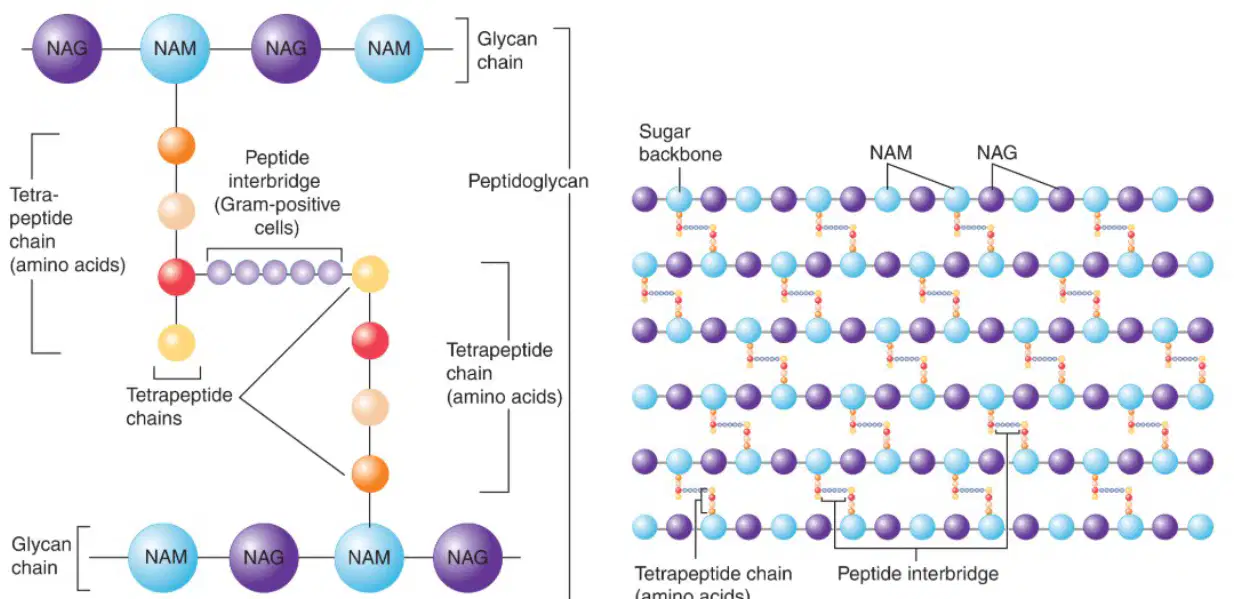
What are the two main sugar components found in the glycan chains of peptidoglycan?
N acetyl muramic acid (NAM) and N acetyl glucosamine (NAG)
Glucose and fructose
Sucrose and lactose
Ribose and deoxyribose

Which structural feature is unique to the peptidoglycan of Gram-positive cells?
Peptide interbridge
Glycan chain
Tetrapeptide chain
Sugar backbone
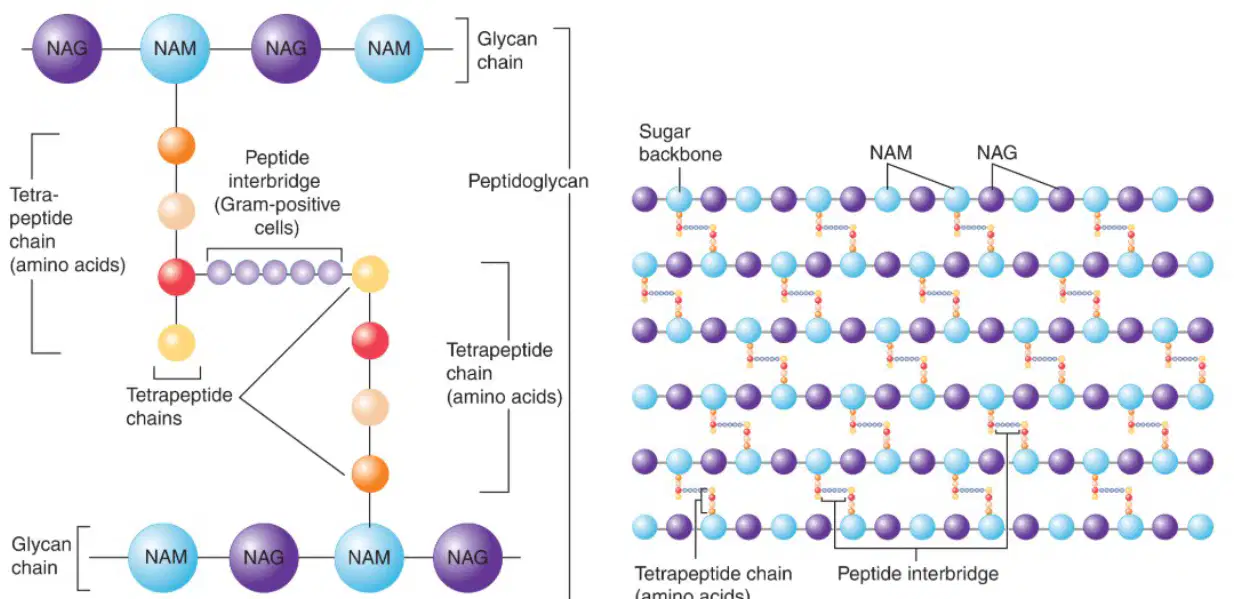
What is the function of the tetrapeptide chains in the peptidoglycan structure?
They connect glycan chains and provide structural stability.
They synthesize new sugars.
They transport nutrients across the cell wall.
They break down peptidoglycan.
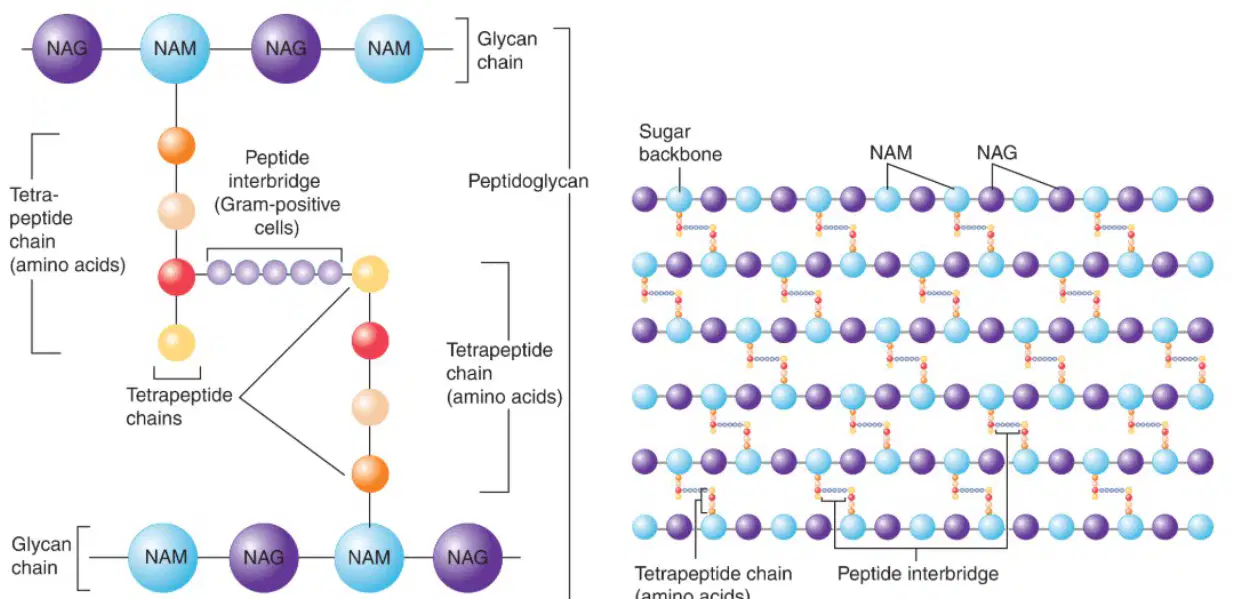
Explain how the arrangement of NAM and NAG contributes to the overall structure of peptidoglycan.
Alternating NAM and NAG units form long glycan chains that are cross-linked by peptide chains, creating a strong, mesh-like structure.
NAM and NAG units are randomly distributed, resulting in a flexible structure.
NAM units only form the outer layer, while NAG units form the inner layer.
NAM and NAG units are not involved in the structure of peptidoglycan.
Which of the following antibacterials acts by inhibiting the synthesis of murein (peptidoglycan) monomers?
Bacitracin
Penicillin
Vancomycin
Tetracycline
What is the role of peptidoglycan glycosyltransferase enzymes in cell wall synthesis?
They facilitate polymerization of murein monomers on the external surface of the cell membrane.
They inhibit the synthesis of murein monomers.
They cross-link polymers to produce the final cell wall product.
They degrade the cell wall.
Which enzyme is responsible for cross-linking polymers to produce the final cell wall product?
Transpeptidases
DNA polymerase
RNA ligase
Amylase
Why is the cross-linking of polymers important in cell wall synthesis?
It strengthens the cell wall by producing the final product.
It initiates the synthesis of murein monomers.
It inhibits antibacterial activity.
It degrades the cell membrane.
Explain how antibacterials such as bacitracin and fosfomycin affect cell wall synthesis.
They inhibit the synthesis of murein monomers, preventing the formation of the cell wall.
They facilitate the cross-linking of polymers.
They increase the activity of transpeptidases.
They promote the polymerization of murein monomers.

Where does the synthesis of the murein monomer (disaccharide glucose derivative) take place in the cell?
Periplasm
Cytoplasm
Nucleus
Mitochondria
Which enzyme catalyzes the polymerization of murein monomers outside the cell?
TP (PBP)
MraY
PGT
MurG
What is the role of TP (PBP) in the synthesis of bacterial cell wall?
It synthesizes murein monomers in the cytoplasm.
It exports murein monomers across the membrane.
It catalyzes cross-linking of murein monomers.
It degrades murein monomers.
Explain why the localization of polymerization and cross-linking steps is important for bacterial cell wall synthesis.
It ensures that the cell wall is synthesized only inside the nucleus.
It allows for the proper assembly and strength of the cell wall outside the cytoplasm.
It prevents the cell wall from being degraded by cytoplasmic enzymes.
It allows for the export of murein monomers into the mitochondria.

Are medications that inhibit cell wall synthesis considered bactericidal or bacteriostatic? Why?
Bactericidal, because they cause cell lysis by disrupting cell wall synthesis.
Bacteriostatic, because they only inhibit bacterial growth without killing the cells.
Bactericidal, because they inhibit protein synthesis.
Bacteriostatic, because they enhance cell wall synthesis.

