
 Worksheets
Gen Bio 01 Q1 Exam Reviewer
Total questions: 70
Worksheet time: 40mins
Sue Puth asks her classmates, which contains the cell’s DNA and controls most of the cell’s activities? The answer is (a) .
In a biology class, Lily Chonin is learning about different types of cells. Her teacher asks the class, "Which is true about eukaryotic cells?"
They have cell walls
They have nuclei
They have lysosomes
They have ribosomes
In a busy cell factory, which of the following workers (cell structure) is NOT directly involved in the movement of materials or products throughout the facility?
cytoskeleton
endoplasmic reticulum
Golgi apparatus
ribosomes
Lyn Guini observes a cell in which damaged mitochondria are not being broken down and recycled. Which cellular structure is most likely malfunctioning?
nucleus
lysosomes
Golgi apparatus
endoplasmic reticulum
All eukaryotic cells have a true nucleus. Which is responsible for generating energy in eukaryotic cells?
Cytoplasm
Mitochondria
Nucleus
Smooth ER
Which is an organelle in a prokaryotic cell? The answer is (a) .
In a biology class, Lucky Tiangco is explaining the fundamental principles of the Cell Theory to his classmates. He is INCORRECT when he states that:
A. The cell is the smallest, basic unit of life.
B. Cells come from previously existing cells.
C. All cells are made up of multiple organelles.
D. All living things are made up of one or more cells.
In the Dolomite Park, children are playing, and families are enjoying picnics. Lee Baggins observes that every living thing in the park, from the smallest ant to the tallest tree, is made up of cells. Which observation supports the cell theory that cells are the fundamental structural and functional units of life?
All organisms in the park are multicellular
Viruses can replicate outside of cells
Bacteria can survive in extreme environments
All living organisms in the park perform basic life functions through cellular activities
The endomembrane system is a network of interconnected structures that process, sort, and transport materials throughout the cell. Which of these statements describes an organelle that is NOT part of the endomembrane system?
Mitochondria produce most of the cell’s ATP through cellular respiration.
The Golgi apparatus packages materials received from the Endoplasmic Reticulum.
The Central Vacuole stores nutrients, waste products, and provides support in plant cells.
Peroxisomes break down fatty acids and produce hydrogen peroxide as their by-product.
Gorgonio Magalpok is CORRECT when he states that the main role of the nucleolus in protein synthesis is ______________
It decides which genes are used to make proteins.
It stores DNA for building ribosomes.
It makes ribosomal RNA (rRNA) and combines it with proteins to build ribosome parts.
It controls what enters and leaves the nucleus through nuclear pores.
In the endomembrane system, various organelles work together to transport proteins. Which of the following sequences accurately describes the journey of a protein that is produced in the rough endoplasmic reticulum (RER) and ultimately released into the extracellular space?
Rough ER → Golgi apparatus → Lysosomes → Cell membrane
Rough ER → Vesicles → Golgi apparatus → Cell membrane
Rough ER → Smooth ER → Golgi apparatus → Cytoplasm
Rough ER → Golgi apparatus → Nucleus → Cell membrane
Which statement about mitochondria is true?
They have a double membrane around them.
They are found only in prokaryotes and act like ribosomes.
They mainly store glucose before it is turned into energy.
They have no DNA and depend only on the nucleus to make proteins.
The endoplasmic reticulum (ER) is essential for various cellular functions, with the rough ER (RER) and smooth ER (SER) playing distinct roles. Which statement accurately describes their specific functions?
The RER is involved in lipid synthesis, while the SER is responsible for protein synthesis.
The RER assists in protein synthesis and modification, whereas the SER is primarily involved in lipid production and detoxification.
The RER and SER both contribute to protein synthesis, but only the RER is involved in lipid metabolism.
The RER synthesizes carbohydrates, while the SER is responsible for protein folding and modification.

Which structure refers to a singular flattened membrane that contains chlorophyll?
Double membrane
Stroma
Lamella
Thylakoid
What is the primary function of the central vacuole in plant cells?
It aids in cellular respiration by producing energy.
It stores nutrients and waste products, contributing to cell homeostasis.
It facilitates the process of photosynthesis by capturing light energy.
It helps in the synthesis of lipids and carbohydrates.
Doc Sebo used Tugmoron 3000, a fake drug that destroys microtubules in cells. This would affect important cell processes because microtubules (a) .
Utotino placed mitochondria in a nutrient solution outside the cell. At first, they worked, but soon stopped functioning and could not reproduce. What does this show about mitochondria?
They are alive but cannot handle lab conditions.
They are smaller than prokaryotes, so they cannot survive.
They are not living; they depend on the cell for important functions.
They have no genetic material at all, so they cannot reproduce.
Which organelle works closely with the ribosome to produce and transport proteins?
nucleus
smooth ER
rough ER
Golgi apparatus
In a bustling city, a group of scientists is studying the origins of various cellular structures. They gather in a lab to discuss the formation of peroxisomes, a crucial component of cells. One scientist, Jung Coke, poses the question: Which feature describes the origin of peroxisomes? (a)
What occurs to proteins synthesized in the rough ER if the trans face of the Golgi apparatus is obstructed?
They are transported to the nucleus for further processing.
They are secreted directly into the cytoplasm.
They cannot be modified and packaged for secretion.
They are immediately degraded by proteasomes.
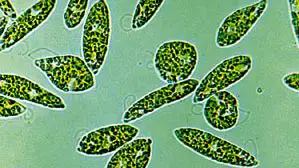
A Euglena placed in water suddenly stops moving after its flagella are damaged. Based on the structure of cilia, which cellular component was most directly affected?
The arrangement of microtubules, which generates movement
The ribosomes embedded in flagella, which directly produce energy for motility.
The actin filaments of the cytoskeleton, which normally power flagella beating
The nuclear pores inside cilia, which regulate transport of proteins to the cytoplasm.
What role does mRNA play in the process of protein synthesis in ribosomes?
mRNA carries the genetic code from the nucleus to the ribosomes.
mRNA stores amino acids for protein synthesis.
mRNA synthesizes lipids for cellular functions.
mRNA transports glucose to the ribosomes.
Which statement accurately describes the relationship between cell size and surface area-to-volume ratio?
As cell size increases, the surface area-to-volume ratio decreases.
Smaller cells have a higher surface area-to-volume ratio compared to larger cells.
A higher surface area-to-volume ratio is beneficial for efficient nutrient absorption.
Cells with a lower surface area-to-volume ratio are more efficient in waste removal.
How does the endosymbiotic theory explain why mitochondria and chloroplasts have double membranes?
Mitochondria and chloroplasts freely entered the first eukaryotic cell.
The first eukaryotic cell swallowed another eukaryote that already had mitochondria and chloroplasts.
Ancient bacteria (like cyanobacteria and proteobacteria) lived inside the first eukaryotic cell in a symbiotic relationship.
Protist and Fungi used the plasma membrane of the first eukaryotic cell.
Andy Lim is studying a cell under a microscope and notices the cell’s DNA is being replicated. During which substage of interphase is this cell most likely in?
G1 phase
S phase
G2 phase
Mitotic phase
After the S phase of the cell cycle, sister chromatids remain attached to each other. Which structure is responsible for holding them together?
centromere
kinetochore
microtubule
telomere
Totoy Golem is studying the organization of genetic materials in prokaryotes for his biology project. She learns that these materials are structured in a specific way. How are genetic materials in prokaryotes organized?
In a continuous circular loop
As freely floating linear DNA molecules
In loosely packed chromatin structures
As chromosomes in with sister chromatids
In a small pond, there are many single-celled organisms called prokaryotes. One day, Jograd observes that one of these organisms is splitting into two identical organisms. Which best describes this process?
It is a process involving cell combination.
It is a form of asexual reproduction in prokaryotes.
It is the process by which eukaryotic cells divide.
It is a form of sexual reproduction in animals.
Sam Ting Wong observes a Streptococcus population doubling every 30 minutes under optimal conditions. What does this observation reveal about binary fission?
Binary fission only occurs at day
The process involves sexual reproduction
The cells are developing genetic mutations
The bacteria are experiencing significant growth
What is the correct order of the phases of meiosis?
Prophase I → Metaphase I → Anaphase I → Telophase I
Prophase II → Metaphase II → Anaphase II → Telophase II
Prophase I → Metaphase II → Anaphase I → Telophase II
Prophase I → Metaphase I → Anaphase II → Telophase I
Metaphase plays a crucial role in ensuring the accuracy of cell division by (a) .
What is the main difference between cytokinesis in plant and animal cells?
Both plant and animal cells divide by forming a cleavage furrow.
Both plant and animal cells divide by forming a cell plate that becomes the cell wall.
Plant cells form a cleavage furrow, while animal cells form a cell plate.
Animal cells form a cleavage furrow, while plant cells form a cell plate.
A toxin prevents the movement of Golgi-derived vesicles in a plant cell. Strygywyr Drytch Bryl is observing a plant cell under a microscope during cytokinesis. He notices that the cell is struggling to form a structure that separates the two daughter cells. Which process would be most directly affected in plant but not animal cytokinesis?
Formation of the cell plate between daughter cells
Pinching of the plasma membrane into daughter cells
Separation of sister chromatids during anaphase causing nondisjunction
Breakdown of the nuclear envelope during telophase in plant cells that affect cell wall formation
During a biology class, Ma'am Nobatos explains the process of meiosis. She asks the students, 'When do homologous chromosomes pair during meiosis?'
During prophase II, homologous chromosomes pair randomly.
During prophase I, homologous chromosomes pair through synapsis.
Homologous chromosomes pair during metaphase II, forming tetrads.
During anaphase I, homologous chromosomes pair and are pulled to opposite poles.
What is the primary purpose of Meiosis II in the cell division process?
To further reduce the chromosome number by separating homologous chromosomes.
To ensure that each daughter cell receives a complete set of chromosomes.
To separate sister chromatids and produce haploid cells.
To replicate DNA before the final cell division.
Which best distinguishes anaphase I from anaphase II in meiosis?
Anaphase I separates centromeres, while anaphase II does not.
Anaphase II separates the synaptonemal complex, while anaphase I does not.
In anaphase I, homologous chromosomes separate, and in anaphase II, sister chromatids separate.
In anaphase I, sister chromatids separate, while in anaphase II, homologous chromosomes separate.
Which is the primary event that occurs in Anaphase I?
Chromosomes align at the equator of the cell.
Sister chromatids are pulled to opposite poles of the cell.
The nuclear envelope re-forms around each set of chromosomes.
Homologous chromosomes are pulled to opposite poles of the cell.
At the G1 phase, what must happen if a cell has DNA damage?
The cell must be arrested at G0 stage.
The cell must entirely evade the G2 phase.
The cell must die automatically before the next phase.
The cell must continue to S phase and replicate its DNA.
How do proto-oncogenes and tumor-suppressor genes compare in their role in cancer?
Both normally stop cell growth, but mutations in them can cause uncontrolled cell division.
Proto-oncogenes normally stop cell growth, while tumor-suppressor genes promote it.
Proto-oncogenes speed up cell growth, while tumor-suppressor genes slow it down. Mutations in proto-oncogenes can cause cancer, but mutations in tumor-suppressor genes prevent cancer.
Proto-oncogenes speed up cell growth, and when mutated, they can lead to cancer. Tumor-suppressor genes slow down cell growth, and mutations that inactivate them can also lead to cancer.
Which component provides the primary structural framework of the membrane?
cholesterol molecules
glycoproteins
phospholipid bilayer
polysaccharides
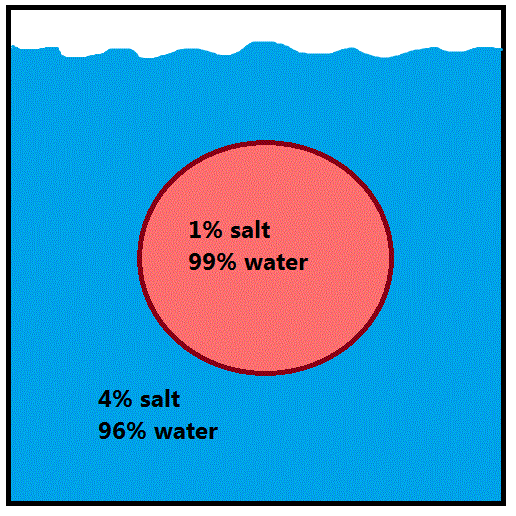
Why do red blood cells shrink into a hypertonic solution?
Water enters the cell.
Water leaves the cell.
Solutes enter the cell.
Solutes leave the cell.
The secretion of antibodies by plasma cells is a crucial part of the immune response. Which type of vesicular transport is primarily responsible for the release of these antibodies into the extracellular space?
endocytosis
exocytosis
phagocytosis
transcytosis
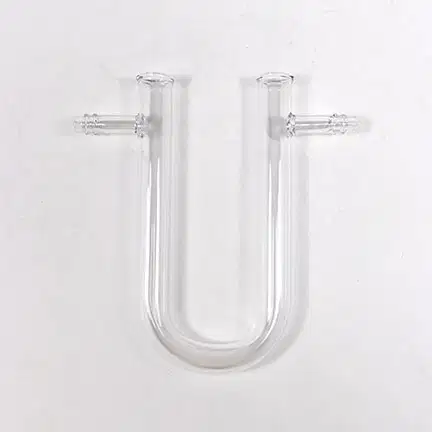
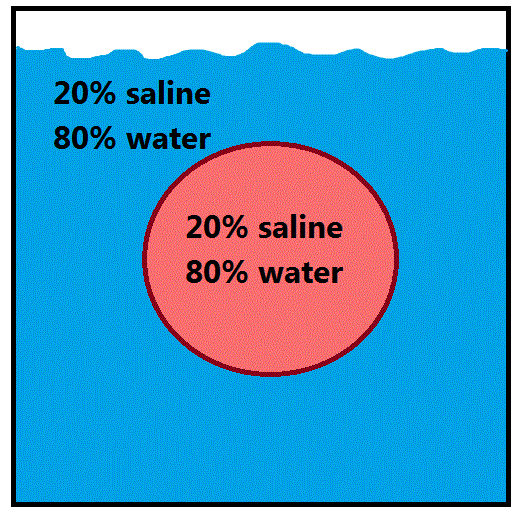
Explain the difference between osmosis and facilitated diffusion. If a U-shaped tube has side A with a 0.7 ml salt solution and side B with a 0.3 ml salt solution, in which direction will water flow?
From side A to side B
From side B to side A
Equally in both directions
There will be no water movement.
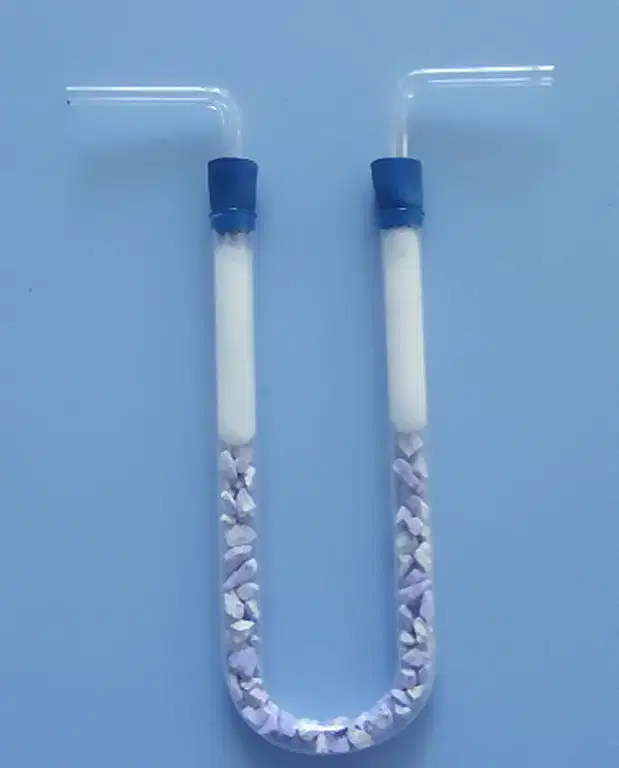
If a U-shaped tube has side A with a 15 ml salt solution and side B with a 5 ml salt solution, in which direction will water flow?
From side A to side B
From side B to side A
Equally in both directions
There will be no water movement.
Imagine a group of phospholipids at a beach party. How do they arrange themselves in the water?
With their water-loving (hydrophilic) tails facing outward.
With their water-hating (hydrophobic) heads facing inward.
With their hydrophobic tails in a single layer, not a bilayer.
With their water fearing tails facing away from the water and water loving heads facing the water.
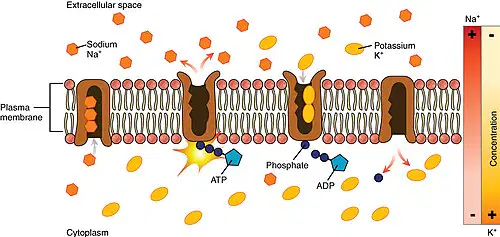
The diagram below depicts which type of molecular movement?
Active transport, molecules move against the concentration gradient using energy
Active transport, molecules move down the concentration gradient without energy
Facilitated diffusion, molecules move down the concentration gradient via channel proteins
Simple diffusion, molecules move against the concentration gradient via lipid bilayer
Bini Tin has a plant that she placed in a hypertonic solution. Based on the principle of osmosis, what will most likely happen?
Water will move into the cell, causing it to swell and burst.
Water will move out of the cell, causing it to shrink and lyse.
No water movement will occur because the cell wall prevents osmosis.
Water will move equally in and out of the cell, keeping its size unchanged.
Totoy Golem is experimenting in his biology lab. He places blood cells in a beaker containing a 0.9% Saline (NaCl) solution. Which describes the tonicity of the solution in relation to the blood cells?
The solution is isotonic to the blood cells.
The solution is hypotonic to the blood cells.
The solution is hypertonic to the blood cells.
The solution is both hypertonic and hypotonic to the cell.
What does the sodium-potassium pump do?
It uses facilitated diffusion to swap sodium (Na⁺) and potassium (K⁺) ions.
It lets Na⁺ and K⁺ ions move freely down their concentration gradients.
It uses ATP (energy) to move 3 Na⁺ out of the cell and 2 K⁺ into the cell
It moves equal numbers of Na⁺ and K⁺ ions without using energy.
Which statements correctly describe the difference between endocytosis and exocytosis?
Statements:
I. Endocytosis brings materials into the cell.
II. Exocytosis brings materials into the cell.
III. Exocytosis moves materials out of the cell.
IV. Both processes use vesicles and require energy (ATP).
I, III, and IV only
I, II, and III only
I, II, III, and IV only
II, III, and IV only
During a science project, Karen is tasked with creating a model of the cell cycle. She learns that DNA replication occurs during a specific phase. Which phase is it?
S phase
G2 phase
M phase
G1 phase
What is the primary function of the rough endoplasmic reticulum (RER) in a cell?
To produce and modify proteins for secretion.
To detoxify harmful substances in the cell.
To store calcium ions for muscle contraction.
To synthesize lipids for cellular membranes.
During which phase of the cell cycle does DNA replication occur? It occurs during the (a) phase.
The cellular structure responsible for packaging and distributing proteins and lipids is (a) .

The stage of mitosis shown in the image is in ________
prophase
metaphase
anaphase
telophase
During a biology lab, Peter and Bryan are observing the process of cell division under a microscope. They notice that the cytoplasm is being divided into two distinct parts. This process is known as (a) .

What stage of mitosis is shown in the image?
metaphase
anaphase
prophase
telophase
Imagine a scenario where a pet goldfish is placed in a bowl filled with fresh water (hypotonic solution). What would happen to the goldfish?
The goldfish will swell
The goldfish will shrink
The goldfish will secrete enzymes
The goldfish will remain unchanged
When cells take in food particles through active transport, is it called as _________.
Exocytosis
Osmosis
Phagocytosis
Pinocytosis
During a biology class, Budak learned about different cellular processes. He discovered that the process by which cells take in small amounts of liquid is known as (a) .
Which of the following statements is true?
Plants and animal cells have cell walls for protection.
Animal cells have one large vacuole; the plant cell has tiny ones.
Plant cells contain chlorophyll; animal cells have lysosomes.
Animal cells are box shaped; plant cells are circular



The phase where chromosomes line up in midway between the spindle poles.
prophase
metaphase
anaphase
telophase


How does someone end up with down Syndrome?
when abnormal cell division involving chromosome 21 occurs
Its developed over time
receiving two defective HEXA genes
gets one sickle cell gene change from each parent
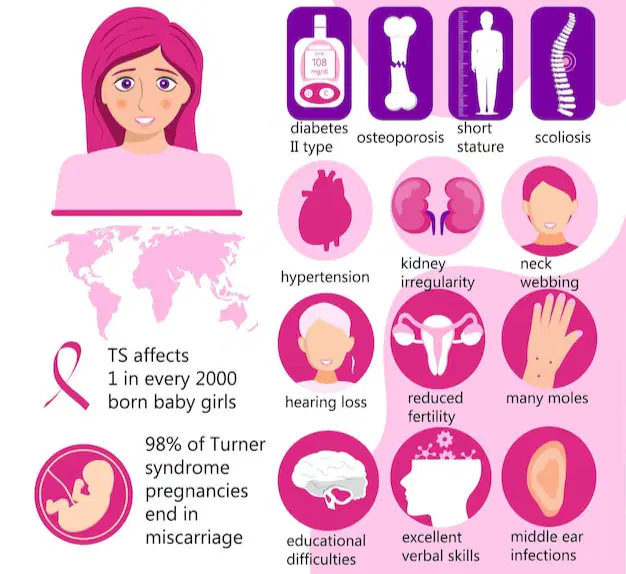
A young girl has short height, skin folds on the back of her neck, brown spots on her skin, no breast development, and has not started her period. She is most likely suffering from __________.
Turner's Syndrome
Down syndrome
Klinefelter's syndrome
Edward's syndrome
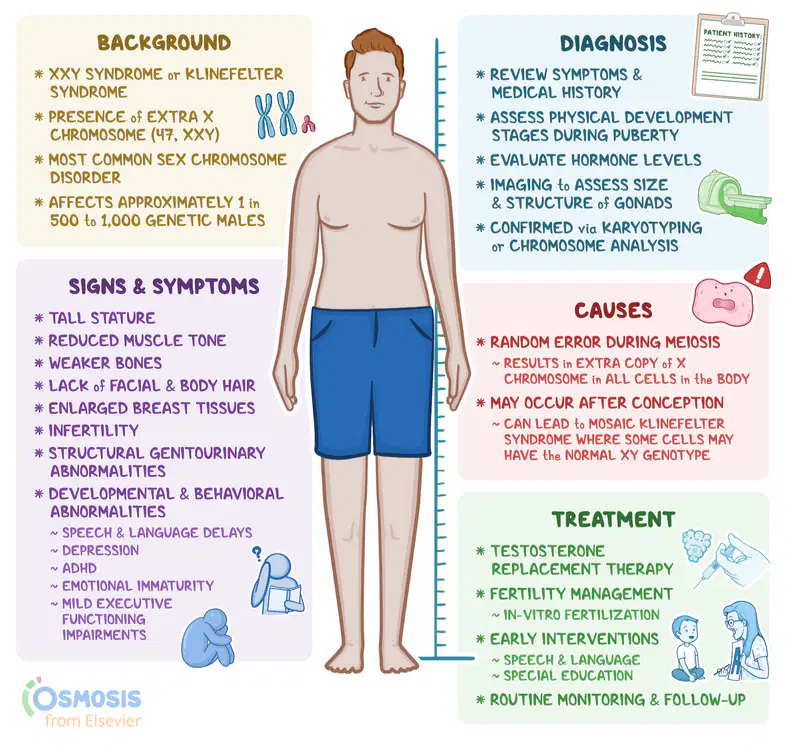
During a check-up, a teenage boy is growing extra breast tissue, has less muscle than usual, and his testes are small. He is most likely suffering from __________.
Turner
Down
Klinefelter's
Edward's

