
 Worksheets
Learning Objectives - Drug Discovery
Total questions: 96
Worksheet time: 48mins
Sources of new drugs include:
Natural products, synthetic chemicals, biotechnology, and molecular modeling
Only natural products
Only synthetic chemicals
Only biotechnology
An “old” drug can be classified as “new” under which of the following circumstances?
When it is used for a new indication, dosage form, route of administration, or patient population.
When it is manufactured by a different company with the same formulation.
When it is prescribed by a new physician.
When it is sold under a different brand name without any change in formulation.
Which of the following correctly defines goal drug, lead compound, drug candidate, and prodrug?
Goal drug is the ideal drug, lead compound is a chemical with desired biological activity, drug candidate is a compound selected for development, and prodrug is an inactive compound converted to active form in the body.
Goal drug is a compound selected for development, lead compound is an inactive compound, drug candidate is the ideal drug, and prodrug is a chemical with desired biological activity.
Goal drug is an inactive compound, lead compound is the ideal drug, drug candidate is a chemical with desired biological activity, and prodrug is a compound selected for development.
Goal drug is a chemical with desired biological activity, lead compound is a compound selected for development, drug candidate is an inactive compound, and prodrug is the ideal drug.
Which of the following lists five lead discovery methods?
High-throughput screening, virtual screening, fragment-based screening, natural product screening, de novo design
High-throughput screening, chromatography, distillation, extraction, crystallization
Virtual screening, PCR, gel electrophoresis, mass spectrometry, NMR
Fragment-based screening, Western blotting, ELISA, immunoprecipitation, flow cytometry
Activity and potency are differentiated as follows:
Activity refers to the effect produced by a drug, while potency refers to the amount needed to produce that effect.
Activity refers to the amount of drug needed, while potency refers to the effect produced.
Activity and potency both mean the same thing in pharmacology.
Activity is only related to side effects, while potency is related to therapeutic effects.
Key requirements for an oral drug include:
Stability in gastric acid, adequate absorption, and minimal first-pass metabolism
Immediate excretion by the kidneys
Insolubility in water
Requirement for intravenous administration
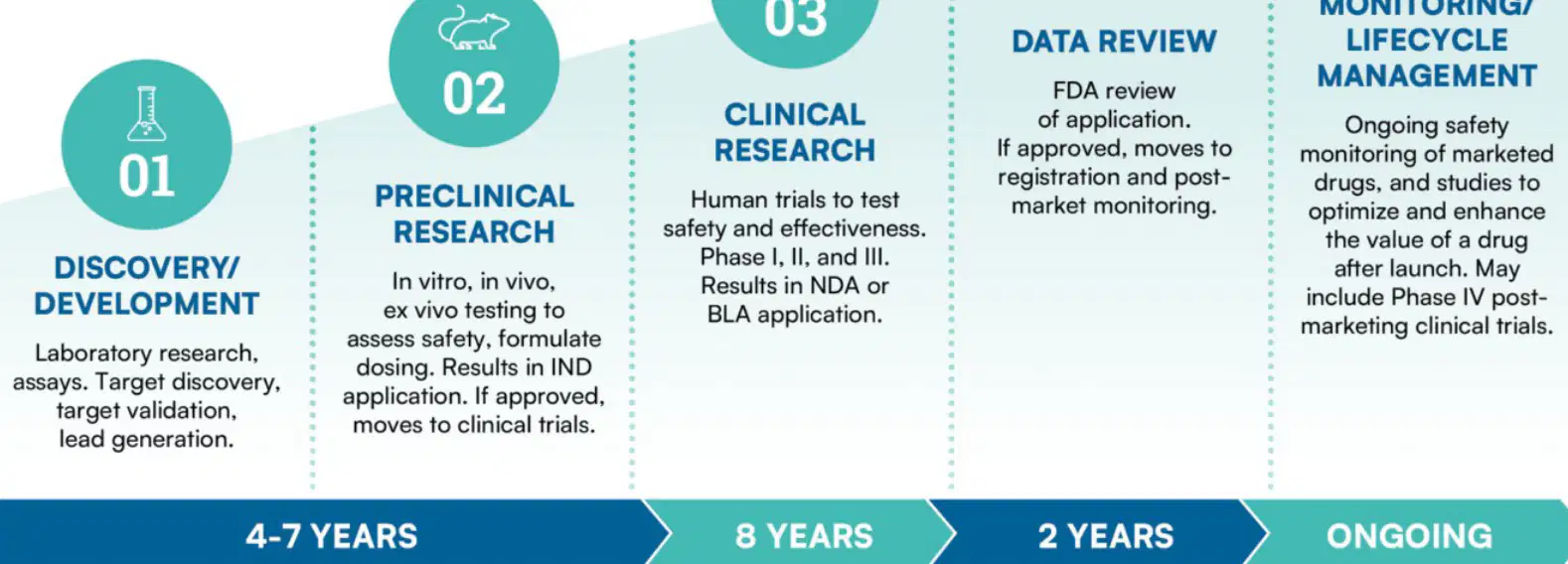
Which stage of the New Drug Approval Process involves laboratory research, assays, target discovery, target validation, and lead generation?
Preclinical Research
Clinical Research
Discovery/Development
Data Review

In which stage of the New Drug Approval Process are in vitro, in vivo, and ex vivo testing used to assess safety and formulate dosing, resulting in an IND application?
Clinical Research
Preclinical Research
Data Review
Post-Market Monitoring/Lifecycle Management

Human trials to test safety and effectiveness, including Phase I, II, and III, are conducted during which stage of the New Drug Approval Process?
Clinical Research
Preclinical Research
Drug Discovery
Post-Marketing Surveillance
What is the main focus of the Data Review stage in the New Drug Approval Process?
FDA review of application. If approved, moves to registration and post-market monitoring.
Initial laboratory research and animal testing.
Marketing and advertising strategies for the new drug.
Distribution of the drug to pharmacies and hospitals.

Ongoing safety monitoring of marketed drugs and studies to optimize and enhance the value of a drug after launch occur in which stage of the New Drug Approval Process?
Post-Market Monitoring/Lifecycle Management
Preclinical Testing
Clinical Trials Phase I-III
Regulatory Submission/Approval
According to the FDA, what is a new drug? Fill in the blank: Any drug that is not yet recognized as ______ and ______ in conditions recommended for its use in the labeling among qualified experts.
safe and effective
affordable and available
tested and marketed
approved and prescribed
Which of the following is considered a new drug according to the FDA?
A new chemical entity
A new formulation of an old drug
A new combination of old drugs
All of the above
Fill in the blank: A new drug can be a new ______ entity.
chemical
physical
mechanical
thermal
Fill in the blank: A new drug can be a new formulation or method of manufacture of an "______" drug.
old
rare
expensive
foreign
Fill in the blank: A new drug can be a new combination (including proportions) of two or more "______" drugs.
old
rare
expensive
foreign
Fill in the blank: A new drug can be a new use or route of administration or dosage form of an ______ drug.
established
expired
experimental
exclusive
What are the three main sources of new drugs? Fill in the blanks: natural sources, ______ synthesis, ______ engineering.
organic, genetic
inorganic, chemical
synthetic, molecular
herbal, protein
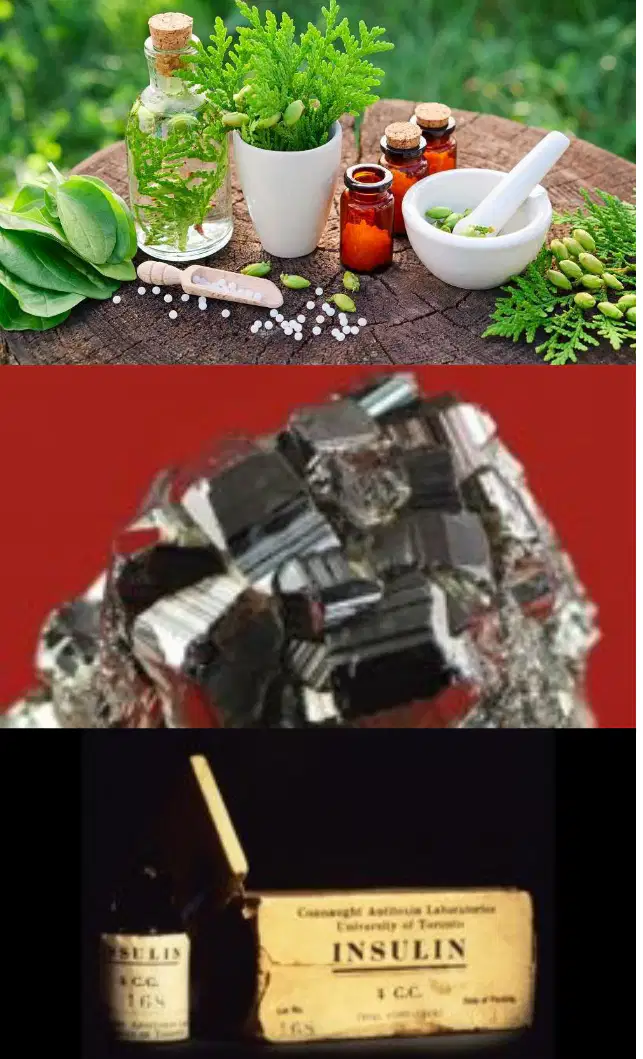
Which of the following is a natural source of drugs?
Plants
Minerals
Animals
Microorganisms

Fill in the blank: Drugs can be obtained from natural sources such as ________.
Plants
Plastic
Steel
Glass
Fill in the blank: Drugs can be obtained from natural sources such as ________.
Minerals
Plastics
Metals
Glass
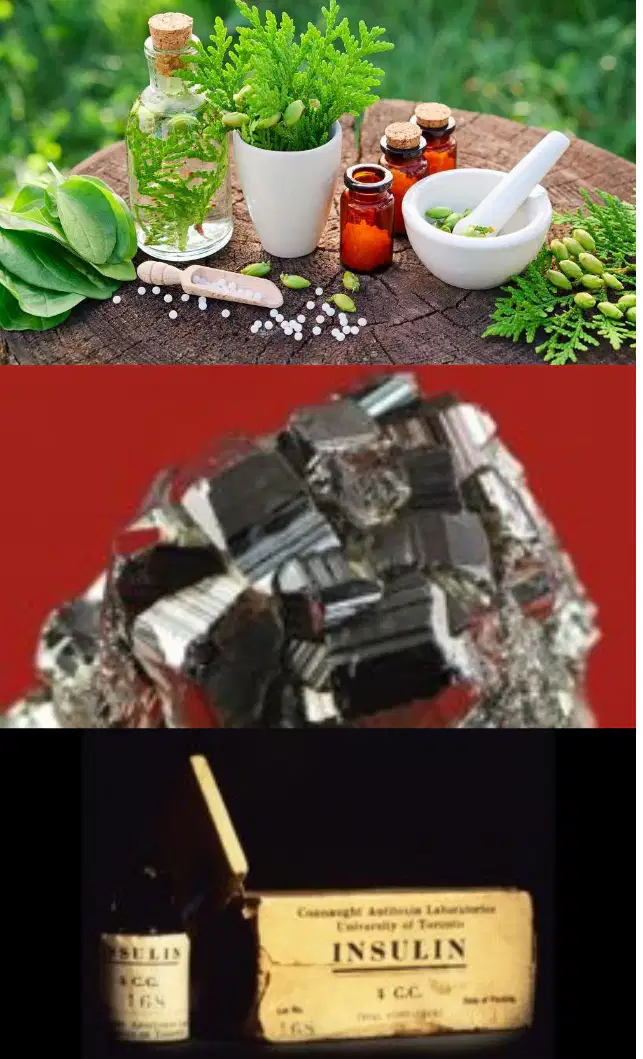
Fill in the blank: Drugs can be obtained from natural sources such as ________.
Animals
Plastic
Steel
Glass
Fill in the blank: Drugs can be obtained from natural sources such as ________.
Microorganisms
Plastic
Glass
Metal
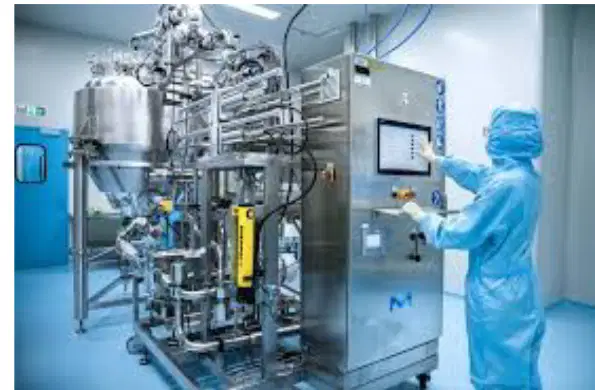
What is the most common source of new drugs, even if originally obtained from natural sources?
Organic synthesis
Animal extraction
Plant extraction
Mineral extraction
Which of the following is an example of a semisynthetic drug?
Amoxicillin
Benzodiazepines
Aspirin
Penicillin
Fill in the blank: Semisynthetic drugs are produced by chemically altering a substance from a ________ source.
natural
synthetic
artificial
mineral
Which of the following statements is true about synthetic drugs?
They are produced entirely from chemical components with no natural source used.
They are extracted from plants.
They are always more expensive.
They are less pure than natural drugs.
Which of the following is NOT an advantage of drugs synthesized in the chemical laboratory?
High purity
Less expensive
Slow production
Large scale production quickly
Fill in the blank: One advantage of drugs synthesized in the chemical laboratory is ________ purity.
high
low
variable
unknown
What is genetic engineering in the context of drug sources?
Direct manipulation of an organism’s genome (DNA chain) to produce drug
Mixing chemicals to create drugs
Extracting drugs from plants only
Using only natural sources for drugs
Which of the following is a technique used in genetic engineering for drug production?
Recombinant DNA (rDNA)
Herbal extraction
Fermentation
Distillation
Fill in the blank: Monoclonal ________ are a technique used in genetic engineering to produce drugs.
antibodies
enzymes
hormones
cells
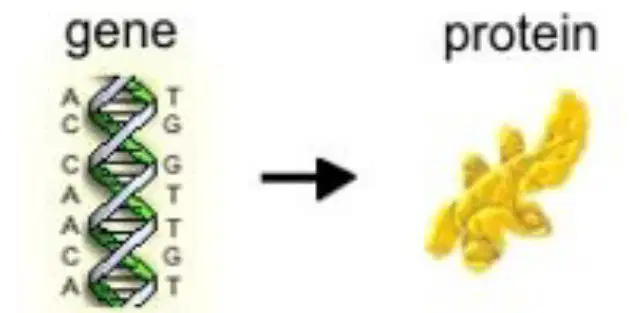
In the diagram, a recipe is to cookies as a gene is to ________.
protein
sugar
flour
enzyme
What is recombinant DNA (rDNA)?
Ability to selectively hydrolyze a population of DNA molecules then join two different DNA molecules creating recombinant DNA (rDNA).
A type of DNA found only in bacteria.
A process of DNA replication in the nucleus.
A method of synthesizing proteins from amino acids.
Which type of cells are commonly used to manufacture proteins identical to those produced in human cells?
Plant cells
Nonhuman cells such as E. coli
Fungi
Animal cells
Fill in the blank: Recombinant DNA technology utilizes _______ cells (ex: strain of E. coli) to manufacture proteins identical to proteins produced in human cells.
nonhuman
plant
fungal
animal

According to the diagram, what enzyme is used to seal the overhangs after mixing donor and vector DNA?
DNA polymerase
DNA ligase
RNA polymerase
Restriction enzyme
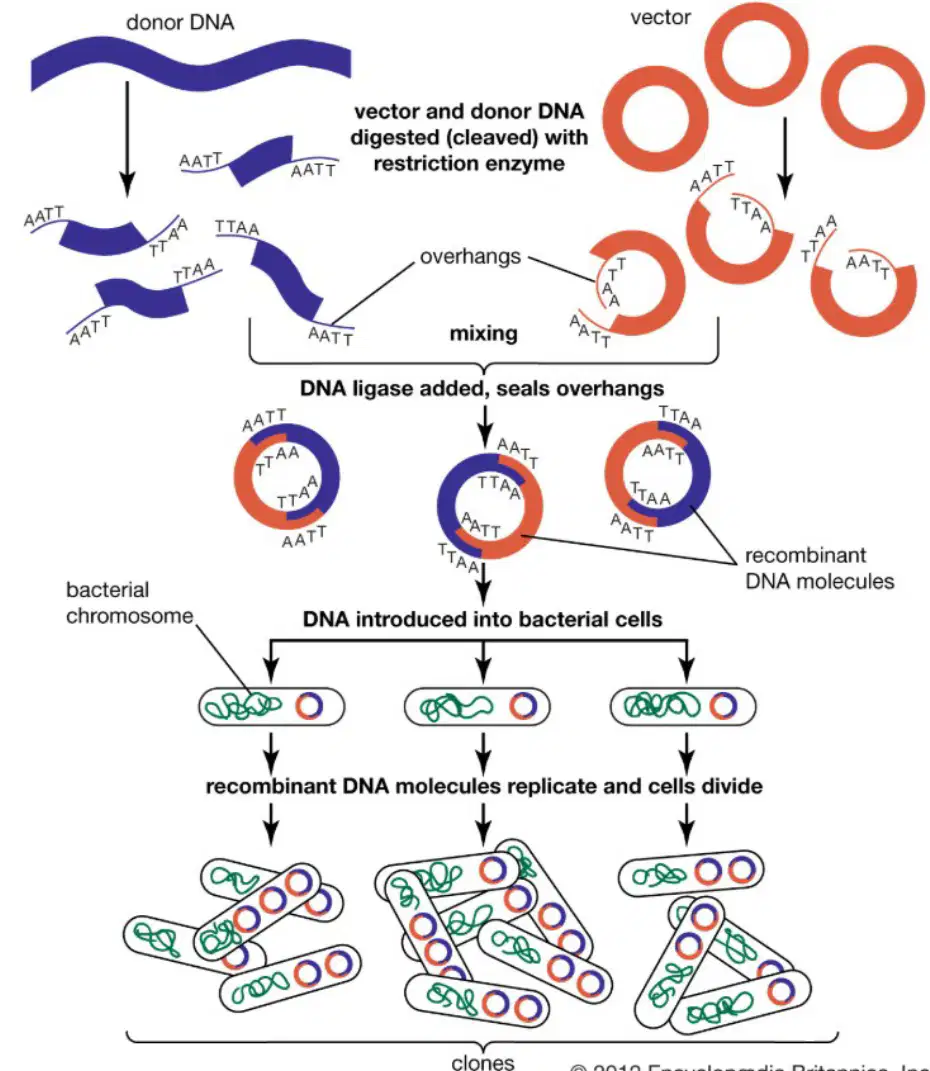
According to the diagram, what happens after recombinant DNA molecules are introduced into bacterial cells?
The cells die
The recombinant DNA molecules replicate and cells divide
The DNA is destroyed
Nothing happens
What does mAb stand for?
Monoclonal antibody
Molecular acid base
Microbial antigen binder
Mammalian albumin
Which of the following is an advantage of monoclonal antibodies?
They can target multiple antigens at once
They can design to specifically target one antigen
They are produced only in bacteria
They cannot be administered to patients
Fill in the blank: Laboratory-produced copies of a specific protein (antibody) are called ________.
monoclonal antibodies
polyclonal antibodies
antigens
enzymes
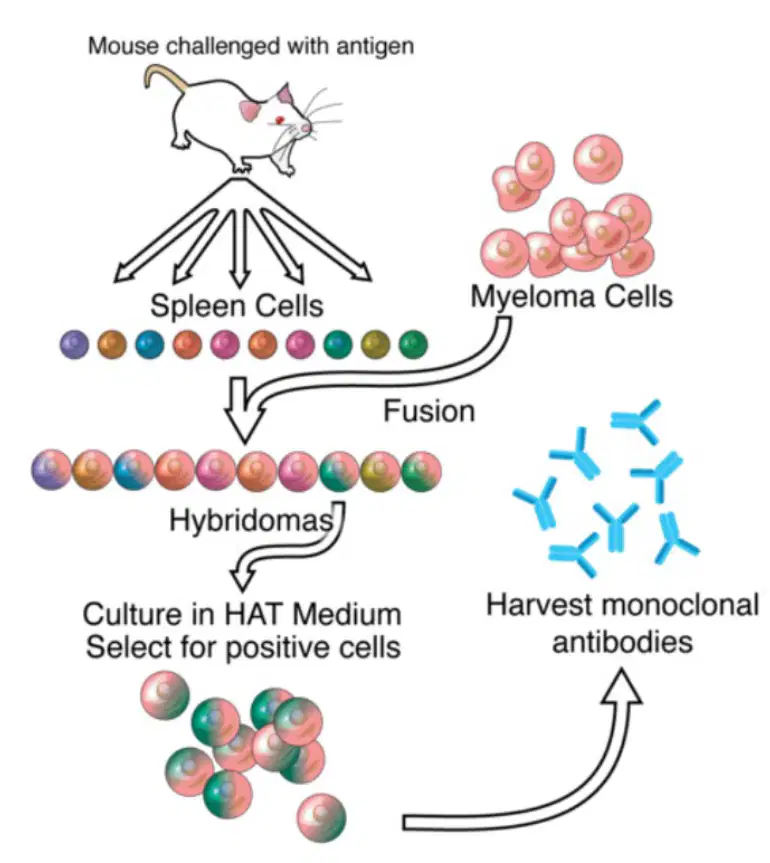
Which cells are fused with myeloma (cancer) cells to produce hybridomas in the production of monoclonal antibodies?
T cells
B cells
Red blood cells
Platelets
What is the purpose of injecting a specific antigen into a mouse during the production of monoclonal antibodies?
To trigger an immune response producing antibodies by B cells.
To increase the mouse's lifespan.
To make the mouse resistant to diseases.
To improve the mouse's memory.

Refer to the diagram showing an antibody binding to a biological substance (e.g., virus, bacteria, pollen) with antigens. What is the main function of the antibody as described in the diagram?
To destroy the biological substance directly
To bind to antigens and induce immune responses to eliminate the foreign intruder
To produce more antigens
To become part of the biological substance

In the diagram, what are the structures on the surface of the biological substance that antibodies bind to called?
Antigens
Enzymes
Hormones
Receptors

According to the diagram, bound antibody induces downstream immune responses to eliminate the ________.
foreign intruder
red blood cell
antibody itself
immune cell
What is the purpose of drug discovery? (Fill in the blank)
To find active ingredients or modify chemical structures of existing active ingredients of drugs to form the basis of a new agent.
To increase the cost of medications for patients.
To reduce the effectiveness of existing drugs.
To create drugs with more side effects.
Ideally, what does the process of drug discovery result in?
A) A failed experiment
B) A goal drug
C) A new disease
D) A new laboratory
Fill in the blank: A goal drug can produce ________ effect.
desired
harmful
temporary
adverse
Fill in the blank: A goal drug can be administered through the most desired route, usually ________.
oral
intravenous
topical
sublingual
Fill in the blank: A goal drug can be administered at minimal ________ and frequency.
dosage
temperature
pressure
volume
Fill in the blank: A goal drug shows optimal ________ and duration of activity.
onset
toxicity
solubility
cost
Fill in the blank: A goal drug has ________ side effects.
no
many
severe
unpredictable
Fill in the blank: A goal drug is eliminated from the body efficiently, with no ________ effects.
residual
immediate
positive
therapeutic
Fill in the blank: The first step in starting a scientific investigation or drug discovery process is to _________.
Identify target disease or indication
Conduct clinical trials
Develop a marketing strategy
Submit a patent application
Which backgrounds should be included when forming an investigative team?
Chemistry, biology, toxicology, pharmaceutics, pharmacokinetics
Literature, history, art, music
Engineering, architecture, design, law
None of the above
Fill in the blank: Target validation involves ________ that action at that target affects disease progression.
analysis
guessing
ignoring
hoping
What is the final step listed in the process of starting a scientific investigation or drug discovery process?
Establish lead compound
Formulate hypothesis
Collect data
Analyze results
What is a lead compound?
A compound with no biological activity
A prototype with desired activity but other undesirable characteristics (ex: poor ADME profile)
A compound with perfect ADME profile
A compound used only in clinical trials
Which of the following is a lead discovery method?
Random screening
Chromatography
Spectroscopy
Crystallization
Which of the following is a lead discovery method?
Drug metabolism studies
X-ray diffraction
Polymerase chain reaction
Gel electrophoresis
Which of the following is a lead discovery method?
Clinical observations
DNA sequencing
Protein folding
Cell lysis
Which of the following is a lead discovery method?
Rational design
Mass spectrometry
Western blotting
Immunoprecipitation
Which of the following is a lead discovery method?
High-throughput screening (HTS)
Southern blotting
ELISA
Flow cytometry
Metabolites are isolated and screened to determine if the observed activity is derived from drug or metabolite.
True
False
Nortriptyline is classified as which of the following?
Antibiotic
Antidepressant
Antiviral
Analgesic
Nortriptyline is the active metabolite of ________.
amitriptyline
imipramine
clomipramine
desipramine
Which is more potent: nortriptyline or amitriptyline?
Nortriptyline
Amitriptyline
Imipramine
Doxepin
What is one way new uses for existing drugs are discovered according to clinical observations?
When clinicians notice unexpected therapeutic effects.
When drugs are only tested in animals.
When patients request new uses for drugs.
When drugs are used without any monitoring.
Minoxidil was originally used for which condition?
Hair loss
High blood pressure
Diabetes
Morning sickness
Thalidomide was used as a treatment for ________.
morning sickness
headache
diabetes
hypertension
What does SAR stand for in the context of lead optimization?
Structure-activity relationship
Structure-activity reaction
Substance-activity relationship
Substance-activity reaction
A drug candidate is a compound worthy of extensive biological, pharmacological, and animal testing.
True
False
Fill in the blank: Activity refers to a particular ________ effect (e.g., antibacterial).
biological
chemical
physical
mechanical
What does potency refer to in the context of lead optimization?
The cost of the drug
The strength of the biological effect
The color of the compound
The duration of testing
IC50 is defined as ________.
half maximal inhibitory concentration
half maximal effective concentration
maximum inhibitory concentration
initial concentration of inhibitor
EC50 is defined as ________.
half the maximal effective concentration
the dose that produces no effect
the maximum tolerated dose
the concentration at which 100% of the effect is observed

What is the inhibition of AChE IC50 [nM] for compound number 15?
6.4
12.8
0.9
25.0
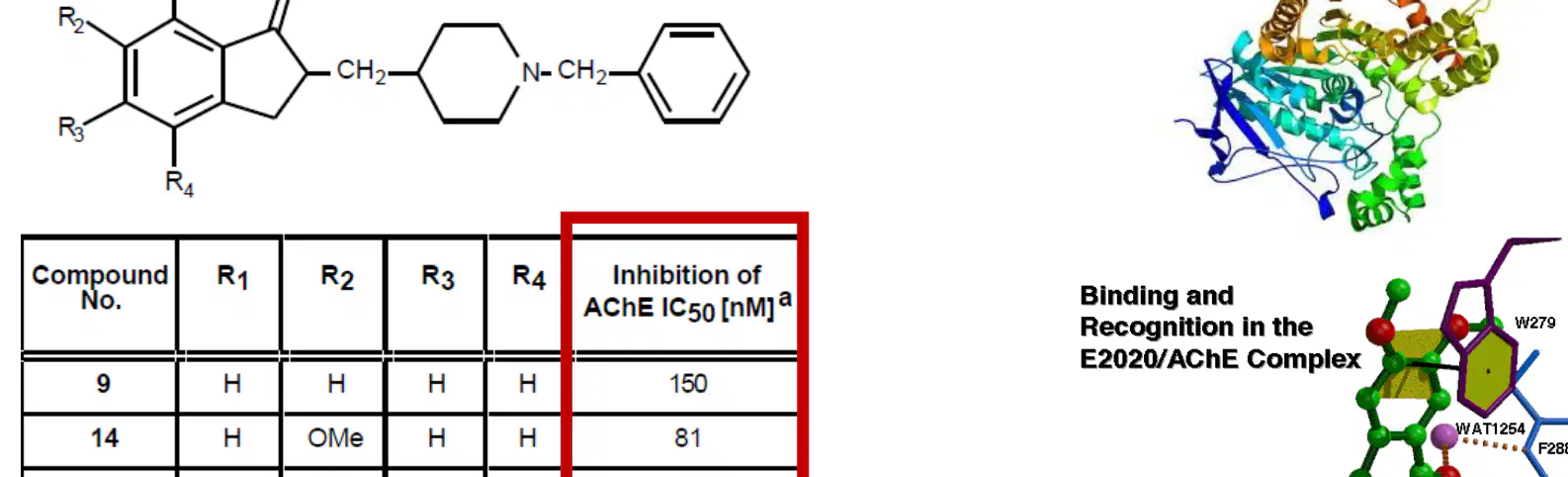
Which compound has the lowest inhibition of AChE IC50 [nM]?
9
15
E2020
18
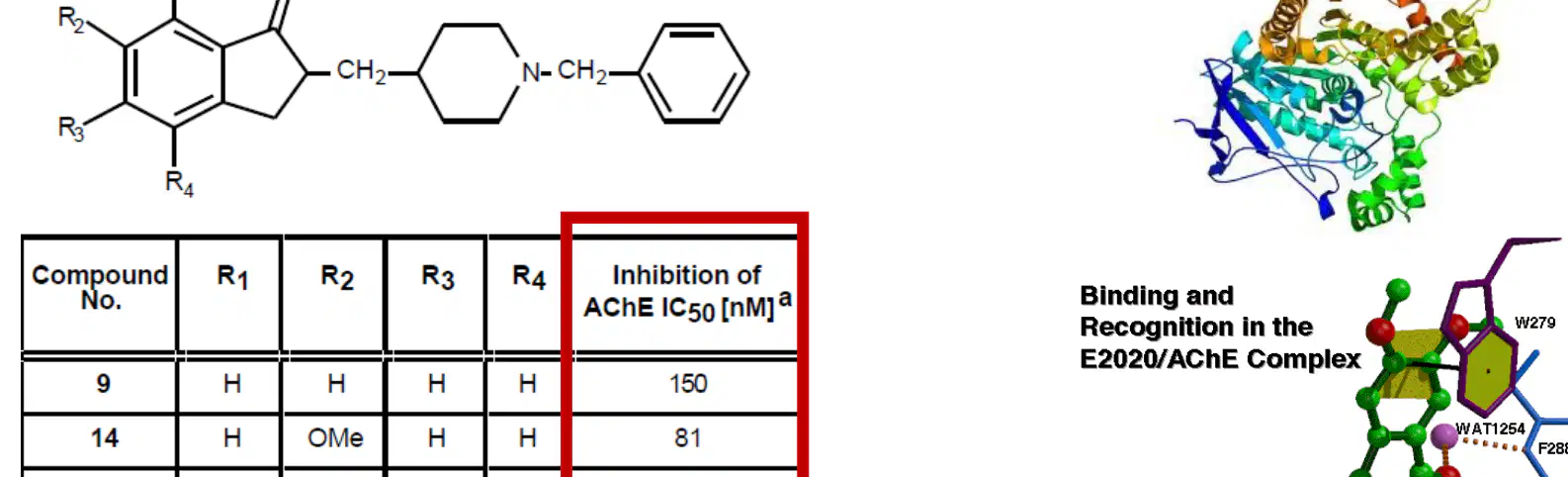
What is the value of R2 for compound number 14?
OMe
NO2
Cl
CF3
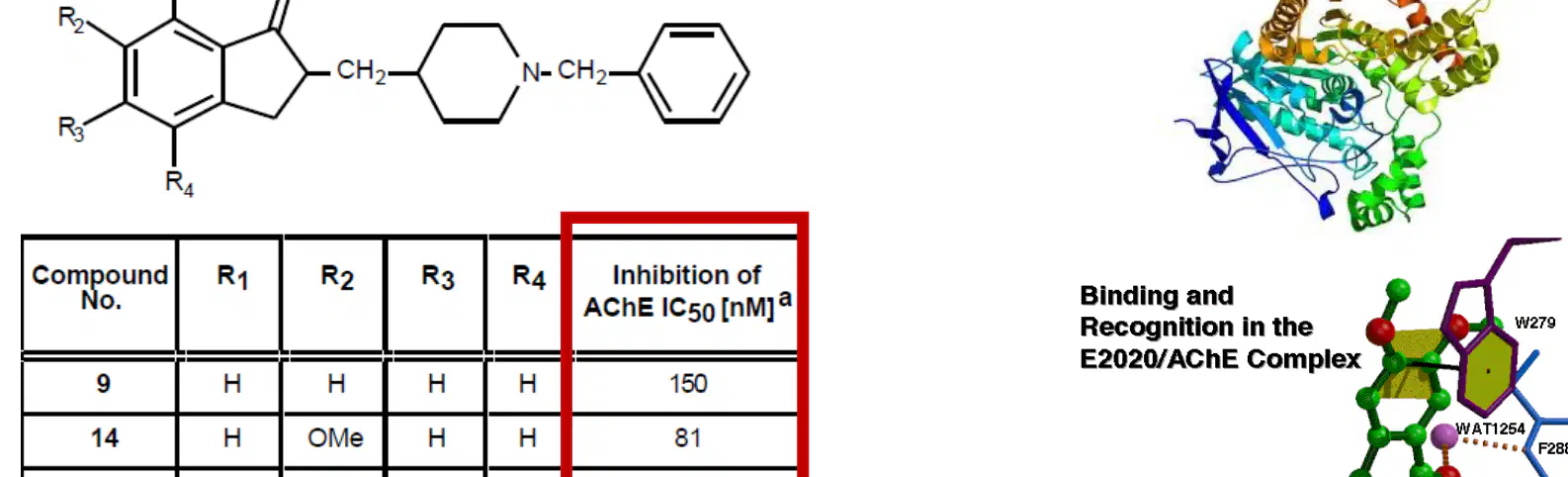
What is the value of R4 for compound number 16?
OMe
Cl
NO2
Br
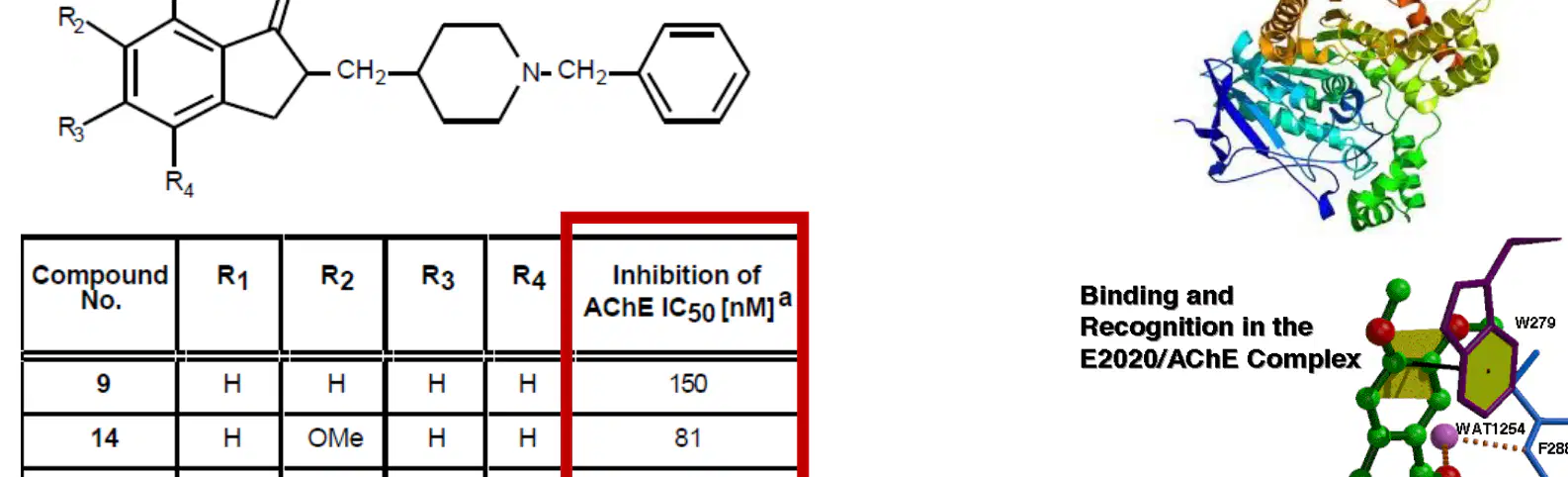
Which compound has R1 = OMe and R2 = H?
17
18
19
20
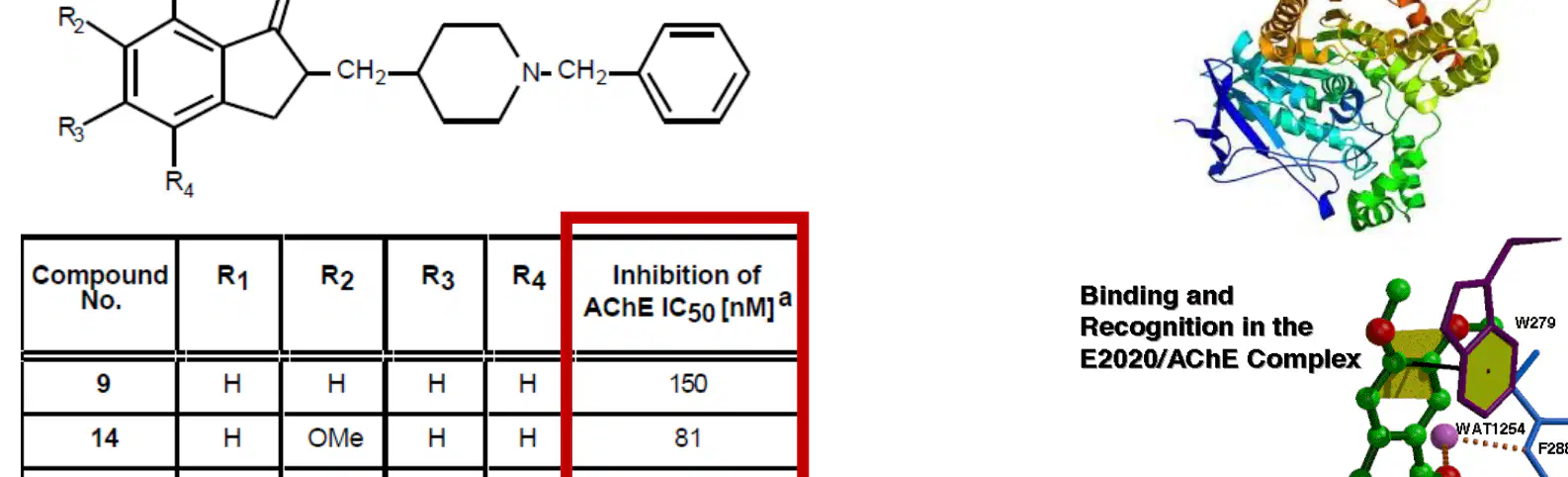
What is the inhibition of AChE IC50 [nM] for compound number 20?
20
5
50
100
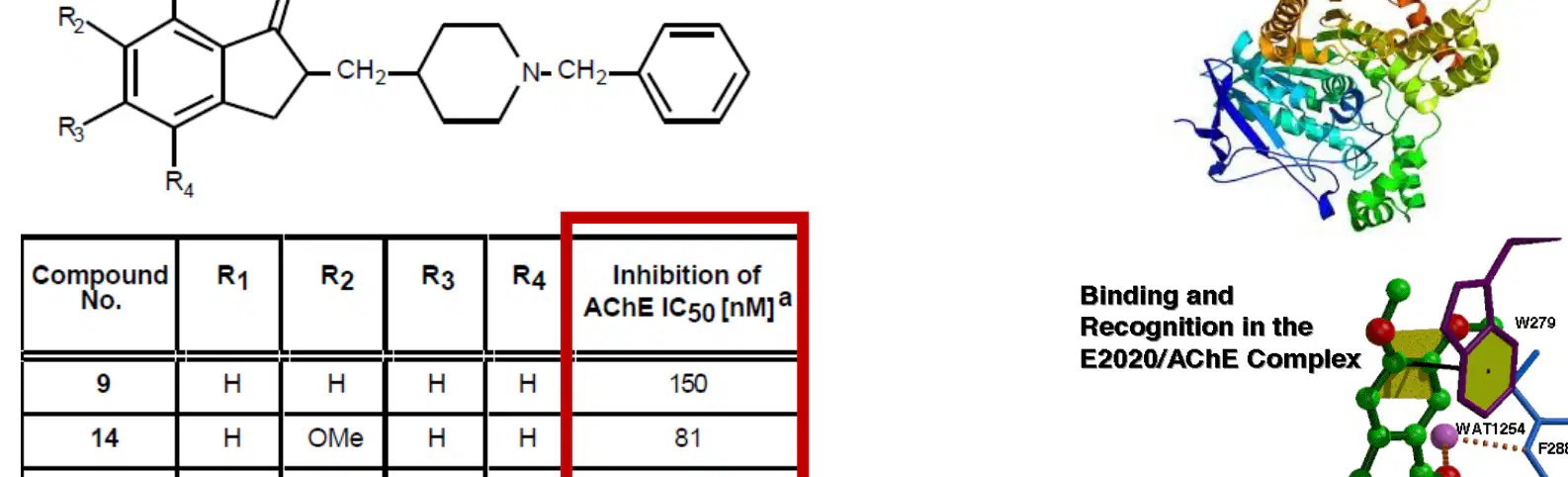
What is the value of R3 for compound number 18?
OMe
NO2
Cl
Br
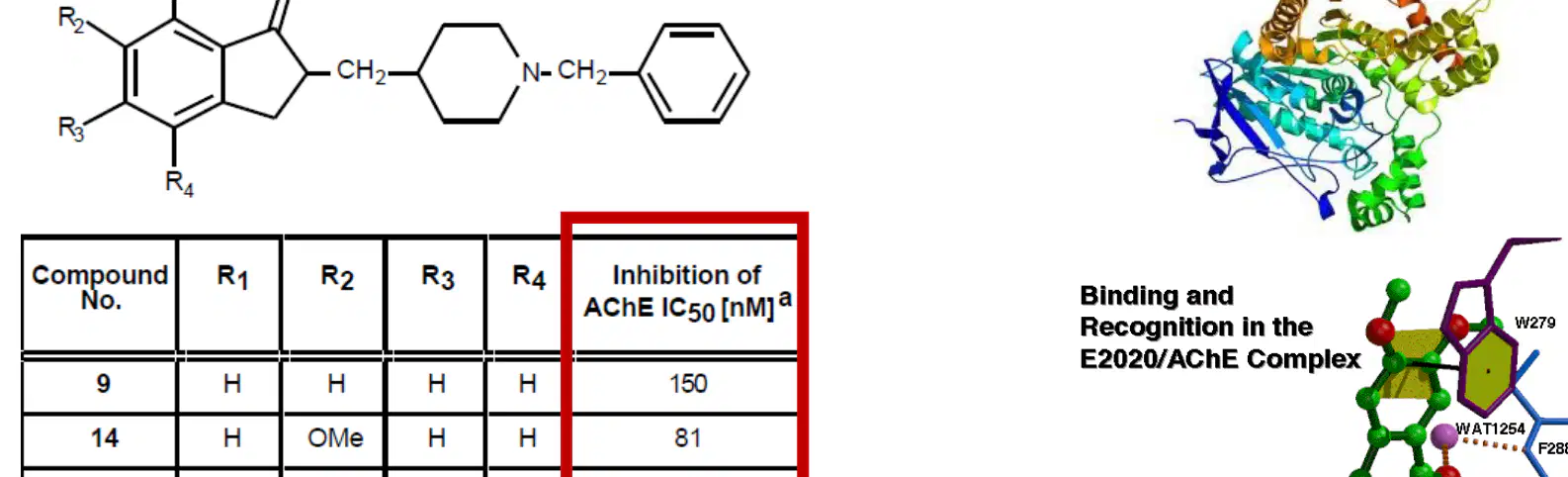
Which compound has the highest inhibition of AChE IC50 [nM]?
9
14
15
16

What is the name of the complex shown in the molecular diagram?
E2020/AChE Complex
Hemoglobin/Oxygen Complex
ATP Synthase/ADP Complex
DNA Polymerase/DNA Complex

An oral drug must be able to ________.
dissolve
evaporate
freeze
ignite
An oral drug must be able to survive a range of pHs. What is the pH range mentioned in the image?
1.5 to 8.0
2.0 to 10.0
5.0 to 9.0
0.5 to 7.0
Which of the following must an oral drug be able to survive?
Intestinal bacteria
High temperature
Low oxygen
High pressure
An oral drug must be able to cross membranes.
True
False
An oral drug must be able to survive ________ metabolism.
liver
renal
pulmonary
gastric
Which organ is responsible for excreting drugs via urine?
Liver
Kidneys
Bile duct
Bladder
An oral drug must avoid active transport to ________.
bile
blood
lymph
saliva
An oral drug must avoid excretion by which organ?
kidneys
lungs
liver
skin
An oral drug should partition into the target organ.
True
False
An oral drug must avoid partition into undesired places such as the ________ or foetus. (Fill in the blank)
brain
liver
stomach
intestine

