
 Worksheets
Medical Quiz on Joint Disorders
Total questions: 153
Worksheet time: 1hrs 17mins
The major lubricant for diarthrotic joints is synthesized by
Synovial membrane
Fibrous capsule
Annulus fibrosus
Articular cartilage
Nucleus pulposus
Which area in cartilage is relatively proteoglycan-rich and collagen-poor?
Perichondrium
Epiphyseal plate
Interterritorial matrix
Fibrocartilage
Territorial matrix
A 20 year-old man complains of sharp and almost constant pain in the region of the right knee. This pain has been present for two months and is associated with swelling of the knee. On admission to hospital a radiograph reported as follows: "Bulky, sclerotic lesion in the lower end of the femur. The lesion extends to the surrounding extra-osseous tissue with transverse 'sunray' streamers of radio-opacity". What is the most likely disorder of bone?
Osteosarcoma
Hyperparathyroidism
Metastatic cancer
Osteomyelitis
Paget's disease
50 years old male, has brief left knee stiffness in the morning, he also felt knee pain after prolonged walking. X-ray of the knee found that there is an osteophyte in the medial compartment of the knee. Where are the disease processes arising from?
Cartilage
Synovium
Bone
Intraarticular fat
All of the above
A 10 year-old boy developed high fever, chills, and worsening leg pain. His upper left leg started to hurt 3 to 4 days ago, and last night he began limping. His parent reports no history of trauma to the area. His only past medical history is two episodes of otitis media (infection in the ear) at age 2 and 7. There were localized tenderness and swelling over the left distal femur. WBC count is 11,500 cells/uL; normal differential count, but ESR is 58 mm/hour. The blood cultures obtained revealed Gram(+) cocci. How is the boy getting this illness?
Direct spread
Air-borne
Lymphogenic
Hematogenous
Fecal-oral
Female 68 years old, present with severe bow legs and pain in both knees during activities. Force change in this condition is?
Increase adduction moment
Increase abduction moment
Decrease extension moment
Decrease flexion moment
None of all the above
While examining a piece of tissue taken from the epiphyseal plate, you noticed large cells arranged in rows. Which of the following layers are you examining?
Calcified zone
Proliferative zone
Hypertrophy zone
Resting zone
A 30-year-old woman was hit by a car and fell down at her arm. She cannot abduct her arm. The radiograph showed fracture of proximal humerus, then she cannot abduct her arm, what vessel is the most possible injured?
A. ulnaris
A. axillaris
A. radialis
A. brachialis
A. profundabrachii
Female 67 years old complaining of pain in the right hip in the last 2 years, the pain comes after walking in a long distance. She feels otherwise healthy. From the physical examination we found painful and limited hip internal rotation. Which is the most possible condition?
Infection
Osteoarthritis
Rheumatoid arthritis
Gout
AVN
A man 30 years old felt very tired after half marathon training. What is the nerve for maintaining a muscle tonus in sustained stretch?
Static γ fiber tonuclear chain fiber of intrafusal skeletal muscle
Dynamic γ fiber tonuclear chain fiber of intrafusal skeletal muscle
Static γ fiber tonuclear bag fiber of intrafusal skeletal muscle
Dynamic γ fiber tonuclear bag fiber of intrafusal skeletal muscle
Static γ fiber tonuclear chain fiber of extrafusal skeletal muscle
While moving into a new apartment a student lifting a heavy box of books experiences a sharp pain in his back, radiating down the anterior thigh and medial side of his leg. After several days of misery, he finally goes for treatment and is told that he has a herniated intervertebral disk at the L3 level which is compressing a spinal nerve where it exits the vertebral column. Where is the point of compression?
Hiatus of the sacral canal
Vertebral foramen
Foramen magnum
Central canal
Intervertebral foramen
While examining a piece of supportive tissue taken from the vertebral column, you noticed rows of cells, in lacunae, between collagen fibers. Which of the following supportive tissue are you examining?
Hyaline cartilage
Compact bone
Elastic cartilage
Fibrous cartilage
A 70-year-old male came to hospital with chief complaint of sudden sharp pain on his back when he was gardening. On physical examination vital signs are normal, range of motion was limited, and there is pain on bending and twisting. Radiographic examination reveals compression fracture on level L3-4. What is the most likely diagnosis?
Osteomalacia
Osteoporosis
Osteopetrosis
Spondylitis
Neoplasm
When helping a baby delivery, a midwife noticed that there’s asymmetric number of thigh skin folds, uneven knee levels and limitation of hip abduction. What diagnosis should be checked on the newborn?
Developmental dysplasia of the hip
Blount disease
Athrogryphosis
Osteogenesis imperfecta
A 15-year-old girl complained of severe pain in her left knee after vigorous exercise for 4 weeks. The knee joint has been swollen and red then she cannot extend her leg. The doctor diagnosed as stress fracture. The MRI showed tear of patella ligament, which structure of the bone is inserted by those ligament?
Capitulum fibulae
Malleolus lateralis
Crista tibialis
Tuberositas tibia
Condyles medialis
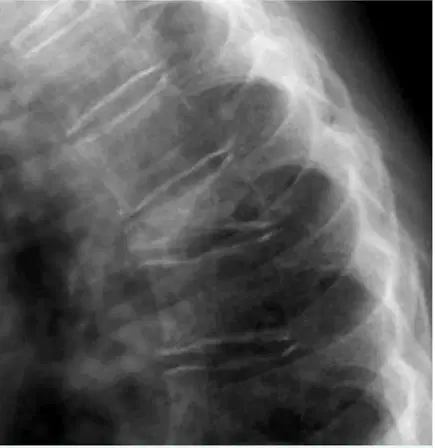
A 75 year-old widow complains of generalized aching in her bones, and a gradually increasing curvature of her upper spine. An X-ray shows osteopenia and vertebral changes. Serum calcium, phosphate, alkaline phosphatase and a blood screen, including ESR, are all normal. What is the most likely cause of this condition?
Hyperparathyroidism
Hyperthyroidism
Multiple myeloma
Osteoporosis
Vitamin D deficiency
A 50-year-old woman has experienced pain in lumbar joints for several months. Radiographic examinations shows Bamboo’s spine. Physical examination reveals several nodules in her small joints in the hands and feet. Histology of the nodule after biopsy shows a central fibrinoid necrosis, surrounding by palisading epithelioid macrophages. The best diagnostic is
Rheumatoid arthritis
Osteoid osteoma
Gout diseases
Chronic osteomyelitis
Osteoarthritis
A 40-yr-old man was admitted to hospitals suffering from tuberculosis. A pathologist discovered central caseous necrosis surrounded by epithelioid macrophages in an area affected by the bacterial infection. Which type of inflammation is most likely associated with this patient's infection?
Ulcer
Acute suppurative
Granulomatous
Chronic active
Chronic suppurative
A 25 year-old man comes to outpatient for follow up his tibia fracture started last month. Physical and radiologic examination reveals normal phase of bone remodeling. Which of the following cell is the most involved in process above?
Osteoblast
Osteocyte
Osteoclast
Osteon
Osteoid
A 20 year old woman came to the hospital with a fracture upper right tibia. X-ray showed well circumscribed lesion, partly cystic. Curettage biopsy is performed and histopathology shows well demarcated fibrous tissue containing small abnormal bone trabeculae. What is the most likely diagnosis based on microscopic appearance?
Ganglion cyst
Chondroblastoma
Fibrous dysplasia of the bone
Osteomyelitis chronic
Osteomyelitis tuberculosa
Female, 60 years old, complaint about pain and stiffness of her left knee. The doctor finds cartilage softening during knee arthroscopy. What is the earliest change that happened at the cartilage?
Decrease proteoglycan
Vascular invasion
Chondroblast death
Decrease collagen
A 65-year-old woman complained of pain in his thigh after strenuous session at the gym. She cannot extend her leg. What muscle is probably impaired?
M. tibialis anterior
M. biceps femoris
M. gastrocnemius
M. quadriceps femoris
M. semimembranosus
A 10 years old girl, admitted to hospital due to draining sinus on the right leg for 2 years. She has chronic osteomyelitis that is multi-resistance to antibiotics. What is the most probable cause of multi-resistance?
Abscess
Septicemia
Involucrum
Sequestrum
Cellulitis
A man 58 years old felt his muscle became easy to fatigue and weak. His physician examined him and found his muscle tone and muscle strength is lesser than normal. His physician suspected possibly he had a problem in neurotransmitters such as in myasthenia gravis disease. What is the name of neurotransmitter in skeletal neuromuscular junction?
Norepinephrine
Epinephrine
Acetylcholine
Dopamine
Serotonin
A 68-year-old man reports pain on his knees and difficulty walking. He can walk in the flat areas, but the pain comes when he tries to go up and down the stairs and when standing from a sitting position. She also felt stiffness on both of her knees. On physical examination, which muscles that most probable to become atrophy?
Hamstrings
Anterior tibialis
Quadriceps
Gastrocnemius
A man 38 years old had upper arm muscles sore after he exercised weight training. He went to the doctor and doctor suggested weight training with the multigym. What is the isokinetic contraction?
The length of muscular remains constant during contraction
The muscle lengthens as it contracts maintaining force and movement
The maximal contraction at constant speed over the full range of movement
Tension remains constant as the muscle shortens or lengthens
The muscle shortens to produce force and movement
A child, 6 years old, presents to emergency room with fever and pain over his left knee since yesterday. There is exquisite tenderness on left proximal tibia, and mild local swelling. No history of injury. What is the most appropriate laboratory workup should be done?
Blood culture
Electrolytes
Rheumatoid factor
ASTO
Liver function
12 year-old boy admitted to the hospital with the complaints of fever, chills, local swelling and pain at his left leg after an accident 3 weeks ago. An x-ray of his femur showed bone destruction, necrosis, and new bone formation. A clinical diagnosis of bone infection was made. What additional diagnostic information should be obtained before this boy received his first dose of antibiotic?
Serum creatinine and blood urea nitrogen (BUN)
Complete blood count
MRI scan
Culture of bone aspirate
Procalcitonin level
While examining a piece of bone tissue, you noticed a structure consisting of circular layers surrounding a tube in the center. Which of the following structures are you examining?
Haversian canal
Lamellae generals
Lamellae interstitials
System Havers
A 75 year-old widow complains of generalized aching in her bones, and a gradually increasing curvature of her upper spine. An X-ray shows osteopenia and vertebral changes. Serum calcium, phosphate, alkaline phosphatase and a blood screen, including ESR, are all normal. What is the most likely cause of this condition?
Hyperthyroidism
Osteoporosis
Vitamin D deficiency
Hyperparathyroidism
Multiple myeloma
A 58 year-old woman was admitted to the hospital with a two-month history of pain, swelling and purulent discharge to her left lower leg. This occurred one year after sustaining a fracture to that area. Colonies grown from the purulent discharge on blood agar were convex and appeared golden yellow. What is the most likely diagnosis?
Arthritis caused by Streptococcus pneumoniae
Wound infection caused by Sporothrix schenckii
Osteoarthritis caused by Neisseria gonorrhoeae
Osteomyelitis caused by Staphylococcus aureus
Osteomyelitis caused by Haemophilus influenzae
A man 55 years old felt his muscle became easy to fatigue and weak. His physician examined him and found his muscle tone and muscle strength is lesser than normal. What is the definition of muscle tone?
The minimum resistance of the unstretched muscle
The maximum resistance of the moderate contraction muscle
The maximum resistance of the overstretched muscle
The minimum resistance of the overstretched muscle
The resistance of the active or passive stretched muscle
A patient was hit by a motorcycle from the side. She has pain on shoulder and x-ray fracture of the proximal humerus then she cannot abduct her arm and impairment of the muscle, what nerve is the most probably affected?
N. Ulnaris
N. Radialis
N. Medianus
N. Axillaris
N. Musculocutaneus
A 19 year-old medical student has a fractured radius. He is concerned that his healed fracture won't be strong enough for football. You tell him that he has particular cells that make osteoid and promote mineralisation in fracture healing leading to bone strength. Which cells are these?
Osteocytes
Chondroblasts
Osteoblasts
Osteoclasts
Chondrocytes
A 54-year-old nurse presents for evaluation of her arthritis. Her symptoms began several years ago with acute pain and swelling in the left ankle. This was followed 8 months later by pain and swelling in the left wrist and several joints of the fingers. Functional inquiry is otherwise completely negative. Physical examination reveals swelling and tenderness in the right 2, left 2-3 metacarpophalangeal joints (MCPs), and the right 2, left 3 and 4 proximal interphalangeal (PIP) joints. There is no swelling in the elbows, wrists, knees, or ankles. There are no cutaneous findings. Her general physical examination is normal. Which of the following tests will be most helpful in confirming diagnosis?
Erythrocyte sedimentation rate (ESR)
HLA-B27 antigen
Serum uric acid
Rheumatoid factor
Check ANA
A man 58 years old felt his right arm muscle became easy to fatigue and weak after recovery from right arm bone fracture. His physician said he got muscular atrophy and his connection between nerve and muscular was good. What is the muscular disuse atrophy?
The reducing flow of nerve impulses to the inactive muscle because they are not used
The reducing flow of nerve impulses to the inactive muscle because a muscle's nerve impulses cease
The reducing flow of nerve impulses to the inactive muscle because the damage to the nerves that control them
The progressive degradative action of enzymes that is generally associated with severe cellular trauma
The muscles suffer a vital loss of protein, and muscle fibers are replaced gradually by fat and connective tissue
28 years old woman have a chronic back pain and weak both lower legs, after series of examination the woman is diagnosed with tuberculous spondylitis. Which of the following tests can set the definitive diagnosis?
Positive culture of mycobacterium in biopsy result
Inhomogeneous appearance abscess in MRI
Endplate destruction on vertebral x-ray
Positive result on tuberculin skin test
A 30-year-old man was crashed by motorcycle and fell down at his sacrum. The imaging showed fracture of his sacrum. Afterwards he has problem of pain in his buttock to the leg. Radiograph showed compression of Sciatic nerve. What muscle is most likely affected?
M. gracilis
M. adductor magnus
M. rectus femoris
M. sartorius
M. gastrocnemius
A 60-year-old woman came with complete left femoral neck fracture after fell from tricycle (becak). The bone mineral density examination showed it is less than -2.5. Microscopic examination showed that the bone cortex becomes thinner and the trabeculae have less complex branching. The most significant contributing factor for this fracture is:
Senile osteoporosis
Hyperthyroid
Immobilization osteoporosis
Vitamin D deficiency
Multiple myeloma
A 60 year old man complains about stiffness and pain in the back after activity. Radiographic examination reveals narrowing of L4-5, L5-S1 disc space. What is the most possible cause of the complaint?
Loss of nucleus pulposus chondroitin sulfate
Facet joint degeneration
Annulus fibrosus tear
Osteoporosis
Increased disc water content
65 years old woman come to orthopedic outpatient department after medical check-up, she brings the result of her knee x-ray. From the x-ray we can see that there is an osteophyte in the medial compartment of the knee and some minimal changes on the cartilage, physical examination of the knee is unremarkable. From the case above we can conclude that her knee is having the problem of?
Normal knee
Osteoarthritis
Rheumatoid arthritis
Aging
Gout arthritis
A 20-year-old man was crashed by motorcycle and cannot walk, then was bring to hospital by his friend. The photoradiograph showed fracture of the proximal femur. What structure is most likely injured?
Condyles lateralis
Epicondyles medialis
Linea aspera
Acetabulum
Trochanter major
35 years old man come with complaint of back pain and stiffness. The pain is chronic, not radiating and not changed with movement. On physical examination there’s only slight tenderness and gibbus. What the most probable diagnosis?
Degenerative disc
Spondylarthrosis
Spondylolisthesis
Spondylitis
A 20-year-old girl had fractured her right humerus in a car accident 2 weeks ago. The fracture did not heal properly, and developed a purulent infection of the skin around the site of fracture. An X–ray revealed a focus bone loss near the lower end of the humerus. Curettage biopsy was performed. Microscopic appearance showed a sequestrum, inflammatory cells proliferation and granulation tissue. What is the most likely diagnosis based on microscopic appearance?
Rheumatoid arthritis
Acute Osteomyelitis
Chronic specific osteomyelitis
Chronic non-specific osteomyelitis
Osteoarthritis
A 55 year old male has a history of episodes of a painless nodule with overlying ulcerated skin at his big toe. Beneath the eroded skin is a chalky white deposit of soft material surrounded by erythematous soft tissue. Microscopic appears a collection of filamentous urate crystals. This nodule is most consistent with which of the following lesions?
Osteophyte
Granuloma
Furuncle
Tophus
Pannus
A 30-year-old woman was hit by a byccle and fell down at her arm. She cannot abduct her arm. What muscle is most likely affected?
M. deltoideus
M. biceps brachii
M. supraspinatus
M. subscapularis
M. teres mayor
Radiographic film from a 60-year old woman shows a complete right femoral neck fracture just only caused by a minor fall. In Examination serum calcium level is normal. Bone density examination shows T–score =-2.5. Which of the following condition factor is the most contributing factor for this fracture?
Parathyroid adenoma
Postmenopausal bone loss
Aging
Vitamin D deficiency
Osteomyelitis chronic
A 65-year-old woman reports pain on her knees and difficulty walking. She can walk in the grocery store, but the pain come when she tries to go up and down the stairs and when standing from a sitting position. She also felt stiffness on both of her knees. After seeing a doctor, she is diagnosed with 3 stages of knee osteoarthritis. What pathology in the knees that is the main cause that the knees become stiff?
Capsular fibrosis
Subchondral bone destruction
Osteophyte formation
Cartilage destruction
On a regular checkup of a 6-week-old female infant you note positive Ortolani test on the left side. You suspect the patient is having DDH so you decided to refer the patient to orthopaedic spesialis. On consultation, you try to explain the parents the most probable initial treatment for this patient?
Observation
Closed reduction and internal fixation
Open reduction and internal fixation
Open reduction and cast
Conservative protection with Pavlik harness
Mr. Bachtiar, 75 years old, he suddenly could not walk because fell very pain in his right Leg. Which of these nerves make the basis of the lumbar plexus?
L1-L5
L2-L5
L2-L4
L1-L4
L5-S1
In a case of fracture at the neck of fibula, what nerve wraps around the neck of fibula?
N. Femoral
N. Superficial fibular
N. Common fibular
N. Tibial
N. Deep fibular
Which of the following most accurately describes compact bone?
Also known as cancellous bone
Forms the diploe in cranial bones
Lines the medullary (marrow) cavity
Predominant bone type in the epiphysis of adult long bones
Characterized by the presence of osteons
A 38-year-old woman has recent onset of cold fingers, joint pain, fever, weight loss, and a facial rash. Examination reveals a symmetrical inflammatory arthropathy, a rash over her face and neck, and lymphadenopathy. Investigations reveal thrombocytopenia, normal urine examination, and a strongly positive anti nuclear antibodies (ANA). What is the most likely diagnosis?
Acute osteoarthritis
Rheumatoid arthritis
Septic arthritis
Systemic lupus erythematosus
Gout
In the impairment of muscle inserted to the femur proximal, what movement of the thigh is the most probably disturbed?
Medial rotation
Lateral rotation
Flexion
Extension
Abduction
A man 38 years old had sore upper arm muscle after he helped to push a heavy cart to the side of street. He went to the doctor and doctor said possibly he had muscle strain. A muscle strain is caused by:
Inflammation of ligament
Inflammation of muscle fibers
Overstretching ligament
Excessive stretching or working of the muscle.
Very forceful, repetitive muscular activity
A 42-year-old woman came to the hospital with complains of sharp pain on the upper back in the last 5 months. She also said that 2 years ago she underwent bilateral ovarian cyst surgery. Physical exam reveals tenderness on the thoracic region, no swelling, and no redness. What is the most likely diagnosis in this case?
Posterior rib fracture
Muscle spasm
Herniated nucleus pulposus
Osteoporosis
Spondylitis
While examining a piece of supporting tissue taken from a knee joint, you noticed many cells located in lacunae, some of which are grouped into clusters of two or more cells. The matrix is homogenous. Which of the following supportive tissue are you examining?
Compact bone
Fibrous cartilage
Elastic cartilage
Hyaline cartilage
While examining a “bony” tissue taken from the epiphyseal plate, you noticed several layers of cells. One of these layers consists of rows of flattened cells, arranged like a stack of coins. Which of the following layers are
Proliferative zone
Calcified zone
Hypertrophied zone
Reserve/resting zone
A 25-year-old man of tennis player was injured of his elbow joint. He complained that he cannot extend his forearm. What muscle is probably impaired?
M. supraspinatus
M. subscapularis
M. teres mayor
M. triceps brachii
M. deltoideus
Mr Alan 48 years got infection and swelling at his hand. He went to the hospital and he was given the antibiotic. After 2 weeks his hand healed but he couldnot bend his finger normally. His doctor said his finger possibility suffered muscular necrosis and became contracture. What is the process in muscle contracture?
The non-stretchy Fibrous tissue replace the connective tissue of the muscle fiber
The fat gradually replace the muscle fibers and connective tissue
The progressive degradative of muscle fiber
The non-stretchy Fibrous tissue replace the normally stretchy (elastic) tissues
The Progressive loss of myofibril
Male 57 years old complaint of chronic right hip pain after sports activities. The doctor found osteophyte on hip x ray, and bone marrow lesion on MRI. Histologically, it contains vascular infiltration. What does the lesion on the case signifies?
Effusion
Injury
Inflammation
Instability
Progression
The major lubricant for diarthrotic joints is synthesized by?
Synovial membrane
Articular cartilage
Annulus fibrosus
Nucleus pulposus
Fibrous capsule
What is the preferred treatment for infant diagnosed with CTEV or clubfoot?
Stretching and serial casting with Ponseti method
Open reduction surgery
Bone reconstruction
Soft tissue surgery
Physiotherapy and observation
The most common sequelae of tuberculous spondylitis in an adolescent are?
Pathological dislocation
Bony ankylosis
Chronic osteomyelitis
Fibrous ankylosis
Vertebral body fusion
Quasimoto, the "Hunchback of Notre Dame," suffered from an abnormal thoracic curvature called kyphosis. In this condition the accentuated convexity of the curvature is:
Anterior
Medial
Caudal
Posterior
Lateral
In the injury of proximal femur, which one of the muscle is inserted to those structure?
M. rectus femoris
M. semitendinosus
M. gluteus maximus
M. vastus medialis
M. biceps femoris
A radiographic film from a 60-year old woman shows a complete right femoral neck fracture just only caused by a minor fall. In Examination serum calcium level is normal. Bone density examination shows T–score =-2.5. Which of the following condition factor is the most contributing factor for this fracture?
Postmenopausal bone loss
Vitamin D deficiency
Calcium deficiency
Parathyroid adenoma
Osteomyelitis chronic
A women 60 years old felt his muscle became easy to fatigue and weak. His physician examined him and found his muscle tone and muscle strength is lesser then normal. What will happen in the length tension relationship if the muscle is over stretch?
The overstretched muscle will develop the little tension
The overstretched muscle will produce a relatively maximum contraction
The overstretched muscle will produce a relatively weak contraction
The overstretched muscle will develop a Maximum tension
The overstretched muscle will produce an optimal contraction
An 85-year-old woman has been confined to a nursing home for the past 6 years. Bone density scans suggest that she has osteoporosis. Although the amount of calcium in her diet is adequate, she cannot absorb enough of it to maintain bone mineral density. One factor likely contributing to her condition is insufficient production of which substance in the dermis of her skin?
Parathormone
Melanin
Vitamin A
Calcitonin
Vitamin D
Mrs Ani is a 50 year-old woman, has painful, symmetrical swelling of her metacarpophalangeal (MCP) joints, and has recently found it difficult to wash clothes. She gained some relief from ibuprofen tablets, which she was able to buy in a small quantity from pharmacy. What is the mechanism of the drug given above?
Inhibits cyclooxygenase enzymes
Selectively inhibit COX-2
Similar to anti-inflammatory corticosteroid
Increases the local production of prostaglandins at sites of inflammation
Before taking further treatment, the doctor gave her non-narcotic analgetic to reduce the inflammation and pain. It was also known that the patient is 6-month old pregnant. Which of the following is the most appropriate NSAID for this patient?
Ibuprofen
Acetaminophen
Aspirin
Mefenamic acid
Methampyrone
A 34 year old man came with pain in his left knee since 2 weeks especially in the morning more than 1.5 hours. He also felt pain in his achilles. 1 month before there was history of chronic diarrhea. The rheumatic factor was negative. What is the most probable diagnose for his problems?
Osteonecrosis
Osteoarthritis
Reactive arthritis
Gout arthritis
Rheumatoid arthritis
A 5-year-old girl is on skin traction after fractures her left femur 3 weeks ago. Now the physician removed the traction and found that the fracture fragment is not displaceable anymore but there is still some movement on fracture site with mild tenderness. What is the most likely phase of healing?
Initial bleeding phase
Hard callus phase
Clinical union phase
Soft callus phase
Proliferation phase
A 52 year old man has been taking aspirin for rheumatoid arthritis for 8 months. Exacerbations are becoming worse, and she asks her physician about drugs that might stop the progression of the disease. Which of the following is the most appropriate drug of choice?
Cholchicine
Methotrexate
Prednisone
Sodium diclofenac
Celecoxib
A 55-year-old female complaining of pain on her left knee, usually worse following activity since few months ago. There's also stiffness that worsen after sitting for prolonged periods of time. The findings from the conventional X-ray of left knee are narrowing of the joint-space, osteophytes formation, and subchondral sclerotic. What is the basic pathomechanism in the case above?
Ligament weakening
Cartilage degradation
Meniscus tear
Synovial membrane inflammation
Porotic bone
A 10-year-old boy was brought to a clinic because of back pain for around one month especially while bending. His mother also noted that her son’s left shoulder is slightly higher than the right. On physical exam the doctor found that Adam’s test was positive but no length discrepancy. What is the most appropriate examination do diagnose this patient?
Spine MRI
Spine CT-scan
Left lateral decubitus X-ray
Standing PA & lateral X-ray
Supine lateral X-ray
Female 60 years old complaint about swelling on the right knee. No inflammation sign found, and fluid is detected in suprapatellar space. No involvement of other joint. Synovium in this case is predominance by?
Macrophage
Lymphocyte B
Leukocyte
Neutrophil
Lymphocyte T
A 60 years old woman fell down then felt very pain in her muscle of medial thigh and could not adduct her thigh. Which nerve is probably injured?
N. Obturator internus
N. Tibialis
N. Femoralis
N. Peroneus superficialis
N. Glutealis superior
Agus, 7 years old boy present to ER because of pain in his left forearm after falling down.He couldn’t move his left forearm. The forearm looks swelling and deformed. X rays shows incomplete radius ulna fracture. The doctor plan to do closed reduction and cast immobilization. What are special features of fractures in children that support the treatment plan?
Thick periosteum
More frequent torn ligaments and dislocation
Frequent joint stiffness
Diagnostic problem due to secondary ossification of epiphyseal plate
A 44-year-old man presents to your office with pain and swelling of the small joints in his hands and wrists. He reports stiffness in his both hands that occurs every morning and lasts for 2 hours. On examination, he has symmetrical involvement of both wrists and proximal interphalangeal joints. The involved joints are swollen and tender. Laboratory tests show high ESR, negative rheumatoid factor, and a positive anti-CCP antibody. X-ray of the wrist and hands reveal erosions in the proximal phalanges and ulnar styloid process. Which is the most appropriate drug to halt the disease progression?
NSAID
Prednisone
Infliximab
Hydroxychloroquine
Methotrexate
30 years old male has a chronic discharging sinus from his left leg. He had tibia fracture 1 year before and was taken care by traditional bone setter. He is able to walk with some bowing and shortening of the left leg, only sometimes he feels pain on the leg. What is the most probable finding on leg x ray?
Fracture nonunion
Involucrum
Sunburst appearance
Brodie’s lesion
Abscess
A 60 year-old female come to hospital with swelling and pain of the right knee. Rontgen photo shows joint space narrowing and macroscopic shows the articular surfaces eroded. Microscopic shows the synovial tissues are thickened with MN cells proliferation. What is the most likely diagnosis in her conditions?
Gout disease
Bursitis
Osteoarthritis
Rheumatoid arthritis
Synovitis
A 35 year old man came to physician with solid mass in his right parietal. Physical examination noted that the tumor is not mobile but solid and hard consistency. The X-ray imaged neither distortion nor destruction on that right parietal’s bone. Curettage biopsy was performed. What is the most likely diagnosis base on microscopic appearance?
Osteoma
Giant Cell tumor
Fibrous dysplasia
Chondroblastoma
Chondroma
A contraction in which the tension remains constant as the muscles shorten is said as:
Concentric contraction
Eccentric contraction
Isometric contraction
Isotonic contraction
Isokinetic contraction
A 55-year-old lady consults to her doctor for her pain and limitation of movement affecting in her interphalangeal joints each morning. Those symptoms have been exists for 10 years but have become disabling only in the recent one year. The physical examination found several nodules on her right 1-4 interphalangeal joints. An enucleation is then performed in one of her digital nodules. The microscopic showed the center of the nodule is generally necrotic, eosinophilic which is surrounded by a zone of epitheloid cells with lymphocyte and the plasma cells are interspersed. What is your diagnosis that fit most to her condition?
Rheumatoid arthritis
Multiple Myeloma
Osteoarthritis
Gout Arthritis
Rheumatic fever
Mrs Rani is 66 years old and has four adult children. She is on Hormone replacement therapy. She has always been a homemaker and a life-long non-smoker. She developed late onset asthma five years ago, requiring regular oral as well as inhaled steroid therapy. Asthma has limited her physical activity, although she was never someone who enjoyed exercise anyhow. Two weeks ago, she tripped over her cat and fractured her left hip. What is most likely to cause bone loss?
Estrogen replacement therapy
Regular exercise
Large doses of glucocorticoids
Excess osteoblastic activity
6 months ago, 25 years old university student twisted her knee and heard a popping sound. Swelling developed within two-hours after the injury. Now, there is no more swelling but she feels her knee unstable. Which test would be most appropriate to use for examination of the cruciate ligaments of the knee?
Plain radiograph
Radio-isotope scan
Computed tomography
Ultrasound
Magnetic resonance imaging
A young woman is diagnosed with RA. Which of the following statements about pathogenic mechanisms in autoimmunity is CORRECT:
Rheumatoid factors are DNA-anti-DNA immune-complexes found in arthritic joints
In Graves' disease, an auto-antibody found commonly in patients binds to the TSH receptor and kills the thyroid cell
In systemic lupus erythematosus, the various anti-nuclear antibodies produced in the patient are highly pathogenic because these
Cytotoxic T cells do not play a major role in autoimmune diseases because the auto-antigens involved are either nucleic acids or carbohydrates
Relief can be obtained in some autoimmune diseases by blocking the effects of the inflammatory cytokines produced
Female 65 years old on Hormone replacement therapy. Complained of feeling shorter along the last few years. Which investigation is the most useful to diagnose this patient?
Dual X-ray absorptiometry
Femoral neck ultrasound
Plain X-ray of the spine
Multiple-site magnetic resonance imaging
A 65 year-old woman presents with pain, stiffness and swelling of her knees. Physical examination reveals marked knee crepitus. Reconstructive surgery is performed and the resected bone reveals destruction of the articular cartilage. Which of the following BEST describes the etiology of this woman's disease?
Wear and tear destruction of articular cartilage
Deposition of short, rhomboid-shaped positively birefringent crystals
Presence of anti-IgG autoantibodies
Deposition of needle-shaped negatively birefringent crystals
Deficient enzyme in the metabolic pathway involving tyrosine
65 years old lady came to your office with complain if pain on her lower back. The pain especially felt after she plays with her 1 years old grandson. Low Back Pain is always associated with:
Arthritis of facet joints
Back muscle tightness or spasm
Chronic stress to the lumbar spine
Fever
Prolapsed intervertebral disc
65 years old lady came to your office with complain if pain on her lower back. The pain especially felt after she plays with her 1 years old grandson. Low Back Pain is always associated with:
Arthritis of facet joints
Back muscle tightness or spasm
Chronic stress to the lumbar spine
Fever
Prolapsed intervertebral disc
Herniated intervertebral disc characterized by radiating pain due to compression of spinal nerve. Part of the anatomical structure that compresses the spinal nerve at herniated intervertebral disc is:
Vertebral body
Intervertebral disc
Nucleus pulposus
Vertebral arch
Annulus fibrosus
A 65 year-old lady presented with left knee pain. Physical examination showed mild tenderness. X-ray showed reduced joint space and formation of osteophytes. Small amount of joint effusion was noted. What is the most likely clinical diagnosis?
Traumatic arthritis
Reactive arthritis
Osteoarthritis
Rheumatoid arthritis
Pseudo-gout
A 6 months old baby presents with fever, drowsy, irritable, and swelling of her left hip. She doesnt want to move her left extremity. X ray show metaphyseal proximal femoral bone destruction and hip joints swelling. The most common cause of this condition is
Streptococcus group B
Pseudomonas aeroginosa
Staphylococcus aureus
Gram negative bacilli
A 60-year-old man has suffered a swelling in his right great toe after over eating blinjo crackers. He has a history of acute arthritis episodes affecting ankle and heels. The biopsy was then performed over him. The microscopic showed large collections of uric crystals and foreign body giant cells fill in the nodule. Your best diagnosis will be:
Osteoarthritis
Gout disease
Rheumatoid arthritis
Rheumatic fever
Synovitis chronic
A 76 year-old lady developed vertebral osteomyelitis. Her blood culture grew Gram-positive cocci arranged in clusters. What is the most likely etiological agent?
Staphylococcus aureus
Streptococcus pneumoniae
Enterococcus faecalis
Viridans streptococci
Streptococcus pyogens
A 20 yrs old waiters complains a unable to flexed his hand and the hand looks like “claw hand”. What nerve is the most likely injured?
N. medianus
N. musculocutaneus
N. Radialis
N. Axillaris
N. Ulnaris
5 years old boy presents to emergency department with intense pain on his left upper leg since yesterday. He has refused to walk since yesterday because of pain. No history of injury. He has some fever and sore throat since 3 days ago. On physical examination, point tenderness was found on proximal left tibia. No abnormality detected on cruris x ray. What is the most appropriate response to this condition?
Hospital admission and IV antibiotic treatment
Cold pack several times a day
Outpatient follow up
Order magnetic resonance imaging
Pain management
A 55 year-old man has noted pain in his right knee for several years. There is no joint swelling. As he moves during the day, the pain increases. If a biopsy of the joint is performed, this would show which of the following histological changes?
Bone marrow fibrosis
Loss of articular hyaline cartilage
Underlying osteomyelitis of bone
Needle shaped crystal deposition
Papillary hyperplasia of the synovial
What distinguishes cartilage from most other connective tissue?
Its predominant cell type secretes both fibers and proteoglycans
It functions in mechanical support
Its extracellular matrix is rich in collagen
Its predominant cell type is a mesenchymal derivative
It lacks blood vessels
A female, 60 years old, complained about swelling on the right knee. No inflammation sign was found, and fluid is detected on suprapatellar space-no other joint involvement. What type of immune system is reflect the predominance cell in the case above?
Neutralizer
Memory
Killer
Innate
A 50-year-old male, presented with right painful tibial bone fracture since 3 month before. X rays show segmental fracture on tibia diaphyses with minimal callus. One month latter, the pain still persists. Another x-ray was taken, with atrophic changes of bone at the facture site. What is the most likely diagnosis?
Delayed union
Avascular necrosis
Non-union
Malunion
Reflex simphatetic dystrophy
A 20 yrs old tennis champion complains a paralyzed to extend his antebrachii and his hand. What nerve is the most likely injured?
N. median
N. radial
N. musculocutaneous
N. ulnar
N. axillary
Amin 15 years old boy felt down from the stairs then the radiograph showed that his joint between clavicle and scapula was fracture. What part of the scapula articulates with the clavicle?
Acromion
Infraspinous fossa
Coracoid process
Supraglenoid tubercle
Spine process
A 47 year-old male presents to the Emergency Department with acute onset of lower back pain radiating posteriorly down the right leg into the outer edge of the foot. On examination, plantar flexion of the ankle is weakened and ankle reflexes are absent on the right side. What is the most likely diagnosis?
Spinal stenosis
Vertebral fracture
Mechanical back pain
Vertebral osteomyelitis
Acute disc prolapsed
A 45 year-old man presented with acute pain of big toe and knee at night. Physical examination revealed inflammation of joints and a nodular lesion adjacent to the big toe. Joint fluid aspirate is performed. What fluid analysis test most likely establishes the diagnosis?
Gross appearance with assessment of viscosity
Total cell count and differential count
Crystal identification by polarized microscopy
Cytology for malignant celli
Gram stain and bacterial culture
What will happen in the forcible over stretch muscle?
Muscle injury
Muscle spasticity
Muscle contracture
Muscle atrophy
Muscle dystrophy
A 58-year-old woman had a history of myocardial infarction and at this time has no symptom. Her lab shows Hb 11 g/dL (10-12), Ht 40% (37-45), Leu 6000 cells/L (5000-10000), plt 300000/ul, serum uric acid: 11,3 mg/d L. Which of the following is the most appropriate treatment for the case above?
Indomethacin
Lifestyle modification
Allopurinol
Colchicine
Sulfinpyrazone
Mrs Rani is 66 years old and has four adult children. She is on Hormone replacement therapy. She has always been a homemaker and a life-long non-smoker. She developed late onset asthma five years ago, requiring regular oral as well as inhaled steroid therapy. Asthma has limited her physical activity, although she was never someone who enjoyed exercise anyhow. Two weeks ago, she tripped over her cat and fractured her left hip. Which investigation is the most useful to diagnose this patient?
Multiple-site magnetic resonance imaging
Plain X-ray of the spine
Femoral neck ultrasound
Dual X-ray absorptiometry
An 80-year-old woman who lives independently at home presents with low back pain in the setting of a fall. She slipped on a wet floor in the kitchen. Blood tests reveal a haemoglobin of 10.5 g/dL (NR 12.0- 16.0 g/dL), a normal white blood cell count, but an elevated ESR. X-rays of the lumbosacral spine reveal a compression fracture of L4, and multiple lytic lesions of her thoracic spine are seen on chest X-ray. What is the most likely diagnosis?
Metastatic carcinoma
Ankylosing spondylitis
Multiple myeloma
Fibromyalgia
Osteoarthritis

A 15-year-old adolescent boy presented with a swelling of the distal femoral that was growing slowly during the 3-month period prior to presentation. The swelling became painful after a minimal injury caused by a fall. A firm, palpable mass was present on physical examination. The remainder of the findings from the examination were unremarkable. Radiography showed a heterogeneous mass measuring 8 cm in length on the distal femoral metaphysis. Magnetic resonance imaging demonstrated a well-defined periosteal lesion with a cortical lysis but without involvement of the medullary cavity. The gross appearance shown in the figure. What is the most likely diagnosis?
Chondroma
Leiomyosarcoma
Enchondroma
Fibrous dysplasia
Osteosarcoma
What is an appropriate characteristic for type 1 skeletal muscle?
High glycolitic capacity
Large diameter
Low oxydative capacity
Fast twitch glycolytic
Rich vascularization
A 8 year old boy came with pain on left hip and inability to walk. He was diagnosed with leg-calves and perthes disease. Which of the following happened on his left hip?
A decrease in the amount of normal Type I collagen
Dyschondrosis of medial physis of proximal femur
Displacement of the capital femoral epiphysis from the metaphysis through the physis
Avascular of capital epiphysis of the femur
A 65-year-old man complaint about chronic right knee pain during activity. During arthroscopic examination, the physician found fibrillation and softening of tibial and femoral cartilage. What is the most probable substance that responsible for the cartilage condition?
TNF
Lipase
VEGF
Protease
IL-1
A 16 year-old has had a hard painless lump on the medial aspect of his knee for at least eight years. It caused no problems until he was kicked in the area of the lump during football game. What is the most likely diagnosis?
Osteomalacia
Osteosarcoma
Osgood-Schlatter disease
Osteochondroma
Osteochondritis
A male 60 years old complained of a sudden swelling of the left knee. The patient sometimes felt calf muscle spasms, otherwise healthy. He suffered several times left knee swelling before. There was a palpable bony enlargement of the knee. What is the least possible condition?
Gout arthritis
Neoplasms
Knee osteoarthritis
Rheumatoid arthritis
Septic arthritis
On first prenatal ultrasound exam, the fetus seems to have normal and complete limb, however when born the infant have only one hand. What error that most probably happen in growth and development?
Disruption
Dysplasia
Malformation
Deformation
A 5 years old boy fall down when jumping on the bed. His mom brought him to ER few hour after the fall. The doctor diagnosed him with fracture of the forearm. Which fracture is common in children?
Bennet's fracture
Burst fracture
Montegia fracture
Green stick fracture
Cole's fracture
A 36-year-old woman has noted a nodule beneath the skin in her left groin since adolescence. On physical examination, the lesion has a 2-cm diameter and is nontender, soft, rubbery, and movable. Microscopic examination shows the findings in the figure. Which of the following cell types is most likely to comprise this lesion?
Smooth muscle
Fibroblast
Endothelial cells
Skeletal muscle
Adipocyte
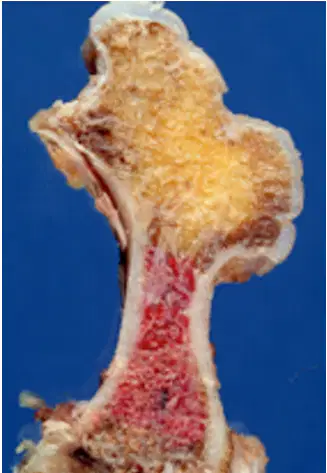
A 45-year-old man has experienced pain in the area of the left hip and upper thigh for the past 7 months. On physical examination, there is tenderness on deep palpation of the left side of the groin. The range of motion at the left hip is decreased, but there is no swelling or warmth on palpation. Pelvic and left leg radiographs show an upper femoral metaphyseal mass lesion that erodes into the surrounding bone cortex. The proximal femur is excised and on sectioning has the gross appearance shown in the figure. Which of the following cell types is most likely to be proliferating in this mass?
Primitive neuroectodermal cell
Chrondrocyte
Osteoclast
Plasma cell
Osteoblast
A patient suffered a complete tear of biceps brachii muscle at its insertion site at the radial tuberosity. For proper treatment, you must identify the damaged tissue. Which of the following tissue was damaged at the tear site?
Dense regular connective tissue
Dense irregular connective tissue
Reticular tissue
Elastic tissue
Loose areolar connective tissue
A 19-year-old footballer was sidelined after falling in a game. You as a first aid team present found that his forearm is strangely angulated, no laceration on the skin, and neither paresthesia nor diminished distal pulse present. Which is the most appropriate FIRST step to help this patient?
Immobilize the forearm with a splint
Apply ice packs directly on the forearm
Try to re-aligned the forearm
Apply pressure to the forearm to stop swelling
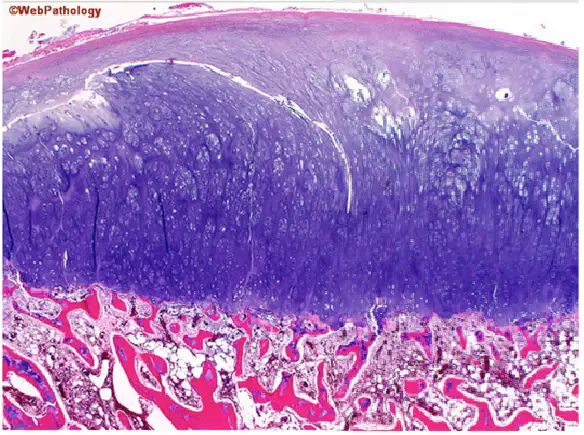
A 25-year-old woman presented with a firm mass in her left lateral pelvis. She felt pain in the area of the mass when lying on her side. Her past medical history was significant only for hypertension. Family history was negative for bone diseases.Physical exam revealed a bony mass that was immovable and attached to her left iliac wing. The mass was approximately 7 cm in greatest dimension. She felt mild pain with extremes of abduction and adduction of her left hip. A radiograph showed a mushroom-shaped bony excrescence joined to the iliac wing by a broad stalk. Computed tomography confirmed this and showed that the mass did not have a fibrous capsule. The patient underwent surgical removal of the suspicious bone lesion. Microscopic examination shows the findings in the figure. What is the most likely diagnosis?
Osteochondroma
Ewing sarcoma
Osteomyelitis
Chondroma
Osteosarcoma
A male, 65 years old, presented with pain in the right hip, especially during prolonged walking, since 3 years ago. She had painful and limited right hip internal rotation. What is the appropriate next step to confirm the diagnosis in this case?
Hip ultrasound
Rheumatoid factor and anti-CCP
Hip X-ray
CRP and ESR laboratory
A male, 65 years old, presented with pain in the right hip, especially during prolonged walking, since 3 years ago. She had painful and limited right hip internal rotation. What is the most appropriate diagnosis in this case?
Rheumatoid arthritis
Osteoarthritis
Gout
Psoriasis
A 19-year-old with hormonal imbalances came to hospital for upper right femur fractured. The X-ray showed well circumscribed lesion and a partly cystic. A curretage biopsy was performed and its microscopic showed fibrous tissue proliferated that containing "claw (U)-shape" configuration of bone trabeculas. What is the most likely diagnosis you may describe to him?
Chondroblastoma
Osteomyelitis tuberculosa
Osteomyelitis chronic
Fibrous dysplasia of the bone
Ganglion cyst
A 12-year-old boy comes to the Rheumatology Clinic with symmetrical painful swollen joints including: proximal interphalangeals, metacarpophalangeals, wrist and knee joints. This has been occurring for the last three months and upon further inquiry he indicates that this is the first time he has developed these symptoms. Laboratory findings reveal positive rheumatoid factor and ANA. Your choice for the first treatment in this case is:
Glucocorticoids
Cyclophosphamide
Opioids
NSAIDs
Methotrexate
A man 38 years old had upper arm muscle sore after he exercised weight training. He went to the doctor and doctor suggested weight training with the multigym and also aerobic training. What is the eccentric isotonic contraction?
The muscle lengthens as it contracts maintaining force and movement
The muscle shortens to produce force and movement
Tension remains constant as the muscle shortens or lengthens
The length of muscular remains constant during contraction
The maximal contraction at constant speed over the full range of movement
A 30-year-old boy had his right femur fractured by a car accident in the past 2 weeks. His fracture was not properly treated for which a purulent infection of the skin around the site of fracture has now been developing. A curettage biopsy is performed and its microscopic showed a sequestrum of the bone, inflammatory cells, and a granulating tissue but showed no specific giants. What is the most possible diagnosis?
Bone tumor
Osteomyelitis TB
Bursitis
Osteomyelitis pyogenic
Synovitis
A mother come to outpatient department because of concern that her 9 months old baby boy seems to have bow leg. When the boy starts to stand she noticed that both of his leg seems bowing on the knee. There's no history of trauma or other anomaly. What would probably be the problem?
Unilateral blount disease
Normal knee
Post traumatic bow leg
Infection
Congenital femoral deficiency
A male 60 years old complained of a sudden swelling of the left knee. The patient sometimes felt calf muscle spasms, otherwise healthy. He suffered several times left knee swelling before. There was a palpable bony enlargement of the knee. What is the appropriate next step to confirm the diagnosis in this case?
CRP and ESR laboratory
Rheumatoid factor and anti-CCP
Joint aspiration and fluid analysis
Knee ultrasound
A 30-year-old man brought to your clinic after falling from 2nd floor balcony 15 minutes ago. He is drowsy and barely conscious. On examination you found an oddly angled right femur with blood oozing from a pin point wound. Which of the following category is best to describe this condition?
Open fracture grade 3B
Open fracture grade 1
Open fracture grade 2
Open fracture grade 3A
Open fracture grade 3C
A male 66 years old complained of a sudden swelling of the left knee. Synovial fluid analysis is taken and the result is The appearance of Calcium pyrophosphate dihydrate crystals. What is the possible condition?
Infection
Osteoarthritis
Pseudogout
Gout
Rheumatoid
A 19-year-old girl came to the clinic due to joint pain and swelling on both knee and left ankle with stiffness in the morning since 6 weeks ago. On physical examination, the involved joints were erythematous, warmth, slight tender on palpation, and limited active-passive motion. Laboratory findings showed hemoglobin 11 g/dL, leukocytes 11,500/mm3, platelets 400,000/mm, negative ANA, positive RF, elevated C3, ESR and CRP. Which cytokine is the major target of treatment in this case?
IL-1
IL-6
Interferon y (gamma)
TNF-a
TGF-b
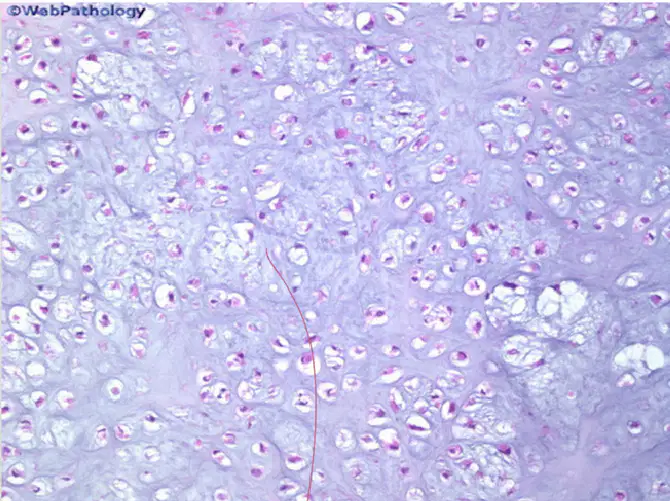
A 30-year-old woman has experienced pain in the area of hands and feet. On physical examination, there is a mass and slowly growing, no erythema or warmth. A radiograph shows a 7-cm mass in the metaphyseal region of small tubular bones of the hands and feet. Microscopic examination shows the findings in the figure. What is the most likely diagnosis?
Osteoblastoma
Chondroma
Plasmacytoma
Giant cell tumor
Osteitis fibrosa cystica
What is the neuro muscular junction?
The part of the sarcoplasmic of the muscle cell that is in closest proximity to the synaptic end bulb
The meeting point of a nerve fibre and the muscle fibre that it supplies
The the releasing place of the neurotransmitter acetylcholine (ACh) from post synaptic terminal
The production place of the neurotransmitter acetylcholine (ACh) in post synaptic terminal
The point of action potential traveling in the T tubules reaches the sarcoplasmic reticulum
A 34-year-old man presented with sudden excruciating pain in right arm and an inability to move after attempting to lift a weight equal to his body weight above his head in the gym. On physical examination, the patient was unable to move right shoulder, and squaring of right shoulder contour, internal rotation of the right shoulder is limited. Radiographs showed the anterior and inferior positions of the humeral head relative to the glenoid fossa. What is the most likely diagnosis for this?
Rotator Cuff Tear
Impingement syndrome
Shoulder bursitis
Frozen shoulder
Anterior shoulder dislocation
A 5 years old boy fall down when jumping on the bed. His mom brought him to ER few hour after the fall. The doctor diagnosed him with fracture of the forearm. This boy was put on an arm cast for 4 weeks, on the 3rd weeks. What would you probably see on the plain xray of the forarm?
Normal bone with periosteal thickening
Clear fracture line
Osseous callus
Porotic bone on fracture site
Undistinguised fracture site
A male 68 years old presents with chronic left hip pain with osteophyte and joint space narrowing. The patient also has a history of peptic ulcers. What is the first line of pharmaceutical management in this patient?
COX-2 inhibitor
Tramadol
Topical NSAID
Hyaluronic acid injection
Mr. Adi, 34 years old was felt down when he climbed the tree. The radiograph demonstrated the fracture of talus. What is the most appropriate reason that fractures of the talus have minimal displacement?
It is a tiny bone
It is a irregular bone
It is place over the calcaneus
Attached muscles pull the fragments apart
Malleoli hold the fragments in place
A 20 years old man worked a clerk for 5 years, since last month he has loss of sensation in his palmar and the 3 first digit. Some of the flexor muscles has no strength to move. The doctor diagnosed with Carpal Tunnel Syndrom. What nerve is most likey compressed?
N. radialis
N. medianus
N. ulnaris
N. musculocutaneus
N. digitalis ventralis
A 44-year-old man presents to your office with pain and swelling of the small joints in his hands and wrists. He reports stiffness in his both hands that occurs every morning and lasts for 2 hours. On examination, he has symmetrical involvement of both wrists and proximal interphalangeal joints. The involved joints are swollen and tender. Laboratory tests show high ESR, negative rheumatoid factor, and a positive anti-CCP antibody. X-ray of the wrist and hands reveal erosions in the proximal phalanges and ulnar styloid process. Which is the most appropriate drug to halt the disease progression?
Prednisolone
Hydroxychloroquine
NSAID
Infliximab
Methotrexate
A male 60 years old complained of a sudden swelling of the left knee. The patient sometimes felt calf muscle spasms, otherwise healthy. He suffered several times left knee swelling before. There was a palpable bony enlargement of the knee. Synovial fluid analysis is taken on the above case. The result is:
The appearance of calcium pyrophosphate dihydrate crystals
Increase red blood count
Appearance of bacteria
Increase white blood count
An overweight female 60 years old presented with bilateral knee pain during activity, bowleg, and knee joint osteophyte on x-ray. What is the first-line treatment for this condition?
Knee tapping
weight loss
Knee unloading brace
steroid injection
A patient, male 50 years old, presents to a clinic with briefly left knee stiffness in the morning and pain following prolonged walking. On x-ray examination, a knee osteophyte was found. The disease processes arise from all these tissue, except:
Peripheral blood vessels
Bone
Intraarticular fat
Cartilage
Synovium
A 5 years old boy fall down when jumping on the bed. His mom brought him to ER few hour after the fall. The doctor diagnosed him with fracture of the forearm. What is the phase of bone healing happening when this boy come to the ER?
Remodelling
Consolidation
Consolidation
Haematoma and inflamation
Callus formation
A man comes for treatment with complaints of not being able to rotate his head to the right. What muscle problem might there be?
M. splenius colli sinistra
M. iliocostalis sinistra
M. trapezius sinistra
M. serratus posterior superior
M. semispinalis sinistra
In pediatric X-ray imaging, which feature is characteristic of a growth plate (physis)?
Radiolucent line between the epiphysis and metaphysis
Thickened cortex
Fracture line parallel to the diaphysis
Sclerotic line across the diaphysis
Displacement of the epiphysis
Each typical vertebra has how many processes?
6
8
4
7
5
Which of the following conditions is characterised by the appearance of "sunburst" or "spiculated" patterns on a bone X-ray?
Osteoarthritis
Osteochondroma
Paget's disease
Osteomyelitis
Osteosarcoma
A forensic expert examines a vertebra found in the forest. It is suspected that these bones are thoracic vertebrae, but at these bones only 1 fovea costalis was found on each side of the vertebral body and a fovea costalis transversalis on each transversal process. Judging from this condition, the forensic expert is examining which thoracic vertebrae?
VT IX
VT VIII
VT XI
VT XII
VT X
Why is it important to obtain both an anterior-posterior (AP) and a lateral view in bone X-rays?
To detect soft tissue abnormalities
To minimize radiation exposure
To better visualize the depth and alignment of fractures
To avoid overexposure of the X-ray film
To provide a complete 3D image

