
 Worksheets
Earthquakes and Volcanoes
Total questions: 94
Worksheet time: 47mins
According to the standard S6E5, what can the movement of lithospheric plates cause?
Major geologic events such as earthquakes and volcanic eruptions
Weather changes
Ocean currents
Plant growth
Fill in the blank: The movement of lithospheric plates is called _________.
plate tectonics
continental drift
seafloor spreading
volcanism
Which of the following are types of plate boundaries mentioned in the clarification statement?
Convergent
Divergent
Transform
All of the above
Plate tectonics can cause major geologic events such as earthquakes and volcanic eruptions.
True
False
The movement of tectonic plates causes major geologic events, such as earthquakes and volcanic eruptions, because:
they create stress and pressure at plate boundaries, leading to earthquakes and volcanic activity.
they change the Earth's climate rapidly.
they increase the amount of sunlight reaching the Earth's surface.
they cause the oceans to evaporate.
Fill in the blank: A ________ is a shaking of the ground caused by the sudden movement of large blocks of rocks along a fault.
Earthquake
Volcano
Tornado
Flood
Fill in the blank: In an earthquake, the ________ is the point underground where the rocks first begin to move.
Focus
Epicenter
Crust
Fault
Fill in the blank: The ________ is the point on Earth’s surface directly above the focus of an earthquake.
Epicenter
Crust
Mantle
Seismic zone
Fill in the blank: A ________ is an instrument that constantly records ground movements.
Seismograph
Barometer
Thermometer
Anemometer
Fill in the blank: ________ is the size or extent of something.
Magnitude
Color
Texture
Weight
Fill in the blank: The ________ is a numerical scale for expressing the magnitude of an earthquake on the basis of seismograph readings.
Richter Scale
Beaufort Scale
Mohs Scale
Fahrenheit Scale
Earth is never still.
True
False
Everyday thousands of earthquakes are detected. Most are:
Very large
Too small to notice
Always dangerous
Only in cities
An earthquake is the shaking and trembling that results from the ______ of rock beneath earth's surface.
movement
melting
cooling
evaporation
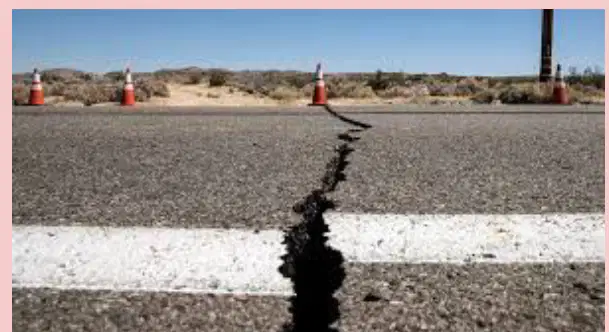
What does the image of the cracked road show?
Flood damage
Earthquake damage
Road construction
Erosion
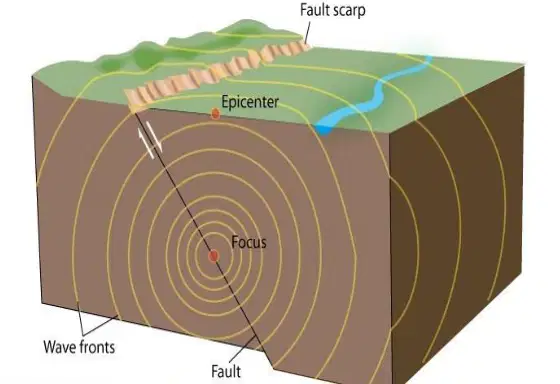
What causes earthquakes?
The forces of plate movement
The movement of water
The blowing of wind
The growth of plants
Some of the energy released during an earthquake travels in the form of ________.
seismic waves
magnetic fields
light waves
radio signals
Seismic waves are vibrations that are similar to ________ waves.
sound
light
water
radio
What do seismic waves carry through the Earth after an earthquake?
Energy released by an earthquake
Water from underground rivers
Magma from the mantle
Wind currents
Seismic waves of an earthquake spread out in every direction from the ______ of an earthquake. (Think of it like the ripples from a rock thrown in a pond!)
focus
crust
mantle
surface
The focus is the area beneath Earth's surface where rock that was under begins to break or move.
stress
fault
crust
magma
The point on the surface directly above the focus is called the ______.
epicenter
mantle
crust
seismic zone
What triggers an earthquake according to the passage?
The breaking or movement of rock under stress beneath Earth's surface (at the focus) triggers an earthquake.
Heavy rainfall causes the ground to shake, triggering an earthquake.
The growth of plants beneath the surface triggers an earthquake.
The movement of ocean waves triggers an earthquake.
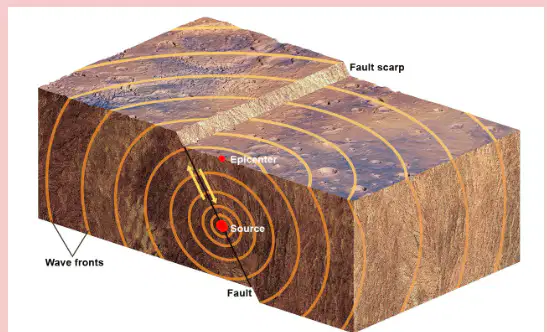
What is the name of the point on the Earth's surface directly above the source of the earthquake?
Epicenter
Focus
Crust
Seismic zone
What do seismic waves carry from the focus through the Earth's interior and across the Earth's surface?
Water
Energy
Rocks
Air
How many main types of seismic waves are there?
2
3
4
5
Fill in the blank: The three main types of seismic waves are ________, S waves, and Surface waves.
P waves
T waves
Q waves
R waves
Fill in the blank: Earthquakes only send out ________ and ________ from its focus.
S and P waves
X and Y waves
L and T waves
Q and R waves
Surface waves can develop where S and P waves reach the surface.
True
False
Where do most earthquakes start?
In the atmosphere
In the lithosphere, around 100 kilometers beneath the surface of Earth
On the Earth's surface
In the ocean
The first waves to arrive during an earthquake are called ______ waves or P waves.
primary
secondary
surface
love
P waves ______ and expand the ground like an accordion.
compress
vibrate
rotate
twist
P waves can damage buildings!
True
False

In which direction are the P waves traveling?
Upwards
Downwards
To the right
To the left
What type of waves come after P waves?
Primary waves
Secondary waves (S waves)
Surface waves
Longitudinal waves
S waves vibrate from ______ to side or up and down.
side
front
back
center
The vibrations of S waves are at a 90 degree angle to the direction they travel.
True
False
When S waves reach the surface, what do they do to buildings?
Shake buildings violently
Make buildings float
Cool buildings down
Make buildings invisible
P waves travel through solids and liquids, while S waves can only travel through _______.
solids
liquids
gases
plasma
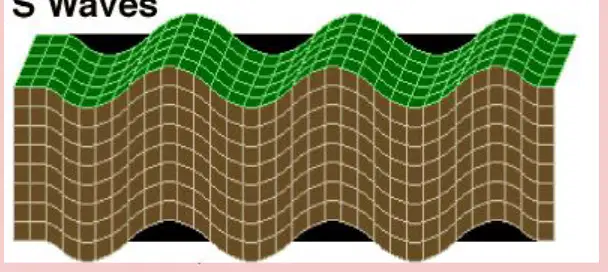
The diagram labeled 'S Waves' shows that S waves move in which way?
Side to side
Up and down
In a circular motion
Straight through liquids
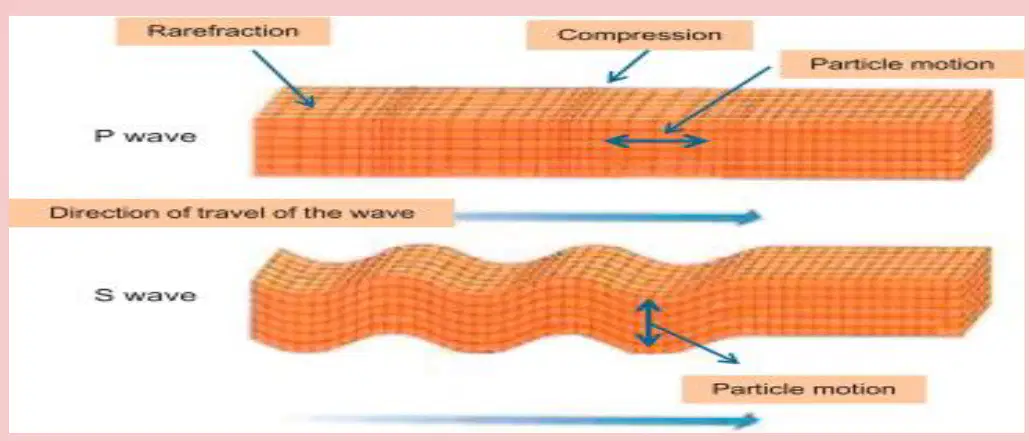
S waves and P waves are different in how they travel through the Earth and can be used to identify the Earth's layers because:
P waves travel through solids and liquids, S waves only through solids, helping us identify Earth's layers based on where each wave is detected.
Both P waves and S waves travel only through liquids, so they cannot help identify Earth's layers.
S waves travel faster than P waves and can pass through the Earth's core, while P waves cannot.
P waves and S waves travel at the same speed and through the same materials, so they do not help identify Earth's layers.
When P waves and S waves reach the ______, some of them become surface waves.
surface
core
mantle
crust
Surface waves move more ______ than P waves and S waves, but they can cause severe ground movements.
slowly
quickly
loudly
smoothly
Surface waves can make the ground roll like ocean waves or shake buildings from side to side.
True
False
What happens when P waves and S waves reach the surface?
They disappear
Some become surface waves
They speed up
They stop moving
Geologists monitor earthquakes by ________.
measuring the waves they produce
observing the color of rocks
counting the number of volcanoes
measuring rainfall patterns
tracking animal migrations
The amount of earthquake damage or shaking that is felt is rated using which scale?
Richter scale
Modified Mercalli Scale
Seismograph
Moment magnitude scale
The magnitude, or size, of an earthquake is measured on a seismograph using the ________ or moment magnitude scale.
Richter scale
Beaufort scale
Fujita scale
Saffir-Simpson scale
A seismograph is an instrument that records and measures an earthquake’s ________.
seismic waves
temperature
wind speed
magnetic field
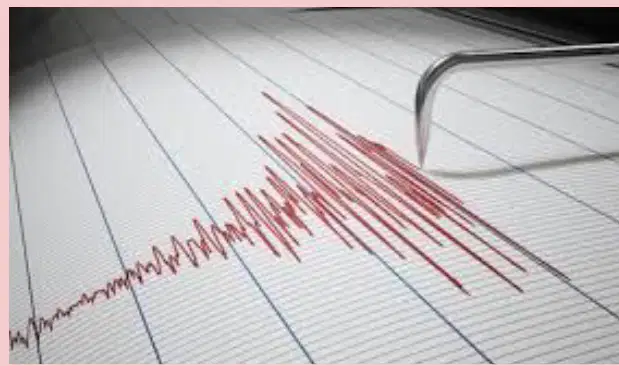
A seismograph measures:
earthquakes
temperature
wind speed
rainfall
What does the Modified Mercalli scale rate?
The speed of an earthquake
The amount of shaking from an earthquake
The depth of an earthquake
The duration of an earthquake
How is the Modified Mercalli scale rated?
By using scientific instruments
By people's observations, without the use of any instruments
By measuring the earthquake's magnitude
By the time of day
How many steps are there in the Modified Mercalli scale?
12
8
15
20
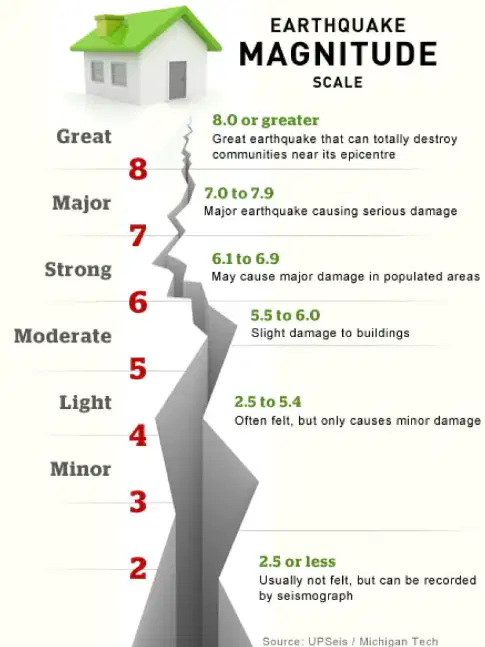
What does the Richter scale measure?
Temperature
Earthquake magnitude
Wind speed
Rainfall
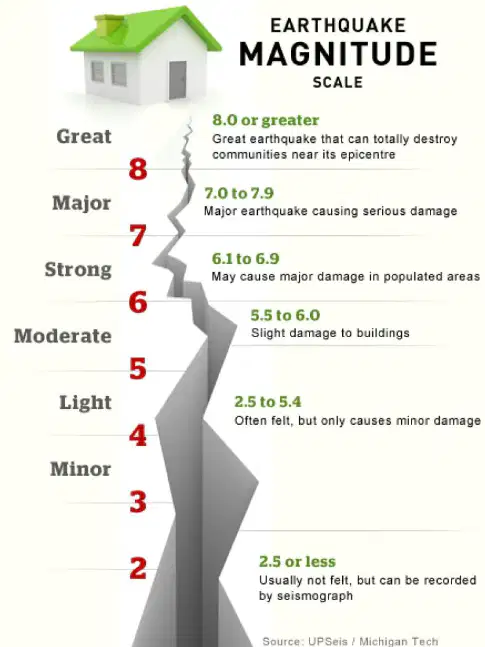
An earthquake with a magnitude of 8.0 or greater is classified as:
Minor
Light
Great
Moderate
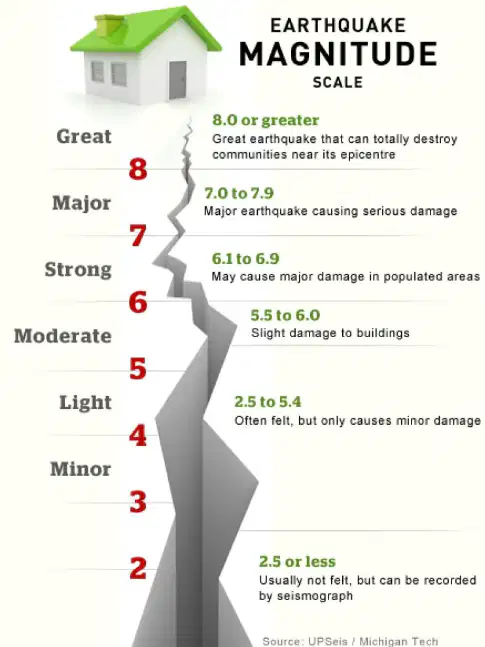
An earthquake with a magnitude between 5.5 and 6.0 causes ______ damage to buildings.
slight
severe
no
catastrophic
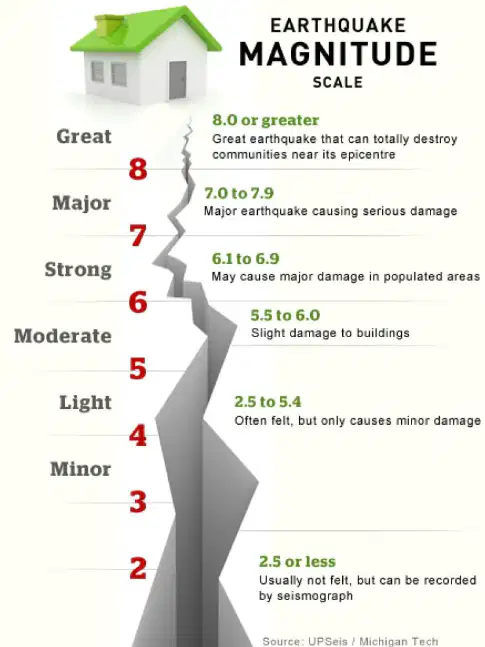
An earthquake with a magnitude of 2.5 or less is usually not felt but can be recorded by a seismograph.
True
False
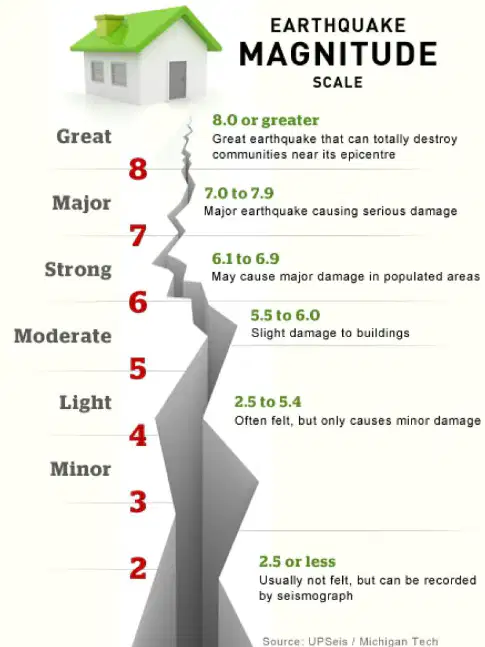
What is the range of magnitudes for a 'Major' earthquake according to the Richter scale?
A) 2.5 or less
B) 2.5 to 5.4
C) 5.5 to 6.0
D) 7.0 to 7.9
What instrument is used to record the size of earthquake waves for the Richter scale?
Seismograph
Barometer
Thermometer
Anemometer
The 'magnitude' of an earthquake refers to:
the amount of energy released during the earthquake
the depth at which the earthquake occurs
the area affected by the earthquake
the duration of the earthquake
What do geologists use the moment magnitude scale for?
To measure temperature
To rate the total energy an earthquake releases
To predict weather
To measure rainfall
To assign a magnitude to an earthquake, geologists use data from ________ and other sources.
seismographs
barometers
thermometers
anemometers
The data from seismographs allows geologists to estimate how much ________ an earthquake releases.
energy
water
wind
light
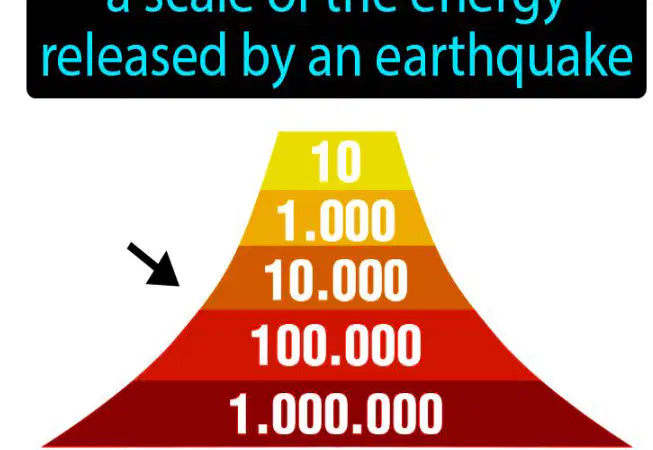
What does the moment magnitude scale measure?
The speed of an earthquake
The energy released by an earthquake
The duration of an earthquake
The location of an earthquake
Each one-point increase in magnitude represents the release of roughly how many times more energy?
32 times
10 times
100 times
2 times
A magnitude 6 earthquake released how many times more energy than a magnitude 5 earthquake?
32 times
10 times
100 times
2 times
An earthquake's effects and damages increase with magnitude.
True
False
Below a magnitude of 5, earthquakes are small and cause little damage.
True
False
Those with a magnitude above 6 can cause great damage.
True
False
What is an epicenter?
The point on the Earth's surface directly above where an earthquake occurs.
The deepest point in the ocean.
The center of a volcano.
The location where a tornado touches down.
What is used to locate the epicenter of an earthquake?
Seismic waves and data from seismograph stations.
Weather satellites and radar images.
Ocean currents and tidal patterns.
Magnetic field measurements.
Locating the epicenter helps geologists identify areas where earthquakes may occur in the future.
True
False
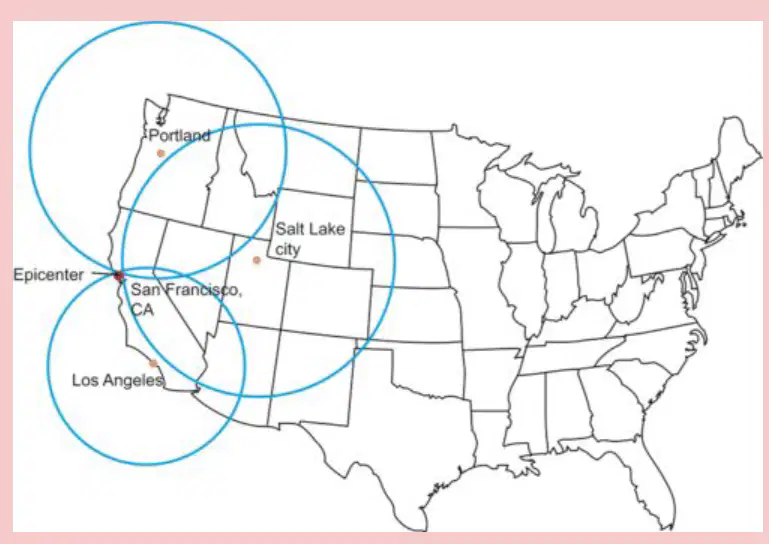
How do geologists use this type of diagram to locate the epicenter of an earthquake?
They use the intersection of circles drawn from different seismograph stations to pinpoint the epicenter.
They measure the depth of the earthquake directly from the diagram.
They use the diagram to predict future earthquakes in the area.
They identify the epicenter by matching the diagram to a map of fault lines.
The movement of lithospheric plates, called plate tectonics, can cause major geologic events such as earthquakes and volcanic eruptions because:
the plates interact at their boundaries, causing stress and magma movement.
the plates are made of water, which causes flooding.
the plates move only vertically, creating mountains.
the plates never move, so no events occur.
Which of the following are types of plate boundaries mentioned in the standard?
Convergent
Divergent
Transform
All of the above
Fill in the blank: The movement of lithospheric plates is called _________.
plate tectonics
continental drift
seafloor spreading
volcanism
Plate tectonics can cause major geologic events such as earthquakes and volcanic eruptions.
True
False
The movement of tectonic plates causes major geologic events, such as earthquakes and volcanic eruptions, by:
creating stress and pressure that leads to the release of energy along faults and the formation of magma.
increasing the Earth's gravitational pull, which triggers seismic activity.
causing changes in the Earth's magnetic field, resulting in eruptions and quakes.
altering the planet's rotation speed, which leads to geologic disturbances.
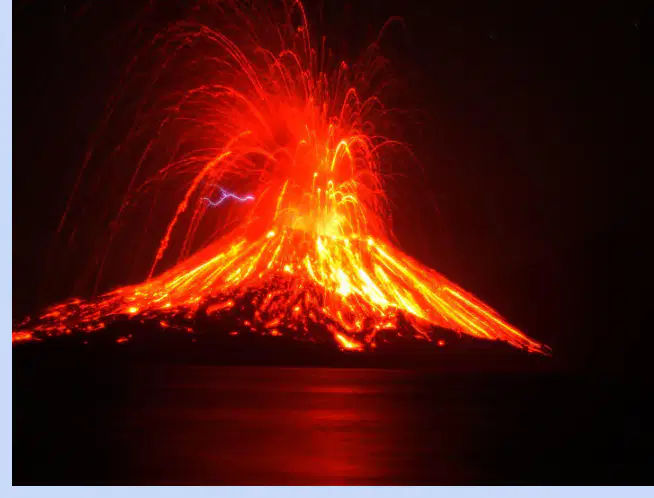
What is the typical shape of a volcano?
Dome-shaped
Cone-shaped
Flat
Irregular
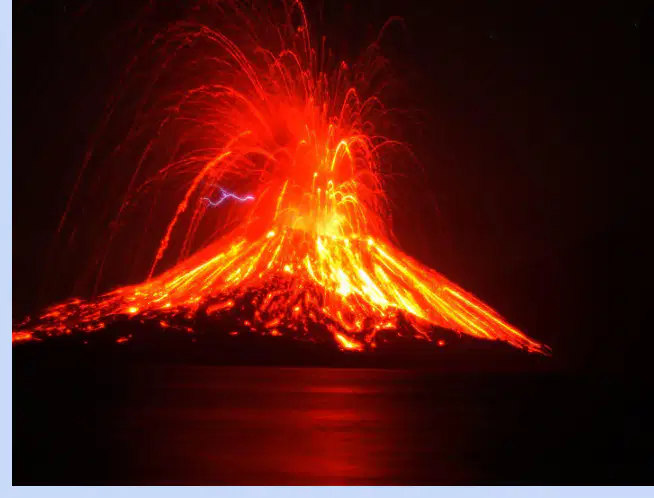
A volcano forms around a vent in the earth’s crust through which ______, steam, and ash are expelled.
lava
sand
water
oil
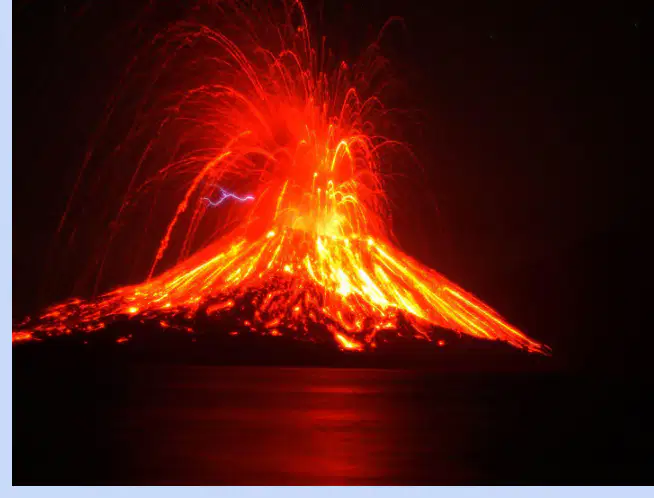
Volcanoes can erupt continuously or at irregular intervals.
True
False
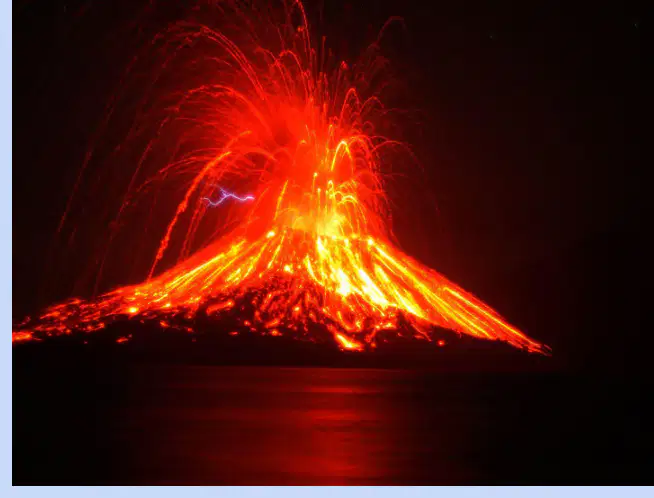
How many distinct types of volcanoes are there?
Two
Three
Four
Five
What is the first kind of volcano listed in the '4 Kinds of Volcanoes'?
Composite Volcano or Stratovolcano
Shield Volcano
Cinder Cone Volcano
Lava Dome Volcano
What is the second kind of volcano listed in the '4 Kinds of Volcanoes'?
Cinder Cone Volcano
Shield Volcano
Lava Dome Volcano
Fissure Volcano
What is the third kind of volcano listed in the '4 Kinds of Volcanoes'?
Shield Volcano
Cinder Cone Volcano
Lava Dome Volcano
Fissure Volcano
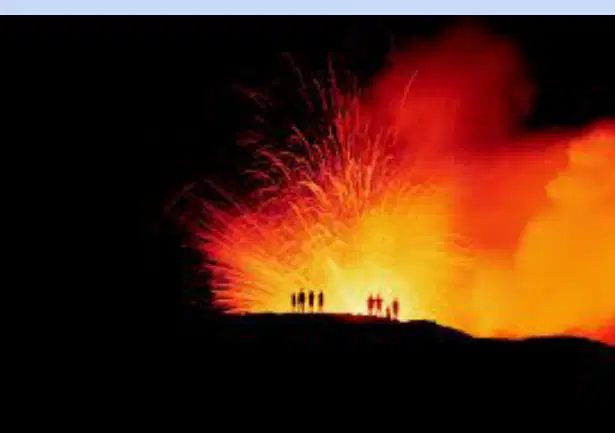
What is the fourth kind of volcano listed in the '4 Kinds of Volcanoes'?
Lava Dome
Shield Volcano
Cinder Cone
Stratovolcano
What type of cones do composite volcanoes have?
Irregular
Symmetrical
Flat
Steep
Composite volcanoes are built by alternating layers of ________, volcanic ash, cinders, and bombs.
lava flows
sandstone
granite
limestone
Composite volcanoes can create ________ eruptions.
Gentle
Explosive
Quiet
Slow
Which of the following is an example of a composite volcano in Japan?
Mt. Hood
Mt. St. Helens
Mount Fuji
Mt. Rainier
Name two examples of composite volcanoes in the U.S.
Mt. Hood and Mt. St. Helens (also Mt. Rainier)
Mauna Loa and Kilauea
Yellowstone and Lassen Peak
Mount Mitchell and Mount Washington
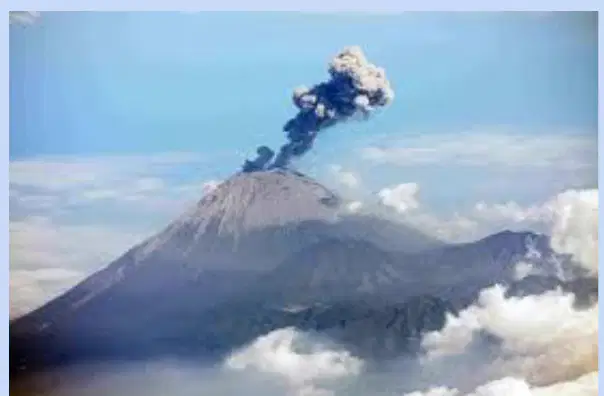
The image shows a volcano with a large symmetrical cone and an explosive eruption. What type of volcano is this?
Composite volcano
Shield volcano
Cinder cone volcano
Lava dome
What shape are cinder cone volcanoes?
Cone-shaped
Flat-topped
Dome-shaped
Irregular
What spews into the air during eruptions of cinder cone volcanoes and falls as cinders on the sides?
Blobs of lava
Ash clouds
Water vapor
Molten metal

