
 Worksheets
Lit Element Study Guide
Total questions: 47
Worksheet time: 24mins

What is the setting in a piece of fiction?
The setting is the time, place, and general environment in which a piece of fiction occurs.
The setting is the main character's personality traits.
The setting is the sequence of events in the story.
The setting is the conflict between the protagonist and antagonist.
The setting creates conditions that affect EVERYTHING about the characters in a story. What is one way culture can impact characters?
It can influence their behavior, personality, family, or goals.
It determines the story's genre.
It decides the length of the story.
It controls the weather in the story.
The setting creates conditions that affect EVERYTHING about the characters in a story. Social impacts include how social expectations affect our lives. What is one way social expectations can influence characters in a story?
They shape characters' behaviors and decisions.
They determine the story's physical location.
They decide the story's time period.
They control the weather in the story.
The setting creates conditions that affect EVERYTHING about the characters in a story. Economic impacts can influence characters in which of the following ways?
By affecting their experiences based on financial background
By determining the story's genre
By deciding the story's time period
By choosing the main character's name
Your life would be different if you were born in another country or another time period because:
You would experience different cultures, laws, and ways of life.
Everything would be exactly the same.
You would have the same friends and family.
You would always speak the same language.
What does 'point of view' refer to in a story?
A) The time period in which the story takes place
B) The relationship of the narrator, or storyteller, to the story
C) The main conflict in the story
D) The setting of the story
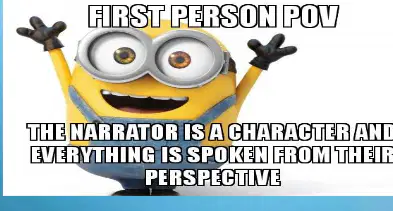
In first-person point of view, the narrator is a character in the story, referred to as _____?
'I'
'he'
'they'
'you'
In third-person limited point of view, the narrator reveals the thoughts of only one character, referring to that character as ____ or ____.
'he' or 'she'
'I' or 'me'
'you' or 'your'
'they' or 'them'
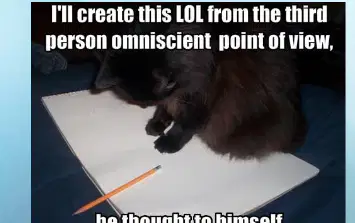
Which point of view is described as the narrator knowing everything about the story’s events and revealing the thoughts of all the characters?
First-person point of view
Third-person limited point of view
Third-person omniscient point of view
Second-person point of view
Fill in the blank: A ______ is a person or an animal in a story, a play, or another literary work.
character
setting
plot
theme
Which type of character does not change much in the story?
Dynamic or round character
Static or flat character
Protagonist
Antagonist
Which type of character changes as a result of a story’s events?
Static or flat character
Dynamic or round character
Protagonist
Antagonist
Fill in the blank: The ______ is the main character of the story who is involved with the central conflict.
protagonist
antagonist
narrator
sidekick
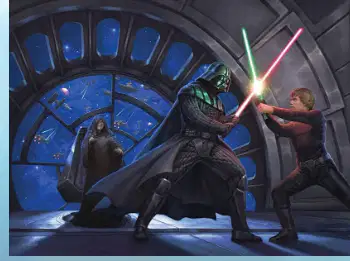
Fill in the blank: The ______ is the character or force that opposes the protagonist.
antagonist
protagonist
narrator
sidekick
What is characterization?
The way a writer reveals the personality of a character.
The setting of a story.
The plot of a story.
The theme of a story.
Direct Characterization is:
The narrator’s direct comments about a character.
The character’s actions.
The setting description.
The story’s theme.
Indirect Characterization is a method of characterization most used by writers revealing a character’s personality in one or more of the following ways. Fill in the blank: __________ of the character.
Physical appearance
Favorite color
Birthplace
Favorite food
Which of the following is NOT a way writers use indirect characterization?
Physical appearance of the character
Speech and actions of the character
The book’s title
Inner thoughts and feelings of the character
One way a writer can reveal a character’s personality through indirect characterization is:
by describing the character’s actions
by stating the character’s traits directly
by listing the character’s age
by providing a character’s physical address
Comments made about the character by other characters in the story is a form of indirect characterization.
True
False
The difference between direct and indirect characterization is:
Direct characterization tells the audience what the character is like, while indirect characterization shows the character through actions and dialogue.
Direct characterization uses only dialogue, while indirect characterization uses only narration.
Direct characterization is used only for main characters, while indirect characterization is used for minor characters.
Direct characterization describes the setting, while indirect characterization describes the plot.
What does the 'S' in the STEAL acronym for indirect characterization stand for?
Speech
Style
Setting
Situation
What does the 'T' in the STEAL acronym for indirect characterization stand for?
Thoughts
Tactics
Traits
Talk
What does the 'E' in the STEAL acronym for indirect characterization stand for?
Effect (on others)
Emotion
Energy
Example
What does the 'A' in the STEAL acronym for indirect characterization stand for?
Actions
Attitude
Appearance
Ambition
What does the 'L' in the STEAL acronym for indirect characterization stand for?
Looks
Language
Love
Laughter
What does the 'S' in STEAL stand for?
Speech
Style
Situation
Story
What does the 'T' in STEAL stand for?
Thoughts
Tactics
Traits
Tones
What does the 'E' in STEAL stand for?
Effect
Emotion
Energy
Effort
What does the 'A' in STEAL stand for?
Actions
Attitude
Appearance
Ambition
What does the 'L' in STEAL stand for?
Looks
Learns
Loves
Leads
What is conflict?
A struggle between opposing forces
A peaceful agreement
A type of friendship
A celebration
An Internal Conflict takes place within the mind of a character who is torn between opposing feelings or between different courses of action. What is an example of internal conflict?
Person vs. Self
Person vs. Person
Person vs. Society
Person vs. Machine
An External Conflict takes place between a character and an outside force. Which of the following is NOT an example of external conflict?
A) Person vs. Person
B) Person vs. Society
C) Person vs. Self
D) Person vs. Nature
Person vs. Person: this is an external struggle between two characters.
True
False
Person vs. Society: this is an external struggle between a character and a social force or condition produced by society, such as poverty, political revolution, or a set of values.
True
False

Fill in the blank: This type of conflict is called _________.
Person vs. Nature
Person vs. Person
Person vs. Society
Person vs. Technology
An external conflict between a character and a machine is called _________.
Person vs. Machine
Person vs. Person
Person vs. Nature
Person vs. Society
What is the underlying and universal meaning, message, or lesson of the story called?
Plot
Theme
Setting
Character
Good stories often have many _________.
themes
errors
pages
authors
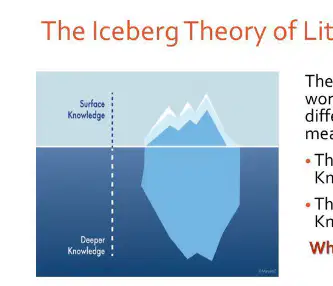
According to the Iceberg Theory of Literature, what are the two levels of knowledge in a work of literature?
Surface Knowledge and Deeper Knowledge
Literal Meaning and Figurative Meaning
Explicit Content and Implicit Content
Textual Level and Subtextual Level
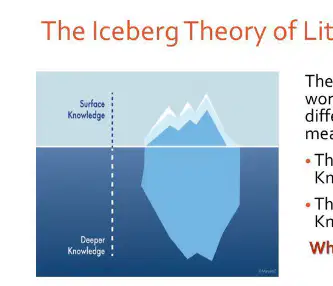
An iceberg might be a good metaphor for literature because:
much of its meaning lies beneath the surface, unseen
it is cold and unfeeling like some stories
it is always moving and changing shape
it is dangerous and should be avoided


This is normally the longest part of the plot which explains events that lead to the climax.
rising action
climax
resolution
predicition

At which stage of the plot diagram are the moments in the story slowly leading toward a key turning point?


What is the highest point of interest or suspense in a story called?
Exposition
Rising Action
Climax
Resolution

What does the PLOT DIAGRAM end with?
Expostion
Climax
Resolution
Falling Action

