
 Worksheets
Pressure and Diffusion
Total questions: 52
Worksheet time: 57mins
at low temperature, particle move slower
true
false
at hight temperature, particle move faster
true
false
increase in temperature causes an decrease in pressure.
true
false
Diffusion is only on liquid and gas-particle (fluid)
true
false
The lighter the particle, the slower for it to diffuse
False
True
All insoluble substances in water can diffuse in water
True
False

Pressure can be exerted by solids, liquids and gases.
TRUE
FALSE


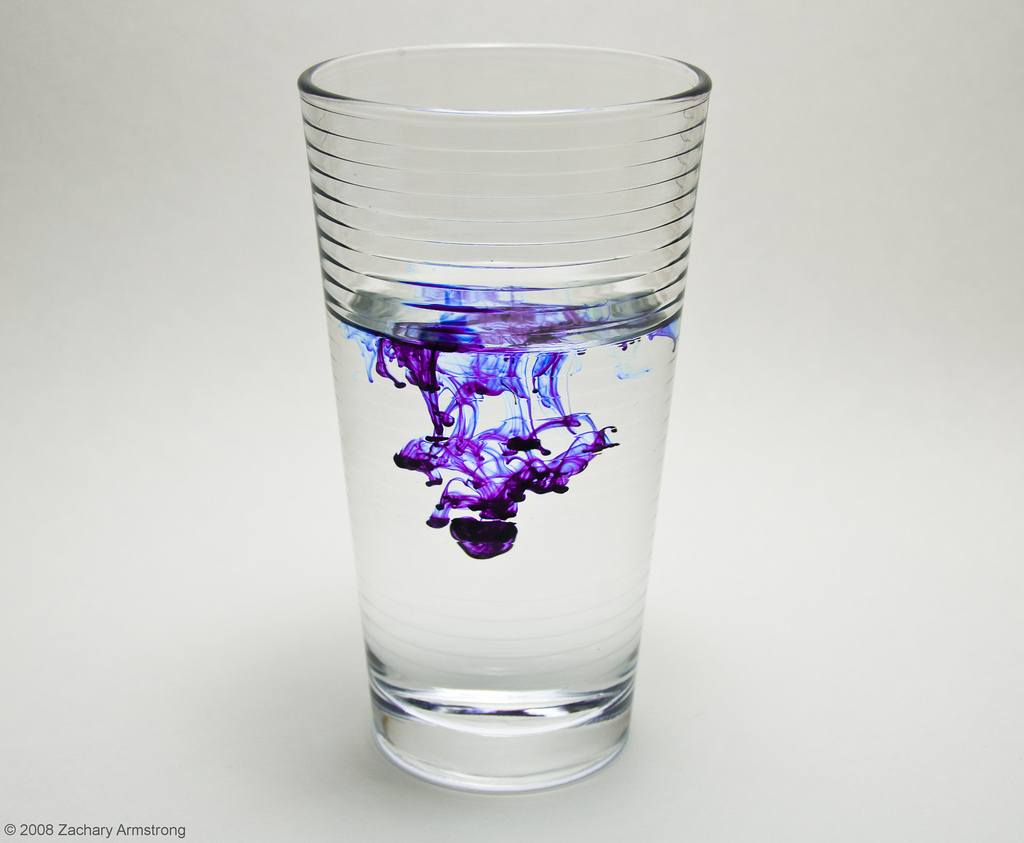
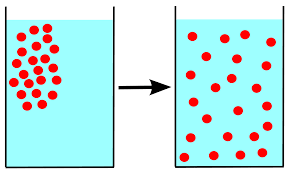
What is DIFFUSION?


The pressure inside the balloon will :
Decrease
Increase
Remain the same
Not enough information to formulate an answer
Gas pressure is caused by
Gas molecules heating up
Gas molecules reacting with other gas molecules
Gas molecules hitting the walls of a container
Gas molecules hitting other gas molecules
Diffusion is the natural movement of molecules from:
Areas of low concentration to areas of high concentration
Areas of high concentration to areas of low concentration
Cold to hot environments
Gaseous to liquid environments
Which of the following describes molecules moving down a concentration gradient?
Sugar settling at the bottom of a water glass
A cell with lots of water in it absorbing even more water
A bottle of soda in which bubbles of carbon dioxide are evenly distributed
Warm air moving from a radiator to fill up a room
Which of the following describes a state of equilibrium?
A group of molecules that have stopped moving completely
A room whose temperature is consistent throughout
Carbon dioxide bubbles escaping from a soda bottle when it's opened
A tree's roots absorbing nutrients from the soil
When do molecules stop moving or vibrating?
When equilibrium is reached
Never
When the temperature is below 0 degrees Celsius
When the substance they are part of becomes a solid
What causes diffusion?
The constant, random motion of molecules
Magnetic attraction between atoms
The nuclear forces that hold atoms together
The tendency of atoms to form chemical bonds with one another
From fastest to slowest rate of diffusion, which of the following is in the correct sequence?
Solids, liquids, gases
Liquids, gases, solids
Gases, liquids, solids
Gases, solids, liquids
Which of the following will diffuse the fastest?
A tablespoon of sugar in a glass of water
Heat through a solid piece of steel
A pinch of salt in a glass of water
The smell of bacon cooking throughout a room
Why is diffusion so important in biology?
It's the basic power source for most types of cells
It allows substances to move across cell membranes
It prevents toxins from entering our bodies
Without diffusion, cell division could not take place
What happens to the coffee particles when coffee is added to hot water?
They sink to the bottom of the cup
They spread out
They clump together
They freeze
What does a 'region with high concentration' mean?
An area with a SMALL number of particles
An area with a LARGE number of particles
An area with an UNEVEN number of particles
An area with no particles
Diffusion is the movement of particles from an area of _____ concentration to an area of ______ concentration
High, Low
Low, High
Low, Low
High, High
What does “area of high concentration” mean?
Spread out
Tightly packed together
Uncrowded
Spacious
An increase in temperature does what to diffusion?
Speeds it up
Slows it down
Nothing
Stops it all together
Which gases move into and out of the blood at the lungs by diffusion
Nitrogen and Oxygen
Oxygen and Carbon Dioxide
Nitrogen and Carbon Dioxide
Argon and Nitrogen

Diagram shows the design of a dam. Why does the thickness of the dam increase with its depth?
The design of this structure is stronger.
Water pressure increases with depth.
The cost of construction is lower.
Water pressure acts uniformly in all directions.

Which length is used to measure the pressure of liquid get by the fish?
A
B
C
D
When divers return to the surface of water quickly, the pressure is ________.
Increased
Decreased
Not changing
The pressure in a liquid or gas is measures by a _________.
Viscosity
Pressure Plate
Pressure Gauge
Pressure Counter

Consider a sample of water in the tank above. Let us mark a point at each side: A, B, C, and D as shown. What statement is correct about those four point?
hydrostatic pressure at point A is greater than hydrostatic pressure at point B
hydrostatic pressure at point B is greater than hydrostatic pressure at point A
hydrostatic pressure at point C is greater than hydrostatic pressure at point D
hydrostatic pressure at point D is greater than hydrostatic pressure at point C

A force of 500 N is given to 0.02 m2. What is the pressure?
25 Pa
25 kPa
10 Pa
0.04 kPa

Liquid X has smaller density than liquid Y. Which tube has the smallest pressure by the liquid?
A
B
C
D
A box has a mass of 5 kg. What is the contact are between the box and the floor to produce pressure of 20 Pa?
2.5 m2
2.5 m3
0.25 m2
100 m2
Why is it hard to cut using a dull knife?
A dull knife has larger contact area than the sharp one, so its pressure is greater.
A dull knife has smaller contact area than the sharp one, so its pressure is greater.
A sharp knife has larger contact area than the sharp one, so its pressure is greater.
A dull knife has larger contact area than the sharp one, so its pressure is smaller.
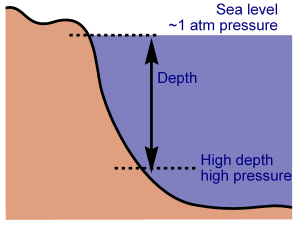
When you increase your depth under water, the water pressure on your body
increases
decreases
stays the same
A liquid has a density of 920 kg/m3. If an object is below 2 m3 below the surface. How much is the pressure of the object?
920 Pa
200 Pa
1840 Pa
18400 Pa
A diver swims in a location 20 m below the surface of a lake. If the density of the water is 1000 kg/m3. How much is the pressure on the diver?
1,000 Pa
10,000
2,000 Pa
20,000 Pa

