
 Worksheets
US Constitution and Government Structure Quiz
Total questions: 116
Worksheet time: 3hrs 13mins
What was the new country's combination of experiences under, according to the US Constitution?
Articles of Confederation and as a British colony
Articles of Confederation and as a French colony
Articles of Confederation and as a Spanish colony
Articles of Confederation and as a Dutch colony
How did the Founders solve the problems they experienced with government power?
By creating a central government with limited powers
By creating a central government with unlimited powers
By creating a central government with shared powers
By creating a central government with absolute powers
What system was used to divide power between the three branches of government?
A system to check the other two branches
A system to merge the other two branches
A system to eliminate the other two branches
A system to ignore the other two branches
What does the Preamble of the US Constitution explain?
Why the Constitution was written and its purposes
The history of the United States
The economic policies of the government
The military strategies of the government
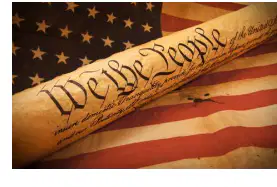
What is the significance of "We the People" in the Preamble?
It signifies the foundation of American democracy
It signifies the foundation of American monarchy
It signifies the foundation of American aristocracy
It signifies the foundation of American oligarchy
Which articles of the Constitution create the three branches of government?
Articles 1-3
Articles 4-6
Articles 5-7
Articles 2-4
What does Article 5 of the Constitution explain?
The creation of the three branches
The relationship of the states to one another
The ways that the Constitution can be amended
The ratification process
How many amendments are there in the Constitution?
10
27
15
21
What principle of the Constitution limits the power of the government with restrictions clearly stated?
Popular Sovereignty
Federalism
Limited Government
Republicanism
Which principle of the Constitution ensures that no one branch becomes too powerful?
Separation of Powers
Checks and Balances
Federalism
Popular Sovereignty
What is the purpose of the three branches of government according to the Constitution?
To ensure that one branch has all the power
To balance powers between the states and the national government
To create a single powerful government
To eliminate state governments
What is the primary role of the Legislative Branch?
To enforce laws
To interpret laws
To make laws
To veto laws
How many total members are there in the House of Representatives?
100
435
50
200
Which state has the most representatives in the House?
Missouri
Texas
New York
California
What is the minimum age requirement to be a member of the House of Representatives?
21 years
25 years
30 years
35 years
How long is the term for a member of the House of Representatives?
4 years
6 years
2 years
8 years
What is the term length for a U.S. Senator?
2 years
4 years
6 years
8 years
What is a Census?
A count of all eligible voters
A count of everyone living in the U.S.
A count of all registered taxpayers
A count of all government employees
Which of the following is an enumerated power of Congress?
To appoint judges
To regulate commerce
To declare laws unconstitutional
To enforce laws
What is the Necessary and Proper Clause also known as?
Supremacy Clause
Elastic Clause
Commerce Clause
Establishment Clause
In the case of McCulloch v. Maryland, what did Maryland attempt to do?
Ban the national bank
Tax the Bank of the United States
Create a new currency
Abolish federal courts
What was one of the Supreme Court rulings in McCulloch v. Maryland?
States can tax the federal government
Congress cannot create a national bank
Congress can create a national bank using the Elastic Clause
States have the power to destroy federal institutions
Who is the head of the Executive Branch?
The Vice President
The Speaker of the House
The President
The Chief Justice
What is the minimum age requirement to be President of the United States?
30 years old
35 years old
40 years old
45 years old
How many total electors are there in the Electoral College?
435
500
538
600
How many electoral votes are needed to win the presidency?
250
270
300
320
If no candidate reaches a majority in the Electoral College, who chooses the president?
The Senate
The Supreme Court
The House of Representatives
The Cabinet
How many cabinet departments are part of the executive branch?
10
12
15
18
Which article establishes the federal court system?
Article I
Article II
Article III
Article IV
What is the term length for judges in the federal court system?
4 years
10 years
Life
20 years
Which case established the principle of judicial review?
Brown v. Board of Education
Marbury v. Madison
Roe v. Wade
Plessy v. Ferguson
What power does the President have regarding foreign nations?
Declare war
Make agreements
Pass laws
Impeach officials
What is the role of the President as Commander of the armed forces?
Declare war independently
Command all armed forces
Sign treaties
What does the concept of checks and balances ensure?
One branch has all the power
Branches operate independently without oversight
Branches cooperate and limit each other
Only the President can pass laws
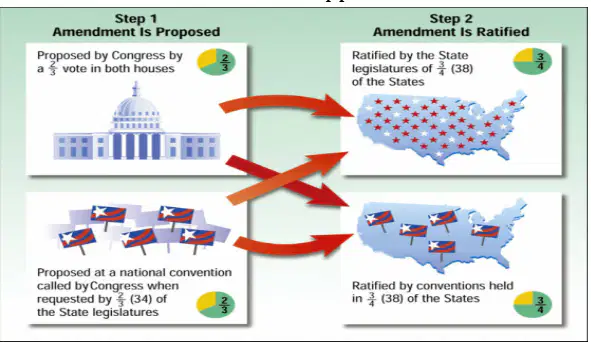
What is one method by which amendments can be proposed in the United States?
Two-thirds vote in the House and Senate
Simple majority vote in the House and Senate
Presidential decree
Supreme Court ruling
How many amendments have been ratified out of the 11,000 proposed?
27
100
50
10
What fraction of state legislatures must approve an amendment for it to be ratified?
One-half
Two-thirds
Three-fourths
One-third
Why did the Framers want the amendment process to be difficult?
To ensure only necessary changes are made
To allow the President to have more power
To make the process faster
To prevent any amendments from being proposed
What does the 1st Amendment protect?
Freedom of speech, press, religion, assembly, petition the government
The right to bear arms
The right to a fair trial
The right to vote
Which amendment gives people the right to bear arms?
2nd Amendment
3rd Amendment
4th Amendment
5th Amendment
What does the 4th Amendment protect against?
Unreasonable searches and seizures
Cruel and unusual punishment
Quartering of soldiers
Double jeopardy
Which amendment abolished slavery in the United States?
13th Amendment
14th Amendment
15th Amendment
16th Amendment
What is the main focus of the 5th Amendment?
Rights of persons accused of crimes
Right to bear arms
Freedom of speech
Right to vote
Which amendment ensures that any person 18 or over may vote?
26th Amendment
19th Amendment
15th Amendment
24th Amendment
What does the 19th Amendment grant?
Gives women the right to vote
Abolishes slavery
Prohibits poll taxes
Limits presidential terms
Which amendment prohibits the sale or manufacture of alcohol in the United States?
18th Amendment
21st Amendment
22nd Amendment
24th Amendment
How many articles and amendments are in the Constitution?
4 articles and 10 amendments
4 articles and 27 amendments
7 articles and 10 amendments
7 articles and 27 amendments
What term is used for a formal change to the original Constitution?
article
judicial review
amendment
executive order
What is the basic structure of the Constitution?
preamble, articles, and amendments
legislative branch, executive branch, and judicial branch
Bill of Rights, articles, and amendments
preamble, Bill of Rights, and amendments
What term means that power is divided between different levels of government?
individual rights
federalism
separation of powers
checks and balances
What term means power is divided among the legislative branch, executive branch, and judicial branch?
federalism
separation of powers
local ordinances
veto power
Which article outlines the powers and structure of the legislative branch?
Article I
Article II
Article III
Article IV
What is another name for the first ten amendments of the Constitution?
the Supremacy Clause
the Amendment Process
the Preamble
the Bill of Rights
Why was a convention called to create the Constitution in 1787?
to declare independence from Great Britain
to admit more states to the union
to replace the Articles of Confederation
to end the Revolutionary War with Great Britain
Under which concept would the power of the Senate to confirm federal judicial appointments be categorized?
individual rights
federalism
separation of powers
checks and balances
Which clause allows Congress to use powers not directly listed in the Constitution?
What does Article V in the Constitution explain?
The duties of the President
The history of the United States
The process for electing Senators
The process for amending or changing the Constitution
What idea of Baron de Montesquieu can be found in the Constitution?
Separation of powers
Enumerated Powers
Federalism
Which Article of the Constitution spells out the legislative powers of Congress?
Article I
Article V
Article III
Article VII
What is the main purpose of the U.S. Constitution?
To give the President unlimited power
To explain the laws of each state
To set rules for how the government works
To replace the Declaration of Independence
What are the three branches of government?
Military, Congress, and Supreme Court
Executive, Legislative, and Judicial
Federal, State, and Local
Senate, House, and President
What does the Preamble of the Constitution do?
Lists the first ten amendments
Explains why the Constitution was written
Gives the President power to make laws
Declares independence from Britain
What is a republic?
A) A government where a king makes all decisions
B) A system where people vote for leaders to represent them
C) A group of people who do not believe in government
D) A country that does not allow elections
What does Popular Sovereignty mean?
The President makes all decisions
The people have the power in the government
The military controls the country
The states can ignore federal laws
Which branch of government makes laws?
Executive
Judicial
Legislative
Military
Opening line of the US Constitution.
"We the People..."
"When in the Course of Human Events..."
"Fourscore and seven years ago..."
"We hold these truths to be self-evident..."
According to the Preamble where does the government's power come from?
Congress
the People
the Constitution
the states
Which goal stated in the Preamble means that the states are going to unite more effectively so they can operate as a single nation, for the good of all.
Establish Justice
Form a more perfect union
Provide for the common defence
Promote the general welfare
Secure the blessings of liberty
What part of the Preamble implies that the government will maintain peace and order, keeping citizens and property safe from harm.
Insure domestic tranquility
Form a more perfect union
Provide for the common defence
Promote the general welfare
Secure the blessings of liberty
What part of the Preamble implies that the government will be ready militarily to protect the country and its citizens from foreign enemies.
Insure domestic tranquility
Form a more perfect union
Provide for the common defence
Promote the general welfare
Secure the blessings of liberty
What part of the Preamble seeks to help people live healthy, happy and prosperous lives.
Insure domestic tranquility
Form a more perfect union
Provide for the common defence
Promote the general welfare
Secure the blessings of liberty
Which part of the Preamble guarantees the freedom and basic rights of all Americans, including future generations.
Promote the general welfare
Secure the blessings of liberty to ourselves and our posterity
Provide for the common defense
Insure domestic tranquility
Establish justice
Article II of the Constitution established which branch of the government?
Legislative
Executive
Judicial
Article III of the Constitution established which branch of the government?
Legislative
Executive
Judicial
What does Article VI (6) say?
Sets rules for the relationship among the states and rules for admitting new states
Enables the Constitution to be amended
States that the Constitution is the "supreme law of the land"
Explains the process for ratification
In addition to the original articles of the Constitution how many amendments have been added?
10
20
27
38
A government only has the power that is given to it. This is called...
Checks and balances
Consent of the governed
Limited Government
Popular Sovereignty
Federalism
Each branch of a government can restrain certain actions of the other branches. This is called...
Consent of the governed
Limited Government
Separation of powers
Rule of law
Checks and balances
The Legislative Branch is the _______________ branch of the federal government.
Lawmaking
Law enforcing
Law ignoring
Court
How many TOTAL Senators do we have?
2
100
435
535
Which house requires you be at least 25 years old, a U.S. citizen for at least 7 years and live in the state and district you represent?
Senate
House of Representatives
How many total Representatives are there?
50
100
435
535
The powers that are listed in the Constitution that belong to Congress are called
implied powers.
enumerated powers.
congressional powers.
powerful powers.
Bicameral means
1 house.
2 houses.
3 houses.
4 houses.
Who approves presidential appointments, like ambassadors, judges, and cabinet members?
Senate
House of Representatives
Serves 2 year terms
Senate
House of Representatives
Must be 30 or older, a citizen for 9 years and live in the state they represent
Senate
House of Representatives
Members serve a 6 year term
Senate
House of Representatives
How many representatives in the House does each state have?
1
2
It is based on the geographical size of the state
It is based on the population of the state
How old do you have to be to become a member of the House of Representatives?
18
21
25
30
35
Under what circumstance does the House decide who will become President of the United States?
If no one wins a majority of votes from the Electoral College
If the current president dies
If they don't like the person who was elected
If they decide the election wasn't

Representation in the House of Representatives is based on ______ and in the Senate it is ________ representation.
equality / population based
tax based / distributed
population / equal
merit / equal

Our bicameral Congress is a result of the ____________.
3/5s Compromise
New Jersey Plan
Virginia Plan
Great Compromise

The minimum age for members of the House of Representatives is _____ years old. They must also be US citizens for a minimum of ____ years.
30 / 9
25 / 9
25 / 7
30 / 7

The US Census is taken every ____ years in order to reapportion seats in Congress.
10
20
5
4

Seven states have a population that requires each to only have _____ Representative(s) in the House (each), while _______ is the largest state, with the most Representatives.
1 / California
2 / California
1 / Alaska
2 / Alaska
Congress is made up of ________
The President + Vice President
Senate + House of Representatives
Supreme Court
If you live in Hawaii, can you become a representative for Hawaii?
Yes
No
Noah is 20. Is he old enough to work in the House of Representatives?
Yes
No
Powers of Congress that are stated in the Constitution are known as enumerated, explicit, or ______________ powers
expressed
reserved
implied
concurrent
What is the "Necessary and Proper" Clause often called?
The Flexibility Clause
The Elastic Clause
The Expansion Clause
The Adaptable Clause
How does the "Necessary and Proper" Clause extend Congress's authority?
By allowing Congress to create new states
By permitting Congress to declare war
By enabling Congress to make laws beyond its explicitly stated powers
By giving Congress the power to elect the President
What does the language of the "Necessary and Proper" Clause primarily allow Congress to do?
Raise taxes without limits
Appoint Supreme Court justices
Make laws necessary for executing its powers
Amend the Constitution without approval
Why is the "Necessary and Proper" Clause referred to as the "elastic clause"?
Because it's written on elastic paper
Because it allows the government to stretch its authority
Because it can be easily removed from the Constitution
Because it changes size depending on who reads it
Which Supreme Court case is a notable application of the "Necessary and Proper" Clause?
Marbury v. Madison
Plessy v. Ferguson
Brown v. Board of Education
McCulloch v. Maryland
What is the maximum length of time someone can serve as president of the United States, according to the Twenty-second Amendment?
10 years
8 years
9 years
7 years

