
 Worksheets
Chemistry Baseline Test
Total questions: 90
Worksheet time: 2hrs 12mins
Which subatomic particle carries a positive charge?
Proton
Neutron
Neutrino
Electron
Which subatomic particle carries a negative charge?
Proton
Neutron
Neutrino
Electron
Which subatomic particle has no charge?
Proton
Neutron
Neutrino
Electron
_________ and __________ are located in the nucleus.
Protons
Neutrons
Electrons
Muons
According to the modern atomic model, electrons are found...
in circular orbits of different sizes
in the nucleus
in the electron cloud
in circular orbits of the same size

This atom is an isotope of boron known as:
boron-8
boron-9
boron-10
boron-11
The mass number of this atom is (a) .
The atomic number of this atom is (a) .
The atomic number of oxygen is 8. This means that an atom of oxygen-18 has ____ neutrons.
2
8
10
18

Which two individuals described the atom as an indivisible particle?
Bohr and Rutherford
Thomson and Dalton
Dalton and Democritus
Schrodinger and Thomson

Who discovered the electron and developed this model of the atom?
Thomson
Schrodinger
Bohr
Rutherford

This model was developed after _______ bombarded very thin gold foil with alpha particles.
Democritus
Dalton
Thomson
Rutherford

This is a Bohr model. Bohr was the first to indicate that electrons in an atom are found in different ___________.
energy levels
nuclei
electron clouds
plum puddings

Schrödinger's model is the most complicated. He called the places where electrons are most likely to be found _________.
nuclei
orbitals
energy levels
karaoke bars
Which of the following is a nonmetallic element?
Calcium (Ca)
Carbon (C)
Cobalt (Co)
Copper (Cu)
Which of the following represents the correct number of atoms in water (H2O)?
One atom of hydrogen (H) and one atom of oxygen (O)
One atom of hydrogen (H) and two atoms of oxygen (O)
Two atoms of hydrogen (H) and one atom of oxygen (O)
Two atoms of hydrogen (H) and two atoms of oxygen (O)
Which term refers to the amount of energy required to remove one electron from a gaseous atom or ion?
First ionization energy
Second ionization energy
Third ionization energy
Electron affinity
Which explains why noble gases have the highest first ionization energy?
Noble gases have stable atoms.
Noble gases have unstable atoms.
Noble gases are reactive.
Noble gases are nonreactive.
Which property generally decreases across a period?
Atomic number
Atomic radius
Electronegativity
Ionization energy
Rows of elements are called ____.
periods
groups
clusters
levels
Vertical columns in the periodic table are called ___.
periods
metals
metalloids
groups
What is special about Mendeleev's table?
Elements are in groups
Elements are in alphabetical order
Undiscovered elements can be predicted
Radioactive elements are at the bottom

How many electrons are in the outer shell of a carbon (C) atom?
1
2
3
4

How many energy shells does krypton (Kr) have?
1
2
3
4

Predict the type of bond that is formed between phosphorus and chlorine.
Ionic
Covalent
Metallic
H-bond
Which pair of elements forms an ionic bond?
Magnesium and Oxygen
Magnesium and Sodium
Iron and Zinc
Nitrogen and Hydrogen

How many valence electrons are shown in the diagram?
16
7
6
2
TRUE OR FALSE: Ionic compounds have high boiling points because they consist of strong ionic bonds.
TRUE
FALSE
Which of the following is NOT an alloy?
bronze
copper
brass
stainless steel
How are covalent bonds formed?
Donating & receiving valence e- between atoms.
Opposite slight charges attract each other between compounds.
Scientists are still not sure how they form.
Sharing valence e- between atoms.
What is the basis of a metallic bond?
the attraction of neutral metal atoms.
the attraction between protons and neutrons.
the attraction between positive metal ions and interlocking electrons.
the attraction between positive metal ions and free-floating electrons.

Examine the image: How many bonds are formed in the model of the compound? Also, identify what type of bond is formed.
2 bonds; covalent
4 bonds; metallic
2 bonds; ionic
4 bonds; covalent
Which type of reaction has the general formula:
AB + CD → AD + CB
Double Replacement
Single Replacement
Synthesis
Decomposition
Combustion
What type of reaction is this?
Cl2 + 2KI → I2 + 2KCl
Synthesis
Single replacement
Double replacement
Decomposition
Combustion
What type of reaction is this?
2C5H10 + 15O2 → 10CO2 + 10H2O
Synthesis
Decomposition
Single replacement
Double replacement
Combustion
What type of reaction is this?
2AgNO3 + Cu → Cu(NO3)2 + 2Ag
Synthesis
Decomposition
Double replacement
Single replacement
Combustion
Which of the following is the general formula for a decomposition reaction?
A + B → AB
AB → A + B
AB + C → AC + B
AB + CD → AC + BD
Using the balanced equation in question 1,
Mg(s) + HCl(aq) → MgCl2(aq) + H2(g)
How many grams of HCl are consumed by the reaction of 2.50 moles of magnesium?
5.00 g
7.29
182 g
218 g
What is the first thing you must do to solve a stoichiometry problem?
Write a balanced equation
Panic
Write an unbalanced equation
Ask for help
For the balanced reaction: 3 Mg + 1 Fe2O3 → 3 MgO + 2 Fe, what is the ratio of moles of Mg to moles of Fe?
3 mol Mg / 2 mol Fe
2 mol Mg / 3 mol Fe
1 mol Fe / 2 mol Fe
3 mol MgO / 2 mol Fe
2CO + O2 → 2CO2
How many liters of carbon dioxide are produced from 10 L of carbon monoxide?
10
20
1
5
Using the balanced equation in question 5,
CaC₂(s) + H₂O(l) → C₂H₂(g) + Ca(OH)₂(aq)
How many grams of Ca(OH)₂ would be formed from 3.20 moles of CaC₂?
119 g
21.2 g
114 g
237 g
Using the balanced equation from question 9:
C₂H₂(g) + O₂(g) → CO₂(g) + H₂O(g)
How many moles of water (H₂O) are produced when 25.0 grams of C₂H₂ are consumed?
0.960 moles
0.480 moles
1.92 moles
3.84 moles
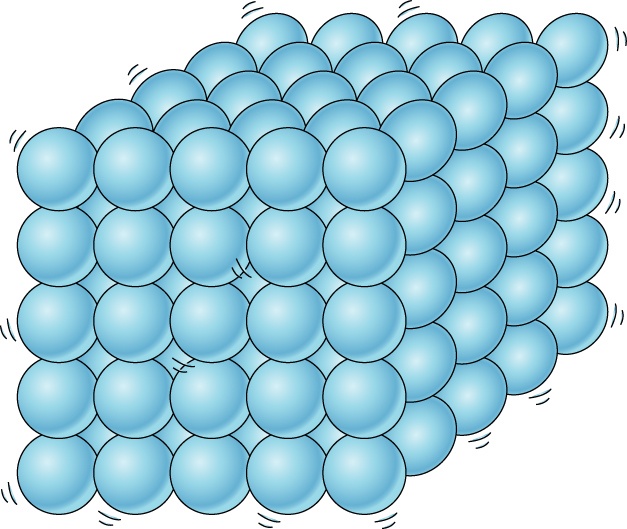
What state of matter is shown?
Solid
Liquid
Gas
Plasma
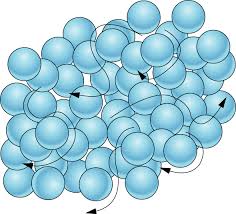
What is the state of matter shown in the image?
Solid
Liquid
Gas
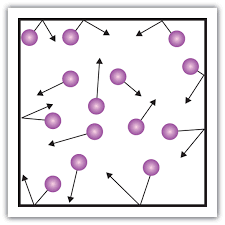
What state of matter is shown in the image?
Solid
Liquid
Gas
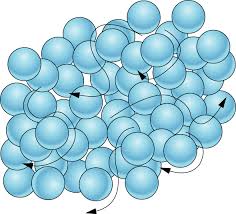
Which is not true about the liquid state of matter?
The liquid state has a definite volume and a definite shape.
The liquid state takes the shape of its container.
The liquid state has a definite volume and an indefinite shape.
The particles in a liquid can easily move past each other.
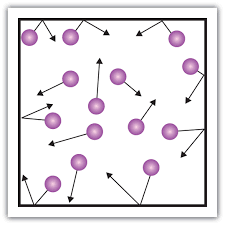
A gas typically consists of:
Low energy particles that experience high attractive forces between them.
Low energy particles that experience no attractive forces between them.
High energy particles that experience high attractive forces between them.
High energy particles that experience little attractive force between them.
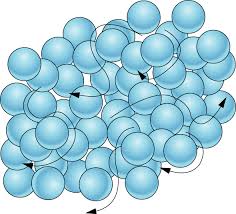
Which of the following statements is true regarding the particle structure of liquids? The particles of a liquid are:
very close together, so the liquid cannot easily change its shape.
fast-moving, so they fill the volume of their container.
relatively close together, so they cannot be easily compressed.
very far apart, so they have plenty of room to move around.
The state of matter in which a material has a definite volume and a definite shape is the:
Solid
Liquid
Gas
Plasma
Which process could cause a material to change state from gas to liquid?
Adding heat
Adding energy
Removing particles
Removing energy
The substance being dissolved is called the ________
solvent
solid
solute
solvate
A non-electrolyte is composed of __________in solution
molecules
molecules and ions
ions
none of the above
What does "like dissolves like" mean?
polar solvents dissolve in polar solutes
polar solutes dissolve in polar solvents
non-polar solvents dissolve in polar solutes
non-polar solutes dissolve in polar solvents
Gases are more soluble at ______temps and _____pressures
high, low
low , high
high, high
low, low
Molarity concentration is abbreviated as _________
MM.
m.
Mol.
M.
Molarity is defined as _________ divided by ___________
mol, liters
mol, kg
kg, liters
liters, kg
How many mols of HCl are in 3 liters of 2.0M HCl solution?
2.0
1.5
6.0
0.66
A hydrogen ion, H+, is the same as a(n):
neutron
electron
proton
hydroxide ion
OH- is called the:
hydrate ion
hydrogen ion
hydronium ion
hydroxide ion
Acids increase the concentration of what in water?
H+ ions
hydrate ions
hydroxide ions
OH- ions
Bases can be referred to as:
none of the choices
proton acceptors
proton donors
protons
A beaker full of acid is added to a beaker full of base. The pH of the base will:
change constantly
decrease
increase
stay the same
Which substance has the lowest pH?
milk
NaOH
pure water
lemon juice
Any substance that does not conduct electricity when in solution is called a(n) ―
nonelectrolyte
electrolyte
conductor
semiconductor

The diagram shows what happens when zinc reacts with hydrochloric acid. Which of these best describes the energy transformation that occurs during this reaction?
Thermal energy - kinetic energy
Kinetic energy -potential energy
Chemical energy - thermal energy
Potential energy - chemical energy

The diagram represents two solids and the temperature of each. What occurs when the two solids are placed in contact with each other?
Heat energy flows from solid A to solid B. Solid A decreases in temperature
Heat energy flows from solid A to solid B. Solid A increases in temperature
Heat energy flows from solid B to solid A. Solid B decreases in temperature.
Heat energy flows from solid B to solid A. Solid B increases in temperature.
A chemical reaction has reached equilibrium when,
the concentrations of the reactants and products are the same
the concentrations of the reactants and products become constant
the forward reaction begins
the reverse reaction begins
When a catalyst is added to a reaction at equilibrium, the rate of the reverse reaction
decreases and the rate of the forward reaction decreases
decreases and the rate of the forward reaction increases
increases and the rate of the forward reaction increases
increases and the rate of the forward reaction decreases
NaCl <-----> Na+ + Cl-
If the above reaction is reversible and reaches equilibrium, and then some Na+ added,
the concentration of Na⁺ will increase
the reaction rate to the right would increase
more NaCl(s) will be produced
the concentration of Na+ will increase and the reaction rate to the right would increase
What is the difference between a voltaic cell and an electrolytic cell?
An electrolytic cell needs a battery
A voltaic cell needs a battery
Oxidation is the ________ of electrons
Lose
Gain
Reduction is the _______ of electrons
Lose
Gain
Determine the oxidation state of the following atom: F2
1
2
0
What is the oxidation state of Oxygen in the following compound? H2O
0
+1
-2

If the given structure is converted to condensed structure, which will be its correct version?
CH3CH2CH2CH2CH2CH3
CH3(CH2)4CH3
C6H14
(CH3)2(CH2)4

Which of these molecules has a triple covalent bond?
CH4
C2H6
C2H4
C2H2
Which is the structures with IUPAC nomenclature
2,2,4-trimethylpentane
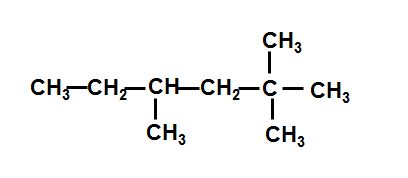
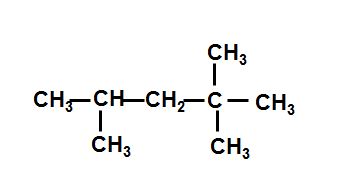
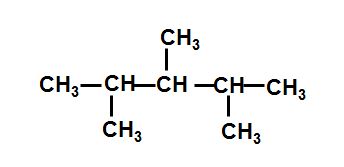
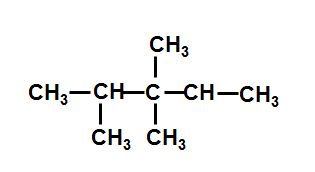
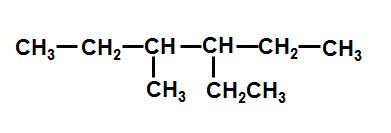
Give the IUPAC name for this compound
3-methyl-4-ethylhexane
3-ethyl-4-methylhexane
3-methyl-4-ethylheptane
3-ethyl-4-methylheptane

Which statement explains the energy term in this reaction?
Mass is lost due to the conversion of energy to mass.
Mass is gained due to the conversion of mass to energy.
Mass is gained due to the conversion of energy to mass.
Mass is lost due to the conversion of mass to energy.
Which risk is related to the radioactive isotopes used to generate electricity?
depletion of atmospheric ozone
exposure to nuclear emissions
depletion of fossil fuels
exposure to acid rain
The study of the composition, structure, and properties of matter and the changes it undergoes.
Chemistry
Physics
Biology
Social Science
The study of carbon containing compounds.
Organic Chemistry
Inorganic Chemistry
Physical Chemistry
Biochemistry
The study of compounds that do not contain carbon.
Organic Chemistry
Inorganic Chemistry
Biochemistry
Analytical Chemistry
The study of the properties and changes in matter and their relation to energy.
Physical Chemistry
Biochemistry
Organic Chemistry
Inorganic Chemistry
What is the subfield of physical chemistry that focuses on the energy changes associated with chemical and physical changes called?
Thermochemistry
Electrochemistry
Nuclear chemistry
Biochemistry

