wayground logo

Free Printable Worksheets

Font size

S
M
L
XL
Worksheets

Unit 1 Review

Total questions: 92

Worksheet time: 31mins
Name
Class
Date
1.
The central region of an atom where its neutrons and protons are is its 
a)
nucleus 
b)
electron cloud
c)
core 
d)
center 
2.
An atom with atomic number 6 would have how many protons 
a)
6
b)
12
c)
3
d)
cannot be determined 
3.
True or False? Neutrons have a negative charge
a)
True
b)
False
4.
What is the atomic number for an element with three protons?
a)
2
b)
1
c)
3
d)
6
5.
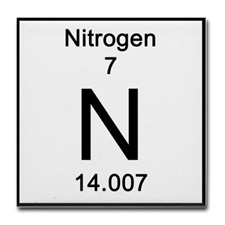
What is the number of protons that the element in this image contain?
a)
14
b)
7
c)
15
d)
18
6.
The positive particles of an atom are 
a)
electrons 
b)
positrons 
c)
neutrons 
d)
protons 
7.
all matter is made of what 
a)
energy 
b)
atoms 
c)
electrons 
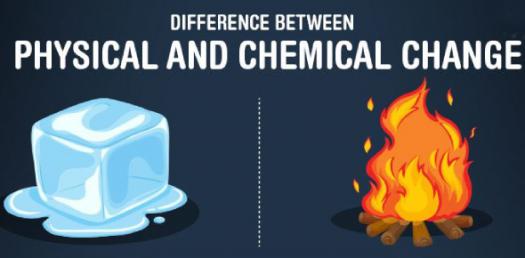
d)
compounds 
8.
electrons have this type of charge?
a)
negative
b)
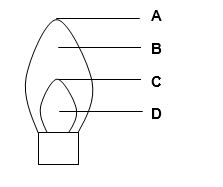
positive
c)
neutral
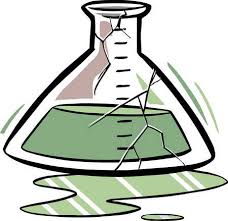
9.
Most of the mass in an atom is concentrated in the...
a)
electrons
b)
nucleus
c)
protons
d)
empty space
10.
What does the nucleus consist of?
a)
Protons + Electrons
b)
Neutrons + Electrons
c)
Atoms
d)
Protons + Neutrons
11.
The part of the atom that is moving around the nucleus is called?
a)
electron
b)
neutron
c)
proton
12.
Atoms are mostly filled with?
a)
electrons
b)
empty space
c)
protons
13.

The following model belongs to which scientist?

a)

Bohr

b)

Rutherford

c)

Thomson

d)

Democratus

14.

Bohr said negative charges are found where?

a)

Around the center

b)

Around the center on fixed rings

c)

In the center

d)

In the center on fixed rings

15.

What is our current model of the atom?

a)

Plum Pudding

b)

Bohr Model

c)

Electron Cloud

d)

Gold Foil Model

16.

Who performed the Gold Foil Experiment?

a)

Democratus

b)

Thomson

c)

Rutherford

d)

Bohr

17.
Neutrons are found in the...
a)
Nucleus
b)
Electron Cloud
c)
Electrons
d)
Protons
18.
Electrons have a ___________ charge.
a)
Positive
b)
Negative
c)
Neutral
19.
The _____________ is the number of protons and neutrons in an atom.
a)
Atomic Mass
b)
Atomic Symbol
c)
Atomic Number
d)
Atomic charge
20.
The _____________ determines the identity of an object.
a)
# of Protons
b)
# of Electrons
c)
# of Neutrons
d)
Atomic Mass
21.
Did experiments to show that atoms form compound in set ratios.
a)
John Dalton
b)
Schrodinger
c)
Niels Bohr
d)
JJ Thomson
22.
Discovered that the atom has a small, dense, positively charged nucleus.
a)
Ernest Rutherford
b)
Heisenberg
c)
Democritus
d)
JJ Thomson
23.
Believed that electrons traveled around the nucleus in definite paths.
a)
Niels Bohr
b)
John Dalton
c)
Modern Atomic Theory
d)
Ernest Rutherford
24.
Determined that electron paths cannot be predicted and exist inside the Electron Cloud.
a)
Schrodinger & Heisenberg
b)
Ernest Rutherford
c)
John Dalton
d)
Democritus
25.
Believed that all atoms of the same element would be the same.
a)
John Dalton
b)
JJ Thomson
c)
Niels Bohr
d)
Modern Atomic Theory
26.
How many protons does an atom with an atomic number of 28 and a mass number of 40 have?
a)
28
b)
68
c)
12
d)
40
27.
The Bohr model below depicts which element?
a)
Scandium
b)
Titanium
c)
Calcium
d)
Potassium
28.

The following picture represents which atomic model?

a)

planetary

b)

billiard ball

c)

plum pudding

d)

nuclear

29.

The following picture represents which atomic model?

a)

planetary

b)

nuclear

c)

electron cloud

d)

billiard ball

30.
The following picture represents which atomic model?
a)
Schrodinger & Heisenberg
b)
John Dalton
c)
Niels Bohr
d)
Ernest Rutherford
31.

Which statement about electrons is true?

a)

Electrons circle the nucleus of the atom

b)

Electrons have a positive charge

c)

Electrons have a mass of 1 amu

d)

Electrons exist in the nucleus of the atom

32.

Who discovered that the atom had an small, dense, positively charged center?

a)

Ernest Rutherford

b)

J.J Thomson

c)

Robert Millikan

d)

John Dalton

33.

Place the following atomic models in order, from earliest to latest:


A) Rutherford B) Thomson C) Dalton

a)

B, C, A

b)

C, A, B

c)

A, C, B

d)

C, B, A

34.
What can you conclude from the fact that scientists continue to update the atomic model?
a)
New information about atoms continues to be discovered
b)
Old information about atoms is completely useless
c)
Scientists did not have any information about atoms until a few years ago
d)
Scientists still have no idea what atoms look like
35.

In the atomic model nicknamed the "plum pudding" model, what do the plums represent?

a)

the nucleus

b)

the atom

c)

the electrons

d)

the positive material

36.

Which scientist proposed a new atomic model after discovering the electron in 1897?

a)

Dalton

b)

Thomson

c)

Rutherford

d)

Bohr

37.

Who discovered that atoms are mostly empty space?

a)

Dalton

b)

Thomson

c)

Rutherford

d)

Bohr

38.

Which scientist was the first to benefit from the Lavoisier's efforts to define pure substances in the 1700's?

a)

Dalton

b)

Thomson

c)

Rutherford

d)

Bohr

39.

In the model nicknamed "planetary model" what are the electrons like?

a)

the sun

b)

the nucleus

c)

the planets

d)

the moon

40.
How many neutrons does the isotope of lithium have?
a)
8
b)
3
c)
4
d)
5
41.
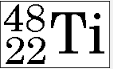
How many protons does this isotope of titanium have?
a)
48
b)
22
c)
26
d)
70
42.
How many neutrons in C-14?
a)
6
b)
7
c)
14
d)
8
43.
How many neutrons does the isotope below have?     89 36Kr
a)
53
b)
36
c)
89
d)
125
44.
How many neutrons does an atom of the isotope Neon-22 have?
a)
12
b)
10
c)
22
d)
20
45.

Isotopes of an element have a different number of...

a)

Protons

b)

Neutrons

c)

Electrons

d)

Mass

46.

Potassium-39 has how many neutrons?

a)

19

b)

18

c)

20

d)

21

47.

Nickel-59 has how many neutrons?

a)

30

b)

31

c)

32

d)

33

48.

Bromine-80 has how many neutrons?

a)

41

b)

42

c)

44

d)

45

49.

12 protons and 13 neutrons

a)

Mg-12

b)

Mg-13

c)

Mg-25

d)

Mg-24.305

50.

Write the hyphen notation for the isotope that has 39 protons and 50 neutrons.

a)

Yttrium-11

b)

Tin-39

c)

Tin-89

d)

Yttrium-89

51.

How many electrons are in an atom that has an atomic number of 34, an atomic mass of 74 and a charge of -2?

a)

2

b)

34

c)

36

d)

40

52.
If X is the symbol for an element, which of the following two symbols represent    isotopes of the same element?     I. 7735X  II. 7733X  III. 8137X  IV. 8135 X
a)
I and II
b)
III and IV
c)
I and IV
d)
I and III
53.

Chromium has four naturally occurring isotopes (chromium-50, chromium-52, chromium-53, and chromium-54). What is the average atomic mass of Chromium?

a)

4

b)

51.996

c)

52.25

d)

Not enough information was given.

54.

An element has three isotopes. Given the abundances and relative masses, calculate the average atomic mass and determine (from the periodic table) which element it is.


Abundances | Relative masses

0.005% | 234.04 amu

0.720% | 235.04 amu

99.275% | 238.05 amu

a)

Uranium (#92, Atomic Mass: 238.03 amu)

b)

Fluorine (#9, Atomic Mass: 19.00 amu)

c)

Mercury (#89, Atomic Mass: 200.59 amu)

d)

Polonium (#84 209 amu)

55.
Four isotopes of lead include lead-204, lead-206, lead-207, and lead-208.  The average atomic mass of lead is 207.2.  Which isotope of lead is likely to be the most abundant.
a)
204
b)
206
c)
207
d)
208
56.
What is the name of the pictured isotope?
a)
Carbon-12
b)
Carbon-13
c)
Carbon-14
d)
Carbon-15
57.
How many protons are in this element?
a)
79
b)
196
c)
117
d)
Cannot be determined
58.
Negative ions are called
a)
Cations
b)
Electrons
c)
Anions
d)
Neutrons
59.
What charge does an atom have if it LOSES an electron? 
a)
Positive (+)
b)
Negative (-)
60.
Ions are: 
a)
atoms with a positive or negative charge
b)
atoms with no charge
c)
atoms with ONLY a positive charge
d)
atoms with ONLY a negative charge
61.
A negative ion is a 
a)
cation
b)
anion
62.
What is the number of protons?
a)
34
b)
16
c)
18
d)
S
63.
What is the number of neutrons?
a)
34
b)
79
c)
45
d)
35
64.
What do these isotopes of carbon all have in common?
a)
neutrons & mass number
b)
atomic number and neutrons
c)
atomic number and electrons
d)
protons, atomic number, and mass number
65.
What are the names of the horizontal rows on the periodic table?
a)
The periods
b)
The Groups
c)
The Non-Metals
d)
Ionization Energies
66.

What charge does an atom have when it GAINS electrons?

a)

Positive

b)

Negative

c)

Neutral

67.

What is a representation of an ion?

a)

Li

b)

Na-22

c)

O-2

68.

What is the mass number of bromine?

a)

35

b)

45

c)

80

d)

79.904

69.

What type of atom is this?

a)

Neutral atom

b)

Cation

c)

Anion

d)

Isotope

70.

What does it happen to this atom?

a)

It LOSES electrons

b)

It GAINS electrons

c)

It GAINS protons

d)

It LOSES protons

71.
Evidence of a chemical reactions is anything that shows - 
a)
a new substance has formed
b)
a solid dissolved in a liquid
c)
interaction between 2 gases
d)
a change in the state of matter
72.
One of the signs of a chemical reaction taking place is:
a)
Bubbles are produced 
b)
Reactants are not combining
c)
Products are not forming
d)
Color is not changing
73.
Which of the following describes a precipitate?
a)
a liquid forms when a block of metal is heated
b)
a solid forms when one liquid is poured into another
c)
a gas forms when a solid is placed in a liquid
d)
bubbles form when an acid is poured on a rock
74.
Which is NOT an indication of a chemical change?
a)
temperature change
b)
formation of a precipitate
c)
shape change
d)
production of light
75.
A clear liquid from a flask is poured into another clear liquid in a beaker. Which of the following results of this procedure would indicate a new substance was formed?
a)
The level of the substance in the beaker is higher after the other liquid is added.
b)
A yellow solid forms and then settles to the bottom of the beaker.
c)
Small white crystals are left behind in the flask that held the first liquid.
d)
The mass of the combined liquids is greater than either original liquid.
76.
Which of the following is an example that includes evidence of a chemical reaction?
a)
A sample of zinc is placed in water and it settles to the bottom
b)
A solid block of ice is heated and it completely melts into a liquid. 
c)
Sugar that is burned gives off an odor and turns brown and then black.
d)
A tomato is placed into a blender and chopped up into smaller pieces.
77.
Four students performed four different investigations by combining different substances. Which of the observations is most indicative of a chemical reaction?
a)
investigation 1
b)
investigation 2
c)
investigation 3
d)
investigation 4
78.

Color is what type of property?

a)

Physical

b)

Chemical

79.

Reactivity is what type of property?

a)

Physical

b)

Chemical

80.

What is a sign of a physical change?

a)

Bubbles forming

b)

Color changing

c)

Stretching

d)

Producing heat

81.

What is a sign of a chemical change?

a)

Stretching

b)

Tearing

c)

Compressing

d)

Bubbles

82.

Which of the following changes is a physical change of matter?

a)

water evaporating

b)

paper burning

c)

a nail rusting

d)

a silver spoon tarnishing

83.

Which of these observations would likely be an indication of a chemical change?

a)

A change in odor when two substances are mixed

b)

A change in temperature when a hot substance is left standing in air

c)

A change in volume as a substance is heated

d)

The disappearance of a liquid as it boils

84.
Who invented the Bunsen Burner?
a)
Albert Einstein
b)
Robert Bunsen
c)
George Burner
d)
Charles Darwin
85.
Which part of the Bunsen flame is the hottest?
a)
A
b)
B
c)
C
d)
D
86.

When the air hole is closed, what color is the flame?

a)

Blue/Yellow/Orange

b)

Dark and Light Blue

87.
When should you tie back long hair or baggy clothing?
a)
When working with chemicals
b)
When working with a Bunsen burner
c)
When doing dissections.
d)
Any time you are working in the lab.
88.
If you break glassware in the lab, you should...
a)
Tell the teacher
b)
Clean it up quickly before the teacher notices
c)
Scream at the top of your lungs
89.
What do you call the part of the burner that "twists" ?
a)
Tube
b)
Barrell
c)
Cylinder
90.
Goggles must be worn when using or working with a Bunsen Burner
a)
False
b)
True
91.

When you lift a bunsen burner, you hold it from the:

a)

Barrel

b)

Gas hose

c)

Base

d)

Collar

92.

In the model nicknamed "planetary model" what is the nucleus like?

a)

the sun

b)

the universe

c)

the planets

d)

the moon