
 Worksheets
Bonding Test
Total questions: 90
Worksheet time: 4hrs 42mins

The positive ions tend to _____________ electrons.
lose
gain
The negative ions tend to _____________ electrons.
lose
gain
Why do all bonds form?
so the number of protons equals the number of electrons
so an atom can become unstable
to fill the outermost energy level

What type of elements form cations?
metals
nonmetals
metalloids?
How does calcium become an calcium ion?
it loses 2 electrons
it gains 2 electrons
How many Aluminum atoms are in Al2O3?
3
5
2
1
An atom with 1 valence electron 'needs' a full shell, so it can either gain 7 electrons or lose 1. Which is more likely to occur?
nothing
gain 7
lose 1
How many valence electrons does Boron have?
1
2
3
4
Group numbers on the periodic table help us determine
number of valence electrons
state of the element (solid, liquid, gas)
Valence electrons are found
in the innermost energy level of an atom
in the middle energy levels of an atom
in the outermost energy levels of an atom

Will a chlorine atom gain or lose electrons?
gain
lose
Which of the following is the correct ionic formula for calcium sulfide?
Ca2S2
CaS
S2Ca2
SCa
Match the following element to their number of valence electrons:
lithium
1
magnesium
2
phosphorus
5
fluorine
7
neon
8
This family contains elements that all have two valence electrons
alkali metals
noble gases
alkaline earth metals
halogens
Boron group has (a) valence electrons

How do covalent bonds help atoms achieve a full outer shell?
Electrons are transferred between atoms until both have full outer shells
The atoms share electrons in order to get a full outer shell
Covalent bonding turns the atoms into ions
It helps the electrons jump to higher energy levels

What kind of bond is shown in the picture?
A single covalent bond
A double covalent bond
A triple covalent bond
An ionic bond
How many electrons are shared in the bond above?
1
2
3
4
What is it called if there are three-pairs of electrons being shared?
Triple Bond
Three Single Bonds
Tribond
Double and Single Bond Combo

Is this correct way to draw the Lewis Dot Structure for Carbon?
Yes
No, too many electrons
No, not enough electrons
No, dots are in wrong places
USE THE PERIODIC TABLE
How many valence electrons does Phosphorus have?
31
5
15
4
This type of bond happens when electrons are shared EQUALLY between the two bonded atoms.
Polar covalent
Nonpolar covalent
Ionic


This is the displayed formula for what covalent compound?
Water
Hydrogen peroxide
Hydrogen oxide
Ethanol

Chlorine is a diatomic element which means in nature, it is found in two's. (Cl2) Chlorine shares one pair of electrons to make sure each atom complete the octet rule. This creates a...
single bond
double bond
triple bond
Oxygen is a diatomic element which means in nature, it is found in two's. (O2) Oxygen shares two pairs of electrons to make sure each atom completes the octet rule. This creates a...
single bond
double bond
triple bond
Nitrogen is a diatomic element which means in nature, it is found in two's. (N2) Nitrogen shares three pairs of electrons to make sure each atom completes the octet rule. This creates a...
single bond
double bond
triple bond

How many covalent bonds are created in a single water molecule?
0
1
2
3
4
How many pairs of valence electrons are being shared in a single ammonia molecule?
0 pair - 0 valence electrons
1 pair - 2 valence electrons
2 pair - 4 valence electrons
3 pair - 6 valence electrons

When assigning the number of individual atoms in a chemical formula it is written as a...
superscript
subscript
coefficient
script
How many total atoms are in the ionic compound Ca(NO3)2 (Calcium nitrate)?
3
5
6
9
10
How many total atoms are in the covalent compound C4H10 (Butane)?
6
8
10
12
14
NaBr
H2O
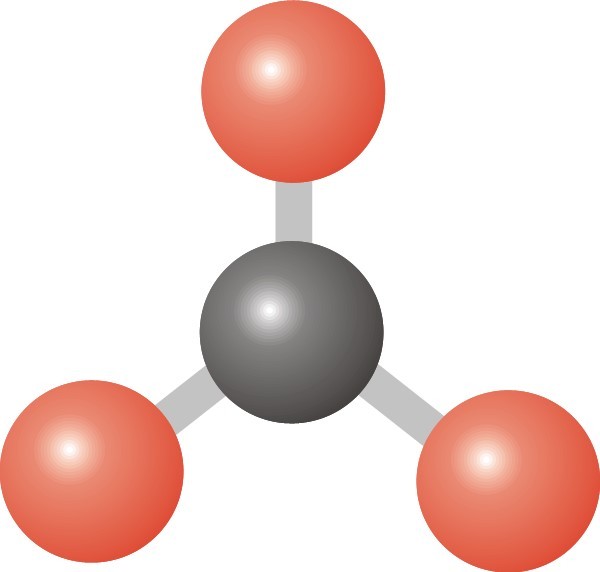
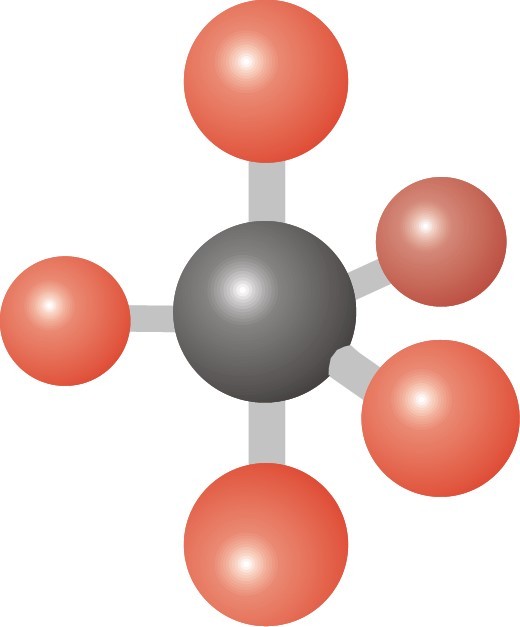
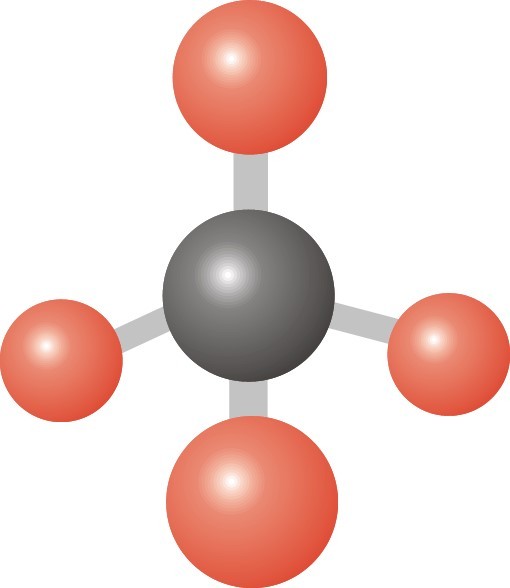

Single bonds are formed when ____ pair(s) of valence electrons are shared.
one
three
two
four
Anions
Gain electrons, has an overall positive charge
Lose electrons, has an overall positive charge
Lose electrons, has an overall negative charge
Gain electrons, has an overall negative charge


The chemical bond between a non-metal and another non-metal will be a ________ bond.
metal
ionic
covalent
polar
Which is the correct molecular structure for carbon dioxide CO2?


Match the following descriptions to the type of bond.
Occurs between two nonmetals - (a)
Occurs between a metal and a nonmetal - (b)
Click on the covalent bond
How do you represent a covalent bond in a Lewis structure?
By a line or a pair of dots
By a circle
By a dashed line
Why do atoms/ions bond?
Repulsion between positive protons and negative electrons
Attraction between positive protons and positive electrons
Attraction between positive protons and negative electrons
Repulsion between positive protons and positive electrons
What are the properties of metallic bonding?
Good conductors of electricity, ductile, malleable, and arranged in crystal lattice structure
Poor conductors of electricity, not ductile, not malleable, and arranged in random structure
Good conductors of electricity, not ductile, not malleable, and arranged in random structure
Poor conductors of electricity, ductile, malleable, and arranged in crystal lattice structure
Which of the following best describes the electron sea model in metallic bonding?
Electrons are shared between two specific atoms.
Electrons are localized around individual atoms.
Electrons are delocalized and shared among all atoms.
Electrons are transferred from one atom to another.
In an ionic bond, electrons are (a) from the (b) to the (c) . Ionic bonds are (d) because of the big difference in electronegativity.
Match the following to form true statements:
When solid, ionic compounds
cannot conduct electricity
When disolved in water, ionic compounds
can conduct electricity
Ionic compounds have
high melting and high boiling points
There are many strong bonds
between ions in an ionic compound.
Elements in group 1 of the periodic table form ions
with a charge of 1+
If an atom gains an electron, it becomes a(n) (a) which is (b) charged. If an atom loses an electron, it becomes a(n) (c) which is (d) charged.
Covalent bonds are formed by sharing an electron between a nonmetal to a (a) .

A substance is composed of a Group 2 element that bonds with an element from Group 4. Which type of bonding does this substance have?
covalent
ionic
hydrogen
Formula for barium sulfide
B2S3
BaS
Ba2S
BaS2
Name for PBr2
phosphorus bromide
phosphorus dibromide
phosphorus dibromine
phosphorus bromine
Formula for cobalt (II) bromide
CoBr
Co2Br2
Co2Br
CoBr2
Name for CO
carbon monoxide
carbon oxide
monocarbon oxide
carbide monoxide

This image shows the bonding between Lithium and Fluorine. What does the red arrow show?
electrons being shared
electrons being transferred to Fluorine
electrons being transferred to Lithium
electrons being destroyed
Polar molecules
have even charge density
are symmetric
form hydrogen bonds
have 10 atoms per molecule

