
Font size
 Worksheets
Chapter 6
Total questions: 98
Worksheet time: 49hrs 0mins
By the end of the chapter, you should be able to: Describe the major functions and structures of the lymphatic and immune systems.
Describe the major functions and structures of the lymphatic and immune systems.
List the organs of the digestive system only.
Explain the process of cellular respiration.
Identify the bones in the skeletal system.
Medical specialists who treat disorders of the lymphatic and immune systems are known as:
Immunologists
Cardiologists
Dermatologists
Gastroenterologists
By the end of the chapter, you should be able to: Recognize, define, spell, and pronounce the primary terms related to the structures, functions, pathology, and diagnostic and treatment procedures of which body systems?
Lymphatic and immune systems
Digestive and respiratory systems
Nervous and endocrine systems
Muscular and skeletal systems
By the end of the chapter, you should be able to: Recognize, define, spell, and pronounce the primary terms related to oncology.
Recognize, define, spell, and pronounce the primary terms related to oncology.
List the primary symptoms of oncology.
Describe the history of oncology.
Identify famous oncologists.
Fill in the blank: One of the main functions of the lymphatic system is to absorb fats and fat-soluble vitamins through the _______ of the small intestine.
lacteals
villi
capillaries
alveoli
Fill in the blank: The lymphatic system helps remove _______ from the tissues and cooperates with the immune system in destroying invading pathogens.
waste products
hormones
nutrients
oxygen
Fill in the blank: The lymphatic system returns filtered lymph to the veins at the base of the _______.
neck
spine
heart
lung
Lacteals are specialized structures of the lymphatic system. What is their function?
Transform dietary fats in the cells of the lacteals
Deliver oxygen to the cells
Produce red blood cells
Filter waste from the blood
Lymphatic vessels return the fats to the ________ circulation.
venous
arterial
pulmonary
hepatic
Interstitial fluid (intercellular or tissue fluid) is plasma from arterial blood that flows out of the arterioles and into the ________.
capillaries
veins
lymph nodes
alveoli
About what percentage of interstitial fluid returns to the bloodstream?
10%
50%
90%
100%
Lymph is a clear, watery fluid containing electrolytes and proteins.
True
False
Lymph is made up of the remaining ________ of the returning interstitial fluid.
10%
50%
90%
25%
Which system must depend on the pumping motion for circulation?
Circulatory system
Lymphatic system
Respiratory system
Digestive system
Lymph flows in only ______ direction.
one
two
three
four
What filters lymph in the lymphatic system?
Blood vessels
Lymph nodes
Heart
Lungs
Since lymph is a clear fluid, the lymphatic vessels are ______ visible.
not readily
always
easily
clearly
Blood circulates throughout the entire body in a loop, pumped by the ______.
heart
liver
lung
kidney
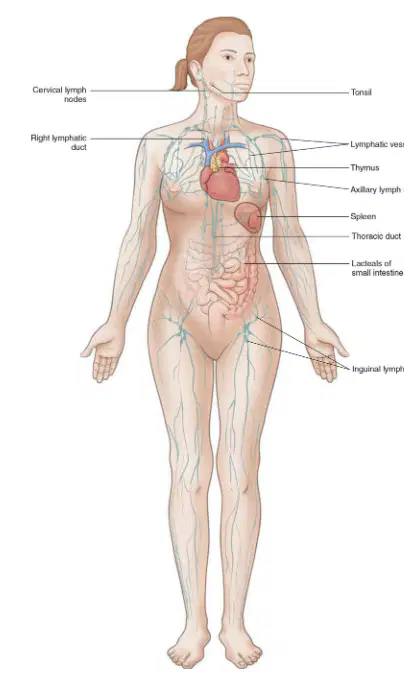
The labeled parts in the diagram of the lymphatic system are:
Lymph nodes, spleen, thymus, lymphatic vessels
Heart, lungs, liver, kidneys
Stomach, pancreas, intestines, bladder
Bones, muscles, skin, brain
Which of the following statements about lymphatic capillaries is true?
They are open at both ends
They are microscopic, blind-ended tubes sealed on one end
They are located deep within the body only
Their walls are several cells thick
Where are lymphatic capillaries located?
Deep within the body
Near the surface of the body
Only in the brain
Only in the heart
Fill in the blank: The walls of lymphatic capillaries are only ______ cell in thickness.
one
two
five
ten
What is the function of the cells in the capillary walls separating briefly?
To allow the lymph to enter the capillary
To increase blood pressure in the capillary
To prevent oxygen from diffusing out
To block the passage of nutrients
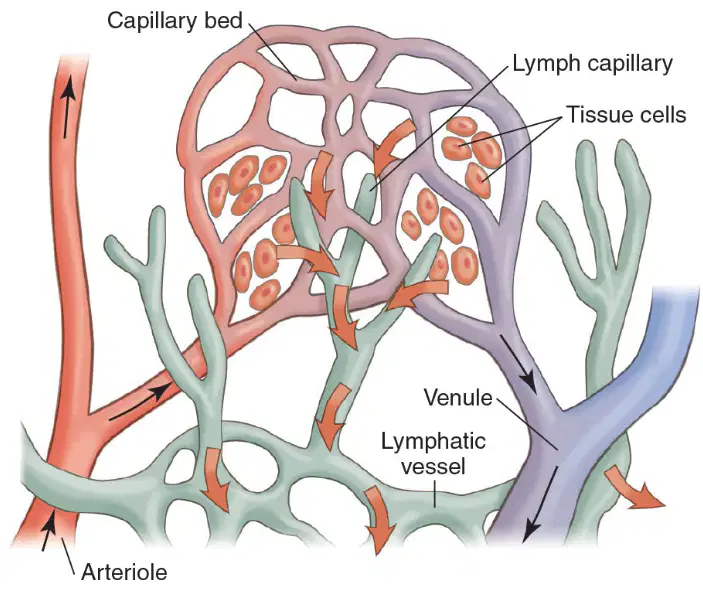
Label the following parts in the diagram:
Capillary bed, Lymph capillary, Tissue cells, Venule, Lymphatic vessel, Arteriole (as labeled in the diagram)
Capillary bed, Lymph node, Muscle cells, Venule, Lymphatic duct, Artery (as labeled in the diagram)
Capillary tube, Lymph capillary, Tissue cells, Vein, Lymphatic vessel, Arteriole (as labeled in the diagram)
Capillary bed, Lymph capillary, Fat cells, Venule, Lymphatic vessel, Arteriole (as labeled in the diagram)
Which of the following is a function of lymphatic vessels?
Flow from lymphatic capillaries into progressively larger lymphatic vessels
Prevent the backward flow of lymph
Both A and B
None of the above
What is the function of lymphatic vessels regarding the flow of lymph?
Prevent the backward flow of lymph
Increase the production of red blood cells
Transport oxygen directly to tissues
Regulate blood sugar levels
Which duct collects lymph from the right side of the head and neck, the upper right quadrant of the body, and the right arm?
Right lymphatic duct
Thoracic duct
Cervical duct
Axillary duct
The thoracic duct collects lymph from which areas of the body?
The left side of the head and neck, the upper left quadrant of the trunk, the left arm, the entire lower portion of the trunk, and both legs
The right side of the head and neck, the upper right quadrant of the trunk, and the right arm only
Only the gastrointestinal tract and the liver
The upper limbs and the heart only
Where are cervical lymph nodes located?
A) Along the sides of the neck
B) Under the arms
C) In the groin area
D) In the chest
Axillary lymph nodes are located under the arms in the area known as the ________.
armpits
neck
groin
abdomen
Inguinal lymph nodes are located in the ________ area of the lower abdomen.
inguinal (groin)
axillary (armpit)
cervical (neck)
popliteal (behind the knee)
Which type of leukocytes are formed in bone marrow as stem cells?
Red blood cells
Lymphocytes
Platelets
Erythrocytes
What is the main function of lymphocytes formed in bone marrow?
Produce hormones
Defend the body against antigens (substances that the body regards as being foreign)
Transport oxygen
Store fat
Natural killer cells (NK cells) play a role in killing cancer cells and cells infected by viruses.
True
False
B cells (B lymphocytes) are specialized lymphocytes that produce ________.
antibodies
hormones
enzymes
red blood cells
What do B cells transform into when confronted with an antigen?
Red blood cells
Plasma cells
Platelets
Macrophages
After transformation into plasma cells, B cells destroy specific ________.
antigens
hormones
enzymes
neurons
T cells (T lymphocytes) get the 'T' in their name from their origin in the ________.
thymus
bone marrow
spleen
lymph nodes
What central role do T cells (T lymphocytes) play in the immune system?
They play a central role in cell-mediated immunity.
They produce antibodies directly.
They are responsible for blood clotting.
They transport oxygen in the blood.
Cytokines are a group of proteins such as ________ and interleukins.
interferons
hemoglobin
insulin
keratin
What is the function of cytokines in the immune system?
They act as intracellular signals to begin the immune response.
They directly destroy pathogens as antibodies.
They serve as structural components of cell membranes.
They transport oxygen in the bloodstream.
Interferons activate the immune system, fight viruses, and signal other cells to ________.
increase defenses
decrease metabolism
produce toxins
divide rapidly
Interleukins play multiple roles in the ________.
immune system
digestive system
nervous system
respiratory system
Interleukins direct B and T cells to ________ and proliferate.
divide
differentiate
migrate
die
Which of the following is NOT one of the three masses of lymphoid tissue mentioned in the slide?
Adenoids (nasopharyngeal tonsils)
Palatine tonsils
Lingual tonsils
Thymus gland
Where are the adenoids (nasopharyngeal tonsils) located?
In the nasopharynx
In the oropharynx
In the larynx
In the oral cavity
The palatine tonsils are located on the left and right sides of the throat in the area visible at the back of the _____?
mouth
nose
ear
eye
Which type of tonsil is located at the base of the tongue and is not readily visible?
Lingual tonsils
Palatine tonsils
Pharyngeal tonsils
Tubal tonsils
The tonsils form a protective ring around the entrance to the ______ system.
respiratory
digestive
circulatory
nervous
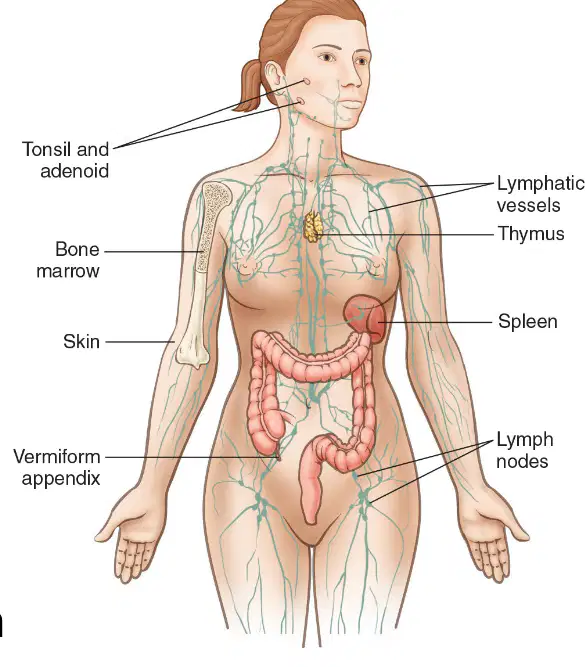
Which gland is a mass of lymphoid tissue located above the heart?
Thymus gland
Spleen
Lymph nodes
Bone marrow
At what stage of life does the thymus gland reach its greatest size?
Infancy
Puberty
Adulthood
Old age
The thymus gland becomes smaller with age.
True
False
The thymus gland is part of the ________ system.
endocrine
digestive
respiratory
circulatory
What hormone function does the thymus gland perform?
It secretes a hormone that stimulates the maturation of lymphocytes into T cells.
It secretes insulin to regulate blood sugar levels.
It produces adrenaline to prepare the body for stress.
It releases melatonin to regulate sleep cycles.
The vermiform appendix is commonly referred to as the ________.
appendix
gallbladder
pancreas
spleen
Where does the vermiform appendix hang from?
The upper portion of the cecum
The lower portion of the cecum
The middle of the small intestine
The end of the rectum
The vermiform appendix is located in the first section of the ________.
large intestine
small intestine
stomach
esophagus
For many years, the purpose of the appendix was ________.
unknown
to aid in digestion of fats
to filter toxins from blood
to produce insulin
Recent research indicates that the appendix may play an important role in which system?
Digestive system
Immune system
Nervous system
Respiratory system
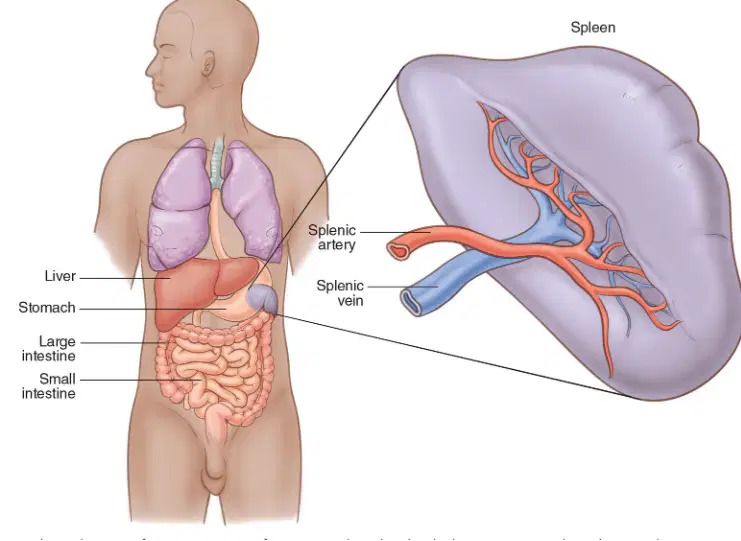
What is the spleen?
A) A sac-like mass of lymphoid tissue
B) A bone in the arm
C) A gland in the neck
D) A muscle in the leg
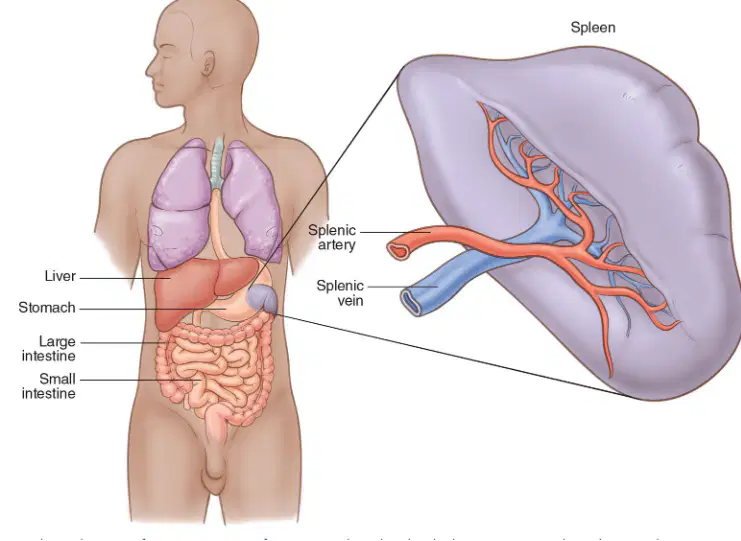
Where is the spleen located?
Right lower quadrant of the abdomen
Left upper quadrant of the abdomen
Center of the chest
Right upper quadrant of the abdomen
The spleen filters microorganisms and other foreign material from the blood.
True
False
The spleen forms lymphocytes and monocytes, which are specialized leukocytes (white blood cells).
True
False
Fill in the blank: The spleen destroys worn-out ________.
erythrocytes
leukocytes
platelets
plasma cells
Fill in the blank: The spleen stores extra ________.
erythrocytes
leukocytes
platelets
plasma
The spleen performs important functions related to both the ________ and ________ systems.
immune; cardiovascular
digestive; respiratory
nervous; endocrine
muscular; skeletal
What is the primary function of the immune system?
Maintaining good health
Producing hormones
Digesting food
Regulating temperature
Pathogens are:
Substances that produce allergic reactions
Disease-producing microorganisms
Poisonous or harmful substances
Potentially life-threatening cancer cells
Allergens are substances that produce ________ reactions.
allergic
chemical
thermal
mechanical
Toxins are ________ or harmful substances.
poisonous
nutritious
fragrant
colorful
Malignant cells are potentially ________ cancer cells.
life-threatening
benign
non-cancerous
harmless
Which of the following is NOT a function of the immune system?
A) Preventing the entry of harmful substances
B) Using chemical signaling to identify antigens
C) Creating memory of invaders
D) Producing digestive enzymes
The immune system creates a 'memory' of the invader to enable the body to mount a more efficient future defense against that ________.
antigen
enzyme
hormone
neuron
What is the function of intact skin in the immune system?
It wraps the body in a physical barrier to prevent invading organisms from entering and is covered with an acid mantle that makes an inhospitable environment for most bacteria.
It produces antibodies to directly attack pathogens.
It secretes digestive enzymes to break down bacteria.
It increases the production of white blood cells in response to infection.
What does the respiratory system do to protect the body from foreign matter?
It traps breathed-in foreign matter with nose hairs and moist mucous membrane lining of the respiratory system, and uses coughing and sneezing to help expel foreign matters that get past initial barriers.
It increases the heart rate to pump more blood and remove foreign matter quickly.
It produces antibodies to directly attack foreign matter in the bloodstream.
It uses digestive enzymes to break down foreign matter in the lungs.
What role does the digestive system play in defending the body?
Acids and enzymes destroy invaders swallowed or consumed with food.
It produces white blood cells to fight infections.
It filters toxins from the blood directly.
It creates antibodies to attack viruses.
What is the function of the lymphatic system in the immune system?
Destroys pathogens that succeed in entering the body.
Produces red blood cells for oxygen transport.
Regulates blood sugar levels in the body.
Breaks down food for nutrient absorption.
What does the antigen-antibody reaction involve?
Binding antigens to antibodies
Producing red blood cells
Destroying antibodies
Creating new antigens
Fill in the blank: Tolerance refers to an acquired unresponsiveness to a specific _______.
antigen
enzyme
hormone
neuron
What are antibodies?
Disease-fighting proteins
Harmful chemicals
Red blood cells
Antigens
The antigen-antibody reaction immediately responds to the presence of any antigen.
True
False
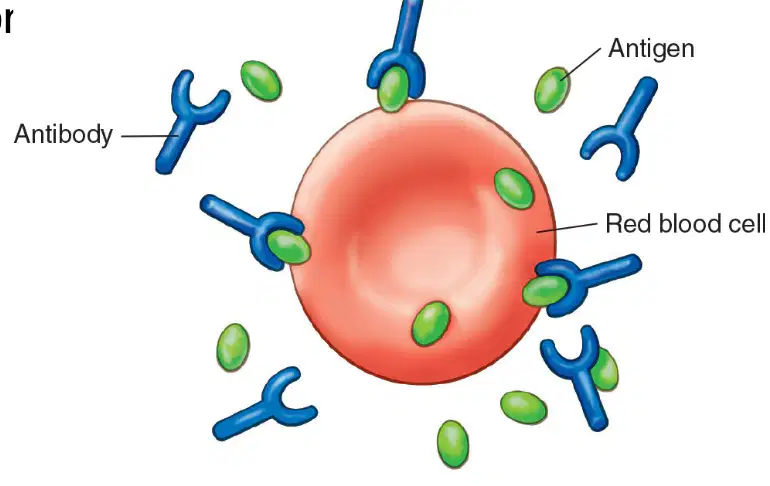
Based on the diagram, what do antibodies do when they encounter foreign antigens?
Bind together with antigens to neutralize them and flag them for destruction
Destroy red blood cells
Produce more antigens
Ignore the antigens
Phagocytes are specialized leukocytes that act as part of the ______–antibody reaction.
antigen
enzyme
hormone
lipid
What is the process called in which phagocytes destroy substances?
phagocytosis
osmosis
diffusion
exocytosis
Monocytes are leukocytes that provide ______ defenses.
immunological
mechanical
chemical
nutritional
Monocytes become ______ and dendritic cells.
macrophages
erythrocytes
neutrophils
lymphocytes
Macrophages are leukocytes that surround and kill ______ cells.
invading
nerve
muscle
fat
Dendritic cells patrol the body searching for ______.
antigens
hormones
vitamins
enzymes
Dendritic cells grab an antigen, swallow it, and alert ______ and ______ cells to act against the specific antigen.
B and T
Red blood and Platelet
Macrophage and Neutrophil
Plasma and Memory
What is the complement system?
A) A group of proteins that normally circulate in the blood in an inactive form
B) A type of white blood cell
C) A type of vaccine
D) A type of bacteria
Fill in the blank: The complement system helps ward off pathogens by combining with them to dissolve and remove ________ and other foreign cells.
pathogenic bacteria
red blood cells
nerve cells
muscle fibers
Immunity is the state of being resistant to a specific ________.
disease
vitamin
mineral
hormone
Natural immunity (passive immunity) is resistance to a disease present without the administration of an ________ or exposure to a disease.
antigen
antibody
vaccine
antibiotic
Acquired immunity is obtained by having had a ________ disease.
contagious
hereditary
chronic
benign
Vaccination provides protection against a disease, but for some conditions, a periodic booster is required.
True
False
Fill in the blank: A(n) ________ is a specialist in diagnosing and treating conditions of altered immunologic reactivity, such as allergic reactions.
Allergist
Cardiologist
Dermatologist
Neurologist
Fill in the blank: A(n) ________ is a specialist in diagnosing and treating diseases caused by microorganisms.
Infectious disease specialist
Cardiologist
Dermatologist
Orthopedic surgeon
Fill in the blank: A(n) ________ is a specialist in diagnosing and treating disorders of the immune system.
Immunologist
Cardiologist
Neurologist
Dermatologist

