
 Worksheets
Business Ideas Quiz
Total questions: 52
Worksheet time: 17mins
What is an idea according to the learning material?
A detailed business plan
A thought or suggestion as to a possible course of action
A financial investment
A marketing strategy
Which of the following is a way you might come up with an idea or opportunity?
You found a solution to a problem you encountered.
You are content with your current routine.
You dislike creating new things.
You avoid sharing your passions.
What might inspire you to share something with others?
A lack of interest in new ideas.
A passion for something.
A desire to keep things private.
A fear of change.
What could be a reason to make a career change?
Satisfaction with your current job.
Tiredness of your daily routine.
Fear of new opportunities.
Lack of creativity.
What percentage of businesses fail in their first five years?
30%
50%
70%
90%
What is a common reason for early business failure?
Lack of funding
Poor planning
High competition
Ineffective marketing
Before creating a business, what should you research?
Potential investors
Existing competitors
Marketing strategies
Office locations
Which of the following is an example of researching a business idea?
Designing a logo
Creating a website
Checking if an idea is already invented
Hiring employees
What is considered the biggest leap of entrepreneurship according to the text?
Developing a business plan
Taking your idea and actually turning it into a business
Hiring the right team
Securing funding
What must you be willing to do to start up your business, as mentioned in the text?
Follow traditional methods
Take the risk and use problem-solving steps
Wait for the right time
Focus solely on marketing
What is the first step in turning an idea into a business?
Gain knowledge in your field.
Research Market.
Have an idea? Identify problem and solve it.
Ensure financial stability.
Which step involves understanding the market for your business idea?
Gain knowledge in your field.
Research Market.
Ensure financial stability.
Have passion and apply it to your business.
What should you do after gaining knowledge in your field according to the steps?
Find your target market.
Ensure financial stability.
Be adaptable and handle the challenges you will face.
Keep positive, current and keep growing.
Which step emphasizes the importance of being flexible and overcoming obstacles?
Gain knowledge in your field.
Be adaptable and handle the challenges you will face.
Ensure financial stability.
Keep positive, current and keep growing.
What is the first step before starting a business according to the document?
Create a marketing plan
Identify the problem and solve it
Hire employees
Secure funding
Why is it important to gain knowledge in your field before starting a business?
To impress investors
To ensure you are knowledgeable and not just passionate
To reduce costs
To avoid competition
Which of the following activities is NOT mentioned as a way to gain knowledge in your field?
Take classes
Research
Network
Explore
What is the primary purpose of market research in starting a business?
To gather information about competitors' prices
To understand consumers' needs and preferences
To create a financial plan
To hire employees
Why is it important to determine if a business idea already exists in your location?
To avoid legal issues
To ensure there is a market need
To reduce marketing costs
To find suppliers
What is a SWOT Analysis used for in business planning?
To calculate profit margins
To analyze an idea in an organized way
To determine employee salaries
To set product prices
What defines a target market in business?
A group of investors
A specific group of consumers for products and services
A list of suppliers
A network of business partners
Why is having a good product or service alone not enough for a successful business?
It requires a large marketing budget
It needs a strong brand name
It must have a defined target market
It should be patented
What is a key part of knowing your needs for a business startup?
Marketing strategy
Financial plan
Employee training
Product design
Why is it important to have a thorough financial plan for your business?
To increase employee satisfaction
To secure investment
To improve customer service
To enhance product quality
What should you consider in your financial plan for a business startup?
Office location
Overhead, cash flow, income, profit/loss, and investment stages
Branding and advertising
Employee benefits
Why is passion important for an entrepreneur?
It helps in reducing costs
It prevents loss of interest in the business
It guarantees business success
It attracts more customers
What is essential to handle the challenges in entrepreneurship?
Being inflexible and rigid
Having grit and flexibility
Avoiding challenges
Focusing only on short-term goals
How is entrepreneurship described in the learning material?
A sprint, not a marathon
A marathon, not a sprint
A quick and easy journey
A straightforward path
What should you do to stay successful in entrepreneurship according to the material?
Stop learning once you succeed
Focus only on past achievements
Stay up with technology, innovations, and trends
Avoid changes and stick to old methods
What does SWOT stand for in SWOT Analysis?
Strengths, Weaknesses, Opportunities, Threats
Strategy, Work, Objectives, Targets
Success, Weakness, Options, Tactics
Strength, Work, Opportunities, Tasks
Which aspect of SWOT Analysis focuses on identifying what a business does well?
Weaknesses
Opportunities
Strengths
Threats
In SWOT Analysis, which aspect involves identifying potential areas for improvement?
Strengths
Weaknesses
Opportunities
Threats
What is the purpose of identifying opportunities in SWOT Analysis?
To find potential threats
To identify areas of improvement
To discover potential opportunities for success
To assess internal strengths
Which aspect of SWOT Analysis involves assessing external factors that could negatively impact a business?
Strengths
Weaknesses
Opportunities
Threats
What is one of the strengths mentioned in the SWOT analysis example?
Our company has little market presence.
We have low overheads, so we can offer good value to customers.
We are vulnerable to vital staff being sick or leaving.
Our cash flow will be unreliable in the early stages.
Which of the following is listed as a weakness in the SWOT analysis example?
Our business sector is expanding.
We can change direction quickly if our marketing is not working.
Our company has little market presence or reputation.
Local government wants to encourage local businesses.
What opportunity is identified in the SWOT analysis example?
Developments in technology may change the market.
Our competitors may be slow to adopt new technologies.
A small change in the focus of a large competitor might wipe out any market position we achieve.
Our cash flow will be unreliable in the early stages.
What does the 'S' in SMART goals stand for?
Simple
Specific
Strategic
Standard
Which aspect of SMART goals ensures you can track your progress?
Specific
Achievable
Measurable
Time-bound
What should you consider to ensure your goal is 'Achievable'?
If it is relevant to others
If it is too easy or too difficult
If it has a start and end date
If it is measurable
Why is it important for a goal to be 'Relevant'?
To ensure it is measurable
To ensure it is realistic and applicable to you
To ensure it is time-bound
To ensure it is specific

What does the 'T' in SMART goals emphasize?
Timeless
Tangible
Time-bound
Transparent
What is the typical time frame for achieving short-term goals?
1-2 years
3-5 years
5-10 years
Over 10 years
Which of the following is an example of a long-term goal?
Open the store doors
Develop loyal customers
Develop new products
Organize a team meeting

Which of the following is a financial goal for a business?
How much money will you earn?
What is the reason for your business?
How many people do you want to have work with you?
What do you want your business to achieve?

What is an example of a non-financial goal for a business?
How quickly will you pay off debts?
Where will your money be spent?
What is the reason for your business?
How much money is this going to cost to start?
What is the benefit of writing down a goal?
It makes the goal real and tangible.
It ensures immediate success.
It eliminates the need for an action plan.
It guarantees financial gain.
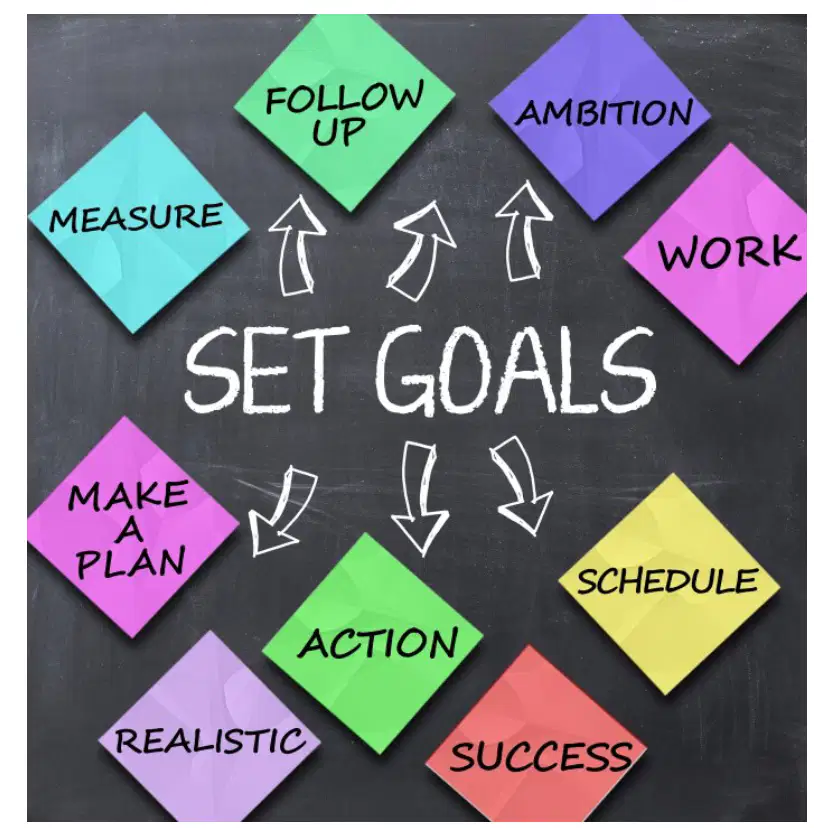
Why is making an action plan important in goal setting?
It allows you to skip steps.
It helps you focus only on the outcome.
It ensures you plan all necessary steps.
It makes the goal less tangible.
What should you do to keep yourself on track with your goals?
Ignore reminders
Build in reminders
Set goals once
Avoid reviewing goals

According to the image, what should you do after setting goals?
Dream big
Take action
Reflect on your goals
Celebrate success
What is suggested as a way to start achieving your goals?
By taking small steps today
By waiting for the right moment
By dreaming bigger
By setting more goals
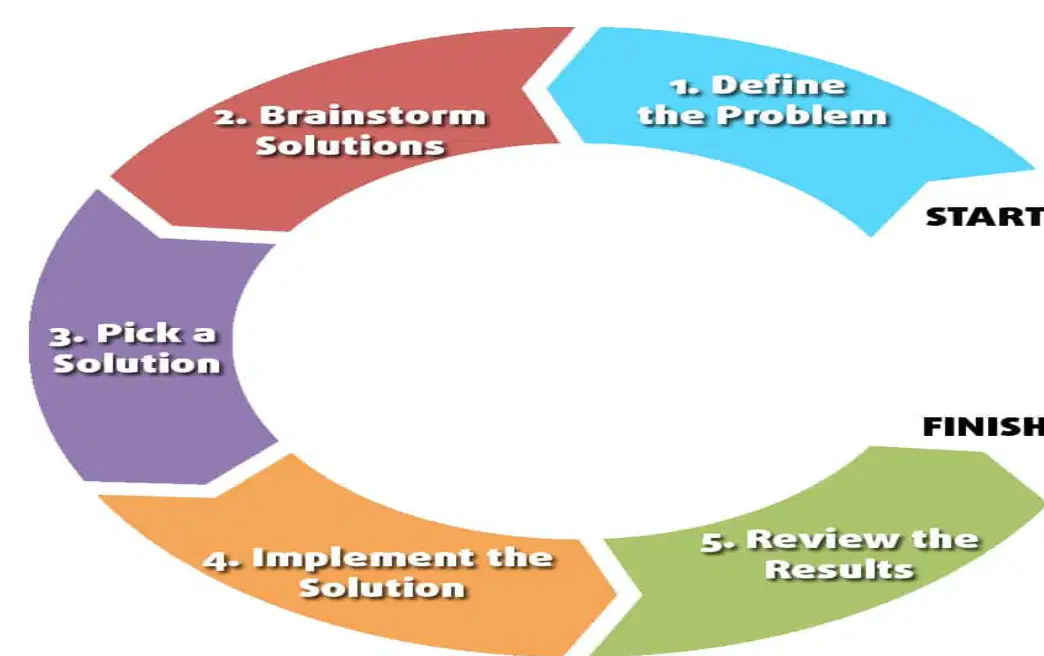
Which step involves generating multiple potential solutions to a problem?
Implement the Solution
Brainstorm Solutions
Review the Results
Pick a Solution

