
 Worksheets
MAPEH 9 Review Test for 2nd Long Test
Total questions: 70
Worksheet time: 35mins
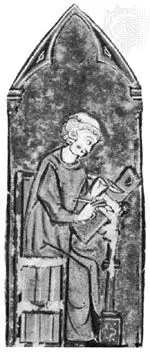
What nickname was Adam de la Halle known by?
Adam le Sage
Adam le Bossu
Adam le Troubadour
Adam le Musicien
Where did Adam de la Halle pursue his primary studies?
University of Paris
Notre Dame Cathedral
Cistercian Abbey of Vaucelles
Court of Charles of Anjou
From whom did Adam de la Halle learn techniques that influenced his polyphonic music?
Charles d’Anjou
Leonin
Liberio Sachetti
Coussemaker
What musical style is Adam de la Halle credited with creating as a trouvère?
Polyphonic music
Gregorian chant
Monophonic chansons
Opera
Which court did Adam de la Halle join after his studies?
Court of Charles of Anjou
Court of Louis IX
Court of Edward I
Court of Richard the Lionheart
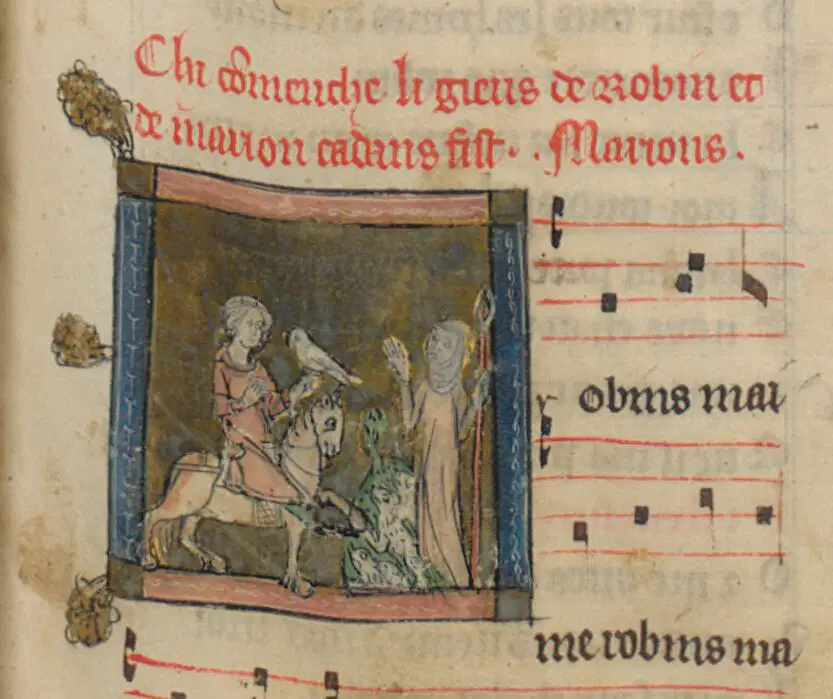
What is the Chansonnier of Adam de la Halle?
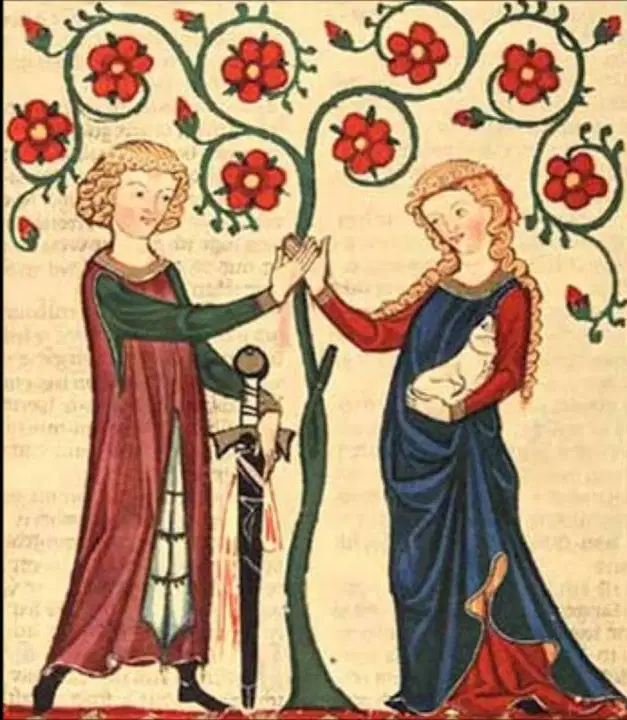
Which work of Adam de la Halle is a play with music?
Le jeu de Robin et de Marion
Rondel
Chansonnier
Canso
What genre did Adam apply polyphony to, creating a unique blend of sophistication and popular charm?
Gregorian chant
Rondeau (rondel)
Opera
Courtly canso
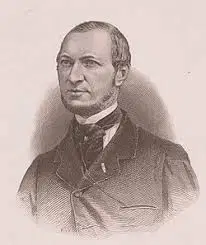
Who published Adam de la Halle’s collected works in a modern edition?
Charles-Edmond-Henride Coussemaker
Guillaume de Machaut
Liberio Sachetti
Leonin
What is notable about the rondels Adam de la Halle composed?
They are purely courtly songs
They are dance-songs with short, recurring refrains and pastoral flavor
They are religious chants
They follow Gregorian modes exclusively
In medieval lyric poetry, the French “jeux-partis” is roughly equivalent to which Occitan form?
Enueg
Canso
Gap
Tenso
Both the jeux-partis and the tenso are characterized by what feature?
Solo lament singing
Use of Gregorian chant notation
Instrumental interludes only
Debate or dialogue between two poets/singers
The Occitan “canso” corresponds to which French trouvère genre?
Rondel
Chanson courtoise
Jeux-Partis
Pastorela

The canso and chanson courtoise are typically about what subject matter?
Political satire
Rural festivals
Religious pilgrimages
Courtly love and refined themes
Adam de la Halle, the famous trouvère, originally came from which place?
Cambrai
Paris
Naples
Arras
In what way did Adam de la Halle’s works differ from those of most other trouvères?
He avoided courtly subjects entirely
He composed exclusively instrumental pieces
He was the only trouvère to compose polyphonic music
He wrote only religious monophonic chants
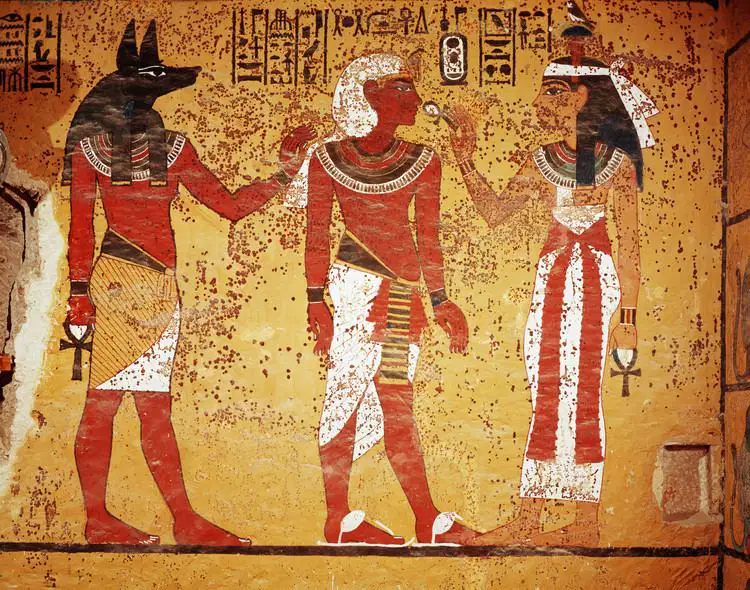
Which event marks the beginning of Early Dynastic Egypt (c. 3000 BCE)?
Rise of the New Kingdom
Construction of the Great Pyramids
Discovery of Tutankhamun’s tomb
Upper Egypt conquered Lower Egypt, unifying Egypt
Egyptian art during the Early Dynastic period mainly expressed:
Daily life of peasants
Warfare and conquest
Agricultural scenes
Kingship, cosmic order, and religion
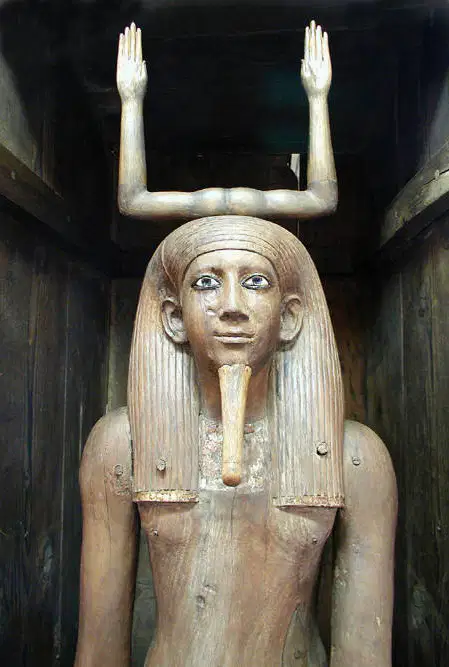
In Egyptian belief, the ka was:
The pyramid capstone
The sun god
The burial chamber
A life force that needed a body or statue
Funerary practices in Egypt were designed to:
Prepare for warfare
Impress neighboring kingdoms
Preserve mummies for display
Ensure survival in the afterlife
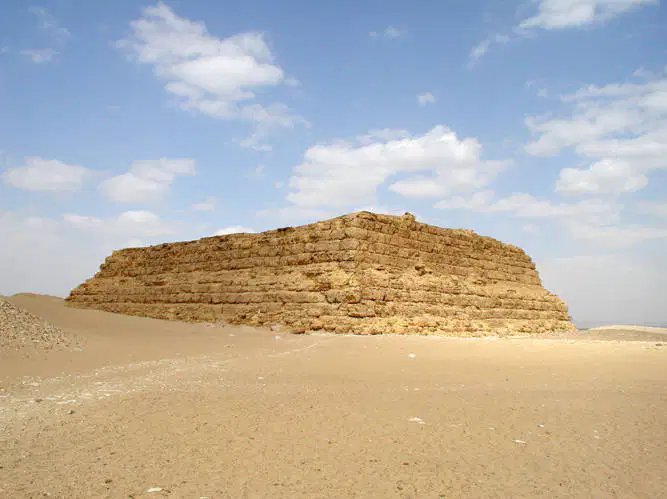
What is a mastaba?
A type of pyramid capstone
A ritual for the dead
A temple for the sun god
A flat-topped tomb with sloping sides
Which part of the mastaba housed the ka statue of the deceased?
Causeway
Chapel
Burial chamber
Serdab

What was the purpose of the chapel in a mastaba?
To store mummies
To hold priests’ meetings
To hide treasures
For family members to bring offerings
Where were mastabas and necropolises usually located?
East bank of the Nile
Near the Red Sea
West bank of the Nile
North of the Nile Delta
Early mastabas were built mainly of:
Sandstone
Gold
Mudbrick
Granite
The purpose of a mastaba was to:
Display royal decrees
Provide a safe, eternal home for the ka
Serve as a place of worship for Ra
Store treasures of the king
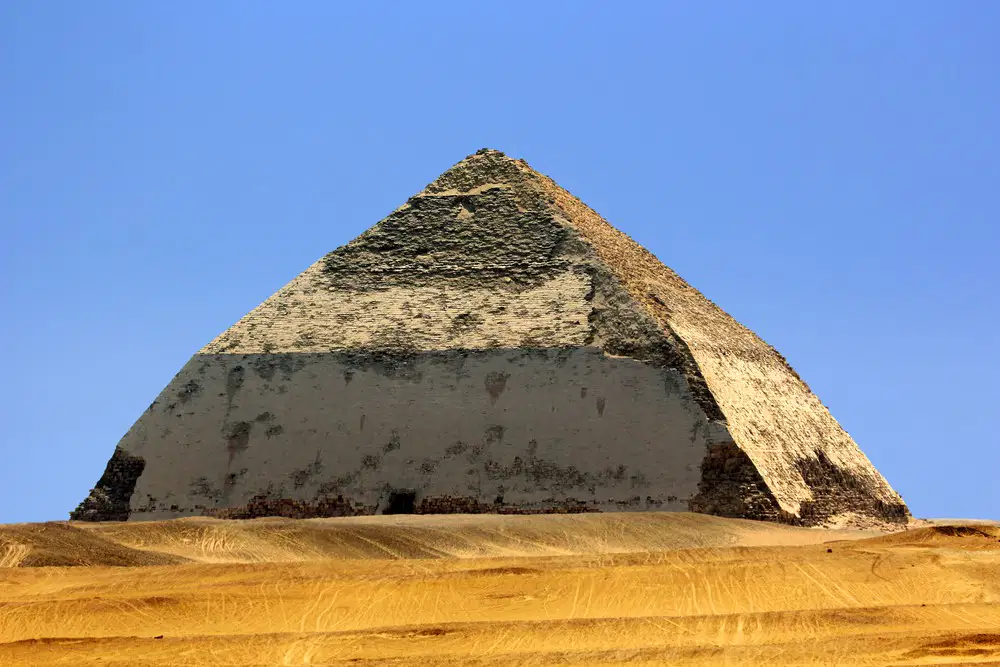
Which pyramid site represents the experimental stage of pyramid building?
Giza
Luxor
Saqqara
Dahshur

The true pyramid symbolized:
The Nile River’s annual flood
Pharaoh’s power over the people
The kingdom’s unification
The rays of the sun for the king’s soul to ascend to Ra
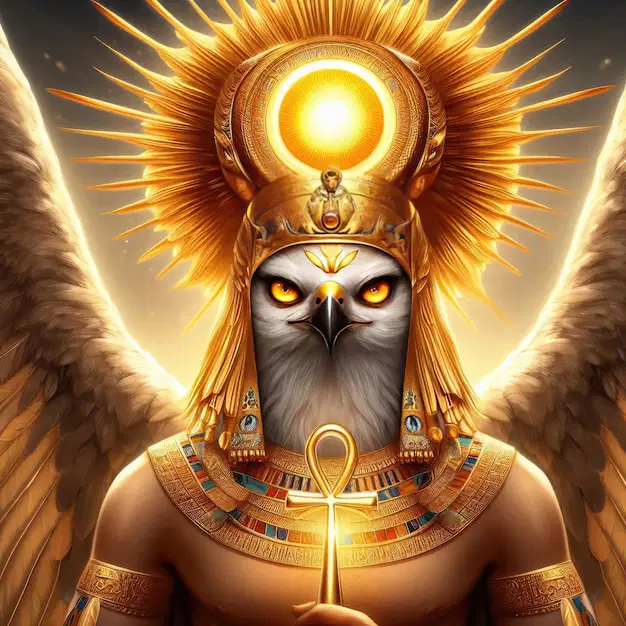
Which god was the Egyptian sun god?
In a funerary complex, the place where the king’s body was first received from the Nile was called the:
Pyramid
Funerary temple
Causeway
Valley temple
Which Great Pyramid at Giza is the largest?
Which pyramid appears taller due to elevated bedrock but is actually slightly smaller?

The Great Sphinx combines a lion’s body and a human head to symbolize:
Paraoh's power and divine protection
The Nile River flood
Tutankhamun’s tomb guardian
Egyptian love of animals
According to the riddle of the Sphinx, “What walks on four legs in the morning, two legs at noon, and three legs in the evening?”

The statue of Menkaure and a Queen portrays the king as:
Seated with crossed legs
Frail and elderly
Kneeling with arms raised
Athletic, idealized, striding with left foot forward

The queen in Menkaure’s statue is shown as:
Standing behind priests
Seated with a crown
Kneeling with offerings
Youthful, supportive, embracing the king
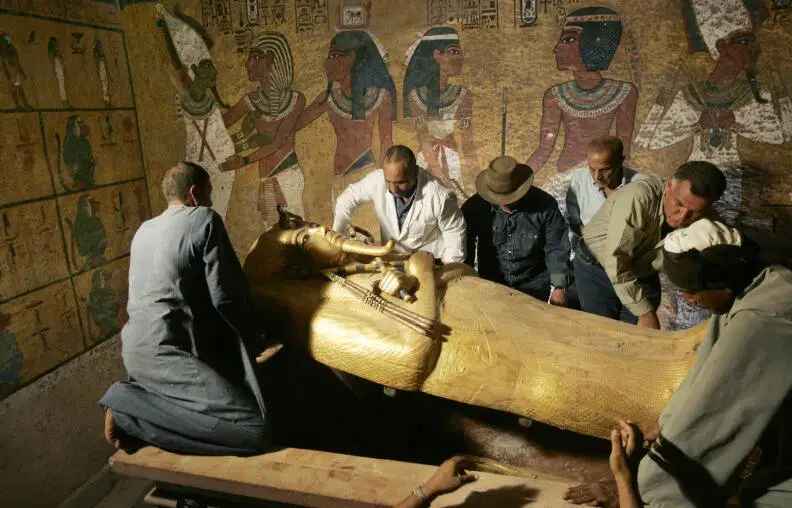
Tutankhamun is famous today because:
He built the largest pyramid
He ruled for 60 years
His tomb was discovered almost intact in 1922
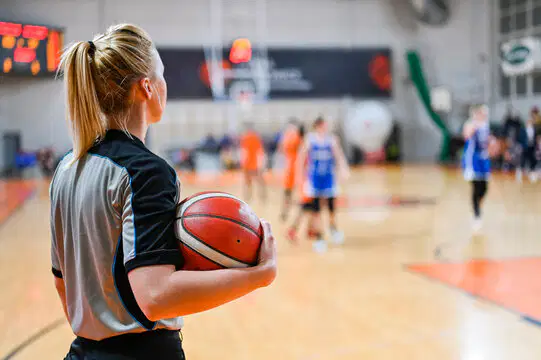
One of the main responsibilities of referees and officials during a basketball game is to ensure:
Team travel arrangements
Only entertainment
Player salaries
Safety, fairness, and proper timing
Before a game, referees must check and approve:
The players’ heights
The audience seating
Equipment, court safety, and game ball
The team’s practice schedule
When there are two worn-out balls, the referee should:
Flip a coin to choose
Pick a newer one
Ask the team captains to choose
Cancel the game
Which of the following items can a referee ban for safety reasons?
Socks
Towels
Metal bracelets
Water bottles

How does the referee start the game?
With a time-out
With a free throw
With a coin toss
With a jump ball

The referee starts other periods after the first with:
Jump balls
Alternating throw-ins
The referee may stop the game for:
A successful basket
Coach’s speech
Team huddle
Wet floor or crowd disturbance
If a team refuses to play, the referee can:
Change the referee
Give them another time-out
Reduce the score
Declare a forfeit
At the end of a game, referees must:
Sign the scoreboard
Announce the MVP
Collect uniforms
Check and sign the score sheet
Which of the following is an example of what the referee records on the back of the score sheet?
Player #12 – 2 unsportsmanlike fouls
Ticket sales
Audience attendance
Team logo
How long does a standard time-out last?
30 seconds
2 minutes
1 minute
45 seconds
At what time marker should the buzzer be buzzed so the players can get on the court within ten seconds?
50 seconds
1 minute
5 seconds
15 seconds
When should an official NOT blow the whistle?
When a foul occurs
When the period ends
After a successful field goal
When a violation occurs
Which principle should referees follow to keep the game flowing smoothly?
Stop for every minor contact
Follow spirit and intent of rules
Let players decide rules
Avoid enforcing time limits
The scorer’s duties include all EXCEPT:
Listing team names and starters
Blowing the whistle for fouls
Flipping the possession arrow
Tracking points and fouls
When a player commits his 5th foul, the scorer should:
Listing team names and starters
Flipping the possession arrow
Blowing the whistle for fouls
Tracking points and fouls
When a player commits his 5th foul, the scorer should:
Stop the clock personally
Notify the coach and officials
Reset the score
Eject the player immediately without notice
The timer starts the game clock:
When the referee raises his hand
At the coach’s signal
After the first basket
When the ball is tapped at jump ball or touched after throw-in
The shot clock operator must reset the shot clock to how many seconds after a full change of possession?
10 seconds
14 seconds
24 seconds
30 seconds
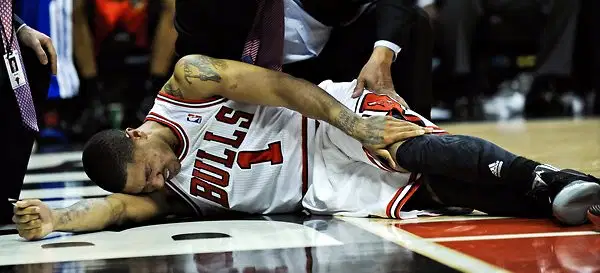
If Player #8 is fouled while shooting but is injured and can’t shoot the free throws, what happens?
Free throw is cancelled automatically
Referee shoots instead
Coach picks another player from their team to shoot
Opposing team shoots
Why are referees’ final decisions important?
They help teams win games
They reduce the number of officials needed
They increase ticket sales
They prevent chaos, keep game moving, and ensure consistency
Within what time should any protest about basketball results be relayed in writing?
1 day
1 hour
1 week
1 minute
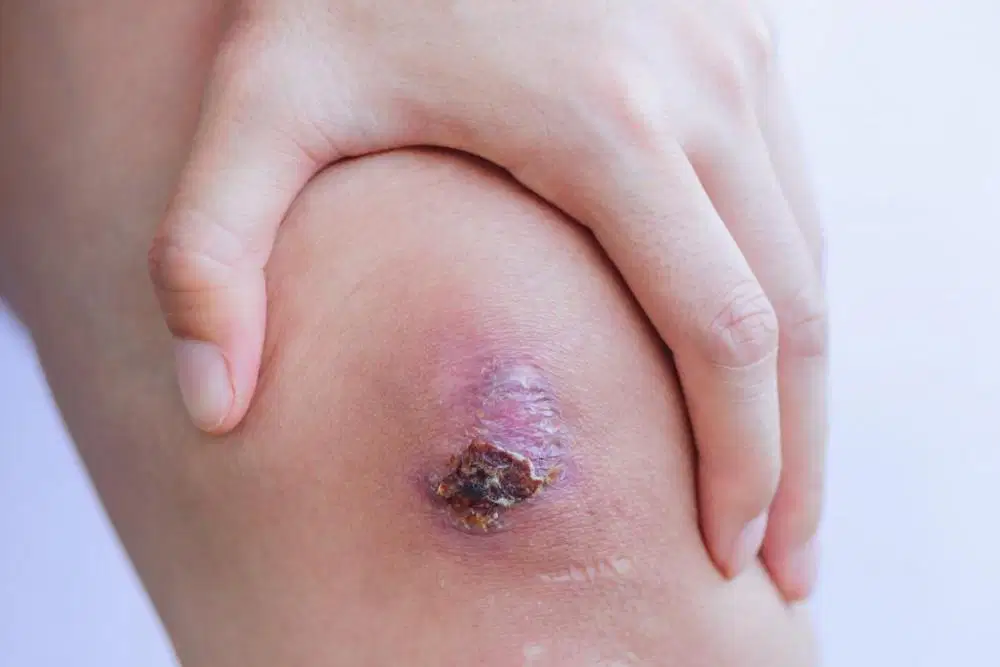
Why should wounds always be covered?
Wounds should always be covered to prevent infection and promote healing.
Before and after dressing a wound, you should:
Touch the wound directly
Pour cold water on the wound
Ask the victim to remove the bandage
Wash or sanitize your hands
When possible, use _____dressings on wounds.
Colorful
Elastic
Sterile
Decorative
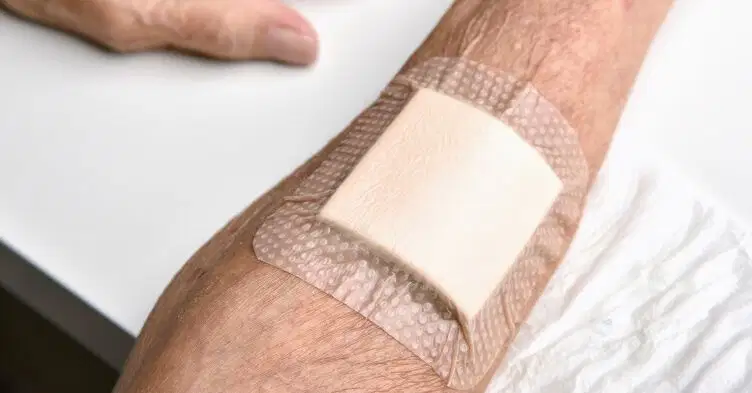
What should you do if the first dressing is stuck to the wound?
Peel it off quickly
Cover it with soil
Leave it unless absolutely necessary
Soak it in water
Which type of bandage is used to secure dressings and support limbs?

Tubular bandage

Triangular bandage

Roller bandage

Adhesive strip
A large triangular cloth, about 1 m per side, used as a sling or to cover large wounds, is called a:
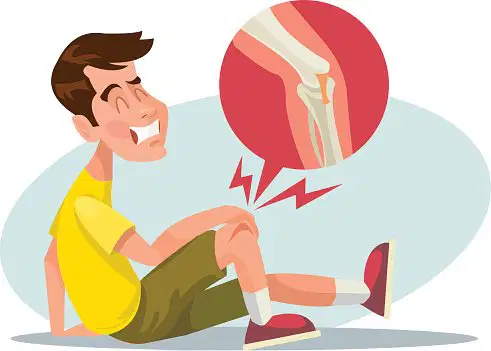
Before bandaging two legs together to immobilize a suspected fracture, you should:
Remove all clothing
Leave them free so they can move
Tie knots tightly over the injury
Place a soft padding such as a towel between them

Which carrying technique is best for moving an unconscious victim by one rescuer?
Hand-seat carry
Chair carry
Packstrap carry
Three-man carry

Which carry requires two rescuers forming a “seat” with their arms for a conscious victim?
Chair carry
Packstrap carry
Hand-seat carry
Three-man carry
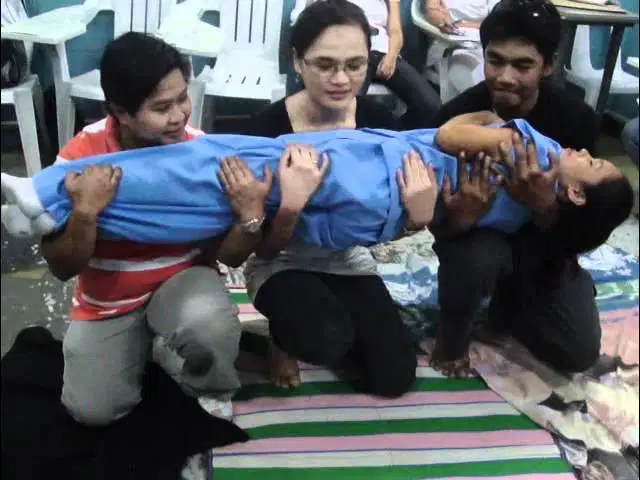
Which method uses three rescuers on one side of the victim, lifting head, hips, and legs together to move someone with serious injuries?
Packstrap carry
Three-man carry
Chair carry

When placing a victim on a stretcher, which rescuer should give clear, loud commands such as “Ready… Lift!”?
The rescuer at the hips
The rescuer at the head
The rescuer at the feet

