
NEW
Font size
 Worksheets
Business Fundamentals Quiz
Total questions: 60
Worksheet time: 30mins
What is the purpose of a business and its aims and objectives?
To maximize profits and achieve growth
To minimize costs and reduce workforce
To avoid competition and maintain status quo
To focus solely on local markets
Which of the following is a type of business structure?
Circular
Flat
Linear
Random
What are the factors to consider when discussing business location?
Local, national, international
Urban, rural, suburban
Domestic, foreign, global
City, town, village
How can business ideas be evaluated and justified?
Using synthesis skills
By guessing outcomes
Through random selection
By ignoring market trends
What is a purpose of a business plan?
To outline the financial goals and strategies of a business
To hire employees
To design a marketing campaign
To create a website
What are the possible structures of a business mentioned in today powerpoint presentation?
Flat, Matrix, Hierarchical
Circular, Linear, Network
Modular, Sequential, Parallel
Centralized, Decentralized, Distributed
Which of the following is a type of business location discussed in today session?
Urban, Suburban, Rural
Local, National, International
Domestic, Regional, Global
City, State, Country
What is an aim?
A specific goal to be achieved
A broad statement of purpose
A detailed plan of action
A list of tasks to complete
What are objectives?
Broad statements of purpose
Specific steps to achieve a goal
General ideas for future plans
Unrelated tasks
What is one key difference between an aim and objectives?
Aims are more specific than objectives
Objectives are broader than aims
Aims are broad, while objectives are specific
Objectives are unrelated to aims
What is a characteristic of a micro business?
Public limited company
Sole trader
Non-profit organization
Government agency
Which type of business is typically a public limited company?
Micro business
Macro business
Non-profit organization
Sole trader
Which of the following is an example of a non-profit organization?
NHS
Private limited company
Sole trader
Public limited company
Why might a business change its ownership? Identify a reason.
To increase profits
To reduce competition
To expand market reach
To comply with regulations
Who owns private organizations?
The government
Individuals
Non-profit groups
Public shareholders
What happens if a privately owned business is successful?
The government takes over
The business closes
The owner(s) make a profit
The business becomes public
How many main types of privately owned organizations are there?
Two
Three
Four
Five
What is a sole trader?
A type of business owned by multiple partners
A type of business owned by one person
A type of business owned by a corporation
A type of business owned by a government
Which of the following is true about a sole trader?
They share profits with shareholders
They are responsible for every aspect of the business
They have limited liability
They are not responsible for business debts
Which of the following is an example of a sole trader?
A multinational corporation
A local retailer
A government agency
A non-profit organization
What happens to the profits in a sole trader business after paying tax?
They are distributed among employees
They are reinvested in the business
The sole trader keeps all the profit
They are donated to charity
What is a key characteristic of a partnership?
Owned and run by one person
Owned and run by two or more people
Owned by a corporation
Owned by the government
In a partnership, who is responsible for running the business?
Only one partner
The government
The partners jointly
An external manager
Which of the following is an example of a typical partnership business?
Large multinational corporation
Local accountant
Government agency
Public school
How are profits typically handled in a partnership?
Kept by one partner
Donated to charity
Shared among partners after paying tax
Reinvested in the business only
What does the name of a private limited company always end with?
Corp
Ltd or Limited
Inc
Co
Who are the owners of a private limited company known as?
Managers
Employees
Shareholders
Customers
What financial rewards do shareholders receive if the company is successful?
Salaries
Dividends
Bonuses
Commissions
In many private companies, who are the owners also known as?
Directors
Employees
Managers
Clients
What is the largest type of business?
Sole Proprietorship
Partnership
Public Limited Company
Private Limited Company
What do the letters 'Plc' at the end of a company name signify?
Private Limited Company
Public Limited Company
Partnership Limited Company
Professional Limited Company
Who owns a Public Limited Company?
A single individual
A group of partners
Shareholders, including the public and institutional investors
Only the directors
Where are the shares of a Public Limited Company traded?
Over-the-counter
Stock Exchange
Directly between individuals
Only within the company
What is one advantage of selling shares to the public for a Public Limited Company?
It limits the company's growth
It raises large amounts of money to expand or develop the company
It reduces the company's market value
It decreases the number of shareholders
What is the term for the owner of a small company who uses the name of a larger company in a franchise agreement?
Franchisor
Franchisee
Investor
Partner
In a franchise agreement, what does the franchisee pay to the franchisor?
A share of the profits and a fee to use the name
A fixed salary
Only a fee to use the name
A share of the profits only
Which of the following is an example of a franchise?
Apple
Kentucky Fried Chicken
Microsoft
Amazon
What kind of support is typically provided to a franchisee by the franchisor?
Financial loans
Help and support to run the business
Free products
Marketing services only
What is a key characteristic of a workers' cooperative?
Owned by a single individual
Profits are shared among workers
Decisions are made by a board of directors
Operates only in large cities
How are decisions typically made in a workers' cooperative?
By a single manager
By a vote among workers
By an external consultant
By a government agency
What distinguishes a workers' cooperative from a Cooperative Retail Society (CRS)?
Workers' cooperatives are usually larger
CRS is owned by customers
Workers' cooperatives operate nationwide
CRS shares profits with workers
What is one reason a business might change its ownership?
To increase product prices
Retirement or death of a partner
To hire more employees
To reduce working hours
Which of the following is a financial reason for a business to change ownership?
Expansion
Decrease in sales
Increase in taxes
Change in management
Why might a business merge with another business?
To reduce competition
To change its location
To decrease its product line
To lower employee salaries
What could be a consequence of business failure leading to a change in ownership?
Increase in market share
Change in product/service/operation
Hiring more staff
Opening new branches
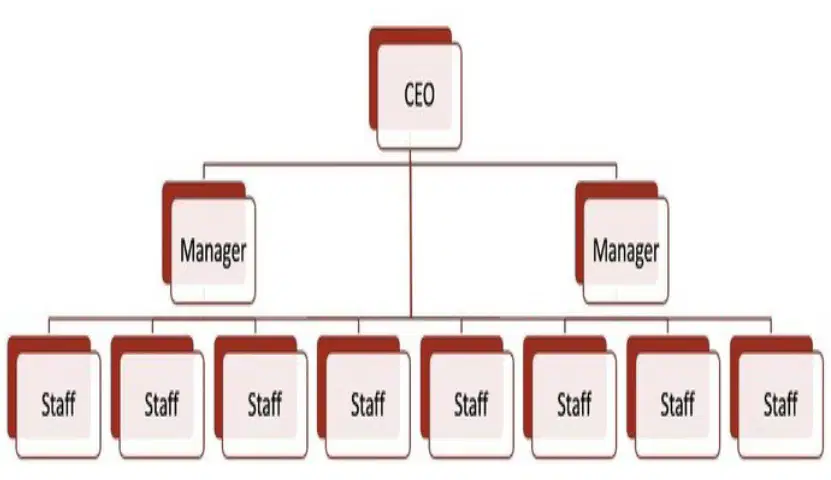
What is a key characteristic of a flat organizational structure?
Many hierarchical levels
Few hierarchical levels
Complex chain of command
Multiple layers of management
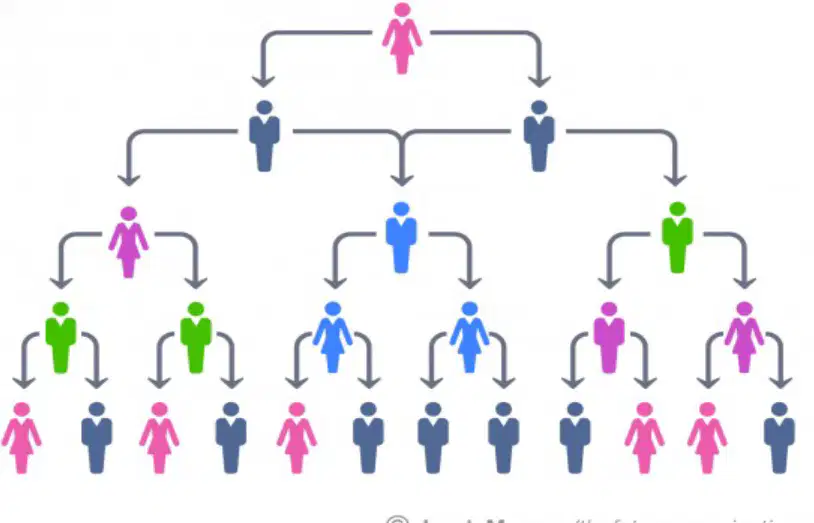
In a hierarchical organization, what is typically found at the top of the structure?
Staff members
Middle managers
CEO or top executives
Entry-level employees
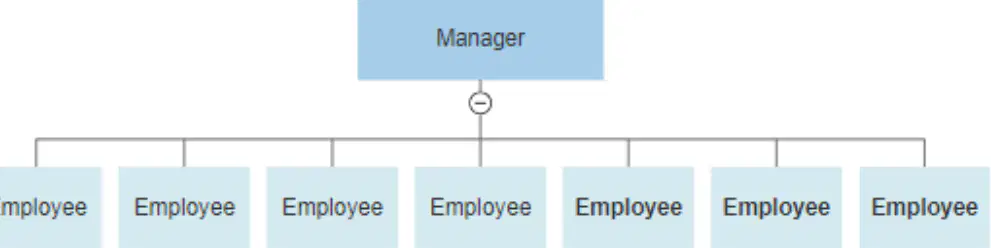
What is a characteristic of a flat structure in an organization?
A manager has a small span of control.
A manager has a large span of control.
There are many hierarchical levels.
It is typically found in large corporations.
In what type of businesses is a flat structure normally found?
Large multinational corporations
Small businesses
Government agencies
Educational institutions
What are some potential advantages of having a flat structure within an organization?
Increased bureaucracy and slower decision-making
Faster decision-making and better communication
More hierarchical levels and complex reporting
Greater distance between management and employees
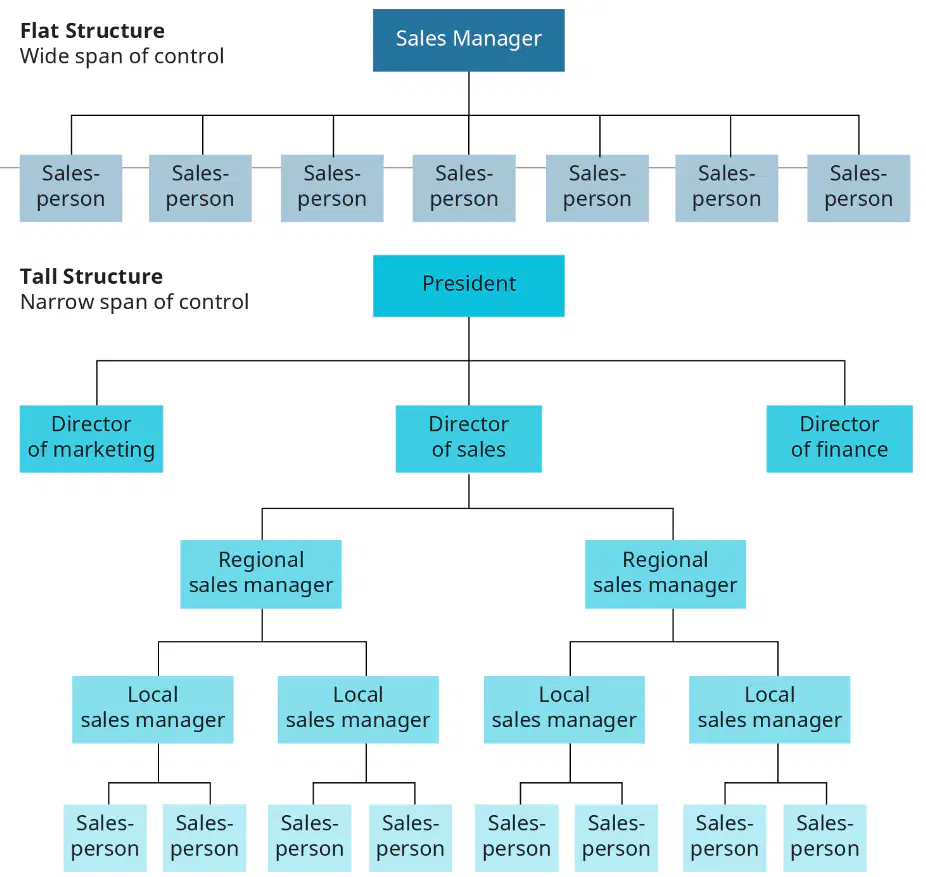
What is a characteristic of a tall organizational structure?
Wide span of control
Small span of control
No span of control
Equal span of control
Why are tall structures normally found in large organizations?
They require fewer managers
They allow for more direct communication
They provide more levels of management for control
They reduce the need for specialization
What is a matrix structure in an organization?
A hierarchical structure with clear lines of authority
A structure where members of different teams collaborate on a project
A structure with no defined roles or responsibilities
A structure focused solely on short-term projects
Which company is mentioned as a heavy user of the matrix structure?
Microsoft
Apple
Amazon
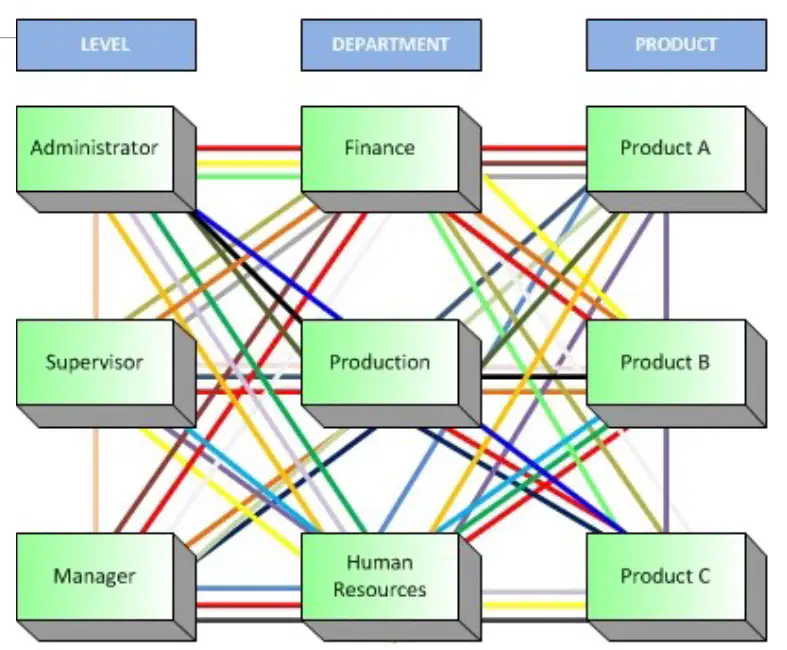
What is one of the benefits of a matrix structure?
It eliminates the need for collaboration
It allows for both short-term and long-term project collaboration
It focuses only on financial departments
It simplifies decision-making by reducing team interactions
What are the four types of business locations mentioned in PowerPoint slides?
Local, National, International, Global
Urban, Suburban, Rural, Global
Local, Regional, National, Global
National, International, Regional, Local
Which type of business location operates within a single country?
Local
National
International
Global
How does the location of a business affect its characteristics?
It determines the business's name.
It influences the structure and purpose.
It affects the color of the building.
It changes the owner's nationality.
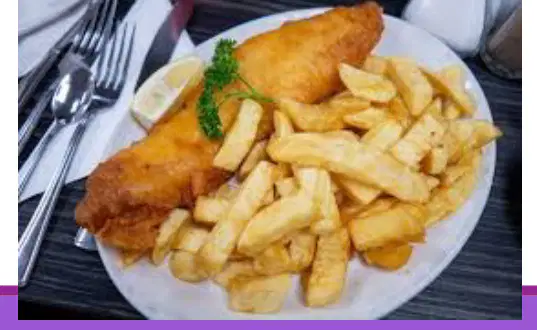
Why might Fish and Chips restaurants be more common in seaside areas?
Seaside areas have more tourists.
City areas have more fish.
Seaside areas have fewer restaurants.
City areas are more expensive.
What is a potential challenge for businesses in different areas?
Different areas have different weather.
Different areas present different challenges.
Different areas have the same customers.
Different areas have the same regulations.

