
Font size
 Worksheets
Vessel Identification Quiz
Total questions: 76
Worksheet time: 40mins
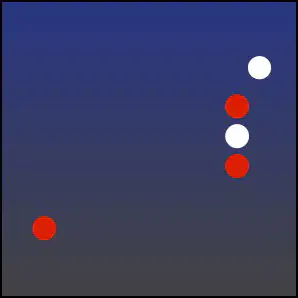
What type of vessel is indicated by the following group of lights?
Power-driven vessel probably greater than 50m in length, restricted in ability to manoeuvre, making way, port aspect.
Power-driven vessel under 50m in length, restricted in ability to manoeuvre, making way, port aspect.
Power-driven vessel probably greater than 50m in length, restricted in ability to manoeuvre, making way, starboard aspect.
Power-driven vessel under 50m in length, not under command, making way, port aspect.

What type of vessel is indicated by the following group of lights?
Air-cushioned vessel not operating in the non-displacement mode, under 50m in length, underway, port aspect
Air-cushioned vessel operating in the non-displacement mode, Probably over 50m in length, underway, port aspect
Air-cushioned vessel operating in the non-displacement mode, under 50m in length, underway, port aspect
Air-cushioned vessel operating in the non-displacement mode, under 50m in length, not underway, port aspect
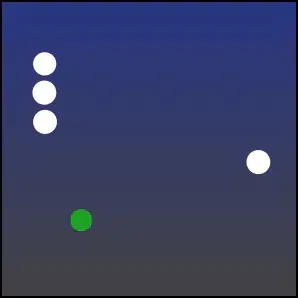
What type of vessel is indicated by the following group of lights?
Power-driven vessel probably greater than 50m in length, towing, length of tow less than 200m, underway, port aspect
Power-driven vessel probably greater than 50m in length, towing, length of tow less than 200m, underway, starboard aspect
Power-driven vessel probably greater than 50m in length, towing, length of tow greater than 200m, underway, port aspect
Power-driven vessel probably greater than 50m in length, towing, length of tow greater than 200m, underway, starboard aspect

What type of vessel is indicated by the following group of lights?
Sailing vessel under 20m in length, underway, seen from ahead
Sailing vessel under 20m in length, underway, seen from astern
Sailing vessel probably greater than 20m in length, underway, seen from ahead
Sailing vessel probably greater than 20m in length, underway, seen from astern

What type of vessel is indicated by the following group of lights?
Vessel constrained by draught, underway, seen from ahead
Vessel constrained by draught, underway, seen from astern
Vessel not under command, underway, seen from astern
Vessel not under command, underway, seen from ahead
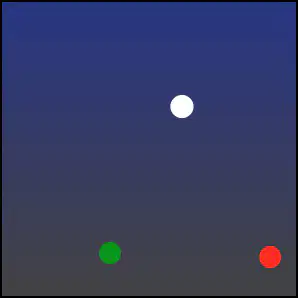
What type of vessel is indicated by the following group of lights?
Power-driven vessel, under 50m in length, anchored, seen from astern.
Power-driven vessel, under 50m in length, anchored, seen from ahead.
Power-driven vessel, under 50m in length, underway, seen from astern.
Power-driven vessel, under 50m in length, underway, seen from ahead.
Look at the vessel below and choose the option which correctly displays navigation lights showing the arcs of visibility for a vessel under sail less than 20m displaying a tricolour light.

A

B

C

D
Look at the vessel below and choose the option which correctly displays navigation lights showing the arcs of visibility for a power-driven vessel less than 20m in length displaying bicolour, steaming and stern lights.

A

B

C

D
A power-driven vessel is deemed to be the stand-on vessel. What action should it take, and/or consider, in complying with the collision regulations? Select all appropriate options from the list below.
It should maintain its course and speed
If it believes the give way vessel is not taking sufficient action, it may take action if that action alone would avoid a collision
It should maintain its course and speed, giving five short blasts of horn if it becomes apparent that a collision cannot be avoided by the actions of the give way vessel alone
If it becomes apparent that a collision cannot be avoided by the actions of the give way vessel alone, the stand on vessel must take action that would best aid the avoidance of a collision

A risk of collision exists in the following situation. Select which vessel(s) should give way, why they should give way, and what action they should take.
B is the overtaking vessel and should keep clear of A
A is a power-driven vessel and should give way to the sailing vessel
Both vessels should maintain their current course
Both vessels should alter course
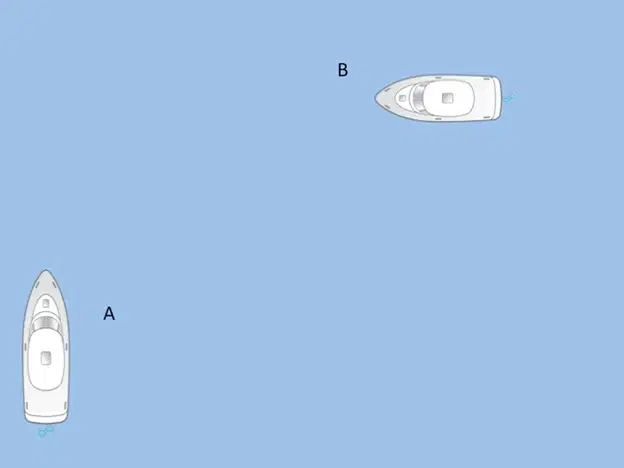
A risk of collision exists in the following situation. Select which vessel(s) should give way, why they should give way, and what action they should take.
B turns to port to pass astern of A making appropriate sound signal, or slows down, or stops.
A turns to port to pass astern of B making appropriate sound signal, or slows down, or stops.
B turns to starboard to pass astern of A making appropriate sound signal, or slows down, or stops.
A turns to starboard to pass astern of B making appropriate sound signal, or slows down, or stops.
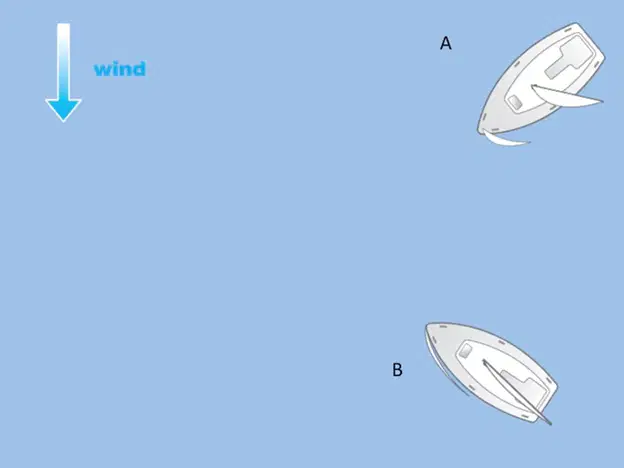
A risk of collision exists in the following situation. Select which vessel(s) should give way, why they should give way, and what action they should take.
B, the windward boat, should bear away or gybe or reduce speed, to pass astern of A
A, the windward boat, should bear away or gybe or reduce speed, to pass astern of B
B, the windward boat, should harden up or tack or reduce speed, to pass astern of A
A, the windward boat, should harden up or tack or reduce speed, to pass astern of B
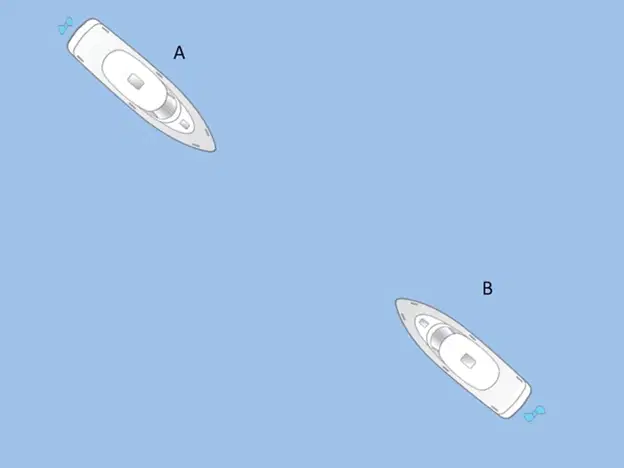
A risk of collision exists in the following situation. Select which vessel(s) should give way, why they should give way, and what action they should take.
A and B each sound two short blasts and both turn to starboard
A and B each sound one short blast and both turn to starboard
A and B each sound two short blasts and both turn to port
A and B each sound one short blast and both turn to port

What do the following day shapes indicate?
Vessel constrained by draught
Vessel engaged in underwater operations
Vessel at anchor
Vessel aground
Vessel motor-sail
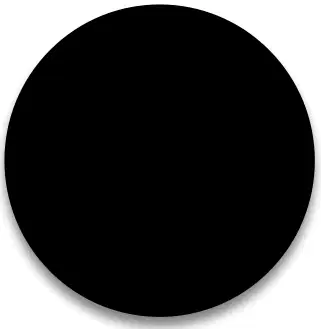
What do the following day shapes indicate?
Vessel constrained by draught
Vessel engaged in underwater operations
Vessel at anchor
Vessel aground
Vessel motor-sail
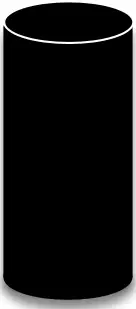
What do the following day shapes indicate?
Vessel constrained by draught
Vessel engaged in underwater operations
Vessel at anchor
Vessel aground
Vessel motor-sail

What do the following day shapes indicate?
Vessel motor-sailing
Vessel aground
Vessel at anchor
Vessel engaged in underwater operations (Diver Down)
Vessel constrained by draught
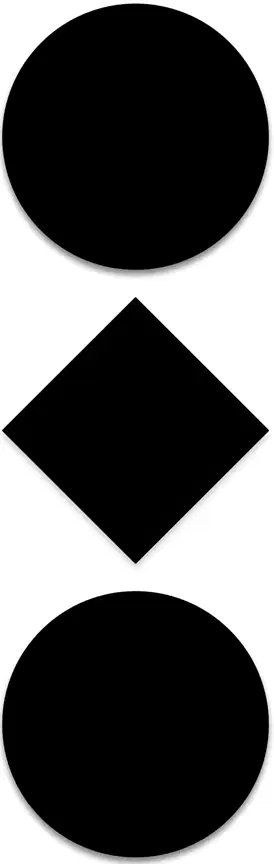
What do the following day shapes indicate?
Vessel motor-sailing
Vessel aground
Vessel at anchor
Vessel Restricted in Her ability to Maneuver
Vessel constrained by draught

What do the following day shapes indicate?
Vessel motor-sailing
Vessel aground
Vessel at anchor
Vessel Restricted in Her ability to Maneuver
Vessel constrained by draught
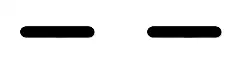
What are the meanings of the following sound signals?
Turning to starboard
Your intentions are unclear
Power-driven vessel underway but stopped in the water in restricted visibility
I am operating astern propulsion

What are the meanings of the following sound signals?
Turning to starboard
Your intentions are unclear
Power-driven vessel underway but stopped in the water in restricted visibility
I am operating astern propulsion

What are the meanings of the following sound signals?
Turning to starboard
Your intentions are unclear
I am operating astern propulsion

What are the meanings of the following sound signals?
Turning to starboard
Your intentions are unclear
Power-driven vessel underway but stopped in the water in restricted visibility
I am operating astern propulsion
How might you establish if there is a risk of collision when in sight of an approaching vessel?
Use VHF to ask the other vessel where it's going
By taking a series of bearings
You can never really know
Listening to their sound signals
How might you tell if a risk of collision exists when not in sight of an approaching vessel? Select all appropriate options from the list below.
Radar
AIS
Listen for sound signals
Take a series of bearings
If you are in any doubt as to whether a risk of collision exists, what should you do?
Ask a member of crew to keep an eye out, but assume the other vessel will react appropriately
Assume no risk exists until proved otherwise, then take appropriate action
Assume a risk exists and take action as per the IRPCS
Stop the vessel as quickly as possible
When taking action as the give-way vessel to avoid a collision, which of the following actions would you be recommended to take? There may be more than one answer.
Going astern of the other vessel
A series of small alterations
At night, change direction so that you present different navigation lights to the stand on vessel
Large, bold alterations that may point you well off course
What can produce a blind arc on a vessel? Select all appropriate answers from the list below.
Vessel structure
Sails
Bright white torches at night
Other crew members
Having identified likely blind arcs on board a vessel, suggest steps you could take to ensure you can effectively assess a risk of collision? Select all appropriate answers from the list below.
Use radar and AIS
Have all crew members on deck at all times keeping a good lookout
Develop a watch keeping routine that ensures blind arcs are regularly checked
Ensure vessel speed is appropriate to the prevailing conditions and lookout capability
What is the difference between 'shall' and 'may' for the purposes of the International Rules for Prevention of Collision at Sea?
It is obligatory to comply with a rule containing 'shall' or must, whereas a rule stating may is optional if it improves the likelihood of avoiding a collision
It is obligatory to comply with a rule containing 'may', whereas a rule stating shall is optional if it improves the likelihood of avoiding a collision
You are always permitted to take action referred to with may, you are limited to when you are able to take action referred to as 'shall'
You are always permitted to take action referred to with shall, you are limited to when you are able to take action referred to as 'may'
Select two factors you would take into consideration when determining a safe speed?
Your sea room, with reference to your draught and the available depth of water
Wind angle
The handling characteristics of your vessel, including turning ability and stopping distance
Horsepower of your engine
When must rules concerning shapes be complied with?
By day, not including twilight
By day, which includes twilight
Between sunset and sunrise
When on an RYA course
When must navigation lights be displayed?
Between sunset and sunrise
Between sunset and sunrise, and between sunrise and sunset when in visibility is restricted
Between sunrise and sunset
Between sunrise and sunset, and between sunset and sunrise when in or near areas of restricted visibility
Read the following statement and decide whether it is True or False. To avoid a collision, it is sometimes permissible to make a departure from the letter of the IRPCS in order to operate within the limitations of one's vessel or to protect life.
True
False
When deciding to anchor, what consideration should be taken into account ?
Seabed type
Change of weather
Wind direction
Swinging room
Tidal height and change over anchoring period
If your boat got a mixture of chain and warp, how many times the maximum depth would you pay out?
Six times the maximum depth
4 times the maximum depth
2 times the maximum depth
Charted depth
what should be recorded in the ship's logbook ?
Course
Lat and long
Log
Tidal information
Quantity of fuel
VQ (3) 5s
East cardinal mark
West cardinal mark
North cardinal mark
Iso 10s
Safe water mark
Isolated danger mark
Special mark
New wreck
FI (2)10s
Safe water mark
Isolated danger mark
Special mark
New wreck
Fire fighting equipment is essential on board a boat. What would you use for the following fires?
Frying pan fire on the hob.
Powder portable fire extinguisher
Fire blanket
Co2
Water
What's is an EPIRB ?
Emergency position indicating radio beacon
Emergency position indicating radar beacon
Emergency position indicating radio bouy
Emergency point indicating radio beacon
Do the following make suitable attachment points for a safety line when moving around on deck?
Guard rail
Standing Rigging
Jackstay
Teak handle
Cockpit strong point D rinh
What makes your vessel more visible to other boats using radar?
A passive radar reflector
Keeping your radar on
Cruising in a wooden vessel with no radar reflector
Active radar reflector

What type of mark is this?
Safe water mark
Special mark
Isolated danger mark
Lateral mark

Which type of vessel is indicated by the light(s) shown in this diagram?
A small boat under oars
Stern light of a vessel
Vessel of less than 7m with max speed less than 7 knots
A small boat under oars

What type of mark is this?
Starboard lateral mark
Isolated danger mark
Safe water mark
Cardinal mark

What is the name of the buoyage shown in the image above ?
North Cardinal mark
Port Lateral mark

What is magnetic variation ?
Which of the following terms are used in the rules of the road?
Give way vessel
Stand on vessel
Right of way vessel
How can you tell if there is a risk of collision when in sight of another vessel?
By using a hand bearing compass to see if the bearing to the other boat remains steady.
By sounding five short blasts
By lining up the approaching boat with a part of your boat and checking whether its position alters relative to your boat.
If your boat is fitted with radar, by using the electronic bearing line.
Which one of these symbols is "Waypoint" symbol?


A buoy that indicates the general direction when approaching harbours, channels and waterway from seaward.
Lateral Buoys
Cardinal Buoys
Safe Water Buoys
Special Buoys
Which of the following countries is not a part of IALA Region B?
South America
Australia
Japan
The Carribean
What does 11M means in the light description Fl5s10m11M
Elevation
Range
Period
Phase
Quick or very quick flashing white light indicates what buoy?
North Cardinal
West Cardinal
Isolated Danger
Safe Water

What buoy does the image indicate?
Emergency Wreck Mark
Special Mark
Safe Water Mark
South Cardinal Mark
What colour are starboard lateral marks?
Red
Green
Black

Pictured here are sectored lights. Which region/colour is safe to stay in?
White only
Any colour
White and green
Green and red
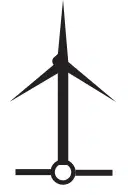
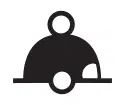
What is the meaning of the following chart symbol?
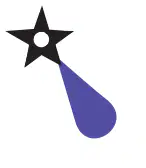
What is the meaning of the following chart symbol?
Major Light
Church
Buoyage
Channel
What is the meaning of the following chart symbol?
Mooring Buoy

What is the meaning of the following chart symbol?
Customs Office
Wind turbine
Pilot boarding place

What is the meaning of the following chart symbol?
AIS NAVAID
Pilot boarding place
Quarry or mine
Tanks
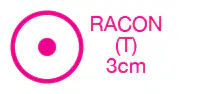
What is the meaning of the following chart symbol?
Radar transponder beacon with Morse identification and radar band
You are in fog and hear a fog signal forward of your beam. What should you do?
You are in fog and see a vessel ahead on radar. What should you do?
Turn early to avoid a close quarter situation.
Sound the danger signal.
Stop or reverse engines.
Slow to steerageway until you see him, then sound action signals.
When two vessels are in fog, which vessel would be the stand on and which one is the giveaway ?
Neither
One Ahead
Starboard
When in restricted visibility, vessels underway shall:
Proceed at a safe speed for the conditions.
Have engines ready for immediate maneuvering if she is power-driven.
Have due regard for the prevailing conditions and circumstances.
All of the above.
What is the significance of Rule 19 in relation to restricted visibility?
It allows vessels to navigate at any speed
It does not apply in restricted visibility
It only applies to small vessels
It provides guidelines for safe navigation in restricted visibility
What should a power-driven vessel do to be ready for immediate maneuver according to Rule 19?
Shut down the engines
Have the engines ready for immediate maneuver
Increase speed to full throttle
Ignore the radar signals
In which direction should a vessel alter its course if a target is forward of the beam and to starboard?
Alter course to port
Maintain current course
Alter course to starboard
Stop the vessel
What does paragraph B of Rule 19 emphasize regarding speed?
Stop the vessel immediately
Ignore speed limits
Proceed at a safe speed adapted to restricted visibility
Proceed at maximum speed
Action to be taken to be done during Restricted visibility
Proper look out
Proceed a safe speed
look out
management
Observation must be used to detect other ship early
Positioning
object
navigation
Radar
Special care when hearing sound signals and proceed with
lookout
Extreme caution
radar
position

