
NEW
Font size
 Worksheets
Unit 2: Injuries to the Spine Exam
Total questions: 36
Worksheet time: 18mins
An injury resulting in complete paralysis of all 4 limbs and the trunk is called:
Paraplegia
Quadriplegia
Cervical Nerve Syndrome
Axial Load
Known as a “stinger” or “burner,” caused by forced lateral flexion:
Cervical Spine Injury
Cervical Nerve Syndrome
Hyperextension
Herniated Disc
An injury resulting in paralysis of the trunk and legs:
Paraplegia
Quadriplegia
Axial Load
Myotome
Injury caused by forced cervical compression:
Hyperextension
Herniated Disc
Axial Load
Paraplegia
Injury caused by forced cervical extension:
Axial Load
Herniated Disc
Hyperextension
Cervical Nerve Syndrome
An area of skin innervated by a sensory nerve root is called a:
Myotome
Dermatome
Peripheral Nervous System
Sympathetic Nervous System
A set of muscles innervated by a motor nerve root is called a:
Dermatome
Myotome
Central Nervous System
Hyperextension
Nucleus pulposus herniates through the annulus fibrosis in a:
Axial Load
Cervical Spine Injury
Herniated Disc
Paraplegia
This branch of the PNS controls the fight or flight response:
Central Nervous System
Parasympathetic Nervous System
Sympathetic Nervous System
Myotome
This branch of the PNS controls being calm, rest and digest:
Sympathetic Nervous System
Parasympathetic Nervous System
Dermatome
Axial Load
This system contains the brain and spinal cord:
Central Nervous System
Peripheral Nervous System
Autonomic Nervous System
Cervical Nerve Syndrome
This system is involuntary, contains cranial and spinal nerves:
Sympathetic Nervous System
Peripheral Nervous System
Central Nervous System
Autonomic Nervous System
An area of muscle that is innervated by a nerve root is known as?
Dermatome
Peripheral Nerve
Cranial Nerve
Myotome
Commonly occurs from axial loading or forced movement of the head, neck, and/or spine:
Cervical Spine Injury
Herniated Disc
Hyperextension
Quadriplegia
An area of skin that is innervated by a nerve root is known as?
Dermatome
Dermatology
Cranial Nerve
Myotome
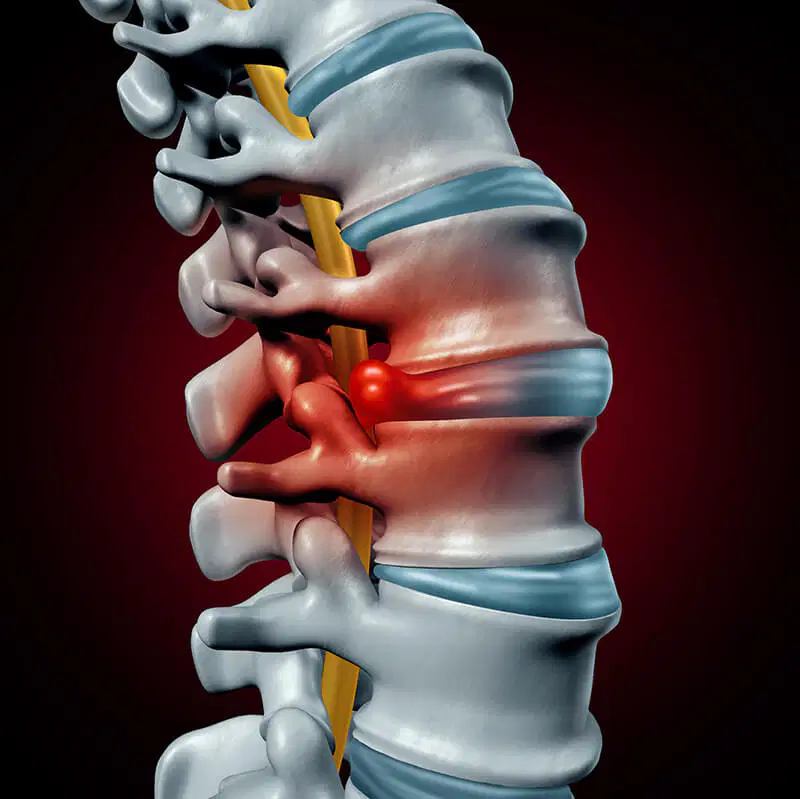
What injury is shown?
Nerve root impingement (herniated disc)
Muscle strain
Ligament sprain
Bone fracture
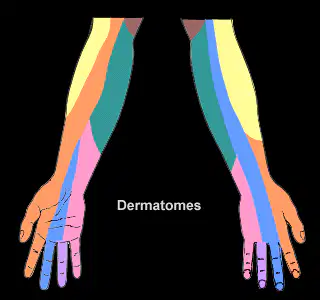
Which Dermatome is shown in BLUE?
C5 dermatome
C7 dermatome
L4 dermatome
T1 dermatome
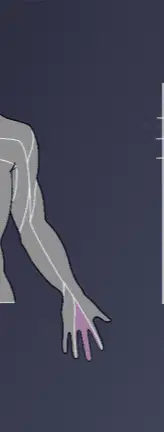
Which Dermatome is shown in purple?
C7 dermatome injury
T4 dermatome injury
L2 dermatome injury
S1 dermatome injury
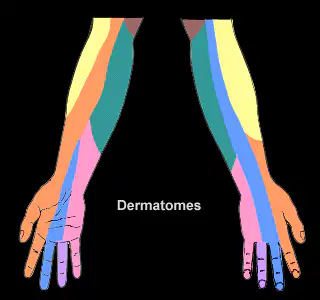
Which Dermatome is shown in ORANGE?
C5
C6
C7
T1
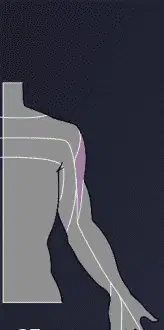
Which Dermatome is shown in purple?
C6
C5
C7
T1
The 5 sections of the skeletal vertebrae and the number of vertebrae in each are:
Cervical (7), Thoracic (12), Lumbar (5), Sacral (5 fused), Coccygeal (4 fused)
Cervical (8), Thoracic (10), Lumbar (6), Sacral (4 fused), Coccygeal (3 fused)
Cervical (6), Thoracic (14), Lumbar (4), Sacral (6 fused), Coccygeal (5 fused)
Cervical (7), Thoracic (11), Lumbar (5), Sacral (5 fused), Coccygeal (2 fused)
Select the option that correctly names 3 cranial nerves, states if each is motor, sensory, or both, and describes the function of each.
Olfactory (sensory, smell), Oculomotor (motor, eye movement), Trigeminal (both, facial sensation and chewing)
Optic (motor, vision), Facial (sensory, facial expression), Vagus (motor, swallowing)
Trochlear (both, taste and eye movement), Accessory (sensory, hearing), Hypoglossal (both, tongue movement and taste)
Abducens (sensory, balance), Glossopharyngeal (motor, heart rate), Vestibulocochlear (both, hearing and smell)

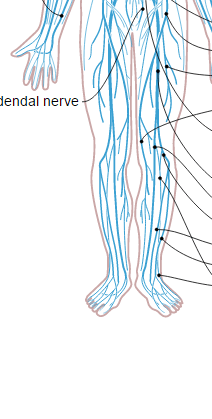
Which body system is shown above?
nervous
muscular
respiratory
skeletal
Which part of the nervous system is responsible for transmitting signals between the brain and the rest of the body?
Peripheral Nervous System
Respiratory System
Muscular System
Digestive System
What is the main function of the myotome?
Sensation in the skin
Movement in a group of muscles
Regulation of heart rate
Production of hormones
Which of the following is NOT a function of the central nervous system?
Processing sensory information
Pumping blood throughout the body
Controlling voluntary movements
Interpreting signals from the environment
Which of the following best describes the function of a dermatome?
Transmits motor signals to muscles
Supplies sensation to a specific area of skin
Regulates hormone production
Controls voluntary muscle movement
What type of injury is most likely to result from a sudden, forceful compression of the spine?
Axial Load Injury
Myotome Injury
Peripheral Nerve Damage
Sympathetic Nervous System Disorder
Which system is responsible for involuntary actions such as heart rate and digestion?
Central Nervous System
Autonomic Nervous System
Muscular System
Respiratory System

