
 Worksheets
Visible Learning
Total questions: 88
Worksheet time: 44mins
Turn and talk means:
Discuss your thoughts with a partner.
Write your answer silently.
Listen to a lecture.
Read the question to yourself.
According to the table 'Effect size - an effect size of 0.40 is the hinge point', what is the effect size of Collective Teacher Efficacy?
1.57
0.40
0.75
0.95
According to the table 'Effect size - an effect size of 0.40 is the hinge point', what is the effect size of Self-efficacy?
0.92
0.35
0.50
0.68
According to the table 'Effect size - an effect size of 0.40 is the hinge point', what is the effect size of Micro-teaching/video review of lessons?
0.88
0.32
0.45
0.21
According to the table 'Effect size - an effect size of 0.40 is the hinge point', what is the effect size of Evaluation and reflection?
0.75
0.30
0.45
0.60
According to the table 'Effect size - an effect size of 0.40 is the hinge point', what is the effect size of Feedback?
0.70
0.30
0.50
0.20
According to the table 'Effect size - an effect size of 0.40 is the hinge point', what is the effect size of Providing formative evaluation?
0.48
0.32
0.25
0.60
According to the passage 'Beliefs and commitments of expert teachers', what do expert teachers do to introduce new content knowledge?
They follow a strict curriculum without adaptation
They integrate it with students’ prior knowledge
They ignore students’ needs
They only teach one subject area
According to the passage 'Beliefs and commitments of expert teachers', expert teachers can adapt lessons according to _________
students’ needs
school policies
textbook chapters
teacher preferences
According to the passage 'Beliefs and commitments of expert teachers', expert teachers seek out evidence of who has not learned, who is not making progress, and they ________ and adapt their teaching in response.
problem solve
ignore
delay
celebrate
According to the passage, what is the best climate for learning?
One in which there is competition
One in which there is trust
One in which there is strict discipline
One in which there is silence
Fill in the blank: Expert teachers create classrooms in which ______ are welcome and learning is cool.
errors
interruptions
distractions
excuses
Expert teachers see student progress as feedback about the effect they are having on learning.
True
False
According to the passage, why must expert teachers regularly gather information?
To know who is not understanding.
To prepare lesson plans.
To assign homework.
To grade tests.
According to the passage, what do expert teachers believe about intelligence?
Expert teachers believe that intelligence is changeable rather than fixed.
Expert teachers believe that intelligence is determined solely by genetics.
Expert teachers believe that intelligence cannot be developed through effort.
Expert teachers believe that intelligence is the same for everyone.
Expert teachers only care about students' test scores.
True
False
List two ways expert teachers help students develop, according to the passage.
They help students develop deep and conceptual understandings and encourage them to take risks in their learning.
They focus only on memorization and repetition.
They discourage students from asking questions.
They avoid giving feedback to students.
Drastic differences in achievement might be attributed to which of the following factors?
Differences in teacher attitude
Student age
Classroom size
School location
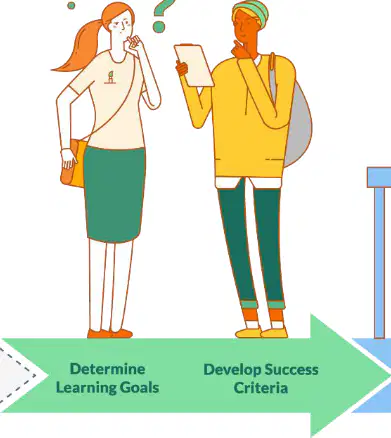
Which of the following is the first step in 'The Feedback Cycle'?
Take Responsive Action
Determine Learning Goals
Interperate Evidence
Elicit Evidence of Learning
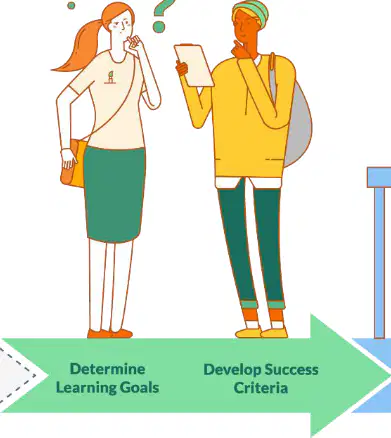
In 'The Feedback Cycle', what comes after 'Determine Learning Goals'?
Develop Success Criteria
Interperate Evidence
Take Responsive Action
Elicit Evidence of Learning
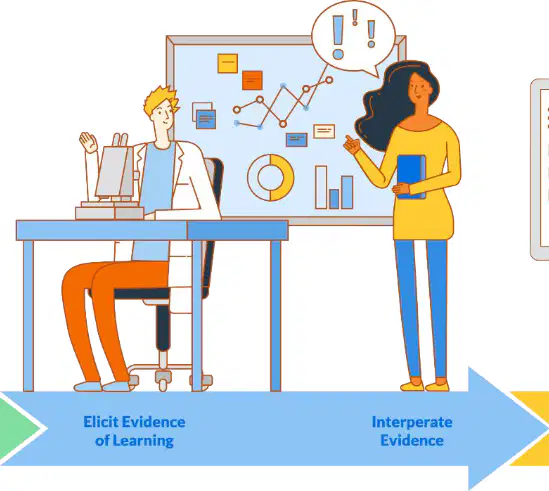
Fill in the blank: In 'The Feedback Cycle', after 'Elicit Evidence of Learning', the next step is ________.
Interperate Evidence
Summarize Learning
Assign Homework
Provide Grades
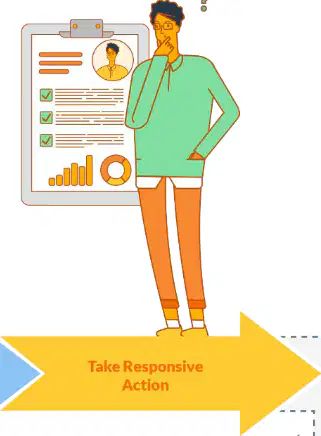
Which stage of 'The Feedback Cycle' involves 'Take Responsive Action'?
Where Am I Going?
Where Am I Now?
Where to Next?
What is the name of the process shown in the diagram?
The Feedback Cycle
The Water Cycle
The Carbon Cycle
The Nitrogen Cycle

According to the passage, what is the purpose of formative assessment?
Only for the student
Only for the teachers
For both the student and the teachers
For parents only
According to the passage, effective feedback helps students answer three important questions. What is the first question mentioned?
Where am I going?
How will I get there?
What resources do I need?
Who will help me?
Based on the passage, what do teachers need to help students answer the question 'Where am I going?' with?
A performance-related goal
A mastery-related goal
A simple task
A list of sources
How can teachers help students understand where they are going, according to the passage?
By creating clear and challenging learning goals and making sure these learning goals are transparent to students.
By giving students more homework assignments.
By allowing students to choose their own grades.
By focusing only on standardized test preparation.
One way to weave more opportunities to give students feedback into your lessons is to:
Incorporate regular check-ins and formative assessments
Avoid giving feedback during class activities
Only provide feedback at the end of the term
Limit feedback to written comments only
According to the passage, what does Hattie allow observers to focus on in classrooms?
A) Teachers' teaching methods
B) Students' reactions to incidents, teaching, peers, and activities
C) School leaders' strategies
D) Classroom decorations
Fill in the blank: The focus moves the discussion away from the teaching toward the _________
effect of the teaching
location of the classroom
duration of the lesson
number of students
According to the passage, why is it important for teachers to review their lessons after teaching?
To look for evidence that they have had an impact on both the climate of the class and the progress on each student’s learning trajectory toward the learning goals.
To prepare for the next day's lesson in advance.
To ensure that all students have completed their homework.
To compare their teaching style with other teachers in the school.
Teachers need to examine the impact they have had on each student’s learning. Are you aware of each student’s progress on the journey from his or her starting point toward attaining the success criteria?
Teachers should be aware of each student’s progress toward attaining the success criteria.
Teachers should focus only on the class average.
Teachers should not track individual student progress.
Teachers should only assess students at the end of the term.
Teachers need to examine the impact they have had on each student’s learning to determine how close each student is to attaining what?
The success criteria
The lesson plan
The classroom rules
The grading policy
Teachers need to examine the impact they have had on each student’s learning. What now needs to occur to help each student to move closer to meeting the success criteria?
Identify and implement strategies to support each student’s progress.
Assign more homework to all students.
Ignore students who are already meeting the criteria.
Focus only on group achievements rather than individual progress.
According to the 'Mindframes for Success', identify who you taught well and not so well.
Reflect on your students' progress to determine who you taught well and not so well.
Ask your colleagues for their opinions on your teaching.
Rely solely on test scores to judge your teaching.
Ignore student feedback when evaluating your teaching.
According to the 'Mindframes for Success', what did you teach well and not so well?
Identifying strengths and areas for improvement in teaching
Focusing only on student performance
Ignoring feedback from students
Relying solely on standardized tests
According to Hattie, what is the major reason for administering tests in classrooms?
To help teachers evaluate their teaching effectiveness and identify areas for improvement
To assign grades to students
To compare students with each other
To prepare students for standardized exams
According to the passage, what are the two things a teacher should identify when planning in the classroom?
The learning intention or objective and the success criteria
The classroom rules and the homework assignments
The students' names and their favorite subjects
The classroom layout and the seating arrangement
Fill in the blank: The teacher needs to know not when the students have completed the activities; they need to know when they have ______ the concepts and demonstrated understanding of the outcome.
learned
forgotten
ignored
avoided
postponed
True or False: According to the passage, the task is the outcome.
True
False
According to O'Connor, what do teachers do to be standards based in grading?
Plan each assessment to provide direct evidence of student proficiency on specific learning outcomes/goals and record this evidence by goal
Grade students based on overall performance only
Use only one test per grading period
Ignore learning goals
Fill in the blank: By the end of the grading period, there are at least _____ scores for each strand, which is sufficient evidence to make summary judgements for that strand. (O'Connor 56)
five
two
ten
three

According to the diagram, assessments are more than just which of the following?
Observations
Conversations
Products
All of the above
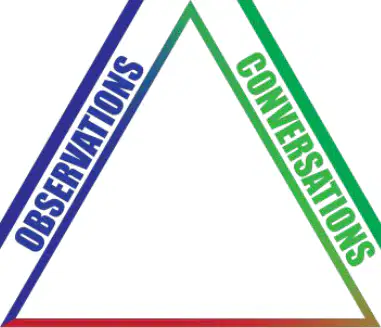
Fill in the blank: According to the diagram, assessments include Observations, Conversations, and ________.
Products
Experiments
Lectures
Assignments
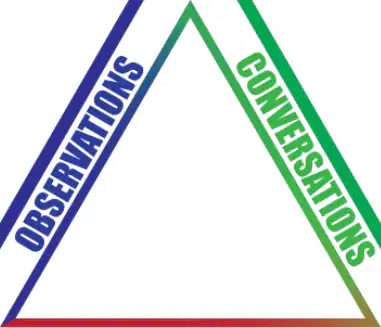
Which of the following is NOT mentioned as a component of assessments in the diagram?
Observations
Conversations
Products
Examinations
What does 'Assessment for Learning' enable teachers to do?
It enables teachers to use information about students’ knowledge, understanding and skills to inform their teaching.
It enables teachers to assign grades based solely on final exams.
It enables teachers to ignore students’ prior knowledge and focus only on new content.
It enables teachers to teach without considering students’ progress.
What kind of feedback do teachers provide in 'Assessment for Learning'?
Teachers provide feedback to students about their learning and how to improve.
Teachers only give grades without explanations.
Teachers provide feedback only at the end of the course.
Teachers focus on administrative feedback rather than learning.
What is the main focus of 'Assessment as Learning'?
It involves students in the learning process where they monitor their own progress, ask questions and practise skills.
It is solely about teachers evaluating students' final performance.
It focuses on standardized testing and external assessments only.
It requires students to memorize facts without reflection.
In 'Assessment as Learning', what do students use to reflect on their learning?
Students use self-assessment and teacher feedback to reflect on their learning, consolidate their understanding and work towards learning goals.
Students use only peer assessment to reflect on their learning and do not consider teacher feedback.
Students rely solely on memorization techniques to reflect on their learning.
Students use external examinations to reflect on their learning, without any self-assessment or feedback.
What is the purpose of 'Assessment of Learning'?
It assists teachers to use evidence of student learning to assess student achievement against learning goals and standards.
It helps students to set their own learning goals.
It is used to design classroom seating arrangements.
It focuses on the physical development of students.
Grades accurately represent students’ abilities.
Yes, grades accurately represent students’ abilities.
No, grades do not always represent students’ abilities.
Grades are unrelated to students’ abilities.
Grades only represent effort, not ability.
What mark would Jeremy receive based on the following scores? Quiz 1: 30, Quiz 2: 50, Quiz 3: 70, Final Test: 90.
60
50
80
70
What mark would Pam receive based on the following scores? Quiz 1: 50, Quiz 2: 70, Quiz 3: 90, Final Test: 90.
75
80
70
85
Gwen writes three quizzes as she progresses through learning experiences connected to an outcome. What mark would Gwen receive based on the following scores? Or - what is your next step?
Gwen's mark should be calculated based on her quiz scores, or the next step is to gather more information.
Gwen should automatically receive a passing grade.
Gwen's lowest quiz score should be dropped without review.
No further action is needed regardless of her scores.
What mark would David receive based on the following scores? Quiz 1: 70, Quiz 2: 90, Quiz 3: 90, Final Test: 80.
82.5
85
80
90
Plus - triangulation fits in which context?
It is a method used in navigation and surveying.
It is a type of mathematical equation.
It is a style of painting.
It is a musical technique.
In which school year will PSSD move to reporting on curricular outcomes?
2023/24
2024/25
2025/26
2026/27
The move to reporting on curricular outcomes aligns with which of the following?
Federal guidelines
Provincial guidelines and PSSD Policy
International standards
School board preferences
Divisional support will be provided for teachers who need to change their _______.
practices
uniforms
classrooms
subjects

Which type of assessment emphasizes what learners can do or demonstrate at the end of a learning period?
Outcome-Based
Task-Based

Which type of assessment centers on the achievement of clearly defined learning outcomes or competencies?
Outcome-Based
Task-Based

Which type of assessment emphasizes what learners can do within a specific task or activity?
Outcome-Based
Task-Based

Which type of assessment centers on the performance of a particular task instead of a curricular outcome?
Outcome-Based
Task-Based
What is one of the purposes of Outcome-Based assessment?
To assess rote learning.
To evaluate whether learners have attained the intended knowledge, skills, and abilities.
To demonstrate understanding within a defined task scenario.
None of the above.
What is one of the purposes of Task-Based assessment?
To provide evidence of learning mastery.
To evaluate whether learners have attained the intended knowledge, skills, and abilities.
To evaluate learners' ability to demonstrate understanding within a defined task scenario.
None of the above.
Fill in the blank: Outcome-Based assessment aims to provide evidence of _________
learning mastery
student attendance
classroom size
teacher salary
Fill in the blank: Task-Based assessment aims to assess ________ learning.
rote
theoretical
passive
memorization
Which of the following is a characteristic of Outcome-Based assessment?
Focus is on units of study without clear learning goals.
Outcomes are explicitly stated and measurable.
Can assess specific skills or processes within the task.
May involve checklists or rubrics to evaluate task performance.
Which of the following is a characteristic of Task-Based assessment?
Assessment criteria are aligned with the outcomes from the Manitoba curriculum.
Can use a variety of assessment methods (e.g., projects, portfolios, performances).
Assessment criteria are related to the task requirements.
Includes observations, conversations, processes, and products in determining student understanding.
Outcome-Based assessment can use a variety of assessment methods such as ______, portfolios, and performances.
projects
lectures
exams
quizzes
Task-Based assessment may involve ______ or rubrics to evaluate task performance.
checklists
essays
lectures
presentations
Outcome-Based assessment often involves criterion-referenced grading (comparing performance to a standard).
True
False
Task-Based assessment focuses only on a product or task to determine student understanding, and not observations, conversations, and processes.
True
False
Which type of assessment includes observations, conversations, processes, and products in determining student understanding?
Outcome-Based
Task-Based
Which type of assessment focuses on units of study without clear learning goals?
Outcome-Based
Task-Based
Students work towards mastery understanding in order to be able to transfer this learning beyond the course. This is a characteristic of which type of assessment?
Outcome-Based
Task-Based
Students study or complete a task but may not be able to repeat that performance or transfer the understanding beyond the task. This is a characteristic of which type of assessment?
Outcome-Based
Task-Based
Fill in the blank: Outcome-Based assessment includes ______, conversations, processes, and products in determining student understanding.
observations
calculations
predictions
guesses
Outcomes-based assessment is about how we measure ________.
learning
attendance
discipline
resources
Ungrading is about whether we measure learning with traditional ________.
grades
lectures
projects
attendance
The two approaches, outcomes-based assessment and ungrading, can overlap.
True
False
Outcomes-based assessment means there are no grades.
True
False
Which assessment method focuses on measuring student learning against predefined learning outcomes?
Outcomes-Based - Required
Ungrading - Pilot Group
Both
Neither
Which assessment method challenges or eliminates traditional grading practices?
Outcomes-Based - Required
Ungrading - Pilot Group
Both
Neither
Outcomes are clear statements of what students should know, understand, and be able to do. This is a core idea of which assessment method?
Outcomes-Based - Required
Norm-Referenced Assessment
Formative Assessment
Summative Assessment
Shifting the focus from grades to student learning, self-assessment, and feedback is a core idea of which assessment method?
Ungrading - Pilot Group
Standardized Testing
Summative Assessment
Pop Quizzes
Assessment is designed to gather evidence of students' achievement of learning outcomes.
True
False
Empowering students to take more ownership of their learning and evaluation is a core idea of which assessment method?
Ungrading - Pilot Group
Standardized Testing
Summative Assessment
Teacher-Led Evaluation

