
 Worksheets
Unit 2: Mesopotamia and Egypt
Total questions: 86
Worksheet time: 54mins
What is the name of the river that was central to the development of Ancient Egyptian civilization?
Nile
Tigris
Euphrates
Amazon
Which writing system was developed by the Sumerians in Mesopotamia?
Hieroglyphics
Cuneiform
Latin Alphabet
Sanskrit
Who was the famous king known for his code of laws in ancient Mesopotamia?
Hammurabi
Tutankhamun
Ramses II
Gilgamesh
What is the term for the rich, fertile soil deposited by rivers, which helped agriculture in both Mesopotamia and Egypt?
Silt
Sand
Clay
Gravel
Which two rivers surrounded Mesopotamia?
Nile and Amazon
Tigris and Euphrates
Indus and Ganges
Yangtze and Yellow
What was the main purpose of the pyramids in Ancient Egypt?
Temples for worship
Tombs for pharaohs
Markets for trade
Palaces for living
How did the flooding of the Nile River benefit Egyptian farmers?
It destroyed their crops
It provided water and fertile soil for crops
It made travel impossible
It caused droughts
Why was the invention of writing important for ancient civilizations like Mesopotamia and Egypt?
It allowed them to build larger cities
It helped them record laws, trade, and history
It made farming easier
It improved their weapons
Egypt's government was both _____ and a _______.
Democracy
Monarchy
Theocracy
Oligarchy
What was the main reason cities developed in Mesopotamia?
The discovery of gold
The availability of fertile land between rivers
The invention of the wheel
The arrival of nomads
Compare the role of religion in Mesopotamia and Ancient Egypt. Which statement is most accurate?
Both civilizations were monotheistic
Both civilizations believed gods controlled natural events and daily life
Neither civilization built religious structures
Religion was not important in either civilization
Which of the following best explains why Hammurabi’s Code was significant?
It was the first written language
It established a set of laws for all to follow
It was a religious text
It was a type of pyramid
Analyze the impact of the unpredictable flooding of the Tigris and Euphrates on Mesopotamian society. What was one result?
It led to the development of irrigation systems
It made farming impossible
It caused the rivers to dry up
It led to the end of civilization
Suppose you are a merchant in Ancient Egypt. How might the Nile River help your business?
It would make it harder to travel
It would provide a route for transporting goods
It would flood your shop
It would prevent trade
Evaluate the importance of the pharaoh’s role in Ancient Egyptian society. Which statement best explains this?
The pharaoh was only a military leader
The pharaoh was considered a god and ruled all aspects of society
The pharaoh was elected by the people
The pharaoh had no real power
Imagine you are a scribe in Mesopotamia. Why would your job be important to the civilization?
You would help build houses
You would record important information for the government and society
You would lead the army
You would farm the land
Based on what you know about Ancient Egypt and Mesopotamia, which factor most contributed to the rise of these civilizations?
Access to fertile land and water sources
Large forests for wood
High mountains for protection
Cold climate

The area of rich farmland in Southwest Asia where the first civilizations began is called the?
Fertile Square
Fertile Triangle
Fertile Diamond
Fertile Crescent

_________________ is a way of supplying water to an area of land
Capitulation
Fertilization
Irrigation
Domestication

The worship of many gods is called?
Monotheism
Duotheism
Polytheism
Quatrotheism

Rapids along the Nile River were called____________________?
Cataracts
White waters
Waterfalls
Riptides

A triangle shaped area of land made from soil deposited by a river is called a Delta.
True
False

What was the title used by the rulers of Egypt called?
Monarch
King
Pharaoh
Emperor

A series of rulers from the same family is called a ________________.
Dojo
Monarchy
Tribe
Dynasty

The Ancient Egyptians believed that their pharaohs were
unfair and cruel
gods in human form
greedy and selfish
the best rulers in the whole wide world

Egyptians had a written language using pictures. It was called
cuneiform
kanji
hieroglyphics
katakana
Which statement best describes burial practices of Egyptians?
they burned their bodies on a funeral pyre
they carried their dead to neighboring countries
they mummified the bodies of their dead
they buried their dead in the waters of the Nile

The ancient Egyptian practice of mummification MOST reflected a belief in
healing rituals
afterlife
technology
education

What was the MAJOR purpose for building the pyramids?
temples for religious worship
storehouses for reserves of grain
storehouses for the pharaohs wealth
tombs for pharaohs when they died
This is what the river is called when it fans out into the sea
The Delta
The Red Sea
The Dead Sea
The Euphrates
How did Egyptians get water to their crops?
Plow
Chariot
Wagon
Irrigation

The flooding of the Tigris and Euphrates in ancient Mesopotamia was
Predictable
awesome
unpredictable
right on time
What is the belief in one god?
Polytheism
Monotheism
Animism
Autocracy
Which statement best explains why people could have jobs other than farming?
People were tired of farming
Everyone was a farmer
Surplus food allowed for other jobs
Only men could be farmers

Which statement best explains why Lower Egypt was in the north and Upper Egypt was in the south?
Upper Egypt was colder than Lower Egypt
The Nile River flowed from south to north
More cities were located in Lower Egypt
Upper Egypt was wealthier than Lower Egypt
Both Mesopotamia and Egypt had polytheistic religions. What does polytheistic mean?
Worship many gods.
Worship of only one God.
Worship no gods.
Worship of the King or Pharaoh.

This group of people came up with the first form of written communication called Cuneiform. Who were they?
Mesopotamians
Egyptians
Chinese
Indian
Mesopotamia was believed to be the region where people first gave up hunting and gathering and settled on farming for their main mode of survival. For this reason, it received what nickname?
Cradle of Farming
Cradle of Civilization
Cradle of Agriculture
Cradle of Wealth
Which of the following were the first group of people to settle in Mesopotamia?
Babylonians
Romans
Sumerians
Assyrians
Which of the following was NOT an invention of Sumerian Society?
plow to help till soil
a number system based on the number 60
sailboats to reach faraway lands
365 day calendar for tracking seasonal flooding
Even though the Nile River floods, it was an great for Ancient Egyptians because
It was predictable
It gave water to drink and to water crops
It gave silt and other nutrition to crops
All of the above

Ancient Mesopotamian temples were called...
Shrines
Ziggurats
Pyramids
Cathedrals
Who were the rulers of ancient Egypt known as?
Pharaohs
Kings
Sultans
Emperors
Which of the following were members of the upper class in MESOPOTAMIA?
An independent city with its own government
City-State
Country
Villiage
Culture

A mixture of copper and tin is called
amber
silver
bronze
gold

Throughout history, which two factors have influenced where people settle?
building supplies and nearby trade ports
animals for hunting and average temperature
drinking water and the ability to grow crops
population density and business opportunity
Mesopotamian governments were mostly...
Monarchies
Communist
Oligarchies
Democracies
When you have extra food
sumer
extra food
surplus
irrigation
development of different kinds of jobs
polytheistic
artisan
specialization
governmet
The economy of Mesopotamia was largely based upon ______________.
Farming
Making iron weapons
crafting jewelry
weaving textiles
Which characteristic of a civilization explains why people were free to do other jobs in Mesopotamia?
writing
trade
specialized jobs
government
Which word means to tame?
Agriculture
Surplus
Domesticate
Irrigation
a place to store food surplus
Egypt is surrounded by desert, what is a benefit of this?
The temperature is warm
The sand is soft
Protection
Easy to navigate
What types of government did ancient Egypt have?
Dictatorship
Monarchy
Theocracy
Democracy
Ancient Egypt was isolated because of its ___________.
economy
natural barriers
religion
government
An Egyptian king. Also known as a living God.
Nomad
Ruler
Pharoah
Vizier
The process of removing internal organs, dry out the body and wrap in linen.
surgery
cleansing
cuneiform
Mummification
One of the reasons for the success of early civilizations such as those in Egypt and Mesopotamia was because
they formed democratcailly elected governmnets
they were able to find ways to make stone tools
they were geographically protected from outside invaders
they used rivers and bodies of water for food and trade

Egypt’s great pyramids were constructed during the...
Old Kingdom
First Intermediate Period
Middle Kingdom
New Kingdom

Which ancient civilization used Hieroglyphics as their form of writing?
Chinese
Egyptians
Mesopotamians
Aztecs
Which description best explains Egyptian religion?
Egyptians believed that God was a life force found in all people and animals.
Egyptians believed that there was only one and God and his name was Allah.
Egyptians were polytheistic and believed that the Pharaoh was a god.
Egyptians were mostly atheist and didn't believe in anything supernatural.
Which statement best explains why people could have jobs other than farming?
People were tired of farming
Everyone was a farmer
Surplus food allowed for other jobs
Only men could be farmers
_____ formed when people moved near water and were able to grow their own food.
Civilizations
Religions
Social structure
Technology
To protect farms and people, civilization built _____ with walls to shelter people.
Armies
cities
pyramids
writing
People could pass down information for other generations to build on and put laws in stone with _____________.
Songs
Writing
Cows
Agriculture
____________ defined how people acted with each other, e.g. slaves, religions leaders, merchants, farmers, etc.
Government
Writing
Social Structure
Religion
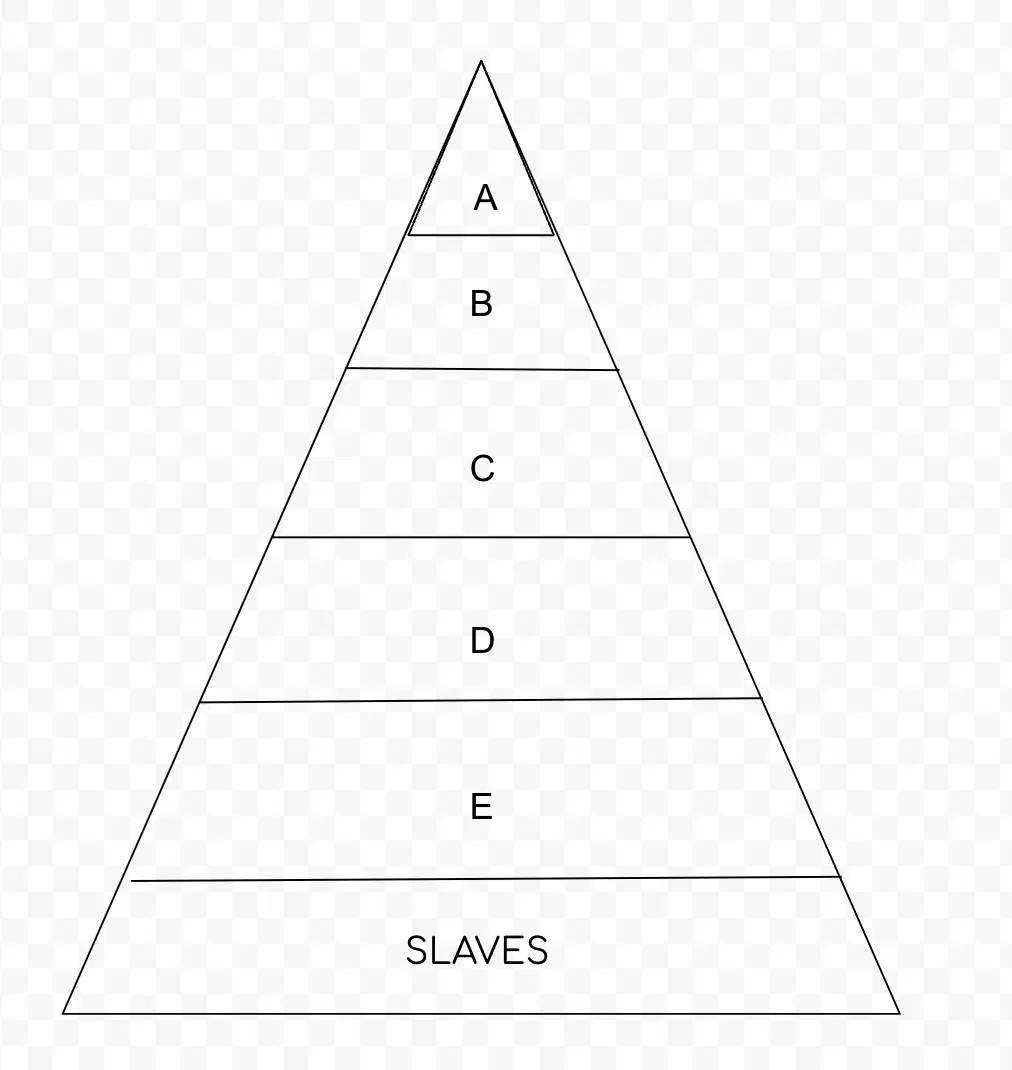
Which is the correct social class for letter A?
Pharaoh
Viziers, Priests, and Nobles
Scribes
Merchants and Artisans
Peasants and Servants
Which is the correct social class for letter B?
Pharaoh
Viziers, Priests, and Nobles
Scribes
Merchants and Artisans
Peasants and Servants
Which is the correct social class for letter C?
Pharaoh
Viziers, Priests, and Nobles
Scribes
Merchants and Artisans
Peasants and Servants
Which is the correct social class for letter D?
Pharaoh
Viziers, Priests, and Nobles
Scribes
Merchants and Artisans
Peasants and Servants
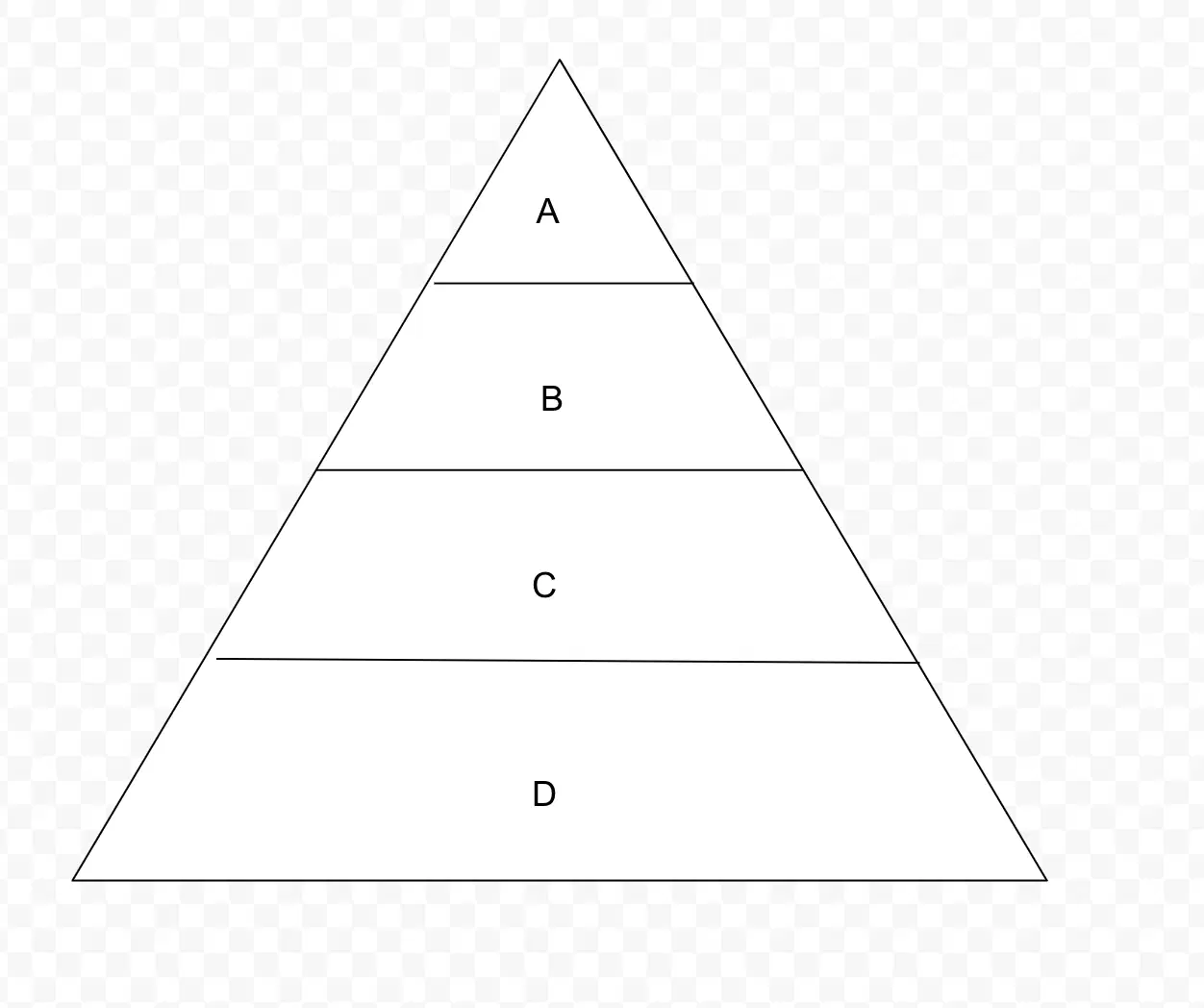
Which of the following Mesopotamian Social Classes belongs in Letter B?
King
Priests, Priestesses, Artisans, Scribes, Merchants
Farmers and Skilled Workers
Slaves
Which of the following Mesopotamian Social Classes belongs in Letter C?
King
Priests, Priestesses, Artisans, Scribes, Merchants
Farmers and Skilled Workers
Slaves
When building a civilization, what ingredient has to come first?

Water

Agriculture

Surplus
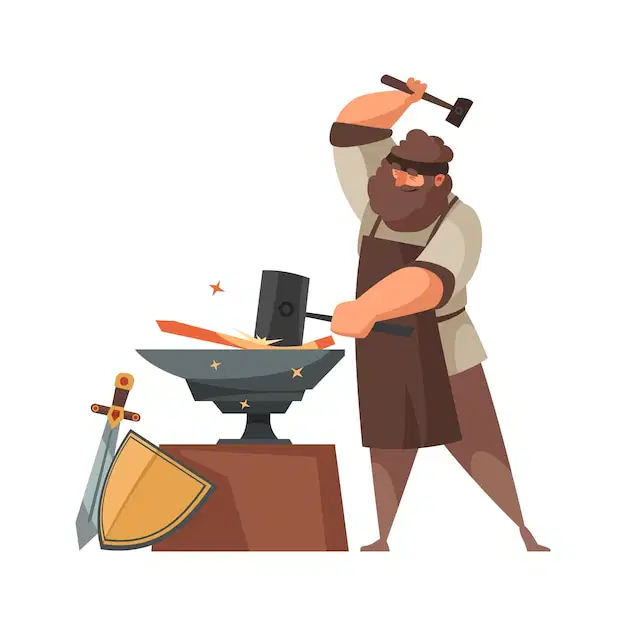
Specialized Jobs
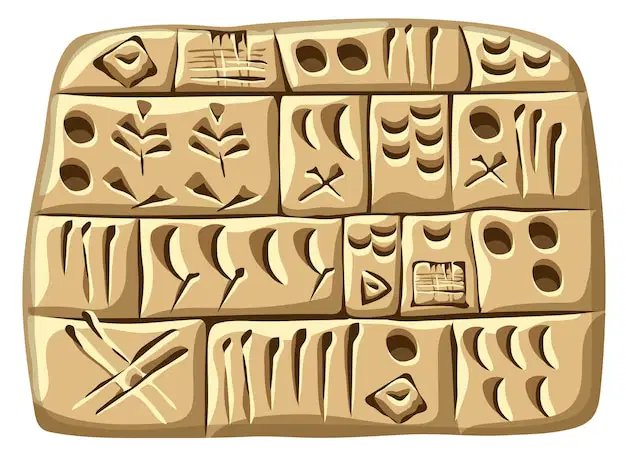
Writing

