
 Worksheets
Soil Erosion and Weathering Quiz
Total questions: 45
Worksheet time: 21mins
How does climate influence the rate of soil weathering?
Humid climates slow down chemical weathering
Dry climates accelerate physical weathering but slow down chemical reactions
Cold climates have the fastest rates of ice wedging
Wet and warm climates have slower rates of all weathering processes
Which farming method would be most effective in reducing soil erosion on a hillside?
Strip-Cropping
Clear-cutting
Furrow plowing perpendicularly to the slope
Overgrazing
What role does topography play in soil formation and erosion?
Flat regions have slower erosion rates compared to steep slopes
Steep slopes don't affect weathering processes
High elevation areas only experience biological weathering
Top and bottom of slopes have similar soil thickness due to erosion
How do human activities accelerate soil erosion, and what can mitigate it?
Mining reduces erosion; contour plowing increases it
Overgrazing increases soil stability; terracing decreases erosion
Construction exposes rock and soil surfaces; conservation techniques like terracing mitigate it
Recreational activities decrease erosion; clear-cutting increases soil stability
Which weathering process is most responsible for changing the chemical composition of rocks in a humid tropical climate?
Abrasion by wind and water
Ice wedging
Chemical oxidation and acid precipitation
Biological weathering by plant roots
Which scenario best illustrates mechanical weathering caused by biological factors?
A mountain being eroded by a glacier
Roots growing into rock cracks and expanding
Lichens decomposing rock over time
Rocks dissolving in acidic rain
Considering various soil conservation methods, which technique is best suited for reducing wind erosion in arid regions?
Strip-Cropping
Crop Rotation
Use of windbreak barriers
Clear-Cutting
A farmer notices that the soil on his sloped farmland washes away frequently during heavy rains. Which soil conservation method can he implement to minimize erosion and preserve soil fertility?
Constructing windbreaks
Contour plowing
Building levees
Planting drought-resistant crops
While hiking in a mountain region, you observe several rock formations with deep cracks and splits. Which process is most likely responsible for the physical breakdown of these rocks?
Hydrolysis
Oxidation
Ice wedging
Carbonation
A community wants to preserve the shape and features of a nearby plateau from extensive erosion. Which natural process should they study to develop effective preservation strategies?
Biological weathering
Differential weathering
Abrasion
Chemical weathering
During a scientific expedition in a desert region, researchers find rocks with smooth surfaces and rounded edges. What is the most likely cause of this observation?
Mechanical weathering by ice
Abrasion by wind-blown particles
Chemical weathering through acid rain
Biological weathering by plant roots
A government aims to reduce the impact of acid precipitation on urban monuments made of limestone. Which chemical process is primarily involved in weathering these structures?
Oxidation
Hydrolysis
Carbonation
Biological activity
In a cold climate, metal objects left outside often develop a reddish-brown coating over time. Which type of weathering does this example demonstrate?
Chemical weathering via oxidation
Biological weathering by microorganisms
Physical weathering due to ice expansion
Hydrolysis leading to metallic leaching
A mining project exposes a large area of rock to acid drainage. Over time, the composition and appearance of the rock change drastically. What is the primary process behind this transformation?
Weathering through hydrolysis
Biological decomposition
Physical weathering by abrasion
Acid precipitation leading to leaching
An engineer is tasked with stabilizing a hillside that is prone to landslides during intense rainfall. Which approach could be most effective in preventing these erosive events?
Plant deep-rooted vegetation to enhance soil stability
Install large boulders to capture runoff
Smoothen the slope to reduce water pooling
Increase chemical spraying to harden the soil
In tropical climates, organic material decays rapidly, adding humus to the soil. What factor primarily influences the thickness of the soil horizon in these regions?
High levels of precipitation
Frequent frosts
Minimal sunlight exposure
Predominant wind erosion
A construction company plans to develop land in a hilly area. To minimize soil erosion and environmental impact, which technique should be prioritized in their plans?
Strip-cropping on steep slopes
Terracing to create level planting spaces
Removal of all native vegetation
Straight-line plowing for efficiency
Scenario: Coastal Erosion A small coastal town is experiencing significant erosion along its shoreline due to high-energy waves. The town plans to construct barriers to prevent further erosion. Which type of barrier would be most effective for this scenario?
Wooden groynes
Concrete seawalls
Sand dunes
Vegetation planting
Scenario: Sediment Deposition A river carries sediments downstream and deposits them at a delta, forming new land. Over time, these sediments create fertile agricultural zones. Which factor most influences the rate of sediment deposition in this scenario?
Climate of the region
Speed of the river flow
Size of the delta
Salt content of the water
Scenario: Wind Erosion In a desert region, frequent winds reshape the landscape by transporting and depositing sand and soil. Farmers in this area are trying to reduce soil loss. Which practice would most effectively counteract wind erosion?
Building wind turbines
Planting windbreak trees
Increasing grazing areas
Installing solar panels
Scenario: Chemical Weathering A limestone cave formation is undergoing changes due to acidic rainwater seeping through the rock. This process is an example of which type of exogenic process?
Physical weathering
Biological weathering
Chemical weathering
Mechanical weathering
Scenario: River Meandering A river meanders through a valley, creating oxbow lakes as a result of erosion and deposition. Which of the following is a consequence of this natural process for the valley ecosystem?
Increased urban development
Loss of soil fertility
Formation of wetlands
Higher ground elevation
Scenario: Glacial Movement A glacier moves slowly down a mountain slope, carving out a U-shaped valley over time. If average temperatures in the region rise, what is the most likely impact on this glacial landscape?
Glacier thickening
Accelerated melting
Slower rock erosion
Formation of fjords
Scenario: Tectonic Uplift An elevated plateau experiences increased rainfall, leading to the development of intricate networks of rivers. How does tectonic uplift contribute to the exogenic processes at work in this scenario?
Alters wind patterns
Increases soil salinity
Creates steep river gradients
Reduces sediment deposits
Scenario: Human Impact on Exogenic Processes A city expands into a forested area, replacing trees with concrete structures. How does this expansion directly affect exogenic processes in the region?
Increases soil absorption
Reduces surface runoff
Decreases erosion rates
Alters local water cycles
Scenario: Karst Topography A region known for its karst topography includes numerous sinkholes and underground caves. Which exogenic process is mainly responsible for these features?
Erosion by wind
Dissolution of limestone
Deposition by rivers
Sediment layering
Scenario: Mitigating Mudslides Recent mudslides in a hilly region have caused damage to infrastructure. Which preventive measure would most effectively minimize future mudslide occurrences?
Removing vegetation from slopes
Building retaining walls
Increasing artificial drainage
Widening roadways

After a hurricane, William noticed that the coastline near his home on Sanibel Island had increased. Which of the following processes is the most likely reason for this change?
Physical weathering
Deposition
Chemical weathering
Erosion

Which of the following is an example of chemical weathering?
A tree root growing into a rock and splitting it
Water flowing over rocks and smoothing them
Iron in rocks reacting with oxygen to form rust
Wind blowing sand against a rock surface
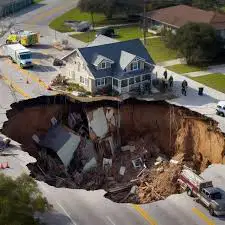
What geological process primarily contributes to the formation of sinkholes in areas with abundant limestone, such as Florida?
Physical weathering
Deposition
Chemical weathering
Erosion
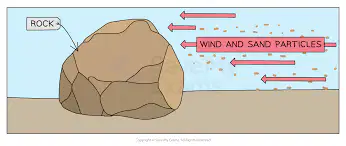
While hiking in the desert, Mason noticed that some rocks had smooth surfaces. How are these rocks weathered by wind?
Rocks are weathered when wind is coming from a certain direction
Rocks are weathered by sediment or smaller pieces of rock carried by wind
Rocks are weathered only by strong winds
Rocks are weathered only by storms

Tommy is curious about the impact of hurricanes on the sand dunes at Cape Coral beach. He knows that hurricanes can cause significant changes in a short time. To study this, Tommy plans to use systematic observations. Which of the following methods would best help Tommy study the changes in sand dunes?
Building a miniature model of the beach and simulating hurricane conditions
Taking regular photographs of the sand dunes before and after hurricanes
Using a fan to blow sand and observing the movement patterns
Collecting water samples from the beach before and after hurricanes
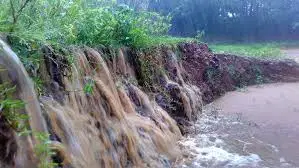
During a field trip, students observed a river carrying sediment downstream. What process is primarily responsible for this movement of sediment?
Erosion
Chemical weathering
Physical weathering
Deposition
Which of the following statements best distinguishes endogenic from exogenic processes?
Endogenic processes shape the earth's surface from the inside, while exogenic processes shape it from the outside.
Exogenic processes are caused by internal heat, while endogenic processes are caused by solar energy.
Endogenic processes only occur in the ocean, while exogenic processes occur on land.
Both processes are influenced by human activities equally.
Exogenic processes are internal geological forces.
True
False
Chemical weathering involves the physical breakdown of rocks.
True
False
Mass wasting refers to the uphill movement of rock, soil, and debris.
True
False
Wind erosion lifts and transports soil particles by the wind.
True
False
Rill erosion forms deep and wide channels or gullies.
True
False
Soil erosion can be influenced by land use practices.
True
False
Exfoliation is primarily caused by heavy rainfall.
True
False
Hydration is a chemical weathering process.
True
False
Mass wasting types include falls, slides, and flows.
True
False
Chemical weathering involves the physical breakdown of rocks by animals
True
False

